
Building blocks have long been a staple in childhood development, offering more than just entertainment. They nurture fine motor skills, spatial reasoning, problem-solving, and creativity. But as parents and educators choose between mini and large building blocks, a critical question arises: Are bigger blocks always better for kids? The answer isn’t straightforward—size matters, but so does age, developmental stage, and intended use. Understanding the strengths and limitations of each type ensures children get the most from their playtime.
Understanding Mini and Large Building Blocks
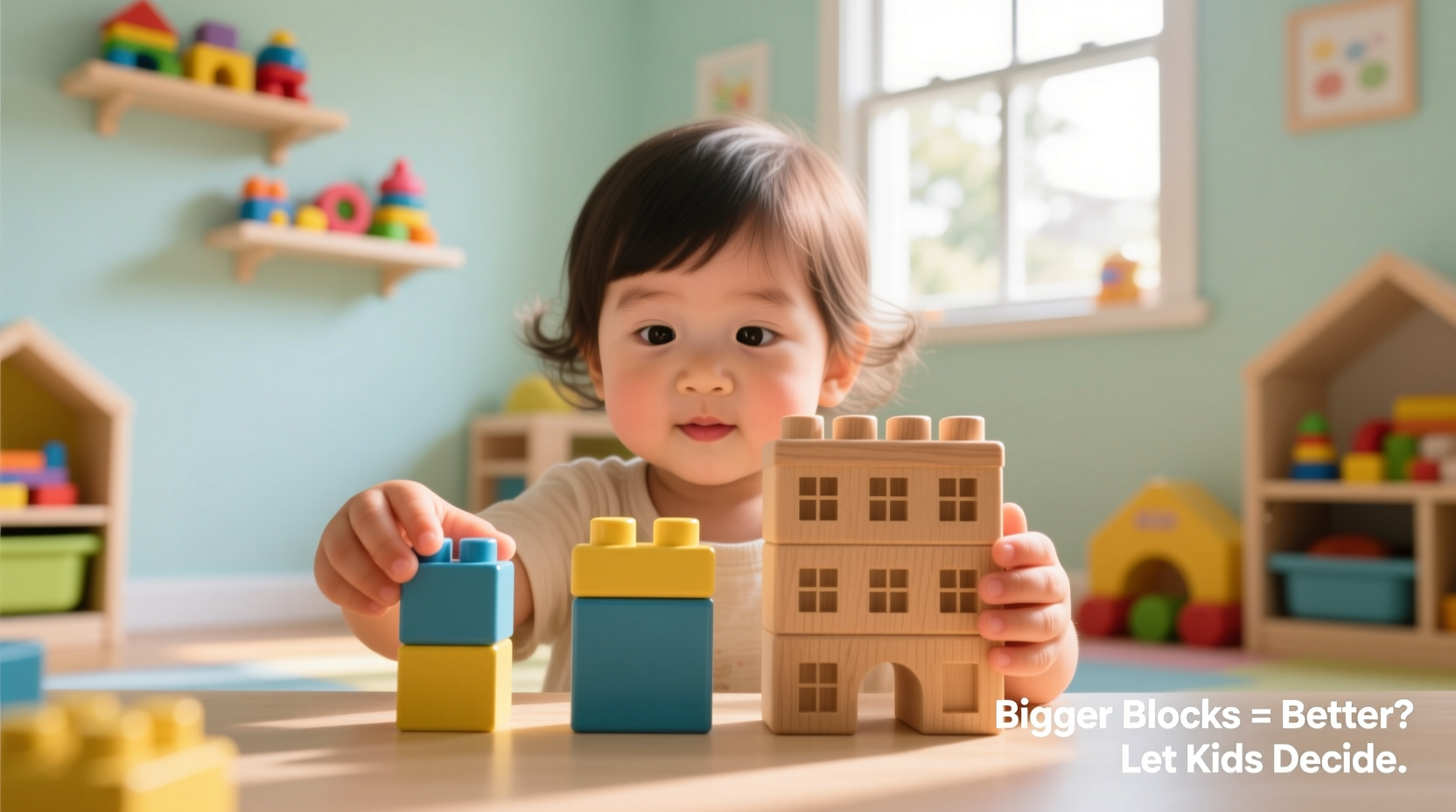
Mini building blocks—like classic LEGO bricks—are typically 0.8 cm or smaller. They require precise finger movements and are designed for detailed construction. In contrast, large building blocks, such as DUPLO or Mega Bloks, can be over 3 cm tall and are engineered for younger hands. These larger pieces reduce choking hazards and are easier to manipulate for children with developing dexterity.
The distinction goes beyond physical size. Mini blocks often appeal to older children who enjoy complexity and realism in their builds. Large blocks prioritize safety, accessibility, and foundational learning. Each has a role in a child’s growth, depending on where they are in their cognitive and physical development.
Developmental Benefits by Age Group
Children progress through distinct developmental stages, and the right building blocks can support each phase effectively.
- Ages 1–3: Toddlers are refining hand-eye coordination and grasping skills. Large blocks help them stack, sort, and knock down structures safely. Their thick fingers benefit from oversized connectors that don’t require precision.
- Ages 4–6: Preschoolers begin symbolic play and storytelling. At this stage, large blocks with themed sets (animals, vehicles) encourage imaginative narratives while still being safe and manageable.
- Ages 7 and up: With improved dexterity and attention span, children can handle mini blocks. These allow for intricate designs, following complex instructions, and exploring engineering concepts like symmetry and balance.
“Block play is one of the earliest forms of STEM learning. The size of the block should match the child’s ability to explore without constant adult intervention.” — Dr. Lena Torres, Early Childhood Development Specialist
Comparing Safety, Creativity, and Cognitive Load
Choosing between mini and large blocks involves balancing three key factors: safety, creative potential, and mental engagement.
| Factor | Mini Blocks | Large Blocks |
|---|---|---|
| Safety | Risk of choking; not suitable under age 3 | Choking hazard minimized; ASTM-certified options available |
| Fine Motor Skill Demand | High—requires pincer grasp and precision | Low to moderate—easier for small hands |
| Creative Complexity | High—enables detailed models and moving parts | Moderate—limited by size and part variety |
| Cognitive Load | Higher—reading instructions, sequencing steps | Lower—focus on open-ended play and cause-effect |
| Durability & Storage | Prone to loss; needs organized storage | Easier to track and store; less clutter risk |
While mini blocks offer greater design flexibility, they demand higher cognitive and physical effort. For young children, this can lead to frustration rather than enrichment. Large blocks, though simpler, lay the groundwork for future success with smaller components by teaching basic construction principles.
Real-World Example: Two Siblings, Two Experiences
Consider the Martinez family: 5-year-old Sofia and her 8-year-old brother Mateo both received building sets for their birthdays. Sofia got a set of large animal-themed blocks, while Mateo received a mini-scale spaceship kit.
Sofia spent hours stacking, sorting by color, and creating stories about jungle adventures. She didn’t follow instructions but developed narrative skills and practiced counting. Mateo followed a 40-step guide, reading diagrams and troubleshooting misaligned pieces. He felt proud completing a complex model but needed breaks due to concentration fatigue.
Their mother noticed Sofia occasionally tried to use Mateo’s mini blocks but became upset when they wouldn’t connect easily. After switching back to her large set, her confidence returned. This case illustrates that “better” depends on the child—not the product’s sophistication.
When Size Isn’t the Only Factor: Quality and Design Matter
Not all large blocks are created equal. Some cheaper brands use brittle plastic or inconsistent sizing, making connections unreliable. Similarly, off-brand mini blocks may not align with major brands, limiting compatibility and frustrating children used to seamless integration.
Look for these qualities regardless of size:
- Durable, non-toxic materials (BPA-free, phthalate-free)
- Consistent connector design (snaps securely, disassembles easily)
- Age-appropriate packaging and instruction clarity
- Inclusion of diverse shapes and colors to inspire varied builds
Brands like LEGO, Mega Construx, and Melissa & Doug invest in ergonomic design and developmental research, ensuring their products grow with the child. A high-quality large block set for toddlers can be just as educationally rich as a mini robotics kit for older kids.
Step-by-Step Guide: Choosing the Right Blocks for Your Child
Follow this decision-making process to select the best building blocks for your child’s current stage:
- Assess age and motor skills: Can they pick up small objects with a pincer grasp? If not, stick with large blocks.
- Check manufacturer guidelines: Respect age recommendations—they’re based on safety testing and usability studies.
- Observe play patterns: Do they prefer storytelling or technical assembly? Choose sets that align with their interests.
- Test connectivity: Try connecting and disconnecting a few pieces. It should be challenging but not impossible.
- Plan for progression: Consider starter sets that bridge sizes, like LEGO Juniors or DUPLO Creator, which gradually introduce complexity.
“The goal isn’t to rush kids into advanced toys. It’s to meet them where they are and let curiosity lead the way.” — Dr. Alan Pierce, Child Psychologist
FAQ
Can older kids benefit from large building blocks?
Yes. Large blocks aren’t just for toddlers. Older children with sensory processing differences or motor challenges may find large blocks more accessible. They’re also useful for group builds, classroom activities, or rapid prototyping of ideas before scaling down.
Are mini blocks dangerous for younger siblings in the house?
Potentially. Even if your 9-year-old uses mini blocks responsibly, a younger sibling could access them during play. Store mini blocks in secure, childproof containers. Consider designating separate play zones or using large blocks for shared spaces.
Do large blocks limit creativity compared to mini ones?
They limit detail, not creativity. A child using large blocks can still invent entire worlds—castles, zoos, space stations. The simplicity often encourages broader imagination because there are fewer constraints from technical assembly.
Conclusion
Bigger blocks aren’t inherently better—they’re better suited for certain ages and goals. The choice between mini and large building blocks should reflect a child’s developmental readiness, interests, and environment. Pushing a toddler into mini blocks risks safety and discouragement, while holding back an older child with oversized pieces may stifle their growing capabilities.
The most effective approach is thoughtful progression: start large, introduce complexity gradually, and prioritize play that feels rewarding, not overwhelming. Whether stacking a wobbly tower or engineering a working crane, every block laid is a step forward in learning.




 浙公网安备
33010002000092号
浙公网安备
33010002000092号 浙B2-20120091-4
Comments
No comments yet. Why don't you start the discussion?