
Skirts have long been a staple in wardrobes across the world, evolving with cultural shifts, seasonal trends, and individual expression. Among the most debated choices in modern fashion is the battle between mini and midi lengths. While some see it as a fleeting trend dictated by runways, others argue that skirt length profoundly affects silhouette, proportion, and confidence. The truth lies somewhere in between — but understanding the real impact of length goes beyond what’s “in” this season.
More than just hemlines, mini and midi skirts represent different philosophies of dressing: one embraces boldness and freedom, the other elegance and coverage. But does the difference in length truly influence how an outfit performs in real life, or are we simply following fashion cycles without questioning their purpose?
The Anatomy of Skirt Lengths
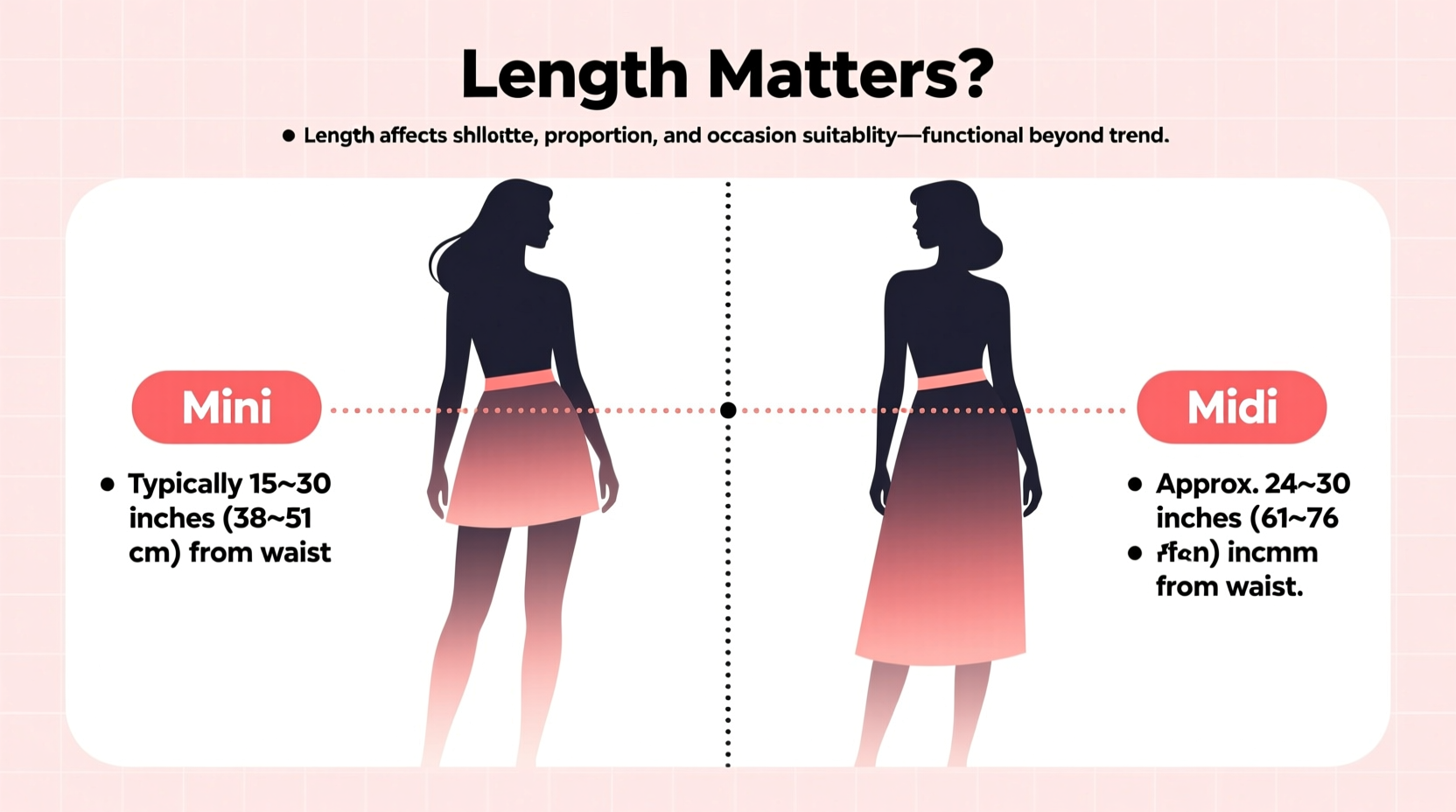
To assess whether length matters, it’s essential to define what we mean by “mini” and “midi.” These aren’t arbitrary terms; they correspond to specific measurements relative to the body.
- Mini skirt: Typically ends 6–8 inches above the knee. Designed to highlight the legs, it's associated with youthfulness and dynamism.
- Midi skirt: Falls between the knee and ankle, usually around mid-calf. Offers more coverage while maintaining movement and flow.
The placement of the hemline changes how weight is visually distributed. A mini draws attention upward from the feet, elongating the leg line. A midi, especially when high-waisted, can create a balanced torso-to-limb ratio, often flattering for petite or taller frames alike.
Functionality vs. Fashion: Where Purpose Meets Aesthetic
Length isn't merely aesthetic; it influences practicality. A mini skirt may be ideal for summer outings or dance floors, offering ease of movement and breathability. However, it can pose challenges in professional environments or conservative settings where modesty is expected.
In contrast, midi skirts often transition seamlessly from day to night, office to dinner. Their versatility makes them a favorite among women seeking polished yet comfortable options. Yet, they’re not without drawbacks — shorter individuals may find certain midi lengths cut off their legs awkwardly, creating a “stumpy” illusion if not styled correctly.
“Hemlines should serve the wearer, not the calendar. A well-chosen length enhances posture, gait, and self-assurance — that’s timeless design.” — Lena Moretti, Fashion Stylist & Body Proportion Consultant
Comparing Mini and Midi: A Practical Breakdown
| Factor | Mini Skirt | Midi Skirt |
|---|---|---|
| Leg Exposure | High — emphasizes thighs and full leg line | Low to moderate — covers knee, shows lower calf |
| Versatility | Limited to casual, warm-weather, or statement looks | High — works with boots, heels, flats, blazers |
| Body Type Suitability | Better for balanced or longer leg proportions | Can flatter most types with proper waist height |
| Seasonal Flexibility | Best in spring/summer | Easily layered in fall/winter |
| Trend Lifespan | Cyclical — surges every 5–7 years | Consistently present with minor variations |
Real-World Example: Olivia’s Wardrobe Shift
Olivia, a 32-year-old marketing executive based in Toronto, relied heavily on mini skirts in her early twenties. They felt empowering and aligned with her vibrant social life. But as her career advanced and her lifestyle became more varied, she noticed discomfort during client meetings and winter commutes.
She experimented with midi skirts after a stylist suggested they’d suit her rectangle body shape. To her surprise, the change wasn’t just about modesty — it improved her overall look. With a tailored midi pencil skirt paired with a tucked-in silk blouse, she received compliments on her “put-together” presence. More importantly, she felt confident without sacrificing comfort.
Her experience illustrates a broader truth: while trends promote extremes, personal style evolves with life context. The shift from mini to midi wasn’t a surrender to convention — it was an adaptation rooted in function and self-awareness.
Does Length Matter, or Is It Just a Trend?
Fashion media often presents mini and midi as opposing forces in a cyclical tug-of-war. One year, minis dominate street style; the next, midi reigns supreme. But reducing the choice to trend-following overlooks deeper considerations.
Yes, designers push extremes each season — micro-minis at Miu Miu or sweeping midis at The Row generate buzz. But longevity in personal style comes from understanding how length interacts with your body, lifestyle, and values.
For instance, a woman with a short torso might benefit from a high-waisted midi that creates balance. Someone with longer legs may carry off a mini effortlessly, even in formal settings, depending on fabric and fit. Meanwhile, climate, cultural norms, and occupational dress codes all influence what length feels appropriate — and authentic.
In this light, length absolutely matters — not because fashion says so, but because it impacts how clothing functions in real life. Trends may elevate one length over another temporarily, but intelligent dressing means choosing based on more than popularity.
Actionable Checklist: Choosing Your Ideal Skirt Length
Before adding another skirt to your closet, ask yourself these questions:
- What activities will I wear this for? (Work, travel, dates, etc.)
- Does this length complement my natural proportions?
- Can I style it across multiple seasons?
- Do I feel confident moving, sitting, and standing in it?
- Is the fabric suitable for the length? (e.g., stiff fabrics can overwhelm a midi)
- Will this piece integrate with at least three other items in my wardrobe?
- Am I choosing this because I love it — or because it’s trending?
FAQ: Common Questions About Mini vs Midi Skirts
Can petite women wear midi skirts?
Absolutely — but proportion is key. Opt for high-waisted styles that rise to your natural waist, and pair with nude heels or pointed-toe shoes to maintain leg continuity. Avoid overly long midis that pool at the floor, as they can shorten your frame.
Are mini skirts unprofessional?
Not inherently. A structured mini in wool or tweed, paired with a blazer and closed-toe heels, can be office-appropriate. The issue isn’t length alone but fabric, fit, and context. If you're unsure, aim for a hemline no more than 4 fingers above the knee.
Why do midi skirts sometimes look frumpy?
This often happens due to poor fit or bulk in the wrong areas. A midi with too much fabric around the hips or an undefined waist can obscure your shape. Choose styles with darts, belts, or A-line cuts that skim rather than cling. Tailoring also plays a crucial role — even small adjustments can refine the silhouette.
Final Thoughts: Beyond the Hemline
The debate between mini and midi skirts isn’t about declaring a winner — it’s about recognizing that length carries meaning. It affects how we move through space, how others perceive us, and how we feel in our skin. While trends come and go, the power of a well-chosen skirt lies in its ability to align form with function.
Instead of asking, “What’s in style?” try asking, “What works for me?” Whether you gravitate toward the playful energy of a mini or the graceful poise of a midi, let your choice reflect intention, not impulse.




 浙公网安备
33010002000092号
浙公网安备
33010002000092号 浙B2-20120091-4
Comments
No comments yet. Why don't you start the discussion?