
As the holiday season approaches, families seek meaningful traditions that captivate children while building lasting memories. Two popular options—miniature nutcracker displays and advent calendars—offer festive charm and seasonal excitement. But when it comes to engaging children consistently throughout December, one may hold a stronger appeal. The choice isn't just about aesthetics; it's about interaction, anticipation, learning, and emotional connection. Understanding how each tradition functions—and how children respond to them—can help parents make an informed decision that enhances their family’s holiday experience.
The Role of Holiday Traditions in Child Development
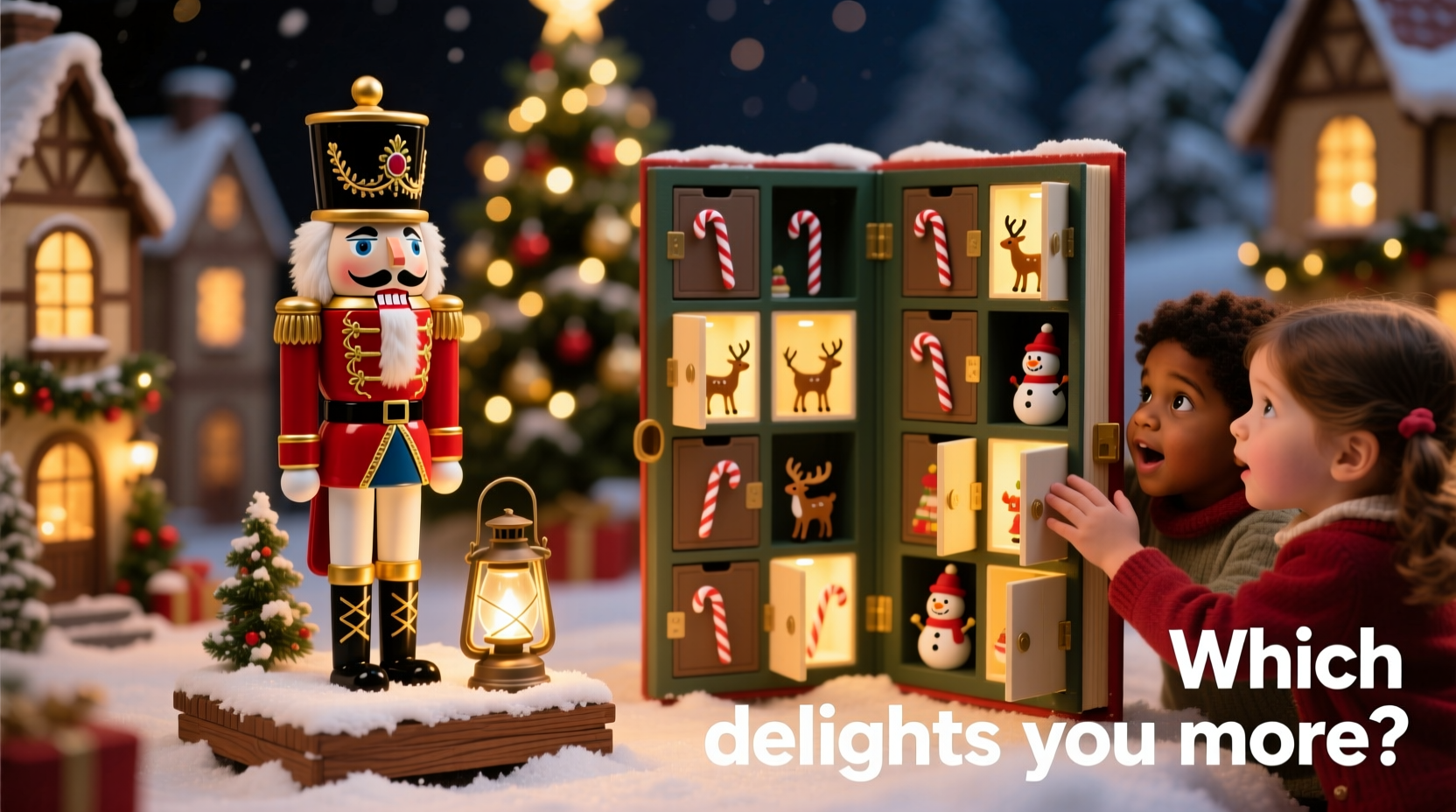
Holiday rituals do more than decorate homes—they shape childhood. Psychologists emphasize that predictable, joyful routines foster emotional security and cognitive development. When children participate in traditions, they develop a sense of belonging, improve memory retention through repetition, and strengthen family bonds. Both nutcracker displays and advent calendars serve these purposes, but they differ significantly in structure and engagement style.
A miniature nutcracker display is primarily visual and symbolic. It draws on cultural storytelling, often tied to Tchaikovsky’s *The Nutcracker* ballet, evoking themes of magic, bravery, and transformation. In contrast, an advent calendar is interactive by design, offering daily rewards or activities that build anticipation toward Christmas Day. This fundamental difference—passive observation versus active participation—plays a crucial role in determining which option holds greater appeal for young minds.
How Advent Calendars Drive Daily Engagement
Advent calendars succeed because they turn waiting into an event. Instead of passively viewing a decoration, children open a door, lift a flap, or retrieve a small item each day from December 1 to 24. This ritual creates a rhythm that children anticipate and look forward to. Whether filled with chocolates, toys, Bible verses, or activity prompts, the element of surprise keeps curiosity alive.
Modern advent calendars go beyond candy. Many now include STEM kits, craft supplies, or reading challenges. For example, a “read-a-day” advent calendar might contain mini storybooks or book-themed puzzles, encouraging literacy. Others offer science experiments or kindness challenges—“Today, draw a picture for someone who made you smile.” These variations transform the calendar into an educational tool disguised as play.
The Power of Anticipation and Routine
Child psychologists note that delayed gratification improves self-regulation. By opening only one compartment per day, children learn patience. The structured countdown also helps them grasp abstract concepts like time. Younger children, especially those under seven, struggle with understanding “a week from now,” but seeing doors close behind them provides tangible proof of progress.
“Daily rituals like advent calendars anchor children in time and give them a sense of control during a chaotic season.” — Dr. Lila Monroe, Child Development Specialist
Nutcracker Displays: Beauty, Storytelling, and Cultural Connection
Miniature nutcracker displays are works of art. Often hand-carved or imported from Germany, they feature intricate details—uniformed soldiers, expressive faces, polished wood grains—that appeal to aesthetic sensibilities. Placed prominently on mantles or shelves, they become conversation starters and symbols of holiday elegance.
These figures originate from German folklore, where nutcrackers were believed to ward off evil spirits and bring good luck. Over time, they became associated with protection and strength. When paired with storytelling—such as reading *The Nutcracker and the Mouse King* or watching a performance—nutcracker displays can spark imagination and narrative thinking in children.
However, their engagement model is observational rather than participatory. A child may admire the nutcracker for a few minutes each day, but there’s no built-in mechanism for sustained involvement. Unlike advent calendars, there’s no daily action or reward cycle. While beautiful, the display risks becoming background decor unless actively integrated into family routines.
Enhancing Nutcracker Appeal Through Interaction
To increase engagement, families can layer interactivity onto the display. Assigning each nutcracker a personality, creating short stories, or staging nightly “adventures” (e.g., moving the nutcracker to a new spot with a tiny clue) adds playfulness. Some families adopt the “Nutcracker Night Watch,” where children write notes to the nutcracker, asking questions or sharing secrets, and receive handwritten replies from parents.
Yet even with enhancements, the effort required to sustain interest lies largely with adults. In contrast, advent calendars are self-sustaining—the format does the work.
Comparative Analysis: Key Factors in Child Engagement
To evaluate which tradition engages children more effectively, consider five critical dimensions: interactivity, educational value, emotional resonance, ease of use, and longevity of interest.
| Factor | Advent Calendar | Nutcracker Display |
|---|---|---|
| Interactivity | High – daily physical interaction (opening doors, retrieving items) | Low – primarily visual; requires adult-led storytelling to boost engagement |
| Educational Value | High – supports literacy, math (counting days), fine motor skills, and thematic learning | Moderate – teaches cultural history and artistic appreciation |
| Emotional Resonance | Strong – builds excitement, routine, and personal investment | Strong – evokes wonder and nostalgia, especially with storytelling |
| Ease of Use | Easy – set up once, then automatic daily use | Easy – place and admire, but harder to maintain child interest without effort |
| Longevity of Interest (Dec 1–24) | Consistently high – daily novelty sustains attention | Variable – peaks at setup and holidays, dips mid-month without intervention |
This comparison shows that while both traditions have merit, advent calendars outperform nutcracker displays in consistent, independent child engagement. They require less parental labor to maintain momentum and naturally align with how children learn and play.
Real Example: The Miller Family Experiment
The Miller family of four—parents Sarah and Tom, and children Mia (6) and Leo (4)—decided to test both traditions side-by-side in 2023. They set up a hand-painted wooden nutcracker display on their fireplace mantle and purchased a reusable fabric advent calendar with activity prompts.
For the first three days, both children were equally excited. They touched the nutcracker’s hat, imagined battles with mice, and asked questions about its origin. By December 7, however, interest in the display waned. Mia still glanced at it occasionally, but Leo stopped noticing it altogether.
In contrast, the advent calendar remained a centerpiece of their mornings. Each day began with the ritual of finding the next flap, reading the activity (“Make reindeer food!” or “Sing a carol”), and completing the task. The predictability gave the children comfort; the variety kept them curious.
Sarah noted, “We had to prompt them to engage with the nutcracker, but the calendar pulled them in on its own.” By Christmas Eve, the children were sad to finish the calendar—but already asking what next year’s would include.
Actionable Guide: Maximizing Engagement with Either Tradition
Whether choosing an advent calendar, a nutcracker display, or both, follow this step-by-step approach to ensure maximum child involvement:
- Assess your child’s age and interests – Toddlers respond well to tactile elements; older kids enjoy puzzles or reading.
- Select the right format – For low maintenance and high engagement, choose an advent calendar with diverse daily activities.
- Involve children in setup – Let them help place items in DIY calendars or arrange nutcrackers in scenes.
- Create a daily ritual – Tie the activity to an existing habit (e.g., after breakfast or before bedtime).
- Add storytelling elements – For nutcrackers, invent nightly adventures; for calendars, narrate the journey to Christmas.
- Rotate themes annually – Prevent monotony by switching between chocolate, toy, craft, or experience-based calendars.
- Reflect together – On December 25, discuss favorite moments and decide what to keep or change next year.
Checklist: Choosing the Right Option for Your Family
- ☐ Are we looking for daily interaction or seasonal ambiance?
- ☐ Do our children thrive on routine and surprises?
- ☐ Do we prefer low-effort traditions or are we willing to co-create stories nightly?
- ☐ Is educational enrichment a priority?
- ☐ Do we already own a nutcracker collection or feel culturally connected to the symbol?
- ☐ Are we open to reusing or rotating advent calendars each year?
- ☐ Will this tradition grow with our children as they age?
Frequently Asked Questions
Can I combine both traditions?
Absolutely. Many families use a nutcracker display for decorative and cultural value while relying on an advent calendar for daily engagement. The two can coexist beautifully—one as atmosphere, the other as action.
At what age do children benefit most from advent calendars?
Children as young as three can begin using simple calendars with pictures or treats. Ages 5–10 tend to get the most developmental benefit, as they understand sequencing and delayed gratification. Older children may prefer themed calendars (e.g., LEGO, books, skincare) to stay engaged.
Are nutcracker displays worth the cost if kids lose interest quickly?
If valued as heirloom decor or part of a larger collecting tradition, yes. However, if the goal is active child engagement, the return on investment is lower compared to reusable, interactive advent calendars.
Conclusion: Prioritizing Participation Over Presentation
While miniature nutcracker displays offer timeless beauty and cultural richness, advent calendars consistently outperform them in engaging children throughout the holiday season. Their daily structure, element of surprise, and adaptability to learning goals make them powerful tools for connection and development. That said, the ideal holiday experience doesn’t require choosing one over the other—it calls for intentionality.
Use the advent calendar as the engine of daily joy and the nutcracker display as a complementary symbol of heritage and artistry. Blend education with emotion, action with awe. By doing so, families create a layered, memorable December that nurtures both the mind and the heart.




 浙公网安备
33010002000092号
浙公网安备
33010002000092号 浙B2-20120091-4
Comments
No comments yet. Why don't you start the discussion?