
A cluttered desk often leads to a cluttered mind. In an age of constant digital distraction and overflowing workspaces, the minimalist desk setup has emerged as a sanctuary for focus, clarity, and intentional living. But minimalism isn’t about stripping away everything until your desk looks like a hospital tray. It’s about curating only what matters—tools that serve you, objects that inspire you, and systems that keep you moving forward. The real challenge lies in balancing efficiency with expression: how do you create a space that enhances productivity while still feeling uniquely yours?
This guide walks through the principles, practical steps, and subtle details that define a truly effective minimalist desk setup—one that doesn’t sacrifice personality for purity of form.
The Philosophy Behind Minimalist Workspaces
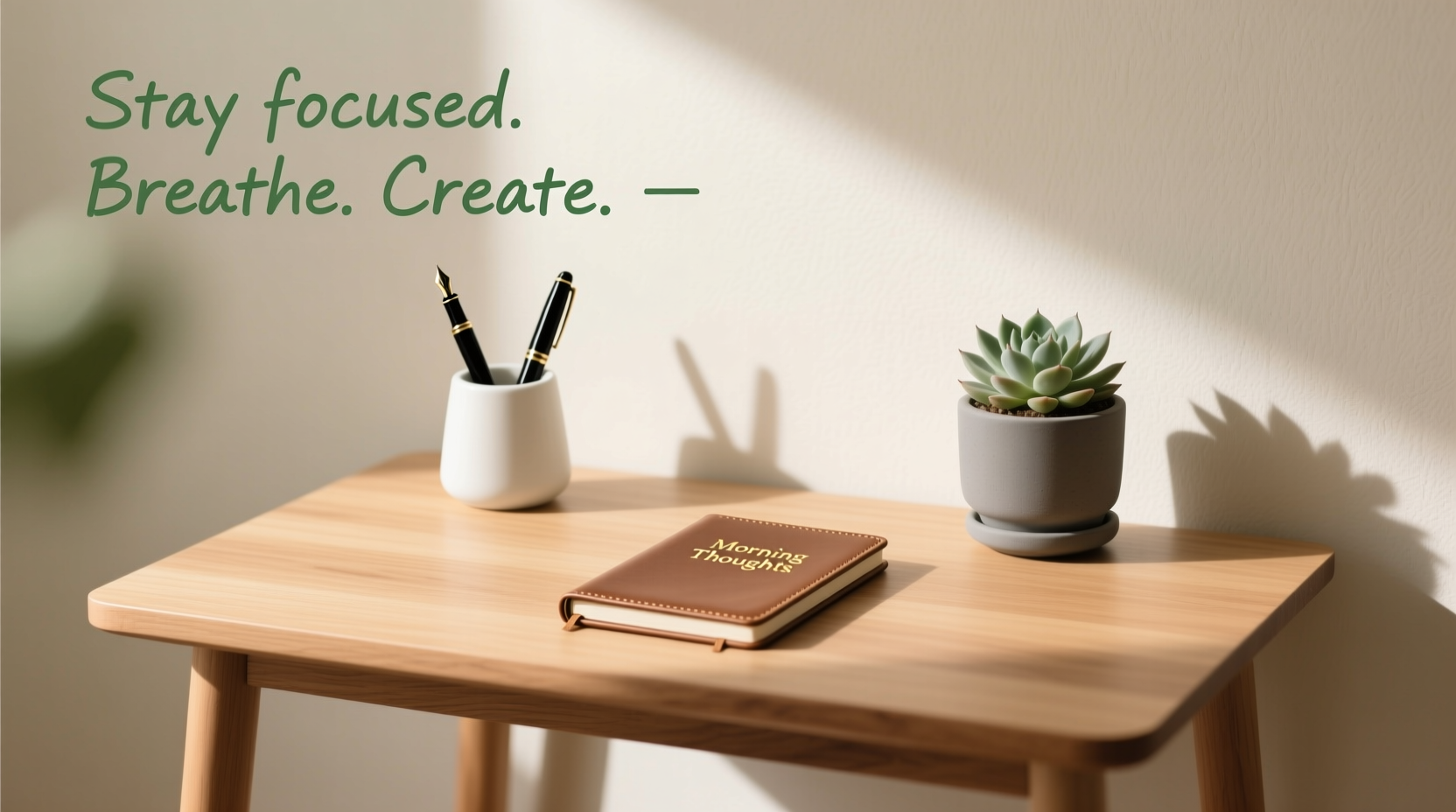
Minimalism in design is often misunderstood as austerity. In reality, it’s precision. It’s removing excess so essentials can shine. When applied to a desk setup, this means every object earns its place by serving a clear function or evoking genuine joy. As designer Dieter Rams famously said:
“Less, but better.” — Dieter Rams, Industrial Designer
In the context of a workspace, “better” translates to tools that reduce friction, surfaces that invite focus, and aesthetics that align with your inner rhythm. A minimalist desk isn’t cold or sterile—it’s calm, deliberate, and deeply functional.
Studies support this approach. Research from Princeton University Neuroscience Institute shows that physical clutter competes for attention, reducing cognitive performance. By minimizing visual noise, you free up mental bandwidth for deep work—the kind that moves projects forward and builds meaningful careers.
Step-by-Step Guide to Building Your Minimalist Desk Setup
Creating a minimalist desk isn’t a one-time purge. It’s a thoughtful process of evaluation, selection, and refinement. Follow these six steps to build a setup that works—and feels—right.
- Clear everything off the desk. Start with a blank surface. Remove all items, including cords, notebooks, and decor. This resets your perspective and forces intentionality.
- Categorize each item. Sort belongings into groups: tech, writing tools, reference materials, personal items, and supplies. Ask whether each belongs on the desk or in storage nearby.
- Apply the 90/90 rule. If you haven’t used it in the past 90 days and don’t expect to in the next 90, remove it. Exceptions apply for sentimental or rarely used essentials (e.g., passport).
- Select core tools only. Limit yourself to one notebook, one pen, one monitor, one device. Add more only if they demonstrably improve workflow.
- Design zones for function. Divide your desk into areas: digital workspace, analog zone (writing), and inspiration corner. Keep each zone clean and purpose-driven.
- Refine weekly. Spend five minutes every Friday resetting the desk. Return misplaced items, wipe surfaces, and reassess what’s necessary.
Essential vs. Expressive: Striking the Balance
The most common pitfall in minimalist setups is overcorrection—eliminating so much personality that the desk becomes impersonal. A workspace should reflect who you are, not erase you. The key is integrating expressive elements that are also functional.
Consider the difference between decoration and meaning. A framed photo of a loved one isn’t clutter; it’s emotional grounding. A plant isn’t just decor—it improves air quality and reduces stress, according to NASA’s Clean Air Study. A well-chosen notebook with a textured cover isn’t indulgence; it invites use.
| Category | Minimalist-Friendly Choices | Clutter Risks |
|---|---|---|
| Personal Items | One framed photo, small memento, motivational quote card | Multiple trinkets, expired reminders, gift clutter |
| Office Supplies | Refillable pen, single notebook, desktop organizer | Loose paper stacks, duplicate pens, broken gadgets |
| Electronics | One monitor, laptop stand, wireless charger | Dangling cables, unused adapters, old chargers |
| Greenery & Light | Small succulent, warm LED task lamp | Overwatered plants, harsh overhead lighting |
The goal isn’t emptiness—it’s harmony. Choose items that pull double duty: useful and uplifting. For example, a wooden desk organizer made by a local artisan supports both organization and personal values. A vintage-inspired clock keeps time and sparks nostalgia. These choices make minimalism sustainable because they feel authentic.
Real Example: From Chaos to Calm – Maya’s Home Office Transformation
Maya, a freelance graphic designer based in Portland, struggled with inconsistent focus. Her desk was covered with sketchbooks, coffee mugs, sticky notes, and three mismatched monitors. She often wasted time searching for files or restarting after distractions.
After reading about minimalist workflows, she decided to rebuild her setup around two goals: reduce decision fatigue and increase creative flow. She cleared her desk entirely, then reintroduced only what she used daily: a single ultrawide monitor, a mechanical keyboard, a refillable fountain pen, and a Moleskine sketchbook. She mounted her tablet on a swing arm for quick access and placed a small snake plant in the corner for warmth.
She added one personal touch—a hand-lettered quote from her mentor: “Create like no one’s watching.” She framed it in black wood and placed it just above eye level. Everything else went into labeled drawers or storage boxes under the desk.
Within two weeks, Maya reported a 40% increase in completed client drafts and fewer afternoons spent reorganizing. “I didn’t realize how much energy I was wasting just managing my space,” she said. “Now, when I sit down, I’m already in the zone.”
Checklist: Build Your Ideal Minimalist Desk in One Afternoon
Use this actionable checklist to transform your workspace efficiently. Allocate 2–3 hours for best results.
- ☐ Clear all items from the desk and nearby surfaces
- ☐ Wipe down the desk, monitor, keyboard, and accessories
- ☐ Sort items into categories: keep, store, donate, discard
- ☐ Select one primary device (laptop/desktop) and position it centrally
- ☐ Choose one notebook and one reliable pen
- ☐ Set up cable management using clips or a cord sleeve
- ☐ Add one plant or natural element (e.g., wood coaster, stone paperweight)
- ☐ Include one meaningful personal item (photo, art, quote)
- ☐ Install task lighting that reduces glare and eye strain
- ☐ Test ergonomics: screen at eye level, wrists neutral, chair supporting posture
- ☐ Label storage bins for off-desk items (stapler, extra pens, chargers)
- ☐ Take a before-and-after photo to track progress
Frequently Asked Questions
Can a minimalist desk work for creatives who need lots of tools?
Absolutely. Minimalism isn’t about limiting creativity—it’s about streamlining access. Creatives benefit even more from focused environments. Store specialty tools (brushes, tablets, prototypes) in accessible drawers or shelves, bringing them out only when needed. Keep the active surface reserved for the current project.
What if I share my desk with someone else?
Shared desks require clear boundaries. Divide the space visually using organizers or orientation. Each person gets a designated side with their own core tools. Shared items (printer, scanner) go in a neutral zone. Establish a reset routine—both users agree to return the desk to a baseline state after use.
How do I maintain the setup long-term?
Maintenance starts with habit. Schedule a 5-minute reset at the end of each work session. Return items to their homes, toss trash, and straighten cords. Weekly, review what’s on the desk—does it still serve you? Seasonally, reassess your needs. Minimalism is a practice, not a one-time achievement.
Expert Insight: Why Simplicity Fuels High Performance
Dr. Sarah Lin, cognitive psychologist and workplace efficiency researcher, emphasizes that minimalism isn’t just aesthetic—it’s neurological.
“The brain processes visual order as safety. When your environment is predictable and uncluttered, your prefrontal cortex can allocate resources to problem-solving instead of filtering distractions. That’s why minimalist setups correlate with higher task completion and lower stress markers.” — Dr. Sarah Lin, Cognitive Psychologist
She recommends starting small: reduce the number of open browser tabs, limit desktop icons to five, and keep only one notebook visible. These micro-adjustments compound into macro improvements in concentration and output.
Conclusion: Design a Desk That Works for You—Not Against You
A minimalist desk setup isn’t about following trends or achieving Instagram-worthy symmetry. It’s about designing a workspace that respects your time, supports your goals, and quietly celebrates who you are. Productivity thrives in simplicity, but sustainability comes from authenticity.
You don’t have to choose between efficiency and expression. With careful curation, your desk can be both a command center and a reflection of your identity. Start today—not by buying new gear, but by asking one question: *What truly belongs here?*




 浙公网安备
33010002000092号
浙公网安备
33010002000092号 浙B2-20120091-4
Comments
No comments yet. Why don't you start the discussion?