
In compact apartments, home offices with limited square footage, or shared living environments, the challenge of creating a functional workspace is real. Yet, a well-designed minimalist desk setup can transform even the smallest corner into a high-performance productivity hub. Minimalism isn’t about deprivation—it’s about intentionality. By eliminating visual noise and prioritizing essentials, you create mental clarity and physical efficiency. This guide explores practical strategies, smart furniture choices, and proven organizational techniques to help you build a clean, focused workspace that works smarter in tight quarters.
The Power of Minimalism in Small Workspaces
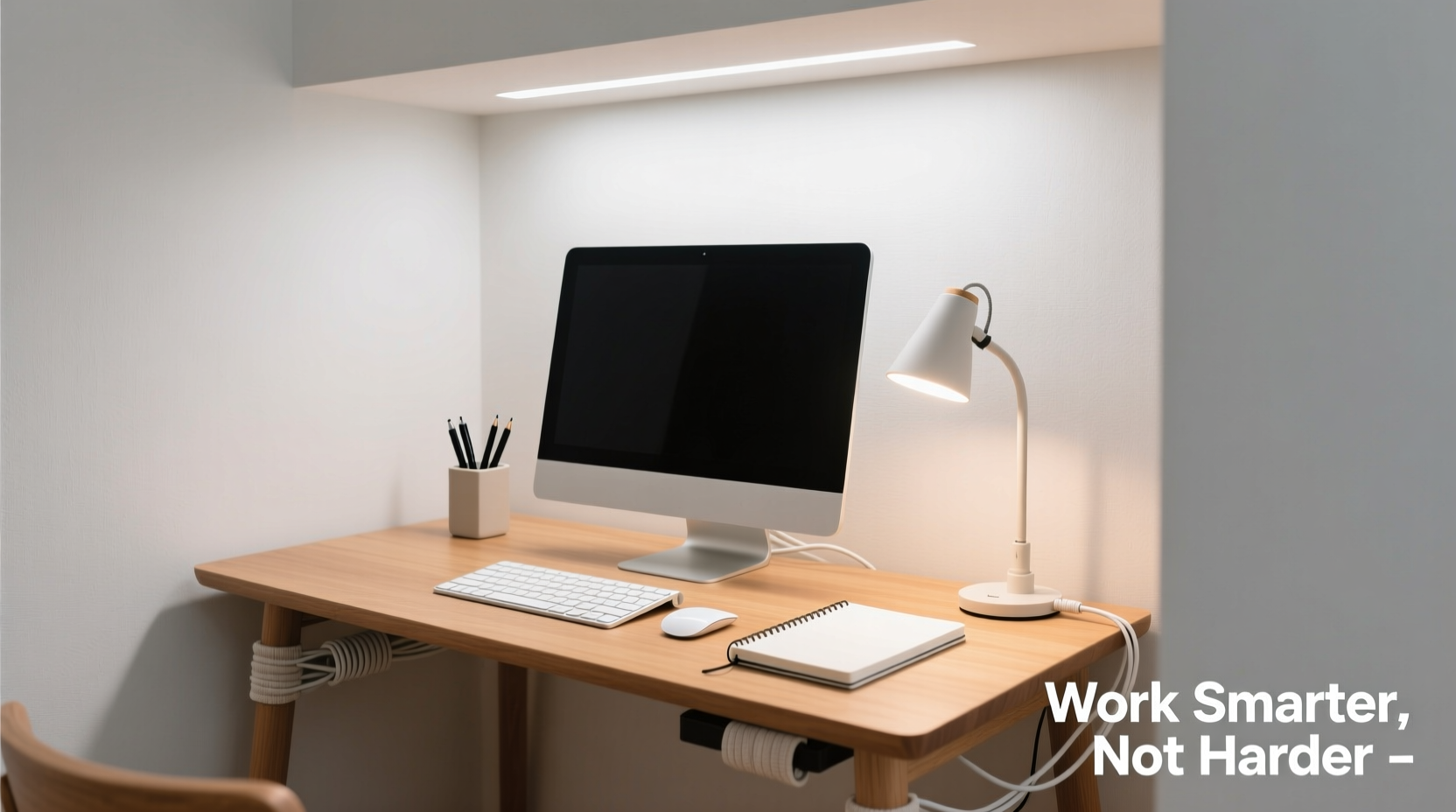
Minimalist design principles align perfectly with the constraints of small spaces. When every inch counts, excess furniture, decor, or cables become obstacles rather than assets. A minimalist approach focuses on three core tenets: functionality, simplicity, and sustainability. By curating only what supports your work, you reduce distractions and enhance concentration.
Studies show that cluttered environments increase cognitive load and stress levels. In contrast, clean, organized spaces improve task performance and emotional well-being. For remote workers, freelancers, or students operating from studio apartments or converted closets, adopting minimalism isn’t just aesthetic—it’s strategic.
“Minimalism in workspace design isn’t about having less; it’s about making room for more focus, creativity, and calm.” — Dr. Lena Torres, Environmental Psychologist
Essential Elements of a Minimalist Desk Setup
A successful minimalist desk doesn’t mean starting from scratch—it means refining what you already have. Focus on four foundational components:
- Desk Surface: Choose a simple, uncluttered surface with enough space for your primary device and one or two essential tools.
- Seating: Invest in an ergonomic chair that supports posture without dominating the room.
- Storage: Use hidden or vertical storage to keep supplies out of sight but within reach.
- Lighting: Incorporate layered lighting—ambient, task, and accent—to maintain energy and reduce eye strain.
Selecting the Right Desk for Limited Space
Not all desks are created equal when square footage is limited. Prioritize scale, shape, and adaptability.
| Desk Type | Best For | Space-Saving Feature | Consideration |
|---|---|---|---|
| Wall-Mounted Fold-Down | Tiny homes, alcoves | Folds up when not in use | Limited surface area |
| Corner Desk | Unused corners | Maximizes underused space | May limit movement |
| Nesting Table Set | Multipurpose rooms | Stacks when unused | Less stable for heavy equipment |
| Standing Desk (Compact) | Digital nomads, health-focused users | No permanent footprint | Higher cost |
| Console Table | Entryways, behind sofas | Sleek and narrow profile | Low depth may limit monitor placement |
For most small-space scenarios, a wall-mounted or corner desk offers the best balance of usability and space conservation. Look for models with built-in cable management or modest shelving to avoid adding extra furniture.
Smart Storage Solutions That Disappear
One of the biggest threats to minimalism is visible clutter. Even if your desk surface is clean, surrounding shelves overflowing with books, cords, and office supplies undermine the calming effect. The goal is “out of sight, out of mind”—but still accessible.
Vertical Storage Over Horizontal
When floor space is scarce, go upward. Wall-mounted shelves, pegboards, or magnetic strips keep essentials organized without consuming valuable real estate. A slim bookshelf beside the desk can hold reference materials, while drawer organizers underneath manage smaller items like paper clips or USB drives.
- Use adhesive hooks under the desk for headphones or charging cables.
- Install a pegboard with modular containers for frequently used tools.
- Choose furniture with hidden compartments—like ottomans with storage or desks with concealed drawers.
Step-by-Step: Building Your Minimalist Desk Setup
Follow this five-phase process to create a personalized, efficient workspace in under a weekend.
- Clear and Assess (Day 1 – Evening)
Remove everything from your current workspace. Wipe down surfaces. Sort items into categories: keep, donate, discard. Ask: “Have I used this in the last 30 days?” If not, reconsider its necessity. - Measure and Plan (Day 1 – Night)
Sketch your available space (in inches or cm). Note door swings, outlets, and natural light sources. Decide where the desk will go based on ergonomics—not convenience. - Choose Core Furniture (Day 2 – Morning)
Select a desk and chair that fit your dimensions and support good posture. Test seating height: feet flat on floor, elbows at 90 degrees when typing. - Integrate Tech and Cables (Day 2 – Afternoon)
Position monitors at eye level. Use adhesive cable clips or sleeves to bundle cords. Label each cable at both ends for easy troubleshooting. - Add Final Touches (Day 2 – Evening)
Include one plant for biophilic benefit, a single piece of art, or a warm-toned lamp. Avoid decorative overload—limit to three non-functional items maximum.
“People often underestimate how much cable chaos affects focus. Tangled wires signal disorder, even subconsciously.” — Raj Patel, Interior Designer & Wellness Space Consultant
Real Example: Transforming a Studio Apartment Nook
Sophie, a freelance copywriter living in a 400-square-foot Brooklyn studio, struggled with blurred boundaries between work and rest. Her laptop lived on the couch, leading to neck pain and inconsistent output. She repurposed a narrow alcove near her kitchen using a 36-inch white laminate wall-mounted desk and a foldable stool that tucks beneath when not in use.
To manage storage, she installed a slim magnetic board above the desk to hold paper clips, scissors, and notes with tiny magnets. All documents go into a lockable rolling cart tucked beside the fridge. Her only decor: a small succulent and a warm LED strip behind the monitor for evening ambiance.
Within two weeks, Sophie reported a 40% increase in focused work hours and improved sleep quality due to better spatial separation. “I finally feel like I clock in and clock out,” she said. “Even though my office is literally six square feet.”
Do’s and Don’ts of Minimalist Small-Space Design
| Do | Don't |
|---|---|
| Use multi-functional furniture (e.g., desk doubles as vanity) | Buy furniture before measuring your space |
| Invest in cord organizers early | Run cables across walkways or under rugs |
| Stick to a neutral color palette with one accent tone | Clutter surfaces with knickknacks or souvenirs |
| Go digital whenever possible (notes, receipts, manuals) | Print and store unnecessary documents |
| Review your setup monthly for inefficiencies | Set it and forget it—neglect maintenance |
FAQ: Common Questions About Minimalist Small Desks
Can a minimalist desk still accommodate dual monitors?
Yes, but only if planned carefully. Choose a desk at least 48 inches wide and mount monitors on a single arm bar to save surface space. Ensure cabling is routed neatly through grommets or behind panels.
How do I keep motivation in such a bare setup?
Minimalism doesn’t mean sterile. Add subtle inspiration: a framed quote in a thin black frame, a textured notebook cover, or a consistent scent via a small diffuser. The key is cohesion—everything should feel intentional, not random.
What if I need to share the space with another person or function?
Design for transformation. Use foldable, mobile, or convertible furniture. A desktop privacy screen on hinges can visually demarcate work mode. When done, fold the desk away or cover it with a decorative tray to signal “off-duty” status.
Checklist: Launch Your Minimalist Desk in One Weekend
- ☐ Measure your available space and sketch layout
- ☐ Declutter current workspace—discard, donate, digitize
- ☐ Select a compact, functional desk type (wall-mounted, corner, etc.)
- ☐ Choose an ergonomic chair or alternative seating
- ☐ Install cable management system (sleeves, clips, trays)
- ☐ Add vertical or hidden storage solutions
- ☐ Position lighting to reduce glare and eye fatigue
- ☐ Limit decor to 1–3 meaningful items
- ☐ Test workflow for comfort and accessibility
- ☐ Schedule monthly review to maintain order
Conclusion: Start Small, Think Big
A minimalist desk in a small space isn’t a compromise—it’s a catalyst. By stripping away excess, you make room for deeper focus, fewer distractions, and greater control over your environment. Productivity thrives not in spaciousness, but in clarity. Whether you’re converting a closet, utilizing a hallway nook, or reimagining a coffee table as a temporary command center, every decision guided by purpose compounds over time.
You don’t need a dedicated office to do meaningful work. You need a clear surface, a clear mind, and a commitment to simplicity. Begin today with one change: remove three unnecessary items from your desk. Notice the difference in how you feel. Then build from there.




 浙公网安备
33010002000092号
浙公网安备
33010002000092号 浙B2-20120091-4
Comments
No comments yet. Why don't you start the discussion?