
Gift-giving can be a minefield when the recipient values minimalism. For someone who intentionally avoids excess, a poorly chosen present—no matter how well-intentioned—can feel like an imposition. Clutter isn't just physical; it’s mental. A misplaced object becomes a silent demand for attention, storage, or maintenance. So how do you honor someone’s commitment to simplicity while still offering something meaningful?
The answer lies in redefining what a gift should be. Instead of focusing on objects, shift toward experiences, utility, sustainability, and intentionality. Minimalist gifts aren’t about cost or size—they’re about thoughtfulness, function, and alignment with the recipient’s lifestyle. The best minimalist presents are those that either disappear into daily life, serve a clear purpose, or create lasting memories without leaving a footprint.
Why Minimalists Resist Traditional Gifts
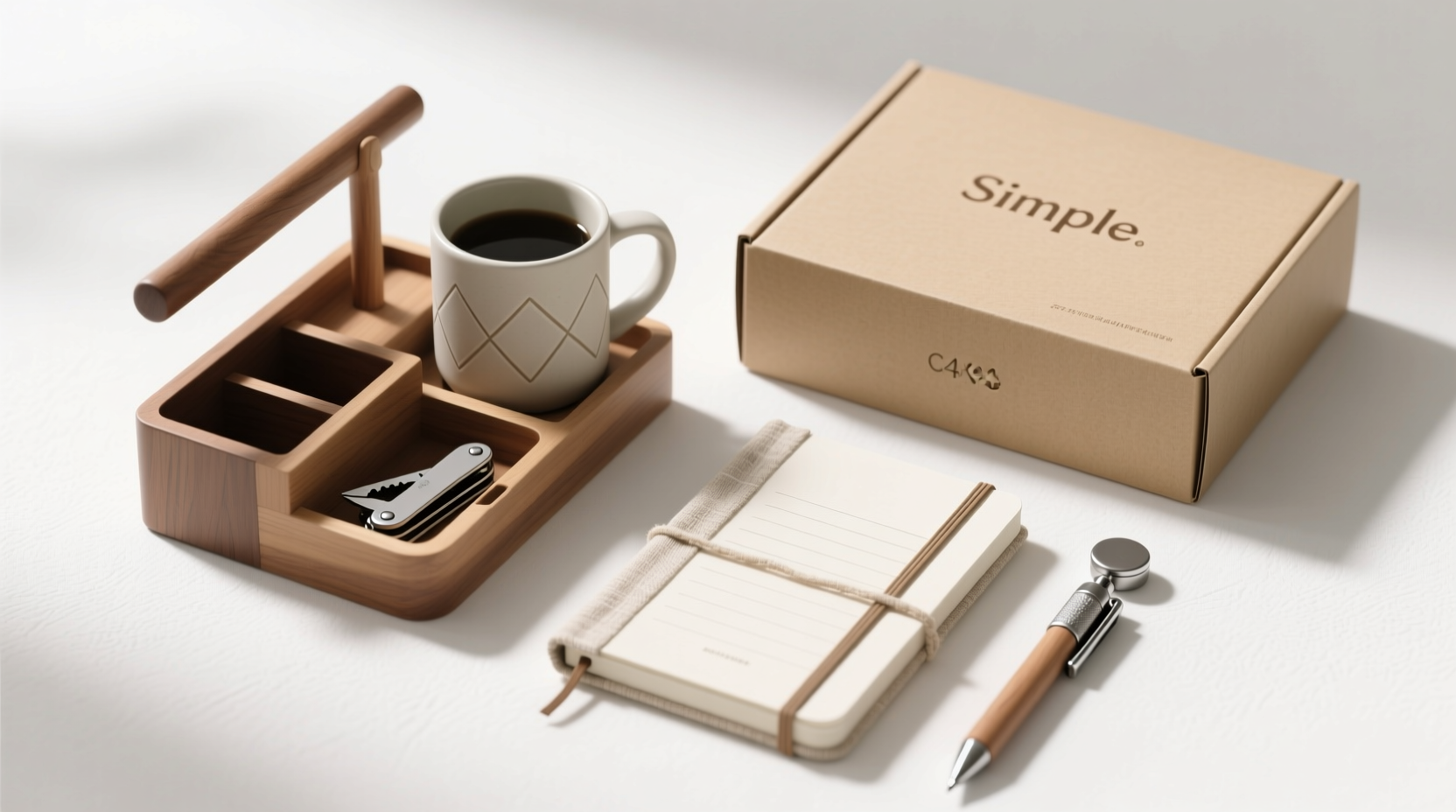
Minimalism isn’t just an aesthetic—it’s a philosophy rooted in mindfulness, intentionality, and freedom from excess. People who embrace this mindset often curate their environments carefully. They’ve likely spent time removing items that don’t add value, and they’re protective of the space they’ve reclaimed.
For them, receiving a gift that doesn’t align with their values can trigger subtle stress. It may sit unused, take up shelf space, or require maintenance. Worse, it might end up discarded—a quiet rejection of your gesture, even if unintended.
“Minimalism is the intentional promotion of what we value most and the removal of anything that distracts us from it.” — Joshua Fields Millburn, The Minimalists
This quote captures the essence of thoughtful gifting: every item should support, not sabotage, the recipient’s values. The goal isn’t to avoid giving altogether, but to choose wisely—to give only what enhances, never encumbers.
Principles of Thoughtful Minimalist Gifting
Before diving into specific ideas, it helps to understand the core principles behind minimalist gift selection:
- Utility over ornamentation: Prioritize usefulness. If it doesn’t solve a problem or improve a routine, reconsider.
- Sustainability: Choose materials and brands that prioritize longevity and environmental responsibility.
- Low maintenance: Avoid items that require cleaning, charging, or frequent replacement.
- Experiences over objects: Memories last longer than things. Consider gifting time, learning, or shared moments.
- Personalization through insight: The best gifts reflect deep understanding—not just “I know you like tea,” but “I know you prefer loose-leaf jasmine in a reusable tin.”
15 Practical Minimalist Gift Ideas
The following list focuses on real-world usability, low visual impact, and high personal relevance. These are not generic suggestions—they’re curated for people who value space, silence, and simplicity.
1. High-Quality Reusable Essentials
Items like a stainless steel water bottle, insulated coffee tumbler, or beeswax food wraps replace disposable versions and reduce waste. Choose neutral colors (matte black, sage green, soft gray) and durable brands like Klean Kanteen or Stasher.
2. Refillable Toiletry Bottles
Perfect for travelers or those simplifying bathroom cabinets. Opt for leak-proof silicone bottles in a matching set. Bonus: include a small bottle of organic lavender oil or unscented moisturizer to fill one.
3. A Single Purpose Tool
Think: a Japanese vegetable knife, ceramic pepper grinder, or precision pour-over kettle. These tools elevate daily rituals without adding complexity. They’re kept out because they’re used daily, not stored away.
4. Digital Detox Experience
Gift a weekend retreat focused on disconnection—forest bathing, silent meditation, or a digital detox workshop. Provide a printed voucher, then let the experience unfold.
5. Subscription to a Niche Service
Choose something that reduces effort, not adds noise. Examples: a meal kit with zero-waste packaging, a curated book rental service, or a meditation app subscription (like Calm or Headspace).
6. Customized Notebook or Journal
Only if they already journal. Select a slim, leather-bound notebook with unlined paper and emboss their initials. Paired with a single refillable fountain pen, it becomes a lifelong companion.
7. Indoor Plant (Low-Maintenance)
Not all plants are clutter. A slow-growing ZZ plant, snake plant, or air plant requires almost no care and purifies air. Present it in a simple ceramic pot—nothing ornamental.
8. Donation in Their Name
If they support a cause—reforestation, animal rights, housing equity—make a donation and send a card explaining the impact. No physical item, just meaning.
9. Skill-Based Workshop
Cooking classes, pottery, calligraphy, or woodworking. These gifts offer growth and memory without permanence. Choose small-group sessions to ensure intimacy and quality.
10. Noise-Canceling Earbuds (If Useful)
Only appropriate if they commute, work remotely, or live in a noisy area. Focus on compact design and long battery life. Brands like Sony or Apple AirPods Pro fit discreetly into routines.
11. Heirloom-Quality Kitchenware
A handmade wooden spoon, cast iron skillet, or linen tea towel. These items age beautifully and become part of daily rhythm. Avoid sets—choose one exceptional piece.
12. Personalized Scent Profile
Work with a natural perfumer to create a custom fragrance based on their preferences—earthy, citrusy, musky. Delivered in a reusable glass bottle, it’s intimate and lasting.
13. Access to Quiet Space
Gift a membership to a co-working lounge with quiet zones, a library pass, or access to a meditation pod service like Zenbooth. Ideal for urban dwellers craving calm.
14. Time-Saving Service
Hire a local cleaner for one deep-cleaning session, schedule a grocery delivery, or arrange dry cleaning pickup. These gifts restore time—the most precious resource.
15. Memory Capsule
A small box containing handwritten notes recalling shared moments, a playlist of meaningful songs, or a timeline of inside jokes. Stored in a drawer, it’s there when needed—never intrusive.
Do’s and Don’ts of Minimalist Gifting
| Do | Don’t |
|---|---|
| Give something they’ve mentioned needing | Surprise with decorative items “just because” |
| Choose multi-functional items | Gift single-use gadgets |
| Opt for timeless design over trends | Select flashy or novelty products |
| Packaging: use recycled paper or fabric wrap | Use excessive boxes, ribbons, or plastic |
| Include a handwritten note explaining your choice | Assume the gift speaks for itself |
Real Example: Sarah’s Birthday
Sarah lives in a 500-square-foot apartment and follows a strict “one in, one out” rule for possessions. Last year, her sister gave her a decorative figurine “to brighten the shelf.” It sat untouched for months before being donated. This year, her friend Alex took a different approach.
Knowing Sarah enjoys morning coffee and quiet reflection, Alex gifted her a hand-thrown ceramic mug from a local artisan, paired with a month’s supply of shade-grown, compostable coffee pods. The mug was functional, beautiful in its simplicity, and displayed proudly on her counter. After finishing the coffee, Sarah reused the pods for seed starters. No clutter, no guilt—just a ritual enhanced.
She later told Alex, “It felt like you saw me. Not just my space, but my pace.” That’s the power of minimalist gifting: it communicates respect.
Step-by-Step Guide to Choosing the Right Gift
- Observe their daily routine: What tools do they reach for? What frustrations do they mention? (e.g., “My keys always get lost.”)
- Identify a pain point: Look for inefficiencies—slow chargers, flimsy utensils, worn-out shoes.
- Research sustainable solutions: Find one high-quality option that solves the issue without introducing new problems.
- Verify compatibility: Ensure it fits their existing system (e.g., same brand for rechargeable batteries).
- Present with context: Include a note: “I noticed you were replacing your razor weekly—this safety model lasts years and reduces plastic waste.”
- Follow up lightly: Ask how it’s working, not to check up, but to show you care about usefulness, not just the act of giving.
“The best gifts are not things you give, but insights you show.” — Tynan, author of *Minimalism: Live a Meaningful Life*
Frequently Asked Questions
Isn’t a gift supposed to be a surprise?
Surprise doesn’t require randomness. The most surprising gifts are those that feel deeply seen. A perfectly timed, hyper-relevant gift can be more astonishing than a flashy but irrelevant one. Surprise comes from accuracy, not secrecy.
What if they already own everything they need?
Shift from ownership to access. Offer an experience: a private stargazing tour, a backstage look at a museum, or a guided nature walk. These leave no trace but linger in memory. Alternatively, contribute to a long-term goal—help fund a weeklong silent retreat or a language course.
Can I give multiple small items?
Only if they form a cohesive, usable set. For example, a bamboo cutlery set with a cloth pouch replaces disposable utensils. But five separate trinkets—even if “tiny”—still count as clutter. Unity matters more than quantity.
Final Checklist Before You Buy
- ☑ Does this serve a clear, regular purpose?
- ☑ Is it durable and repairable?
- ☑ Will it blend into their space, not dominate it?
- ☑ Can it be used within the next month?
- ☑ Would they choose this for themselves?
- ☑ Does it reduce waste, time, or effort?
- ☑ Is the packaging minimal and recyclable?
Making Minimalism Meaningful
Giving to a minimalist isn’t about restraint—it’s about refinement. It challenges us to move beyond convenience and consumerism, to listen more closely and observe more carefully. The process itself becomes a gift: one of attention, empathy, and presence.
In a world where more is constantly pushed as better, choosing less is an act of courage. And when your gift reflects that courage back to someone, it becomes more than an object or event—it becomes recognition. A quiet acknowledgment: *I see how you live. I honor your peace. I’m with you in it.*




 浙公网安备
33010002000092号
浙公网安备
33010002000092号 浙B2-20120091-4
Comments
No comments yet. Why don't you start the discussion?