
In an era where skincare and simplicity dominate beauty trends, the idea of achieving full-coverage makeup with only three products may sound like a myth. Yet, growing numbers of makeup artists, dermatologists, and everyday wearers are proving it’s not only possible—but often preferable. A minimalist makeup routine isn’t about sacrificing coverage or finish; it’s about strategic selection, skillful application, and understanding your skin’s needs. The result? A polished, natural-looking complexion that feels light, lasts all day, and reduces exposure to unnecessary chemicals and irritation.
The core philosophy behind minimalism in makeup is intentionality. Instead of layering foundation, concealer, powder, bronzer, blush, highlighter, and setting spray, you focus on multifunctional products that serve more than one purpose. This approach saves time, money, and cabinet space—while often improving skin health by reducing clogged pores and product buildup.
But can three products truly deliver what a full vanity once promised? The answer lies in choosing wisely, applying correctly, and redefining what “full coverage” means for modern beauty.
What Does “Full Coverage” Really Mean?
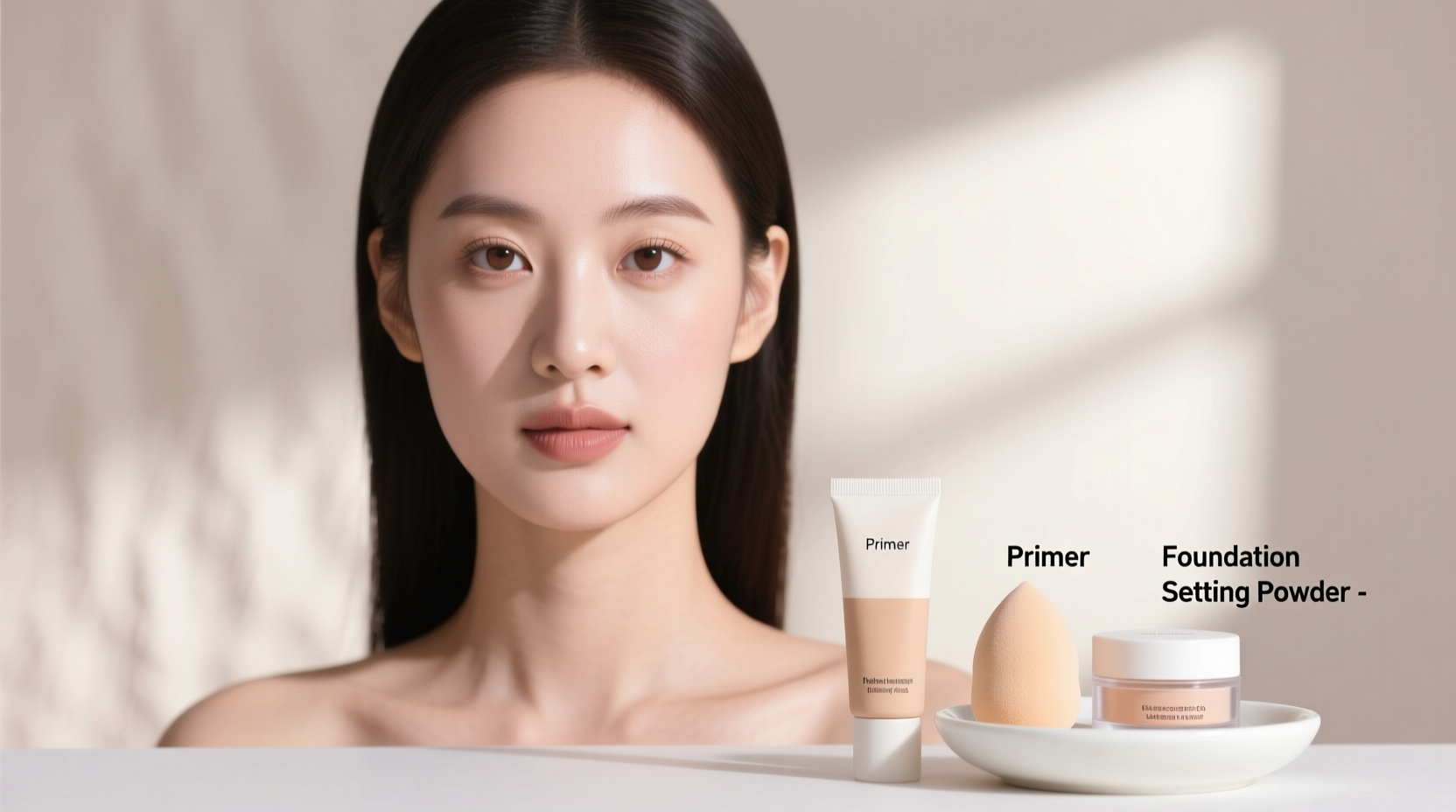
Before diving into product selection, it’s essential to clarify what “full coverage” entails. Traditionally, full coverage meant completely obscuring blemishes, redness, dark circles, and discoloration—creating a blank canvas. However, today’s interpretation is evolving. Modern full coverage emphasizes even tone, refined texture, and a healthy glow—not mask-like opacity.
As celebrity makeup artist Lila Torres explains:
“Full coverage doesn’t mean invisible pores or zero texture. It means confidence in your skin. You can have complete correction without looking airbrushed—and often, less product gives you more authenticity.” — Lila Torres, Celebrity Makeup Artist
This shift allows minimalist routines to shine. With high-performance formulas and targeted techniques, three well-chosen products can address redness, darkness, and uneven tone while preserving the skin’s natural character.
The Three-Product Framework: Strategy Over Quantity
A successful minimalist routine hinges on selecting products that multitask. Each item should fulfill multiple roles—correcting, enhancing, and protecting. The ideal trio typically includes:
- A tinted moisturizer or serum foundation with buildable coverage
- A hybrid concealer-highlighter for under eyes, blemishes, and luminosity
- A skin-perfecting powder or cream compact for setting and texture control
Each product must be chosen based on skin type, tone, and lifestyle. For example, someone with oily skin might opt for a matte-tint foundation and translucent setting powder, while dry skin benefits from dewy formulas and cream-based concealers.
Why Three Is the Magic Number
Three products strike the balance between efficiency and efficacy. Fewer than three often leaves gaps in coverage (e.g., no setting leads to shine or creasing). More than three increases complexity and risk of over-application. Three enables:
- Base coverage – even out overall tone
- Targeted correction – hide imperfections and brighten key areas
- Finishing and longevity – lock in makeup and refine texture
This framework mirrors professional techniques used on film sets and photo shoots, where precision beats volume.
Step-by-Step: Building Full Coverage with Just Three Products
Follow this timeline for a seamless, full-coverage minimalist routine. Allow five to seven minutes total.
- Prep Your Skin (1 minute)
Start with a clean, moisturized face. Apply sunscreen if not already included in your base product. Let absorb for 60 seconds. - Apply Tinted Moisturizer or Serum Foundation (2 minutes)
Using fingers, a sponge, or brush, apply a sheer layer across the face. Focus on areas of redness and discoloration. Build a second thin layer only where needed—cheeks, forehead, chin. Avoid heavy application on the neck. - Spot-Correct and Illuminate (2 minutes)
Use a creamy, pigmented concealer-highlighter hybrid. Dab under eyes in a triangle, blend gently. Apply directly onto blemishes or dark spots. Use a fingertip to warm and press into skin—do not rub. - Set Strategically (1–2 minutes)
Take a small amount of translucent or tinted powder. Focus on the T-zone, under-eye area, and any spot prone to creasing. Use a fluffy brush for a soft finish. Skip powder on dry zones to preserve radiance. - Final Blend (30 seconds)
Use a damp beauty sponge to lightly press all layers together. This melts edges, prevents separation, and boosts natural finish.
Choosing the Right Products: A Comparison Guide
Not all products are created equal. To maximize performance, compare key features before purchasing. The table below outlines ideal characteristics for each of the three essentials.
| Product Type | Key Features | Avoid If… |
|---|---|---|
| Tinted Moisturizer / Serum Foundation | SPF 30+, hydrating base, buildable pigment, non-comedogenic | You need extreme oil control or have severe hyperpigmentation |
| Concealer-Highlighter Hybrid | Creamy texture, color-correcting options, radiant finish | You prefer matte-only finishes or have very puffy under eyes |
| Skin-Perfecting Powder | Translucent or skin-tone matched, blurs pores, lightweight | Your skin is very dry or flaky without heavy prep |
When shopping, read ingredient lists. Avoid alcohol-heavy formulas, synthetic fragrances, and silicones if you’re acne-prone or sensitive. Prioritize brands that offer shade ranges inclusive of undertones—especially olive, deep, and neutral shades.
Real Example: Sarah’s Transition to Minimalist Makeup
Sarah, a 34-year-old project manager, used to spend 25 minutes every morning applying 10+ products. Her routine included liquid foundation, color corrector, concealer, setting powder, cream blush, liquid bronzer, and setting spray. Despite the effort, her makeup often looked cakey by noon, and she experienced frequent breakouts along her jawline.
After reading about minimalist beauty, she decided to test a three-product system for two weeks:
- Product 1: Ilia Super Serum Skin Tint SPF 40 (medium shade)
- Product 2: Kosas Revealer Concealer in 20 (with peach undertone)
- Product 3: Hourglass Ambient Lighting Powder in Diffused Light
She applied the serum tint with a sponge, used the concealer under eyes and on a hormonal pimple, and set only her forehead and nose. The first day, she worried it wasn’t enough. By day five, coworkers complimented her “glowing skin.” By day ten, her morning routine was down to six minutes, and her breakouts had cleared significantly.
“I realized I was covering up my skin because I thought I had to,” Sarah said. “Now I’m enhancing what’s already there. And people notice the difference—not the makeup, but me.”
Expert Tips for Maximizing Coverage
To get the most from just three products, follow these expert-backed strategies:
- Layer Thinly: Multiple sheer layers provide better coverage and longevity than one thick coat.
- Use the Right Tools: A damp sponge gives a more natural finish; a small brush offers precision for blemishes.
- Customize Shades: Mix foundation with a drop of concealer to match your exact tone.
- Press, Don’t Drag: Pressing products into the skin ensures adherence and prevents lifting.
- Blot Midday, Don’t Reapply: If shine appears, blot with tissue. Adding more product leads to buildup.
Checklist: Building Your Minimalist Routine
Follow this checklist to create your own effective three-product system:
- Assess your skin concerns: redness, dark spots, oiliness, dryness.
- Choose a base with skincare benefits (SPF, hyaluronic acid, niacinamide).
- Select a concealer that doubles as a highlighter (illuminating finish, corrects darkness).
- Pick a finishing powder that blurs without drying.
- Test the trio together on bare skin before committing.
- Practice the application sequence until it takes under 7 minutes.
- Evaluate after 7 days: Is coverage sufficient? Does skin look healthier?
Frequently Asked Questions
Can three products really cover acne or rosacea?
Yes—with technique. Use a green-correcting concealer under your base to neutralize redness. Layer the foundation gradually over inflamed areas. For active breakouts, spot-conceal after foundation with a small brush. While extreme cases may benefit from additional color correction, many find that a well-applied three-step method provides adequate coverage without irritation.
Won’t skipping powder make my makeup melt off?
Only if you're using the wrong formula. Many modern setting powders are designed to be weightless and sebum-absorbing without dulling the skin. Apply only where necessary—typically the T-zone. Alternatively, use a cream compact as both base and setter. These hybrid compacts contain binding agents that resist heat and humidity.
Is this routine suitable for mature skin?
Absolutely. In fact, minimalist routines are often better for aging skin. Heavy layers settle into fine lines and emphasize texture. A hydrating serum foundation, luminous concealer, and soft-focus powder create a youthful, plump appearance. Avoid matte powders and over-setting around the eyes.
Conclusion: Less Can Be More—Especially in Makeup
The minimalist makeup movement isn’t a trend—it’s a return to intentionality. Achieving full coverage with just three products challenges outdated notions that more equals better. Instead, it celebrates smart formulation, thoughtful application, and respect for the skin beneath.
By focusing on quality over quantity, you reduce irritation, save time, and often end up with a more flattering, natural finish. Whether you’re a busy parent, a skincare enthusiast, or simply tired of cluttered vanities, the three-product routine offers a sustainable, elegant solution.




 浙公网安备
33010002000092号
浙公网安备
33010002000092号 浙B2-20120091-4
Comments
No comments yet. Why don't you start the discussion?