
In a world saturated with serums, essences, acids, and miracle creams promising overnight transformations, skincare has become overwhelming. Many people apply ten or more products daily, yet still struggle with breakouts, dryness, or irritation. The truth is, more isn’t always better—especially when it comes to skin health. A minimalist skincare routine focuses on fewer, high-quality products that deliver real results while reducing stress, cost, and the risk of overloading your skin.
The philosophy behind minimalism in skincare isn’t about deprivation—it’s about intentionality. By identifying what your skin truly needs and eliminating redundant or potentially harmful steps, you create space for clarity, consistency, and long-term resilience. This approach is particularly beneficial for those with sensitive skin, busy lifestyles, or anyone feeling lost in the endless cycle of product experimentation.
Why Simplicity Works: The Science Behind Minimalist Skincare
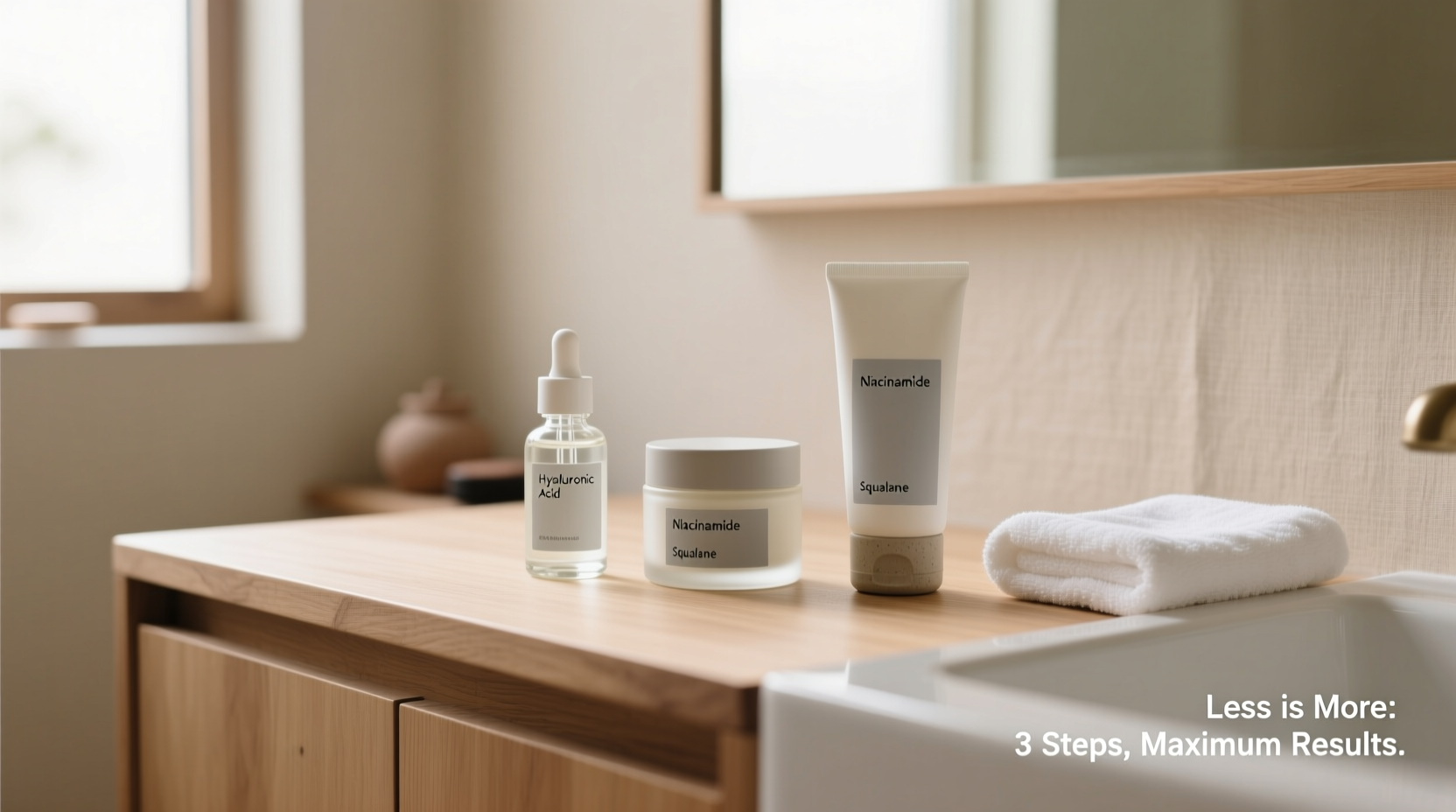
Skin is the body's largest organ and functions best when supported, not overloaded. Dermatologists increasingly warn against \"skincare maximalism\"—the habit of layering multiple active ingredients—which can compromise the skin barrier, trigger inflammation, and lead to conditions like contact dermatitis.
The skin barrier, composed of lipids and proteins, acts as a protective shield against environmental aggressors, pollution, and moisture loss. When disrupted by excessive exfoliation, incompatible ingredient combinations, or constant product switching, it becomes vulnerable. A minimalist routine prioritizes barrier integrity through gentle cleansing, hydration, and protection.
“Simplifying your routine allows your skin to recover and function optimally. Often, less intervention leads to better outcomes.” — Dr. Lena Torres, Board-Certified Dermatologist
Studies have shown that consistent use of a few well-formulated products yields superior results compared to erratic multi-step regimens. For example, a 2021 clinical trial published in *The Journal of Cosmetic Dermatology* found that participants using a three-product regimen (cleanser, moisturizer, sunscreen) saw comparable improvements in texture and tone after eight weeks versus those using seven or more products.
Building Your Core Routine: The Essential Steps
A minimalist skincare routine doesn't mean skipping care—it means focusing on foundational steps proven to deliver lasting benefits. Most experts agree that four key functions are non-negotiable: cleanse, hydrate, treat (if needed), and protect.
Step 1: Gentle Cleansing
Cleansing removes dirt, oil, and pollutants without stripping natural oils. Choose a mild, pH-balanced cleanser free from sulfates and alcohol. Avoid hot water, which can damage the lipid barrier.
Step 2: Hydration and Moisturizing
Hydration supports plump, resilient skin. Look for humectants like hyaluronic acid or glycerin in lightweight formulas. Follow with a moisturizer containing ceramides or squalane to seal in moisture and reinforce the barrier.
Step 3: Targeted Treatment (Only If Necessary)
This step is optional and should be based on specific concerns—acne, hyperpigmentation, aging—not trends. Use one active ingredient at a time (e.g., retinol, vitamin C, azelaic acid) and introduce slowly to prevent irritation.
Step 4: Daily Sun Protection
Sunscreen is the most effective anti-aging and preventive tool available. Apply broad-spectrum SPF 30+ every morning, regardless of weather. Skipping this step undermines all other efforts.
What to Remove: Common Redundancies in Skincare
Many popular products serve little functional purpose or duplicate existing benefits. Identifying these redundancies is key to streamlining effectively.
| Common Product | Purpose | Redundancy / Risk |
|---|---|---|
| Toner (alcohol-based) | Remove residue | Drying; disrupts pH balance |
| Facial Mists | Refresh skin | Often contain fragrances; no lasting benefit |
| Eye Cream | Target fine lines | Most face moisturizers work equally well |
| Multiple Serums | Treat various concerns | Ingredient conflicts; increased sensitivity |
| Overnight Masks (frequent use) | Intense hydration | Can clog pores; unnecessary with good moisturizer |
Instead of accumulating products, ask: Does this solve a problem I actually have? Is there scientific evidence supporting its efficacy? Can another product already in my routine do the same job?
Step-by-Step Guide to Transitioning to Minimalism
Switching to a minimalist routine requires thoughtful evaluation and gradual changes. Follow this five-phase timeline to ensure a smooth transition without compromising skin health.
- Phase 1: Audit Your Current Routine (Days 1–3)
Lay out all your skincare products. Note each item’s purpose, frequency of use, and how long you’ve used it. Identify duplicates (e.g., two exfoliating toners). - Phase 2: Pause and Reset (Days 4–7)
Simplify to just a gentle cleanser, fragrance-free moisturizer, and sunscreen. Stop all actives. This “skin fasting” period helps identify underlying sensitivities and resets reactivity. - Phase 3: Reintroduce Strategically (Weeks 2–3)
Add back one product at a time—only if it addresses a confirmed concern. Wait 5–7 days between additions. Track changes in texture, clarity, and comfort. - Phase 4: Evaluate Effectiveness (Week 4)
Assess what’s working. Eliminate anything causing redness, tightness, or breakouts. Keep only products delivering visible, consistent results. - Phase 5: Maintain and Adjust (Ongoing)
Stick to your core routine. Seasonal adjustments (e.g., richer moisturizer in winter) are acceptable but keep them intentional and temporary.
Real Example: From 12 Products to 4 in 30 Days
Sarah, a 34-year-old marketing executive, struggled with persistent redness and occasional breakouts despite using a 12-step Korean-inspired routine. Her shelf included double cleansers, essences, sheet masks, ampoules, and chemical exfoliants applied nearly every night.
After consulting a dermatologist, she simplified her regimen: morning routine became a milky cleanser, hyaluronic acid serum, moisturizer, and mineral sunscreen. At night, she used only the cleanser, moisturizer, and a low-concentration retinol twice weekly.
Within three weeks, Sarah noticed reduced flushing and improved texture. By week six, her skin was calmer, clearer, and required less makeup. She saved over $200 monthly and cut her routine time from 25 minutes to under 5.
“I thought I needed all those steps to look good,” she said. “But my skin never looked healthier than when I stopped trying so hard.”
Checklist: Building Your Minimalist Routine
- ☐ Assess current products and eliminate duplicates or irritants
- ☐ Choose a sulfate-free, non-stripping cleanser
- ☐ Select a moisturizer with barrier-supporting ingredients (ceramides, fatty acids)
- ☐ Use a daily broad-spectrum sunscreen (SPF 30 or higher)
- ☐ Add one targeted treatment only if needed (e.g., retinoid for aging, salicylic acid for acne)
- ☐ Patch test new products before full application
- ☐ Limit exfoliation to 1–2 times per week maximum
- ☐ Monitor skin response and adjust seasonally
- ☐ Store products away from heat and sunlight to preserve potency
- ☐ Stick to the routine for at least 6–8 weeks before judging results
FAQ: Common Questions About Minimalist Skincare
Can a minimalist routine really work for acne-prone skin?
Yes—often more effectively than complex regimens. Acne is frequently worsened by over-cleansing and harsh actives that trigger rebound oil production. A simple routine with a gentle cleanser, non-comedogenic moisturizer, and targeted treatment (like benzoyl peroxide or salicylic acid used sparingly) can regulate oil and reduce breakouts without irritation.
Won’t skipping serums and essences make my skin age faster?
Not necessarily. Anti-aging is primarily driven by sun protection, consistent hydration, and proven ingredients like retinoids and antioxidants. Instead of using multiple serums, choose one well-formulated product with stable vitamin C or niacinamide. Quality matters far more than quantity.
How do I know if a product is truly necessary?
Ask yourself: Does it address a diagnosed concern? Is there clinical evidence supporting its claims? Have I noticed a measurable improvement since using it? If the answer is no, consider removing it. Remember, maintenance is often more valuable than constant change.
Expert Insight: What Dermatologists Recommend
Leading dermatologists emphasize that the most effective routines are sustainable, gentle, and personalized—not elaborate or trendy.
“The patients with the healthiest skin aren’t using the most products. They’re using the right ones consistently.” — Dr. Arjun Patel, Clinical Dermatology Instructor at Columbia University
Experts also caution against influencer-driven trends like “10-layer hydration” or “double masking,” which lack scientific backing and may harm sensitive or compromised skin. Instead, they advocate for medical-grade ingredients used at appropriate concentrations and frequencies.
Conclusion: Less Can Be More—For Your Skin and Mind
A minimalist skincare routine is not a shortcut—it’s a smarter, science-backed approach to achieving healthy, balanced skin. By focusing on essentials, avoiding overstimulation, and choosing quality over quantity, you support your skin’s natural functions rather than fighting against them.
More importantly, simplification reduces decision fatigue, saves money, and creates space for mindfulness in self-care. When you stop chasing perfection with endless products, you often find better results—and greater peace.




 浙公网安备
33010002000092号
浙公网安备
33010002000092号 浙B2-20120091-4
Comments
No comments yet. Why don't you start the discussion?