
In modern homes and offices, surface clutter is more than just an eyesore—it’s a subtle drain on focus, productivity, and peace of mind. One of the most overlooked contributors to this chaos is the humble tissue box. Left exposed, it creates visual noise; tucked away, it becomes inconvenient. Enter two popular solutions: the minimalist tissue box and the multifunctional tissue box with a built-in phone holder. Both promise order, but they deliver it in fundamentally different ways. Which one actually solves your clutter problem better?
The answer isn’t universal. It depends on your lifestyle, spatial needs, and how you define “clutter.” Is it just about hiding things? Or is it about streamlining function and reducing the number of items competing for space? Let’s explore both options in depth.
Understanding the Clutter Problem at Its Core
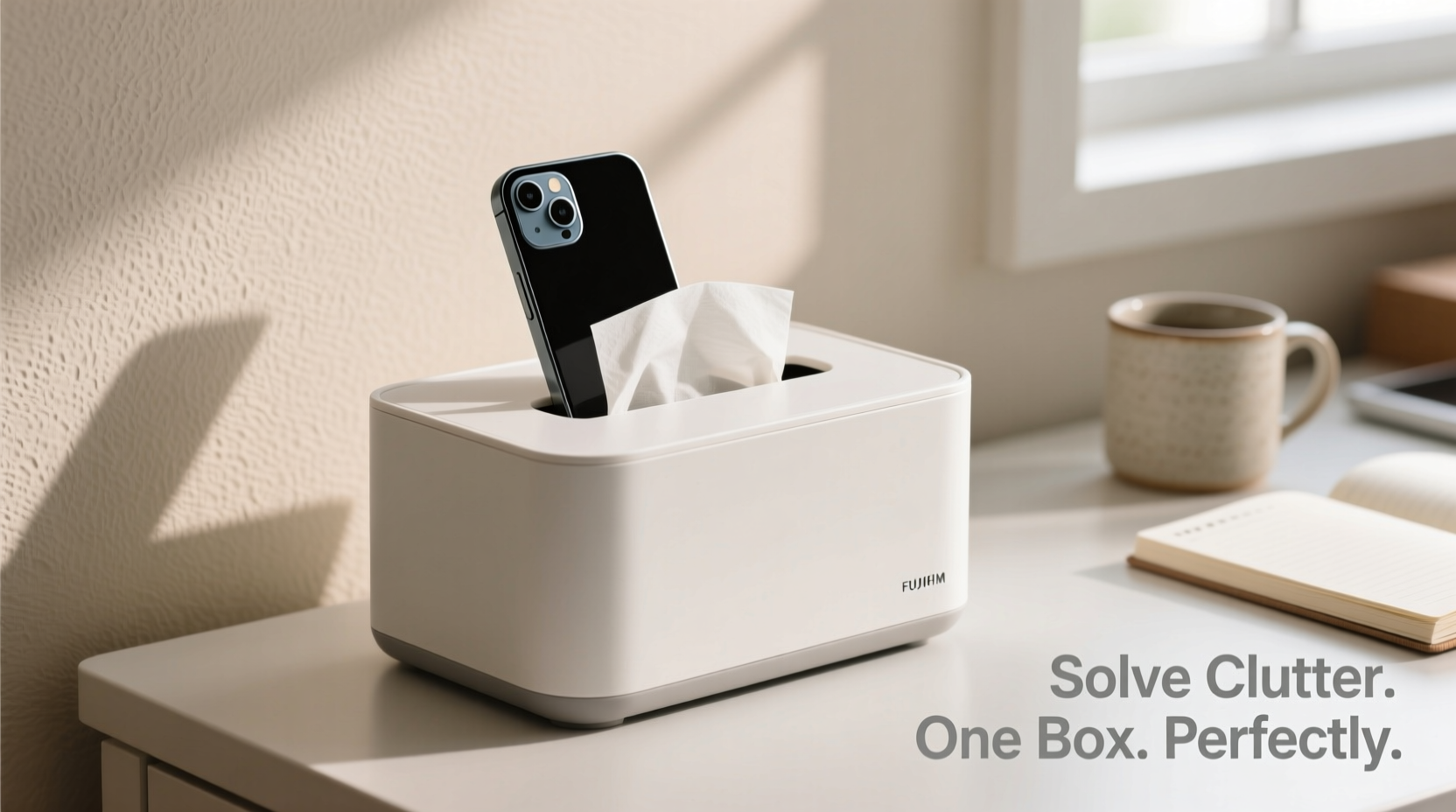
Clutter isn’t merely about having too many things. It’s about poor organization, inefficient design, and lack of intentionality. A tissue box, while necessary, often sits awkwardly on a nightstand, coffee table, or desk—adding bulk without blending in. The goal of any clutter-reducing solution should be twofold: enhance accessibility and improve aesthetics.
A minimalist tissue box focuses on the latter—clean lines, hidden storage, and visual harmony. In contrast, a tissue box with a phone holder prioritizes utility by combining two frequently used items into one compact unit. But does combining functions always reduce clutter? Sometimes, integration adds complexity rather than simplicity.
“True minimalism isn’t about owning less—it’s about designing systems where every object earns its place.” — Daniel Kim, Interior Systems Designer
Minimalist Tissue Boxes: Simplicity as a Strategy
Minimalist tissue boxes are designed to disappear into their surroundings. Made from materials like matte wood, ceramic, or powder-coated metal, they feature concealed openings and seamless lids. Their strength lies in restraint: they don’t add features, they remove distractions.
These boxes often require tissues to be loaded from the top or back, maintaining a flush front panel. Some models even fold flat when empty, making them easy to store or travel with. Because they don’t introduce new functions, they avoid the risk of becoming outdated or underused.
They work best in environments where calm and order are priorities—bedrooms, meditation spaces, or high-end living rooms. If your ideal space feels like a retreat from sensory overload, a minimalist tissue box supports that vision.
Tissue Box with Phone Holder: Function Over Form?
The tissue box with a phone holder emerged from the reality that people constantly reach for both tissues and phones—especially during cold season or late-night browsing. By integrating a phone dock, these units aim to reduce the number of separate objects on a surface.
Most models feature a slot or cradle behind the tissue dispenser, allowing smartphones to stand upright. This can be genuinely useful in bedrooms or home offices, where checking notifications before sleep or after waking is routine. No more fumbling for your phone beside a loose tissue box.
However, this hybrid design comes with trade-offs. The phone holder may not fit larger devices or cases. The structure can appear bulkier, defeating the purpose of decluttering. And if you charge your phone elsewhere or use a dedicated stand, the added feature becomes redundant—and now you have an object taking up space for two purposes, only one of which you use.
Real Example: Two Homes, Two Outcomes
In one case, Sarah, a freelance writer, installed a tissue box with phone holder on her bedside table. She uses her phone heavily at night for reading and journaling. Having both items in one unit reduced nightly clutter and eliminated the need for a separate phone stand. She reported feeling more organized and less distracted.
Conversely, James, who keeps his phone in another room overnight to improve sleep hygiene, found the same product awkward. The phone slot went unused, and the box’s angular design clashed with his otherwise serene bedroom aesthetic. He eventually replaced it with a simple wooden tissue box, which he said “finally made the space feel intentional again.”
Comparison: Key Factors That Matter
| Feature | Minimalist Tissue Box | Tissue Box with Phone Holder |
|---|---|---|
| Visual Impact | Low – blends into décor | Moderate to High – more visible due to dual structure |
| Functionality | Singular – tissue access only | Dual – tissue + phone docking |
| Space Efficiency | High – compact, clean footprint | Variable – saves one item but may take more space |
| Lifestyle Fit | Ideal for low-tech, calming spaces | Better for tech-integrated routines |
| Longevity | High – timeless design | Moderate – dependent on phone trends and usage |
How to Choose Based on Your Environment
The decision shouldn’t be based on trendiness, but on actual behavior. Ask yourself:
- Do I frequently use my phone near where I keep tissues?
- Is my nightstand or desk already crowded?
- Do I value visual calm over multi-function gadgets?
- Am I likely to change my charging or phone placement habits?
If you often use your phone in bed or on the couch and dislike multiple small items scattered around, the phone-holder model could streamline your space. But if you prioritize tranquility, symmetry, and long-term usability, the minimalist option is likely superior.
Actionable Checklist: Choosing the Right Solution
- Observe your current tissue and phone usage patterns for three days.
- Measure the available surface space where the box will go.
- Evaluate the aesthetic of the room—does it lean toward minimal or functional?
- Test whether you actually need a phone stand in that location.
- Select a material (wood, metal, fabric) that complements existing décor.
- Check user reviews for durability and ease of refilling.
Expert Insight: Designing for Behavior, Not Just Objects
Interior designers increasingly emphasize behavioral alignment when recommending organizational tools. A product might look clever, but if it doesn’t match how you live, it becomes another piece of clutter.
“The most effective clutter solutions aren’t the flashiest—they’re the ones that quietly support your daily rhythm without demanding attention.” — Lena Patel, Sustainable Living Consultant
This principle favors the minimalist tissue box for most users. It doesn’t assume how you’ll behave; it simply improves the experience of an essential item. The phone-holder version, while innovative, makes assumptions about tech use that don’t hold true across households.
Frequently Asked Questions
Can a phone-holder tissue box damage my phone?
Not typically, as long as the holder has soft lining and secure grip. However, if the box is placed near liquids or in high-traffic areas, accidental knocks could lead to drops. Always ensure stability.
Are minimalist tissue boxes harder to refill?
Some models require lifting the top or sliding panels, which can be slightly slower than open-top boxes. However, most premium designs balance aesthetics with practicality, allowing quick reloads without compromising appearance.
Which option is better for small apartments?
It depends on your habits. In tight spaces, multifunctional furniture wins—but only if both functions are regularly used. If you rarely use your phone near the tissue box, a compact minimalist design frees up more usable space.
Final Recommendation: Less Is Often More
After evaluating functionality, design longevity, and real-world usability, the minimalist tissue box emerges as the more universally effective solution for reducing clutter. It addresses the root issue—visual and spatial disorder—without introducing new complications. It respects the principle that fewer decisions, fewer elements, and cleaner lines lead to calmer environments.
The tissue box with a phone holder has merit in specific scenarios, particularly for tech-reliant individuals in multipurpose rooms. But for most people seeking genuine clutter reduction, simplicity outperforms integration.




 浙公网安备
33010002000092号
浙公网安备
33010002000092号 浙B2-20120091-4
Comments
No comments yet. Why don't you start the discussion?