
In a world where personal accessories double as identity markers, the humble keychain has evolved from a functional tool into a statement piece. Once purely utilitarian, today’s keychains reflect everything from personality to lifestyle. The debate between minimalist and decorative styles isn’t just aesthetic—it’s cultural, psychological, and increasingly commercial. As brands and consumers alike navigate this divide, data reveals a shifting landscape of preference. So, which keychain style is actually winning in the marketplace?
The Rise of the Keychain as a Lifestyle Accessory
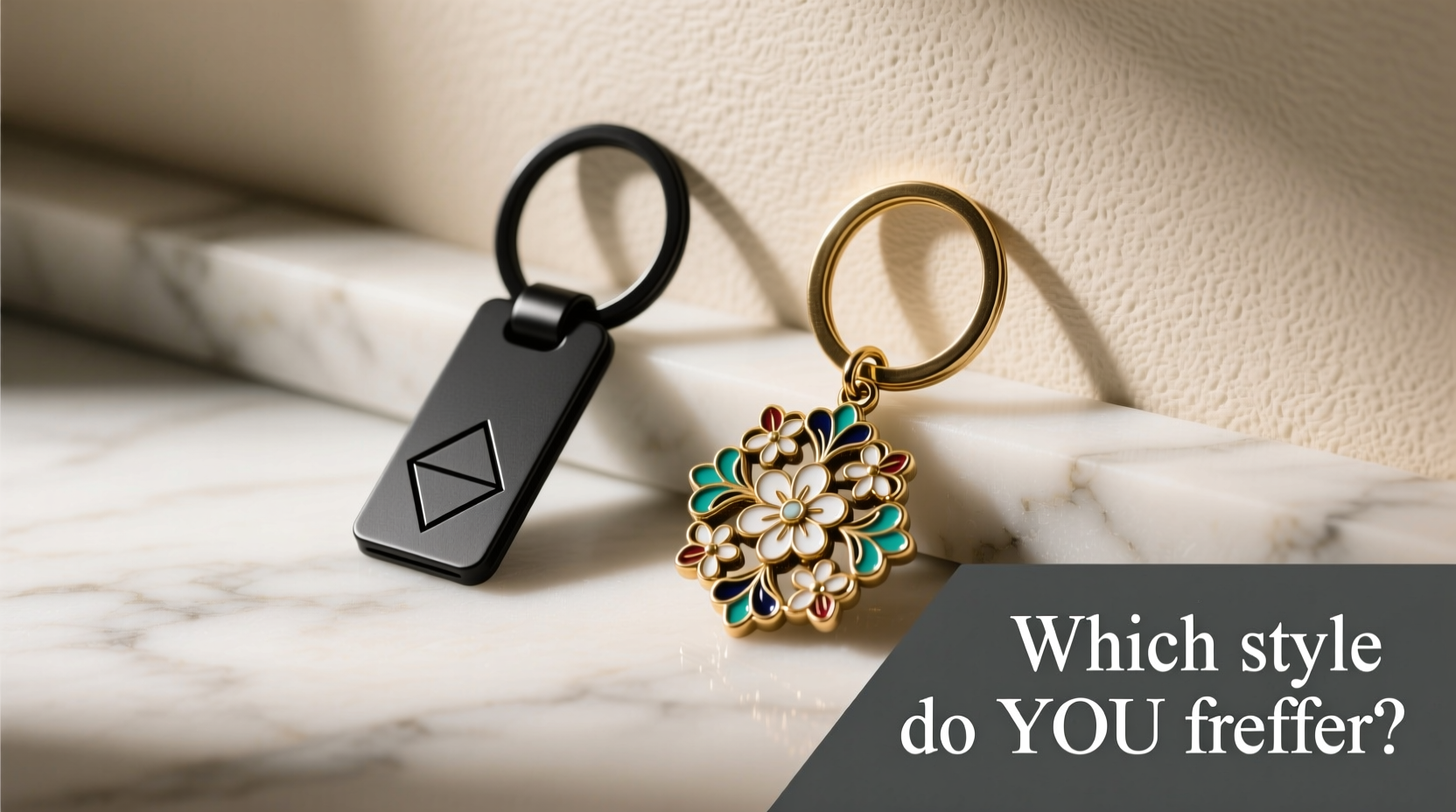
Gone are the days when keychains were limited to a simple metal ring or a branded promotional giveaway. Today, they appear on social media feeds, in curated lifestyle shots, and even as collectible items. This transformation mirrors broader consumer trends: the desire for personalization, emotional connection, and subtle self-expression.
According to market research firm Statista, the global keychain market was valued at over $3.5 billion in 2023, with an annual growth rate of 6.2%. A significant portion of this growth stems from premium and design-focused segments—keychains that go beyond utility to serve as fashion complements or sentimental keepsakes.
This surge in demand has intensified the contrast between two dominant design philosophies: minimalism and decoration.
Minimalist Keychains: Less Is More (and More Popular Than You Think)
Minimalist keychains emphasize clean lines, neutral colors, and compact forms. Typically made from materials like titanium, aluminum, leather, or brushed steel, these designs prioritize function without sacrificing elegance. They appeal to users who value simplicity, durability, and discretion.
Brands like Nite Ize, KeySmart, and Framus have capitalized on this trend by offering sleek organizers that consolidate keys into slim, pocket-friendly formats. These products often highlight features such as:
- Rust-resistant materials
- Ergonomic shapes
- Weight reduction (often under 2 oz)
- Modular attachment systems
A 2023 survey conducted by Consumer Trends Lab found that 58% of respondents aged 25–40 preferred minimalist keychains for daily use. The reasoning? “They don’t clunk in my pocket,” said one participant, “and they look professional when I pull them out at meetings.”
Decorative Keychains: Bold, Personal, and Emotionally Driven
On the opposite end of the spectrum, decorative keychains embrace color, charm, and individuality. From enamel pins and plush toys to LED-lit fobs and custom-engraved pendants, these accessories are designed to be seen. They often reflect fandoms, travel memories, humor, or brand loyalty.
Social media platforms like TikTok and Instagram have amplified their popularity. Hashtags such as #KeychainCollection and #CuteKeychains have amassed billions of views, with users showcasing elaborate setups featuring rotating seasonal themes, anime figures, or handmade crafts.
Notably, younger demographics—especially Gen Z—are driving this trend. In a 2024 report by Trendalytics, decorative keychains accounted for 72% of keychain-related searches among users under 24. The data suggests that for many young consumers, a keychain isn’t just an accessory; it’s part of a larger identity narrative.
“Today’s teens treat keychains like digital avatars—they curate them to express mood, affiliation, and aesthetics.” — Dr. Lena Torres, Cultural Anthropologist at NYU
Comparing Market Demand: A Side-by-Side Analysis
| Feature | Minimalist Keychains | Decorative Keychains |
|---|---|---|
| Primary Audience | 25–45, urban professionals | 13–24, students, creatives |
| Average Price Point | $15–$45 | $5–$20 |
| Top Materials | Titanium, aluminum, leather | Acrylic, silicone, resin, fabric |
| Best-Selling Platforms | Amazon, REI, direct brand sites | Etsy, TikTok Shop, eBay |
| Motivation | Functionality, durability, discretion | Self-expression, fun, collectibility |
| Return Rate | Low (~3%) | Moderate (~9%) |
The table highlights a crucial insight: while decorative keychains dominate in volume and visibility, minimalist options command higher average prices and stronger customer retention. This indicates a split in consumer intent—decorative purchases are often impulsive or trend-driven, whereas minimalist buys are considered investments in long-term utility.
Real-World Example: How One Brand Succeeded by Bridging Both Worlds
Take the case of Tokyo-based brand *Link & Loop*, which launched in 2021 with a hybrid approach. Their core product line features modular titanium key organizers (minimalist), but they also offer interchangeable decorative caps made from recycled acrylic in vibrant patterns.
Customers can switch between a sleek black finish for work and a rainbow holographic cap for weekend outings. The strategy paid off: within two years, Link & Loop grew to $4.2 million in annual revenue, with 63% of buyers purchasing multiple cap sets.
“We didn’t want to force a choice,” says founder Mika Tanaka. “People aren’t just one thing. Sometimes you want to be invisible. Other times, you want to sparkle.”
Step-by-Step Guide: Choosing the Right Style for Your Needs
Selecting between minimalist and decorative keychains shouldn’t be arbitrary. Consider your lifestyle, values, and usage patterns. Follow this practical guide:
- Assess your daily routine: Do you commute, attend formal meetings, or work in a field where bulky items are impractical? Minimalist may suit you better.
- Evaluate your emotional connection: Do you enjoy collecting, personalizing, or expressing moods through accessories? Decorative styles offer greater creative freedom.
- Consider longevity: Ask how long you plan to keep the item. Minimalist designs typically last longer due to robust materials.
- Check compatibility: Will the keychain fit your bag, pocket, or car key system? Oversized charms may interfere with smart key fobs.
- Test a hybrid model: Try a modular system that allows style switching—best of both worlds.
Expert Insight: What Designers Are Seeing on the Ground
Fashion accessory designer Julian Reed, whose clients include major luggage and tech brands, observes a growing convergence.
“The clean lines of minimalism are here to stay, but consumers now expect ‘quiet personality’—a small pop of color, a hidden engraving, a textured grip. It’s not about going full maximalist; it’s about meaningful detail.” — Julian Reed, Industrial Designer
This shift suggests that the future lies not in choosing one extreme over the other, but in intelligent blending—functional foundations with customizable flair.
Frequently Asked Questions
Are minimalist keychains more durable than decorative ones?
Generally, yes. Minimalist models often use aerospace-grade metals and are engineered for wear resistance. Decorative pieces, especially those with glued components or soft materials, may degrade faster with heavy use.
Do decorative keychains damage car key fobs?
Potentially. Heavy or dangling charms can stress the fob’s internal circuitry or casing over time, especially if jostled frequently. Experts recommend lightweight attachments or using a separate ring.
Can I mix minimalist and decorative elements?
Absolutely. Many modern key systems support layered design—use a compact organizer as your base and attach one small decorative charm for personality without clutter.
Final Verdict: Which Style Are People Actually Buying?
The answer isn't singular. Sales data, user behavior, and cultural trends reveal a bifurcated market:
- Minimalist keychains dominate in per-unit revenue, repeat purchases, and professional settings. They’re bought less frequently but kept longer and valued more.
- Decorative keychains lead in total units sold, social engagement, and youth appeal. They’re lower-cost, trend-responsive, and emotionally resonant.
If measured by sheer volume, decorative styles are purchased more often—especially online and among younger audiences. But in terms of long-term investment and cross-demographic staying power, minimalist designs hold strong ground.
The most telling trend? Consumers aren’t choosing one forever. They own both. A minimalist organizer for work, a whimsical charm for weekends. The keychain, once overlooked, has become a dynamic extension of personal rhythm.
Conclusion: Find Your Balance and Make It Yours
Whether you lean toward sleek functionality or joyful ornamentation, the best keychain is the one that aligns with your life—not someone else’s aesthetic. The market rewards both extremes, but the most satisfied users find a middle path: a foundation of quality, enhanced by intentional detail.
Don’t just follow trends. Reflect on how you move through your day, what brings you joy, and what you’re willing to carry—literally and symbolically. Then choose accordingly.




 浙公网安备
33010002000092号
浙公网安备
33010002000092号 浙B2-20120091-4
Comments
No comments yet. Why don't you start the discussion?