
For decades, men have tucked thick bi-fold wallets into their back pockets without a second thought. But as lower back and hip discomfort becomes increasingly common—even among younger, active individuals—attention has turned to an unlikely culprit: the everyday wallet. With the rise of minimalist wallets, many are asking whether switching from a traditional bi-fold to a slimmer alternative can genuinely alleviate chronic pain. The answer isn’t just anecdotal; it’s rooted in biomechanics, posture science, and growing clinical awareness.
The debate isn’t merely about convenience or aesthetics. It's about how a small object, carried for 8–12 hours daily, might be disrupting spinal alignment, compressing nerves, and contributing to long-term musculoskeletal issues. This article examines the physiological impact of wallet placement, compares minimalist and bi-fold designs, and evaluates whether downsizing truly makes a difference in reducing back and hip pain.
The Problem with Back-Pocket Wallets
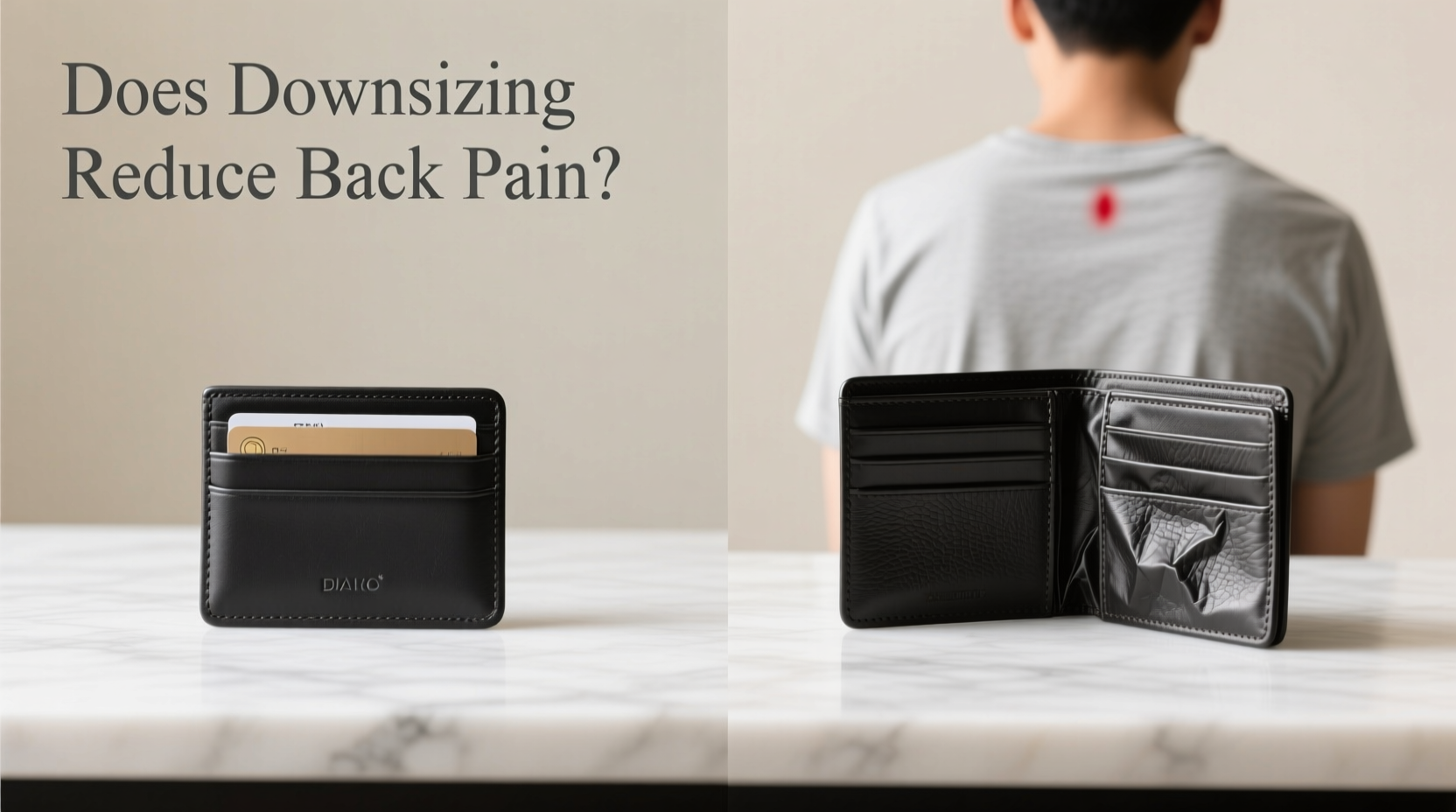
Sitting on a wallet may seem harmless, but when repeated day after day, it creates an asymmetrical pelvic tilt. When you sit with a thick wallet in your back pocket, especially on one side, your pelvis shifts out of neutral alignment. One side is elevated slightly, forcing the spine to compensate by curving laterally—a condition known as functional scoliosis. Over time, this misalignment stresses the lumbar vertebrae, tightens gluteal muscles, and irritates the sciatic nerve.
Dr. Alan Hirsch, a neurologist specializing in headache and pain disorders, explains:
“Wallets in the back pocket create a pelvic obliquity that alters gait and sitting mechanics. The body adapts—often poorly—and those adaptations lead to myofascial pain, piriformis syndrome, and even referred leg pain.”
This isn’t theoretical. A 2003 study published in *The Journal of the Canadian Chiropractic Association* found that subjects who removed their wallets from their back pockets experienced significant improvements in pelvic symmetry and reductions in low back pain within just two weeks. Another clinical observation noted that patients diagnosed with piriformis syndrome—where the sciatic nerve is compressed by the piriformis muscle—often saw symptom relief after eliminating wallet-induced pressure.
Minimalist Wallet vs Bi-Fold: A Structural Breakdown
To understand how wallet design affects posture, it helps to compare the physical characteristics of each type:
| Feature | Traditional Bi-Fold Wallet | Minimalist Wallet |
|---|---|---|
| Average Thickness | 0.75 – 1.2 inches (when full) | 0.2 – 0.4 inches |
| Card Capacity | 6–12 cards + cash, receipts, photos | 4–6 cards (some with RFID blocking) |
| Material | Leather, often bulky stitching | Titanium, aluminum, carbon fiber, or ultra-thin leather |
| Weight (average) | 6–9 oz | 1.5–3 oz |
| Common Pocket Placement | Back pocket (left or right) | Front pocket, jacket, or bag |
| Impact on Sitting Posture | Creates uneven pelvic tilt | Neutral or minimal disruption |
The data shows a clear disparity: bi-fold wallets are significantly thicker and heavier. When placed in the back pocket, they act like a wedge, lifting one side of the pelvis by up to half an inch. That may sound negligible, but in biomechanical terms, even a 3–5 mm imbalance can trigger compensatory changes in spinal curvature, muscle tension, and joint loading.
Real-World Impact: A Case Study
Take Mark T., a 38-year-old software developer from Portland, Oregon. For over a decade, Mark carried a full-sized bi-fold wallet stuffed with credit cards, loyalty programs, cash, and old receipts. He began experiencing persistent right-sided lower back pain, which radiated down his leg during long coding sessions. After multiple visits to a chiropractor and an MRI that showed no disc herniation, his therapist asked one simple question: “Where do you keep your wallet?”
Mark always kept it in his right back pocket. The therapist observed a visible pelvic tilt during a posture assessment. He was instructed to stop carrying the wallet in his back pocket for four weeks and switch to a slim titanium cardholder worn in his front pocket. Within ten days, Mark reported reduced discomfort. By week three, the radiating pain had disappeared. At his follow-up, the therapist noted improved pelvic symmetry and greater range of motion in hip extension.
Mark’s experience isn’t unique. Physical therapists across the U.S. and UK now routinely screen for “wallet-related back pain” during initial assessments for lower back and hip complaints. Many clinics even display posters titled “Is Your Wallet Causing Your Pain?”
How to Transition: A Step-by-Step Guide
Moving from a bi-fold to a minimalist wallet isn’t just about buying new gear—it’s a behavioral shift. Here’s how to make the transition effectively while minimizing lifestyle disruption:
- Assess your current contents: Empty your wallet completely. Sort items into categories: essential (ID, primary cards), occasional (library card, gym pass), and obsolete (expired coupons, old business cards).
- Digitize what you can: Use mobile wallets (Apple Pay, Google Pay) for frequent transactions. Store digital copies of IDs and insurance cards in secure cloud storage.
- Choose the right minimalist design: Consider materials, card access speed, and security features. Aluminum sleeves offer durability; carbon fiber is lighter. Some models include quick-scan mechanisms.
- Re-train your habits: Start carrying the new wallet in your front pocket or jacket. This reduces temptation to revert to the back pocket. It also improves safety—front-pocket wallets are harder to lose or steal.
- Monitor your body: For the first two weeks, pay attention to sitting comfort, hip balance, and any reduction in stiffness. Keep a brief journal of pain levels (scale 1–10).
- Optimize your seating: Pair wallet changes with ergonomic adjustments—use a lumbar support cushion, take standing breaks every 30 minutes, and avoid prolonged static sitting.
Expert Insight: What Medical Professionals Say
Orthopedic specialists and physical therapists increasingly recognize wallet-induced postural dysfunction as a modifiable risk factor. Dr. Lena Cho, a physical medicine and rehabilitation physician at Johns Hopkins, states:
“We see patients all the time with unilateral sacroiliac joint strain caused by chronic wallet sitting. It’s a low-cost fix with high-impact results. Removing the wallet from the back pocket is often the first line of treatment I recommend—before imaging or medication.”
Similarly, the American Chiropractic Association includes “wallet posture” in its patient education materials, advising members to counsel patients on proper carry methods. Their guidelines emphasize that even short-term exposure—such as driving with a wallet in the back pocket—can contribute to cumulative strain.
Checklist: Is Your Wallet Hurting You?
Use this checklist to evaluate whether your wallet could be contributing to back or hip pain:
- ✅ Do you carry your wallet in your back pocket daily?
- ✅ Is your wallet thicker than 0.5 inches when fully loaded?
- ✅ Do you notice one hip sits higher than the other when seated?
- ✅ Do you experience stiffness or pain on one side of your lower back?
- ✅ Does the pain improve when you remove your wallet while sitting?
- ✅ Do you lean to one side when standing or walking?
- ✅ Have you been diagnosed with piriformis syndrome or SI joint dysfunction?
If you answered “yes” to three or more, your wallet may be a contributing factor. Consider making a change.
Frequently Asked Questions
Can a thin wallet still cause problems if kept in the back pocket?
Even slim wallets can create issues if carried consistently in the back pocket, though the risk is significantly lower. The key is symmetry. Any object that elevates one side of the pelvis during sitting can lead to imbalances over time. The safest practice is to avoid the back pocket entirely and use a front pocket, belt holster, or bag instead.
Are front-pocket wallets less secure?
Many believe front pockets are easier to pickpocket, but modern minimalist wallets are designed with security in mind. Features like RFID-blocking shields, locking mechanisms, and snug fits reduce theft risk. Additionally, because front-pocket wallets are more noticeable, you’re more likely to notice if someone attempts access. Most users report fewer lost wallets due to increased awareness.
Will switching wallets eliminate my back pain completely?
Not necessarily. While removing a wallet from the back pocket can resolve or significantly reduce pain caused by pelvic imbalance, chronic back pain often has multiple causes—poor ergonomics, weak core muscles, sedentary lifestyle, or prior injury. Wallet modification should be part of a broader strategy that includes movement, stretching, and professional evaluation if symptoms persist.
Conclusion: Small Change, Meaningful Results
Downsizing from a bi-fold to a minimalist wallet isn’t just a trend—it’s a practical intervention with real health implications. The evidence from medical professionals, biomechanical research, and user experiences supports a clear conclusion: reducing bulk in the back pocket can alleviate pelvic tilt, decrease nerve compression, and improve overall posture. For many, the result is measurable relief from chronic back and hip pain.
The transition requires minimal investment—both financially and behaviorally—but the payoff can be substantial. Whether you're dealing with nagging discomfort or simply want to optimize your daily habits, rethinking your wallet is a surprisingly effective starting point. Your spine doesn’t need luxury leather or extra cards. It needs balance, symmetry, and space to function as intended.




 浙公网安备
33010002000092号
浙公网安备
33010002000092号 浙B2-20120091-4
Comments
No comments yet. Why don't you start the discussion?