
In an age where convenience and efficiency define daily routines, the humble wallet has undergone a quiet revolution. No longer just a bulky leather pouch stuffed with receipts and forgotten loyalty cards, today’s wallets are designed with purpose—slim profiles, RFID protection, and smart organization. The debate between minimalist wallets and traditional bi-fold designs centers on one key question: which keeps your cards secure while eliminating unnecessary bulk? For professionals, travelers, and urban commuters alike, the answer isn’t always obvious. It depends on lifestyle, security needs, and personal preference.
Both minimalist and bi-fold wallets aim to streamline your carry, but they do so in fundamentally different ways. One prioritizes radical simplicity; the other offers familiar functionality in a refined package. Understanding the strengths and trade-offs of each helps you make an informed decision—one that balances safety, accessibility, and comfort.
The Evolution of Wallet Design
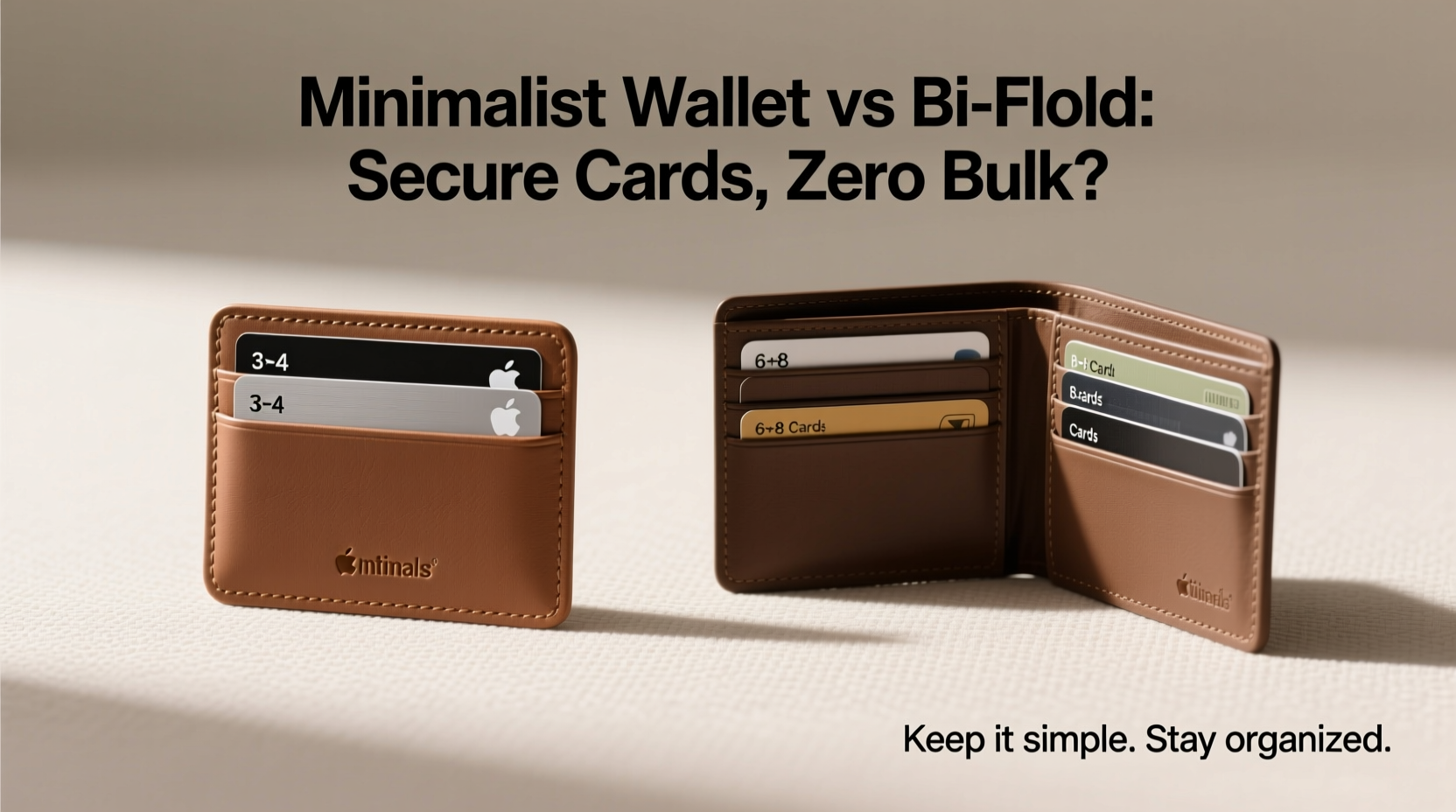
Wallets have evolved from simple coin purses to multifunctional accessories. In the 20th century, the bi-fold became the standard—a compact, foldable design that could hold cash, IDs, and a few credit cards. Its popularity stemmed from practicality: it fit easily into back pockets, offered multiple compartments, and felt substantial enough to convey reliability.
But as digital payments rose and card reliance grew, users began carrying more plastic than cash. This shift exposed the inefficiency of traditional wallets—overstuffed, thick, and prone to wear. Enter the minimalist wallet: a sleek, often metal or carbon fiber alternative designed to hold only essentials—typically 4 to 6 cards and folded cash. These emerged from tech-forward communities and ergonomic design circles, appealing to those who valued function over formality.
Today, both styles coexist, each serving distinct user needs. Minimalist wallets cater to those seeking a near-pocketless experience, while modern bi-folds have adapted with slimmer materials and better internal organization to reduce bulk without sacrificing capacity.
Security: How Well Do They Protect Your Cards?
Card security involves two main concerns: physical protection and digital safeguarding. Physical protection refers to how well a wallet prevents card damage, loss, or unauthorized access. Digital safeguarding focuses on shielding against RFID skimming—the silent theft of contactless card data.
Minimalist wallets, particularly those made from aluminum, titanium, or polycarbonate, often include built-in RFID blocking. Their rigid construction acts as a Faraday cage, disrupting radio frequencies used by skimmers. Because cards are tightly secured and not freely accessible, casual theft or accidental drops are less likely. However, some ultra-slim models lack padding, making cards vulnerable to bending if sat on frequently.
Bi-fold wallets traditionally lagged in RFID protection, but many premium versions now integrate blocking layers into their lining. Leather or fabric bi-folds with structured card slots offer cushioning, reducing wear on magnetic strips and chips. Yet, their open center compartment can allow cards to slip out if the wallet is overstuffed or flipped open unexpectedly.
Access Control and Pickpocket Resistance
A minimalist wallet’s low profile makes it harder for pickpockets to grab, especially when carried in front pockets. Many models use spring-loaded mechanisms or sliding trays that require deliberate action to open, adding a layer of passive security. In contrast, bi-folds open wide with a single flip, exposing all contents at once. While convenient, this increases risk in crowded spaces like subways or festivals.
“Slim doesn’t mean insecure. The best minimalist wallets combine compactness with intelligent access control.” — Daniel Reeves, Product Designer at Urban Carry Co.
Comfort and Carry: Who Really Benefits From Less Bulk?
Bulk isn’t just about thickness—it’s about how a wallet disrupts your posture, movement, and clothing fit. Sitting with a thick bi-fold in your back pocket can misalign the spine over time, contributing to lower back pain. This phenomenon, known as “wallet sciatica,” has led many chiropractors to recommend removing wallets from pockets entirely—or switching to slimmer alternatives.
Minimalist wallets address this directly. Measuring under 0.5 inches thick and weighing as little as 2 ounces, they conform naturally to the body. Whether carried in a front jeans pocket, jacket interior, or even clipped to a belt, they avoid pressure points. Users report improved comfort during long walks, drives, or flights.
Bi-fold wallets, even when marketed as “slim,” typically measure 0.7 to 1 inch thick when holding more than four cards. While some high-end versions use ultra-thin leather or synthetic fibers to reduce weight, they still create a noticeable bulge. For those who prefer back-pocket carry or need quick access to multiple cards, this may be acceptable—but it comes at the cost of ergonomics.
Real-World Example: The Commuter’s Dilemma
Take Mark, a software engineer in Seattle who commutes 45 minutes each way via bus and walking. He used a full-grain leather bi-fold for years but started experiencing hip discomfort after prolonged sitting. After switching to a titanium minimalist wallet, he noticed immediate relief. “I didn’t realize how much my old wallet was throwing off my balance,” he said. “Now I barely feel it in my pocket, and I’ve never lost a card.”
However, Mark did face an adjustment period. He had to downsize from eight cards to four, relying more on mobile payments. His solution? Keep essential cards (driver’s license, credit, transit pass) in the minimalist wallet and store backups in a small home safe.
Comparative Analysis: Key Features Side-by-Side
| Feature | Minimalist Wallet | Bi-Fold Wallet |
|---|---|---|
| Thickness | 0.3–0.5 inches | 0.7–1.2 inches |
| Card Capacity | 4–6 cards (optimized) | 6–12+ cards (expandable) |
| RFID Protection | Common (especially in metal models) | Available in select premium versions |
| Cash Storage | Limited (folded bills only) | Full bill compartment |
| Durability | High (metal/composite) | Moderate to high (leather degrades over time) |
| Pickpocket Resistance | High (front-pocket friendly) | Moderate (bulkier, easier to spot) |
| Access Speed | Moderate (mechanism-dependent) | Fast (open-flip design) |
This comparison reveals a clear trade-off: minimalist wallets excel in portability and security but limit capacity and ease of access. Bi-folds offer versatility and familiarity but sacrifice comfort and discretion.
Choosing the Right Wallet: A Step-by-Step Decision Guide
Selecting between a minimalist and bi-fold wallet shouldn’t be arbitrary. Follow this logical process to identify the best fit for your lifestyle:
- Assess Your Daily Carry Needs: List every item you currently carry in your wallet. Identify which are essential (e.g., ID, primary credit card) versus situational (e.g., gym membership, library card).
- Evaluate Your Payment Habits: Do you rely on contactless payments, mobile wallets, or physical cards? If you use Apple Pay or Google Wallet regularly, you may only need one or two backup cards.
- Consider Your Clothing Style: Tight-fitting pants or suits benefit from ultra-slim wallets. Loose workwear or cargo pants may accommodate a bi-fold without discomfort.
- Test Carry Positions: Try carrying a thin object (like a phone case) in your front pocket for a day. If it feels natural, a minimalist wallet will likely suit you.
- Budget for Quality: Invest in durable materials. A $60 aluminum wallet may outlast three $25 leather bi-folds. Prioritize craftsmanship over brand names.
- Check Return Policies: Buy from retailers offering 30-day trials. Real-world use is the best test of comfort and functionality.
Expert Tips for Maximizing Security and Function
- Use a card sleeve for sensitive items: Even in RFID-blocking wallets, place high-risk cards (like corporate IDs) in individual sleeves for added protection.
- Limit exposure in public: Avoid laying your wallet on restaurant tables or bar counters. Instead, keep it in your hand or pocket until needed.
- Track card placement: Assign fixed positions (e.g., top slot = credit card, middle = license) to prevent fumbling and reduce theft opportunity.
- Avoid overloading: Never force extra cards into a minimalist wallet. Excess pressure can damage edges and compromise structural integrity.
Checklist: Is Your Wallet Working for You?
Answer these questions to evaluate your current wallet’s effectiveness:
- Does it create a visible bulge in your pocket?
- Have you experienced back or hip discomfort after sitting?
- Do you frequently misplace cards or struggle to find the right one?
- Is your wallet older than two years and showing signs of wear?
- Are you using fewer than half the cards you carry regularly?
If you answered “yes” to two or more, it’s time to consider an upgrade.
Frequently Asked Questions
Can a minimalist wallet hold cash securely?
Yes, but with limitations. Most minimalist wallets accommodate one or two folded bills. Some models include elastic straps or external pockets for better retention. If you regularly carry cash—for tips, tolls, or emergencies—a bi-fold with a dedicated billfold remains more practical.
Are bi-fold wallets becoming obsolete?
No, but they’re evolving. Modern bi-folds are thinner, lighter, and smarter than their predecessors. Brands now use microfiber linings, reduced stitching, and modular inserts to minimize bulk. They remain ideal for users who value tradition, larger capacity, or tactile satisfaction.
Which wallet type is better for travel?
Minimalist wallets have an edge for international travel due to their discreet profile and RFID protection. They’re easier to secure in crowded areas and less likely to attract attention. However, travelers needing multiple currencies, visas, or boarding passes may still prefer a slim bi-fold or a hybrid travel wallet.
Final Recommendation: Balance Simplicity With Practicality
The choice between a minimalist wallet and a bi-fold ultimately hinges on your definition of necessity. If your goal is to eliminate clutter, enhance comfort, and prioritize security, a well-designed minimalist wallet delivers unmatched efficiency. It forces intentionality, reduces physical strain, and aligns with modern, mobile-first lifestyles.
Yet, if your routine demands frequent access to multiple cards, cash, or documents—a bi-fold, especially a contemporary slim version, provides the flexibility you need without excessive bulk. The key is selecting a model engineered for minimalism within the bi-fold framework: look for bonded leather, reduced layering, and secure card slots.
Neither option is universally superior. What matters is alignment with your habits. The best wallet isn’t the thinnest or most expensive—it’s the one that stays in your pocket comfortably, protects what matters, and disappears into your day-to-day life.




 浙公网安备
33010002000092号
浙公网安备
33010002000092号 浙B2-20120091-4
Comments
No comments yet. Why don't you start the discussion?