
In an age where minimalism dominates design philosophy—from smartwatches to capsule wardrobes—it’s no surprise the same trend has reached our pockets. The traditional bifold wallet, once a staple of adult responsibility, now faces stiff competition from its sleek, compact rival: the minimalist wallet. But is downsizing truly more convenient, or does it come at the cost of practicality? For many, this isn’t just about aesthetics; it’s about daily comfort, efficiency, and how well a wallet integrates into modern life.
The appeal of a minimalist wallet lies in its promise: fewer bulges, lighter load, and a cleaner aesthetic. Yet, for others, the idea of leaving behind spare receipts, loyalty cards, and cash feels like surrendering control. This article dissects both sides—not to declare a winner, but to help you decide which option aligns with your lifestyle, habits, and priorities.
The Evolution of Wallet Design
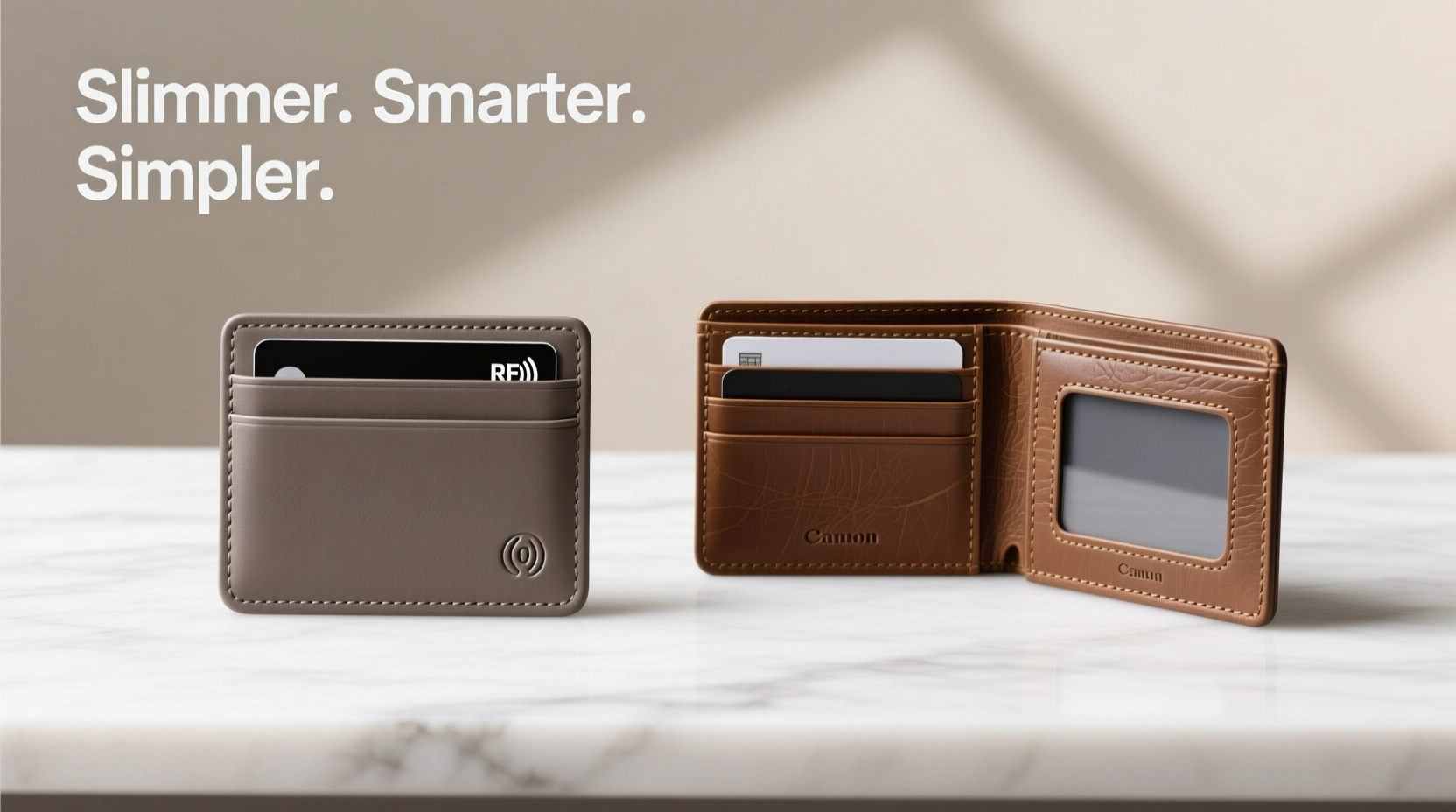
Wallets have evolved far beyond their original purpose as simple money pouches. In the 19th century, men carried coin purses or tucked folded bills into coat pockets. The bifold emerged in the early 20th century as paper currency became standardized and credit systems developed. By mid-century, the classic leather bifold—complete with slots for ID, multiple credit cards, and folded cash—became a symbol of professionalism and preparedness.
Fast forward to the 2010s, and urban professionals began questioning the necessity of bulk. Inspired by movements like digital nomadism and capsule fashion, designers introduced ultra-slim wallets made from materials like aluminum, titanium, and carbon fiber. These models often hold only a few cards and some folded cash, prioritizing pocket ergonomics over storage capacity.
This shift wasn’t just aesthetic—it responded to real pain points: back pain from sitting on thick wallets, difficulty retrieving cards quickly, and the discomfort of bulky front pockets. Still, convenience is subjective. What works for a tech entrepreneur might not suit a sales rep who juggles gift cards, business contacts, and travel documents daily.
Minimalist Wallet: Pros and Trade-offs
At first glance, minimalist wallets seem ideal: they reduce pocket bulk, eliminate unnecessary items, and often feature premium materials that age gracefully. Most designs fall into three categories: sleeve-style (like the popular Ridge or Secrid), front-pocket cardholders, and flip-top metal wallets with spring-loaded mechanisms.
- Reduced pocket bulk: Eliminates the “wallet lump” that distorts pants and causes posture issues.
- Faster access: Cards slide out easily; no fumbling through layers of plastic and paper.
- Durability: Many are made from aerospace-grade metals or reinforced polymers resistant to wear.
- RFID protection: Some include shielding against digital theft, especially useful in crowded areas.
However, minimalism demands discipline. If you’re accustomed to carrying insurance cards, gym passes, concert tickets, or even a small notebook, transitioning to a slim wallet requires curation. Most hold between 3–6 cards comfortably. Any more, and the mechanism jams or the profile thickens.
Another consideration is cash handling. Minimalist wallets typically support only one or two folded bills. If you frequently pay in cash—perhaps at farmers' markets or small businesses—this limitation can be frustrating. You may end up carrying cash separately or reverting to a pocket full of loose notes.
Bifold Wallet: Tradition Meets Functionality
The bifold remains the default choice for many. Its familiar fold-over design offers dedicated sections: a clear ID window, multiple card slots, a bill compartment, and often a coin pouch. This structure supports organization, making it easier to separate work cards from personal ones or stash emergency cash without clutter.
For frequent travelers, parents, or those managing complex schedules, the bifold’s versatility shines. It can accommodate boarding passes, hotel keys, parking stubs, and membership cards—all within reach. Leather bifolds also develop a patina over time, becoming more personalized with use.
Yet, size becomes a liability. A fully loaded bifold can measure over half an inch thick, creating discomfort when seated. Over time, this pressure on the sciatic nerve can contribute to lower back pain—a condition doctors sometimes call “wallet sciatica.” Additionally, deep pockets make retrieval slower, especially when wearing tight jeans.
“Carrying a thick wallet in your back pocket alters pelvic alignment and can lead to chronic postural strain.” — Dr. Lena Torres, Physical Therapist & Ergonomics Consultant
Despite these drawbacks, the bifold excels in environments where digital solutions aren’t viable. Rural areas, older establishments, or countries with limited contactless infrastructure still rely on physical payment methods and documentation. In such cases, having everything in one place outweighs the benefits of slimming down.
Comparative Breakdown: Key Factors
| Feature | Minimalist Wallet | Bifold Wallet |
|---|---|---|
| Pocket Comfort | Excellent – flat, lightweight, no bulge | Poor to Moderate – creates visible lump, especially when full |
| Card Capacity | Limited (3–6 cards optimal) | High (8–12+ cards with ease) |
| Cash Storage | Minimal (1–2 folded bills) | Ample (multiple bills, unfolded) |
| Access Speed | Fast – spring-loaded or easy-slide designs | Slower – requires unfolding and searching |
| Durability | High – often metal or reinforced composite | Variable – leather ages well but wears over time |
| Digital Integration | Encourages app-based alternatives | Less incentive to digitize |
| Cost Range | $40–$150+ | $20–$100 (luxury models higher) |
When Minimalism Wins
- You live in a city with widespread contactless payments.
- You value clean lines and dislike pocket bulk.
- You're willing to digitize IDs, tickets, and loyalty cards.
- You sit for long periods (e.g., office work, commuting).
When Bifold Makes More Sense
- You handle cash regularly or work in retail/service industries.
- You travel frequently and need quick access to multiple documents.
- You prefer tactile organization and physical backups.
- You’re not ready to fully trust digital wallets in all scenarios.
Real-Life Scenario: Two Users, Two Choices
Alex, 29 – Software Developer, Urban Dweller
Alex switched to a titanium minimalist wallet two years ago after developing lower back pain. Working remotely, he rarely needs more than his driver’s license, one credit card, and Apple Pay. His wallet holds exactly four cards and a single folded bill. He uses Google Wallet for boarding passes and digital IDs. The slim profile fits seamlessly in his front pocket, and he reports feeling “lighter” throughout the day. When asked if he misses anything, he laughs: “I used to carry seven credit cards. Now I realize I only ever used two.”
Maria, 45 – Sales Representative, Frequent Traveler
Maria relies on her leather bifold daily. It holds her corporate card, two personal cards, health insurance ID, Costco membership, airline rewards card, and local transit pass. She keeps cash for tips, tolls, and places that don’t accept cards. During trade shows, she tucks business cards into the outer slots. While she acknowledges the bulk, she says, “I can’t risk being unprepared. My wallet is my command center.” She mitigates discomfort by rotating between back and jacket pockets.
Their stories highlight a crucial truth: convenience isn’t universal. It depends on routine, environment, and personal thresholds for friction.
How to Transition Smoothly (If You Choose Minimalism)
Switching to a minimalist wallet isn’t just about buying new gear—it’s a behavioral shift. Follow this step-by-step guide to avoid frustration:
- Audit your current wallet: Lay out every item. Ask: Which do I use weekly? Monthly? Ever?
- Digitize what you can: Add IDs, boarding passes, and loyalty cards to your phone’s digital wallet.
- Consolidate duplicates: Cancel unused subscriptions or merge similar credit lines.
- Choose the right model: Test options—sleeve, bi-fold slim, or spring-release—based on grip preference.
- Start slow: Carry only essentials for a week. Reassess what you genuinely miss.
- Keep a backup: Store extra cards and cash in a secure place at home for emergencies.
Frequently Asked Questions
Can a minimalist wallet hold coins?
Most cannot. A few hybrid models include small detachable coin pouches, but these add bulk. For regular coin users, a bifold with a zippered section or a separate keychain pouch is more practical.
Are minimalist wallets safer from pickpockets?
They can be. Metal wallets are harder to slip into silently, and front-pocket carry increases awareness. However, any wallet in a public space carries risk. RFID-blocking models offer added protection against wireless skimming.
Do minimalist wallets damage cards over time?
Poorly designed spring mechanisms or tight elastic bands can bend or crack cards. Opt for models with smooth edges and adjustable tension. Regularly inspect cards for warping, especially if stored vertically.
Final Verdict: Convenience Is Personal
So, is going slim really more convenient? For many, yes—but not universally. The minimalist wallet wins on comfort, speed, and modern integration. It encourages intentionality, reduces physical strain, and aligns with a digital-first lifestyle. Yet, it imposes constraints that don’t suit everyone.
The bifold, though bulkier, remains unmatched in raw utility. It’s forgiving, adaptable, and built for complexity. As long as society doesn’t fully transition to paperless systems, there will be a place for the well-worn leather fold.
Rather than chasing trends, assess your actual needs. Track your wallet usage for a week. How often do you pull it out? What do you retrieve? Where do you feel discomfort? Let data—not design hype—guide your decision.




 浙公网安备
33010002000092号
浙公网安备
33010002000092号 浙B2-20120091-4
Comments
No comments yet. Why don't you start the discussion?