
Choosing the right wallet isn’t just about style—it’s about function, comfort, and how well it fits into your daily life. Many people assume that a bifold wallet, with its traditional fold and multiple compartments, naturally holds more than a minimalist wallet. But modern design has redefined what “capacity” means. Today, minimalist wallets are engineered to carry surprising amounts of cards and cash while staying slim. The real question isn’t just about volume—it’s about how much you can carry *without* creating an uncomfortable bulge in your pocket.
This comparison cuts through marketing claims and focuses on practicality: Which wallet type actually offers better organization, durability, and long-term comfort—especially when loaded?
The Evolution of Wallet Design
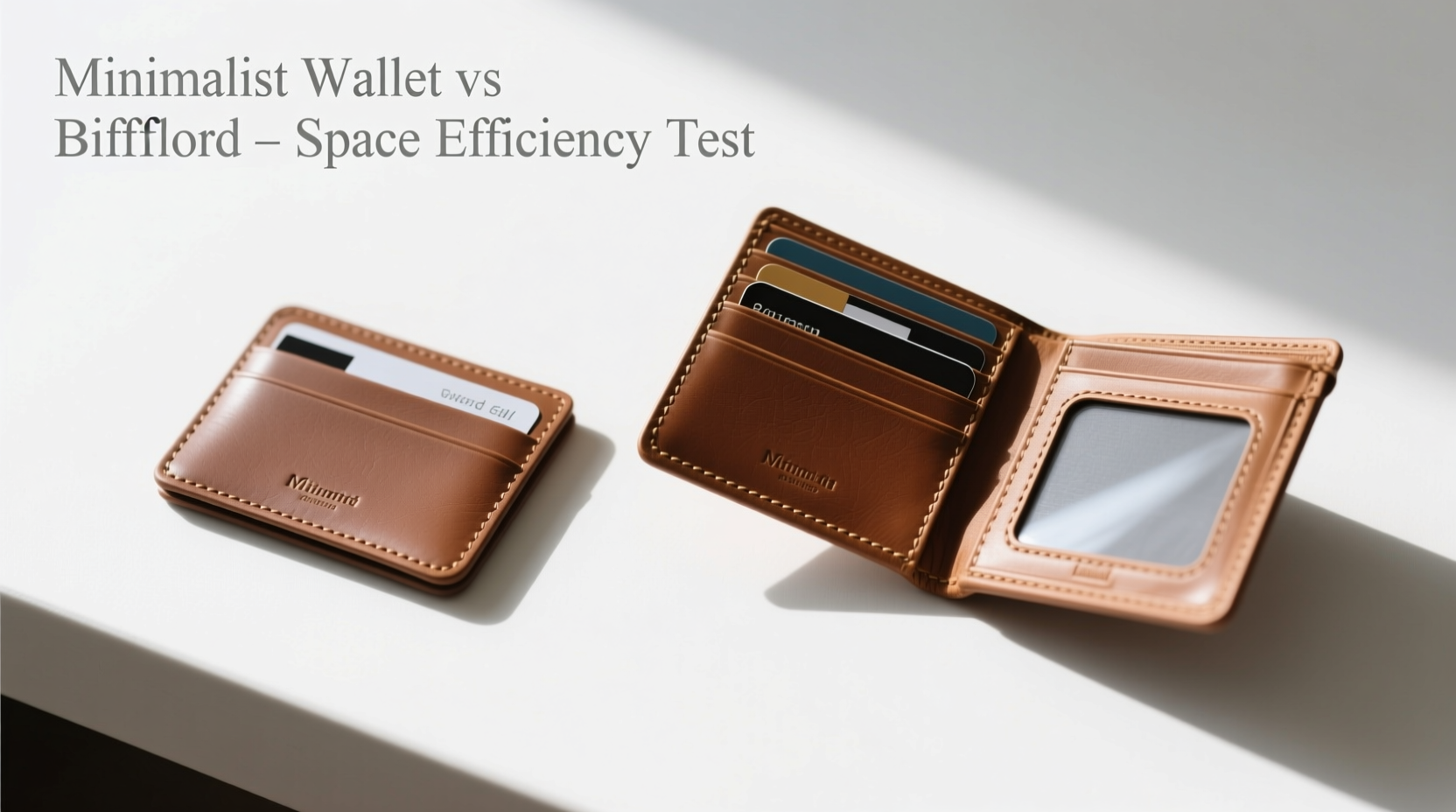
Wallets have evolved from simple leather pouches to highly specialized accessories designed for efficiency. The classic bifold emerged in the early 20th century as a compact solution for carrying cash and a few cards. Its folded design allowed it to fit in trouser pockets, but over time, users began stuffing them with receipts, loyalty cards, and excess bills—leading to the now-infamous “wallet bulge.”
In contrast, minimalist wallets gained popularity in the 2010s, driven by a broader cultural shift toward decluttering and functional design. These sleek alternatives prioritize slim profiles, RFID protection, and quick access to essentials. Made from materials like aluminum, titanium, or ultra-slim leather, they challenge the assumption that more bulk equals more utility.
The core innovation isn’t just reducing size—it’s optimizing space. Minimalist wallets often use spring-loaded mechanisms, elastic bands, or layered card slots to hold up to 10–12 cards securely, while still remaining thinner than most traditional bi-fold models when fully loaded.
Capacity Comparison: What Can Each Actually Hold?
To understand which wallet holds more without bulking, we need to examine both raw capacity and real-world usability.
| Wallet Type | Average Card Capacity | Cash Capacity | Thickness (Empty) | Thickness (Fully Loaded) |
|---|---|---|---|---|
| Traditional Bifold | 6–8 cards | Folds 4–6 bills | 0.75 inches | 1.2+ inches |
| Minimalist (Front-Load) | 8–12 cards | 4–6 bills (flat) | 0.3 inches | 0.6 inches |
| Minimalist (Spring-Loaded) | 10–14 cards | 4 bills (behind cards) | 0.4 inches | 0.7 inches |
| Slim Bifold (Modern) | 6–10 cards | 6 bills (folded) | 0.6 inches | 1.0 inches |
As shown, many minimalist wallets outperform traditional bi-folds in card capacity while maintaining a significantly lower profile. The key lies in their design: instead of stacking cards loosely in multiple pockets, minimalist models compress them tightly using metal frames or tension mechanisms. This compression prevents shifting and reduces overall thickness.
Cash handling differs significantly. Bifold wallets allow folding bills, which increases vertical thickness quickly. Minimalist wallets typically store cash flat behind or beneath the cards, limiting folds but preserving slenderness. For those who carry large amounts of cash, this can be a trade-off. However, with digital payments dominating everyday transactions, most users no longer need to carry more than a few bills.
Comfort and Pocket Impact: The Bulge Factor
No matter how much a wallet can hold, if it distorts your pants or causes discomfort when sitting, its utility diminishes. The “bulge factor” is a critical yet often overlooked aspect of wallet performance.
Bifold wallets, especially when overstuffed, create pressure points in the back pocket. This can lead to posture issues, hip misalignment, and fabric wear. A study published in *The Spine Journal* found that prolonged sitting with a thick wallet in the back pocket can contribute to lumbar spine asymmetry and sciatic nerve irritation.
Minimalist wallets, by design, mitigate this issue. Their narrow footprint and low height reduce surface pressure. Even when holding 10+ cards, they remain under 0.7 inches thick—less than half the loaded thickness of a standard bifold. This makes them ideal for front-pocket carry, which experts recommend for spinal health.
“Carrying a thick wallet in your back pocket is like walking around with a small rock in your shoe—it may not hurt immediately, but over time, it disrupts your alignment.” — Dr. Aaron Lee, Chiropractic Biomechanics Specialist
Moreover, minimalist wallets made from lightweight materials like aircraft-grade aluminum or carbon fiber add negligible weight. Even fully loaded, they rarely exceed 3.5 ounces, compared to 6–8 ounces for leather bi-folds with similar contents.
Real-World Example: One Week, Two Wallets
Consider Mark, a 34-year-old project manager who uses his wallet constantly—from swiping access cards at work to paying for coffee and transit. He used a full-grain leather bifold for years, stuffing it with 15+ cards, receipts, and folded cash. After six months of persistent lower back discomfort, he consulted a physiotherapist, who identified wallet bulge as a contributing factor.
Mark switched to a titanium minimalist wallet with a spring-loaded mechanism. He reduced his carried items to 10 essential cards and four bills. The new wallet measured just 0.6 inches thick and weighed 3.2 ounces. Within two weeks, he reported improved sitting comfort and no recurrence of back tightness. Surprisingly, he also felt more organized—because the wallet had limited space, he was forced to curate only what he truly needed.
Despite holding fewer total items, the minimalist wallet served him better because it eliminated clutter and enhanced accessibility. Cards fan out slightly when the release button is pressed, allowing instant visibility and selection—something his old bifold never offered.
Choosing Based on Lifestyle: Who Should Use What?
The best wallet depends on your habits, clothing, and priorities. Here’s a checklist to help determine which option suits your needs:
Do you carry more than 10 cards regularly? → Minimalist (spring-loaded) or slim bifold
Do you wear slim-fit pants or prefer front-pocket carry? → Minimalist wallet
Do you handle large amounts of cash daily? → Traditional bifold with wide bill compartment
Are you concerned about back or hip pain? → Avoid thick bi-folds; choose minimalist
Do you value quick access and one-handed operation? → Minimalist with push-button release
Do you want a wallet that lasts 10+ years with zero wear? → Metal minimalist model
Do you prefer classic aesthetics over modern tech look? → Leather bifold (but keep it slim)
For urban professionals, travelers, and anyone prioritizing mobility, minimalist wallets offer superior ergonomics. They slide easily into jacket pockets, backpacks, or jeans without sagging. Their resistance to wear—especially metal versions—is unmatched. Leather bi-folds, while stylish, crease, stretch, and degrade over time, particularly at the fold.
However, certain professions still benefit from bi-folds. Sales representatives, field technicians, or hospitality workers who manage numerous gift cards, loyalty programs, or cash transactions may find the compartmentalization of a bifold more practical. In these cases, opting for a “slim bifold” made from bonded leather or synthetic fibers can balance capacity with reduced bulk.
Frequently Asked Questions
Can a minimalist wallet really hold as much as a bifold?
Yes—many minimalist wallets hold more cards than traditional bi-folds while remaining thinner. Their efficient design compresses cards tightly and stores cash flat. However, if you routinely carry over 15 cards or large stacks of cash, a bifold may still be more suitable.
Do minimalist wallets damage credit cards over time?
Poorly designed models with sharp edges or excessive pressure can wear down magnetic strips or chips. High-quality minimalist wallets use smooth interiors, rounded corners, and even pressure distribution to protect cards. Look for models with rubberized linings or plastic inserts for added safety.
Is it worth switching from a bifold to a minimalist wallet?
If you experience pocket bulge, back discomfort, or disorganization, yes. Most users report greater convenience and comfort within days of switching. The initial adjustment period involves downsizing carried items, but this often leads to better financial and organizational habits.
Final Verdict: Maximizing Space Without the Bulk
The idea that bifold wallets inherently hold more is outdated. Modern minimalist wallets leverage smart engineering to deliver equal or greater capacity in a fraction of the space. When comparing loaded thickness, organization, and long-term comfort, minimalist designs consistently outperform traditional bi-folds.
That said, the best choice isn’t universal. It depends on how you use your wallet, what you carry, and how much you value physical comfort. For most people—especially those embracing digital payments and minimalism—a well-designed minimalist wallet offers the optimal balance of capacity and slimness.
The future of wallets isn’t bigger—it’s smarter. As mobile wallets and contactless payments grow, physical wallets will continue shrinking in necessity. But until then, choosing a design that maximizes utility without sacrificing comfort is the smartest move.




 浙公网安备
33010002000092号
浙公网安备
33010002000092号 浙B2-20120091-4
Comments
No comments yet. Why don't you start the discussion?