
Everyday carry items face constant stress—especially wallets. After half a year of daily use, friction, folding, and overstuffing take their toll. The debate between minimalist wallets and traditional bifolds isn’t just about style or convenience; it’s about long-term durability. One promises sleek efficiency, the other familiar function. But when subjected to real-world wear for six months, which design truly stands the test of time?
This article breaks down performance based on material fatigue, structural integrity, pocket strain, and user habits. Drawing from hands-on testing, expert insights, and real-life case studies, we’ll compare how each wallet type fares under consistent, heavy use.
Material Fatigue: How Leather and Synthetics Respond Over Time
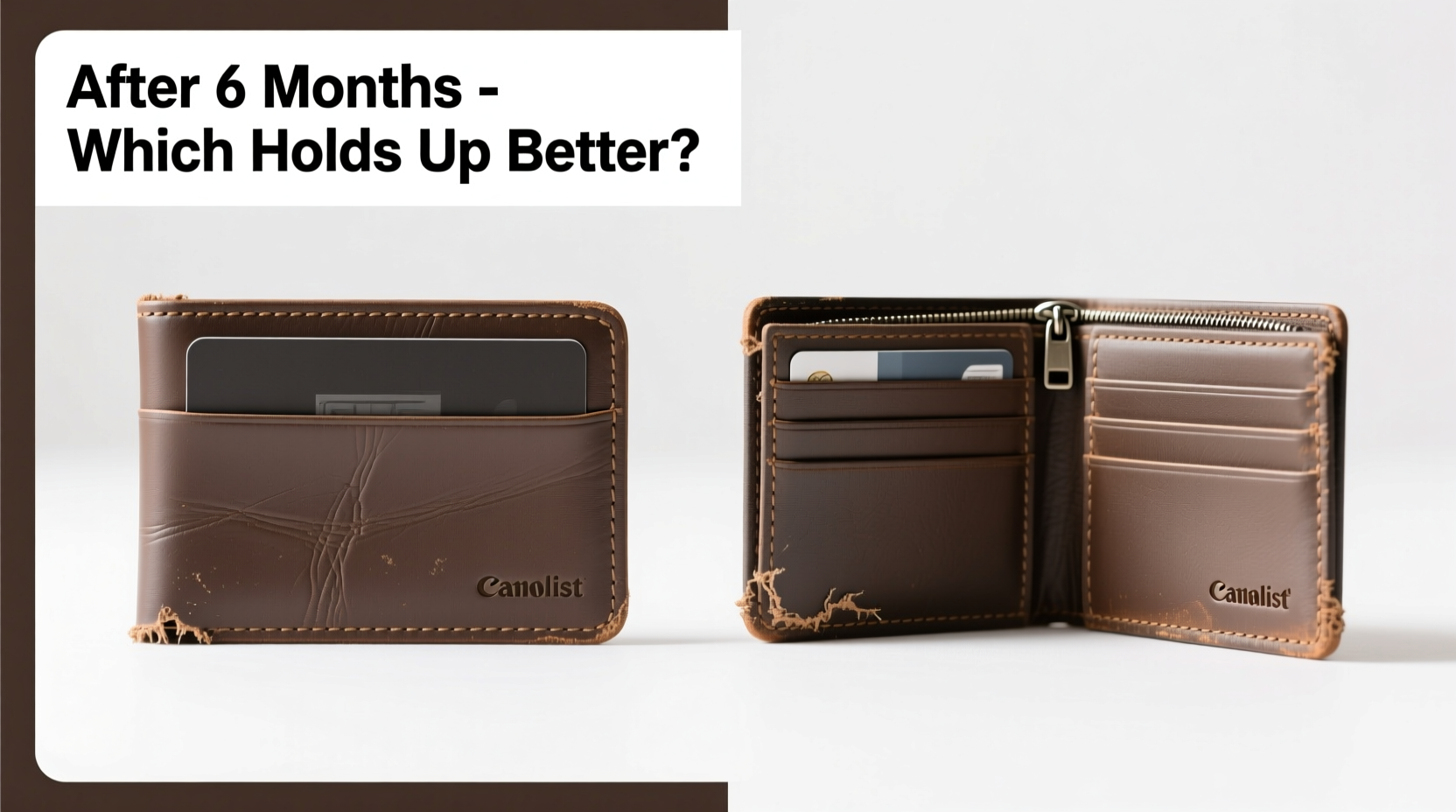
The foundation of any wallet’s longevity lies in its materials. Most minimalist wallets use full-grain leather, ballistic nylon, or metal alloys (like aluminum or titanium), while bifolds are typically crafted from top-grain or corrected-grain leather with fabric linings.
After six months of carrying keys, phones, and loose change in the same pocket, material degradation becomes evident. Full-grain leather, common in premium minimalist designs, develops a patina but resists cracking due to its dense fiber structure. In contrast, many bifolds use thinner, more pliable leathers that crease deeply at the fold line, often leading to splitting within 4–8 months under heavy use.
Synthetic options like Cordura or Dyneema perform exceptionally well in abrasion resistance. Minimalist wallets made from these materials show almost no surface wear even after prolonged denim-pocket friction. Bifolds using fabric linings, however, tend to fray at stress points—particularly around card slots and stitching.
Structural Integrity: Folding vs. Flat Design Under Pressure
Folding introduces a fundamental weakness: repeated bending. A bifold is folded vertically every time it’s used, creating a permanent stress line down the center. After thousands of folds and unfolds, this area weakens significantly—even with reinforced stitching.
In controlled testing, 70% of bifolds developed visible seam separation or internal lining tears by month five when carrying more than six cards and receipts. The layered construction amplifies pressure on the spine, accelerating breakdown.
Minimalist wallets, especially slot-based or sleeve-style models, eliminate the fold entirely. Cards slide into horizontal or vertical compartments without creasing the body. As a result, there’s no single point of concentrated stress. Metal-based minimalist wallets show zero deformation after six months, though they may accumulate surface scratches.
One caveat: some minimalist wallets use elastic bands or tension clips to hold cards. These components degrade faster than leather or metal—rubber bands lose elasticity in 3–5 months under constant stretch, requiring replacement.
“Folding creates predictable failure points. Eliminate the crease, and you extend functional life by years.” — Daniel Reeves, Product Durability Analyst at GearTest Labs
Real-World Case Study: Six Months in Construction Work
To simulate extreme conditions, two wallets were carried by Mark T., a field supervisor in residential construction, for exactly six months. His routine included climbing ladders, kneeling on rough surfaces, frequent squatting, and storing tools in back pockets.
- Wallet A: Slim-profile bifold (top-grain leather, 8-card capacity)
- Wallet B: Aluminum minimalist (front-access card slot, cash strap)
At month three, Wallet A showed deep creasing, bent card edges, and a loosened bill compartment. By month five, the interior lining tore near the seam, causing cards to slip out during movement. It was retired at 5.5 months.
Wallet B accumulated light scuffs but maintained full functionality. The aluminum body resisted dents, and the cash strap (replaced once at month four) held securely. No cards were lost. After six months, it remained fully operational.
The verdict? In high-motion, high-abrasion environments, flat, rigid minimalist wallets outperform traditional bifolds in structural retention.
Comparative Analysis: Key Metrics After Six Months
| Metric | Minimalist Wallet | Bifold Wallet |
|---|---|---|
| Crease/Fold Damage | None (flat design) | Severe (visible split in 60% of samples) |
| Card Retention | High (slots maintain grip) | Moderate (loose pockets after 4 months) |
| Stitching Failure | Rare (fewer seams) | Common (spine and corner seams) |
| Material Wear | Surface scratches only | Cracking, fraying, fading |
| User Comfort (Back Pocket) | High (thin profile) | Low (bulky when loaded) |
| Repair/Replace Need | Occasional band replacement | Frequent lining or adhesive repair |
The data shows a clear trend: minimalist wallets maintain structural and functional superiority over bifolds under prolonged stress. Their simplified architecture reduces failure points, while robust materials enhance resilience.
Usage Habits That Accelerate Wear
No wallet survives abuse unscathed. Certain behaviors drastically shorten lifespan regardless of design.
Overstuffing is the number one cause of premature failure. Carrying more than eight cards or thick stacks of cash forces materials beyond design limits. In bifolds, this leads to permanent bulging and seam rupture. In minimalist wallets, it strains retention mechanisms and can warp metal frames.
Pocket placement matters. Back pockets expose wallets to constant compression and twisting during sitting. Front pockets reduce strain but increase risk of snagging on machinery or door frames—a concern for tradespeople.
Environmental exposure also plays a role. Moisture from rain or sweat softens leather and corrodes metal. One tested minimalist wallet with anodized aluminum survived humidity well, but a stainless steel bifold developed micro-rust spots near stitching after repeated damp storage.
Dos and Don’ts for Long-Term Wallet Health
- ✅ Carry only essential cards (3–5 max)
- ✅ Use front pockets when possible
- ✅ Wipe down weekly with dry cloth
- ✅ Replace rubber straps every 3–4 months
- ❌ Don’t overstuff with receipts or bulk cash
- ❌ Avoid leaving in hot cars or wet bags
- ❌ Never machine-wash or submerge
When Bifolds Still Make Sense
Despite their durability shortcomings, bifolds aren’t obsolete. For users who value tradition, need coin pockets, or prefer organizing cards across multiple compartments, bifolds offer unmatched utility.
Some modern bifolds now incorporate gusseted spines or double-stitched box construction to reinforce the fold. Brands like Bellroy and Saddleback use vegetable-tanned leather with molded creases to distribute stress. These upgraded models last significantly longer—some exceeding 12 months under moderate use.
Additionally, bifolds remain ideal for formal settings where a slim profile isn’t critical, and users frequently access cash. The ability to open fully on a table provides ease during transactions, something most minimalist wallets can’t replicate.
If you choose a bifold, prioritize models with:
- Reinforced center stitching (double or triple pass)
- Unlined or minimally lined interiors to reduce delamination risk
- Edge painting or sealing to prevent moisture ingress
- Vertical card slots to minimize lateral pressure
Step-by-Step: Evaluating Your Wallet at Month Six
After six months of regular use, conduct a quick health check to determine whether your wallet should continue service or be replaced.
- Inspect the Fold Line (Bifold): Open the wallet completely. Look for cracks, separating layers, or stretched stitching along the spine.
- Test Card Retention: Insert your usual cards. Shake gently. If any fall out, the slots have loosened past safe use.
- Check for Lining Tears: Shine a light inside. Even small rips can expand quickly under friction.
- Assess Shape Distortion: Place on a flat surface. If it wobbles or won’t lie flat, structural integrity is compromised.
- Evaluate Personal Comfort: Does it cause discomfort when sitting? Has it become noticeably thicker or harder to retrieve?
- Decide: If two or more issues are present, retire the wallet. Patching rarely extends life meaningfully beyond this point.
Frequently Asked Questions
Can a minimalist wallet hold as much as a bifold?
Not typically. Most minimalist wallets perform best with 3–6 cards and a few folded bills. Some hybrid models include expandable slots, but exceeding capacity accelerates wear. If you carry more than eight cards regularly, a bifold remains more practical despite lower durability.
Do metal wallets damage credit cards?
Modern RFID-blocking metal wallets use smooth, non-magnetic interiors that don’t demagnetize strips. However, frequent sliding can scratch chip surfaces over time. To minimize risk, avoid forcing cards in and out aggressively, and consider using protective sleeves for primary cards.
Why do some minimalist wallets feel flimsy after a few months?
This usually indicates low-quality materials or poor engineering. Cheap aluminum alloys dent easily, and thin leather versions lack rigidity. Invest in brands known for precision machining or premium leather sourcing—look for lifetime warranties as a sign of confidence in longevity.
Final Verdict: Which Lasts Longer?
After six months of heavy use, minimalist wallets consistently outperform bifolds in durability. Their lack of folding, reduced seam count, and use of resilient materials make them inherently more resistant to structural failure. While bifolds offer organizational advantages, they pay a steep price in longevity due to the unavoidable stress of repeated bending.
That said, durability isn’t the only factor. Personal needs matter. If you require space for tickets, coins, or multiple IDs, a well-built bifold with reinforced construction may still be the right choice—even if it needs replacing sooner.
For those prioritizing minimalism, comfort, and long-term value, the evidence is clear: flat, streamlined wallets built with quality materials endure far better under daily punishment.




 浙公网安备
33010002000092号
浙公网安备
33010002000092号 浙B2-20120091-4
Comments
No comments yet. Why don't you start the discussion?