
Choosing the right wallet isn’t just about style or how many cards you can carry—it’s about longevity, functionality, and how well it adapts to real life. With the rise of minimalist design, many have switched from traditional bifold wallets to sleeker, slimmer alternatives. But when daily wear, frequent access, and the need to carry coins enter the equation, does the minimalist wallet still hold its ground? Or does the classic bifold prove more resilient over time?
This comparison dives deep into long-term performance, structural integrity, and practicality under real-world conditions. Whether you're a commuter, traveler, or urban professional, understanding how each wallet type handles daily stress—especially with coins—can save you money, discomfort, and frustration in the long run.
Durability Under Daily Wear: Material and Construction
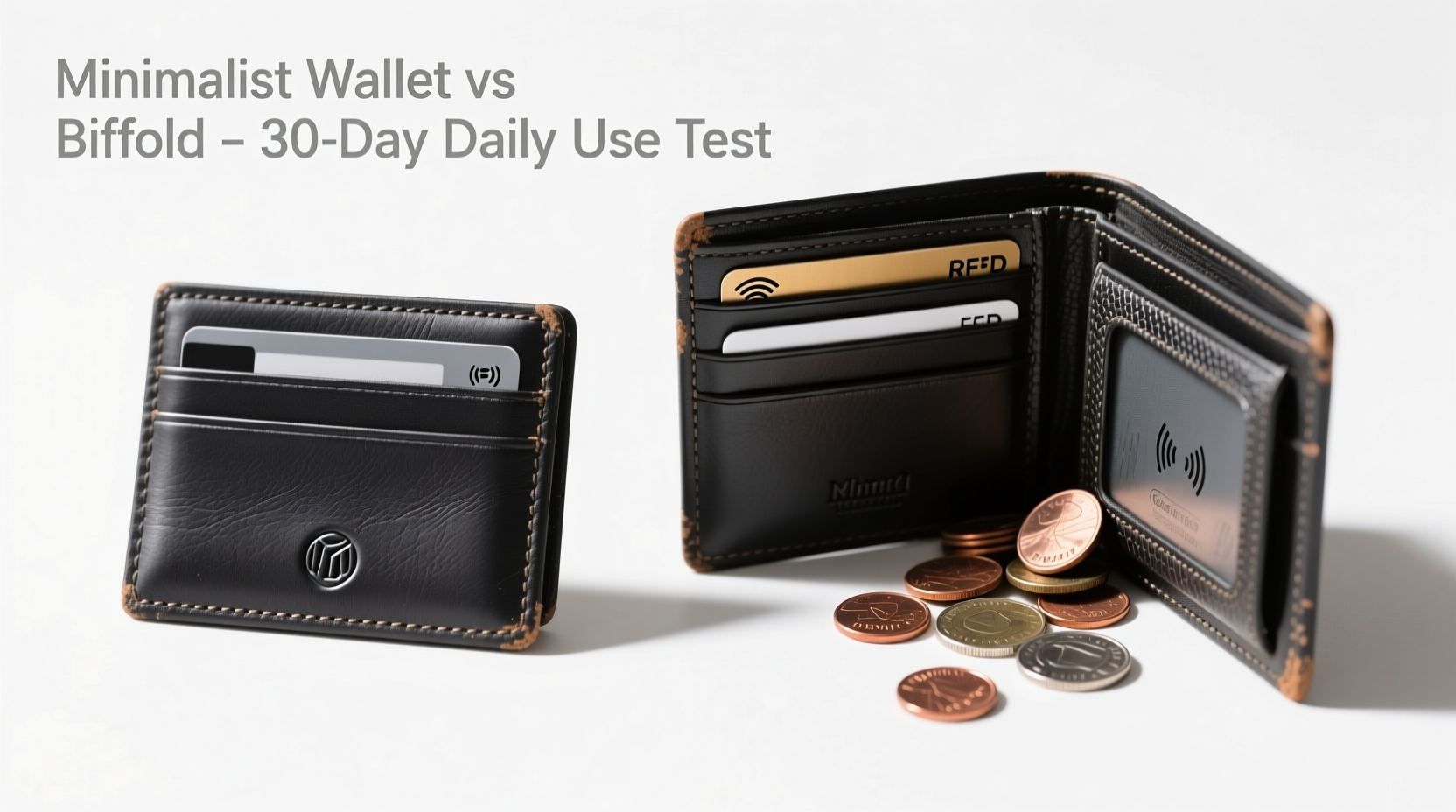
The lifespan of any wallet begins with what it's made of and how it's built. Both minimalist and bifold wallets come in leather, synthetic fabrics, metal, and even recycled materials. However, their construction differs significantly due to form factor.
Bifold wallets are traditionally stitched or bonded with multiple panels—typically two outer flaps enclosing inner card slots and a central bill compartment. This layered approach allows for reinforced stitching at stress points like corners and folds. High-quality bi-fold models often use full-grain leather, known for developing a rich patina while resisting cracking.
Minimalist wallets, on the other hand, prioritize compactness. Many are made from one piece of folded leather, CNC-machined metal (like titanium or aluminum), or molded polymer composites. While some premium versions use durable materials, the reduced surface area means less protection for contents and thinner margins for wear resistance.
Over months of daily use—being sat on, pulled in and out of pockets, exposed to moisture and friction—the bifold’s larger footprint distributes stress across more material. In contrast, minimalist wallets concentrate pressure on fewer seams or moving parts, especially if they feature spring-loaded mechanisms or sliding components.
Coin Storage: A Critical Differentiator
One of the most telling tests of a wallet’s practical endurance is whether it can comfortably and securely hold coins. Most minimalist wallets do not support coin storage by design. Their slim profile assumes a cashless or near-cashless lifestyle, relying on digital payments or folded bills tucked behind cards.
Some exceptions exist—certain minimalist models include small zippered compartments or snap closures for loose change. However, these features often compromise the core benefit: thinness. Once coins are added, bulk increases, defeating the purpose for many users.
Bifold wallets, particularly those with a center gusset or zipper pouch, naturally accommodate coins. The structure supports weight distribution, and zippers protect against spillage during movement. Even without dedicated coin sections, users often tuck change into the billfold section, though this can lead to stretching over time.
“Carrying coins regularly changes the stress dynamics of a wallet. Flexible but structured designs—like reinforced bi-folds—handle dynamic loads better than rigid minimalists.” — Daniel Reeves, Product Durability Analyst at Urban Gear Lab
Realistically, if your routine involves vending machines, parking meters, laundromats, or international travel where cash is king, coin compatibility becomes essential. In such cases, the bifold maintains a clear advantage in both utility and long-term usability.
Structural Longevity: How Each Wallet Ages
Time reveals weaknesses that initial impressions miss. After six months of regular use, common failure points emerge depending on wallet type.
| Failure Point | Minimalist Wallet | Bifold Wallet |
|---|---|---|
| Seam Splitting | Moderate (in sewn-leather variants) | Low (if double-stitched) |
| Material Creasing | High (sharp folds develop quickly) | Moderate (distributed across larger surface) |
| Card Retention | Declines after 4–6 months | Stable if well-constructed |
| Coin Compatibility | Poor to none | Good to excellent |
| Overall Lifespan | 1–3 years (average) | 3–7+ years (quality models) |
Minimalist wallets made from metal may resist creasing but suffer from scratch accumulation and cold transfer in winter. Polymer-based models can crack under repeated flexing. Leather ones age gracefully but lose rigidity faster due to constant folding.
Bifold wallets, when properly maintained, can last for years. The gradual break-in period improves comfort without sacrificing function. Stitching reinforcements, lining materials, and thicker hides contribute to resilience. Even when worn, many high-end bifolds remain functional long after aesthetic appeal fades.
Mini Case Study: Two Years, Two Wallets, One User
Mark T., a city courier in Portland, tested both wallet types over a two-year period. He carried keys, phone, and wallet in his back pocket daily, logged 10,000+ steps weekly, and frequently used coins for tolls and snacks.
Year 1: Mark started with a titanium minimalist wallet marketed as “indestructible.” It held six cards and had a spring-loaded ejector. Initially praised for its slim profile, by month eight, the mechanism began jamming due to dust and lint ingress. Coins were impossible to carry, so he kept them in a separate pouch—a constant source of loss.
Midway through year one, he switched to a full-grain leather bifold with a zip coin compartment. Though slightly thicker, it fit comfortably in his front pocket. The zipper remained smooth, and the leather softened without tearing. After 18 months, the edges showed wear but no structural damage.
By the end of year two, the minimalist wallet was retired—its ejector failed completely, and micro-scratches made it unsightly. The bifold, lightly conditioned every few months, remained fully functional.
His takeaway: “If you move a lot and handle physical transactions, thickness is a fair trade for reliability. I’d rather carry a little extra bulk than worry about my wallet failing mid-shift.”
Step-by-Step Guide: Choosing the Right Wallet for Your Lifestyle
Selecting between minimalist and bifold isn’t about trends—it’s about alignment with your habits. Follow this decision path to find the best fit:
- Assess your payment habits: Do you use cash or coins daily? If yes, lean toward bifold.
- Evaluate pocket space: Back-pocket carriers risk spine damage from thick wallets; front-pocket users tolerate slightly bulkier designs better.
- Count your essentials: More than six cards? Minimalist wallets may force uncomfortable stacking.
- Consider environment: Wet climates demand water-resistant materials. Leather needs care; synthetics may degrade faster.
- Test for sit-down comfort: Sit for long periods? Try both styles loaded with daily items to check pressure points.
- Check repair potential: Can it be re-stitched or resoled? Many minimalist wallets are non-repairable.
- Set a replacement timeline: Budget for shorter lifespans with minimalists unless investing in ultra-premium builds.
Expert Recommendations and Maintenance Tips
Longevity isn’t solely determined by design—it’s also shaped by care. Experts agree that even the best-made wallet fails prematurely without basic maintenance.
- Condition leather every 3–4 months with a pH-balanced balm to prevent drying and cracking.
- Avoid overstuffing—a swollen wallet stresses seams and distorts shape, especially in minimalist models.
- Empty and clean monthly to remove debris, receipts, and moisture-trapping particles.
- Use a waterproof spray sparingly on fabric or leather; avoid silicone-heavy products that clog pores.
- Store flat when not in use to maintain structure and prevent permanent creases.
“A wallet should evolve with you—not fall apart on the commute. Build quality matters, but user behavior matters more.” — Lena Choi, Sustainable Accessory Designer
For minimalist wallets, pay special attention to moving parts. Clean ejector rails gently with a dry brush. Metal bodies should be wiped down after exposure to salt or sweat, especially in coastal or humid regions.
FAQ
Can a minimalist wallet last as long as a bifold?
Only in specific cases—high-end models made from aerospace-grade materials or one-piece leather cuts can rival bifolds in lifespan. However, most mass-market minimalist wallets are designed for short-term convenience rather than decade-long use. Realistically, expect 1–3 years versus 5+ for a well-kept bifold.
Are there minimalist wallets that hold coins well?
Few, and with compromises. Some brands offer hybrid “slim bi-fold” designs with small internal zippers. Others use removable coin sleeves. These add bulk and often negate the minimalist appeal. True minimalism excludes coin carriage by definition.
Does carrying a wallet in your back pocket damage it faster?
Yes—and it damages your posture too. Sitting compresses the wallet unevenly, accelerating crease formation and seam stress. Front-pocket carry is gentler on both body and wallet. If you must use a back pocket, opt for a rigid bifold with reinforced corners.
Checklist: Wallet Longevity Scorecard
Before purchasing, evaluate any wallet using this checklist:
- ✅ Uses full-grain, top-grain, or weather-resistant synthetic
- ✅ Features double or saddle stitching (not glue-only)
- ✅ Includes dedicated coin compartment (if needed)
- ✅ Maintains structure when fully loaded
- ✅ Allows easy access without excessive pulling
- ✅ Manufacturer offers repair or replacement program
- ✅ Comfortable when seated for extended periods
- ✅ Has replaceable internal components (e.g., card trays)
If a wallet scores 6+ on this list, it’s likely built to endure. Most minimalist designs struggle to exceed 5, while premium bifolds often hit 7 or higher.
Conclusion: Function Over Form for Lasting Value
In the minimalist wallet vs bifold debate, aesthetics often overshadow endurance. While slim profiles win praise for modern simplicity, real-world demands—especially coin use and daily abrasion—reveal the bifold’s enduring strengths. Its robust construction, adaptable layout, and superior load management make it the more reliable companion over years of active use.
That said, minimalist wallets serve a purpose: streamlining carry for digital-first users who rarely handle cash. For them, the trade-off in lifespan may be acceptable. But if you value durability, versatility, and the ability to handle unpredictable days, the bifold remains unmatched.
Ultimately, the best wallet isn’t the thinnest or trendiest—it’s the one that survives your routine without complaint. Choose based on how you live, not how you wish you lived.




 浙公网安备
33010002000092号
浙公网安备
33010002000092号 浙B2-20120091-4
Comments
No comments yet. Why don't you start the discussion?