
In an age where convenience meets personal style, the humble wallet has evolved from a simple pocket accessory into a reflection of lifestyle choices. The debate between minimalist wallets and traditional bulky bi-fold designs isn't just about aesthetics—it's about longevity, functionality, and how each type withstands daily wear. While one promises sleek simplicity, the other offers familiar comfort and capacity. But when it comes to lasting power, which option truly holds up over time?
This comparison goes beyond initial impressions. It’s about material fatigue, seam stress, long-term usability, and even psychological satisfaction. Whether you're upgrading your carry or reevaluating your daily essentials, understanding the real-world endurance of these two wallet styles can save you money, reduce clutter, and improve everyday comfort.
Durability by Design: Structure and Stress Points
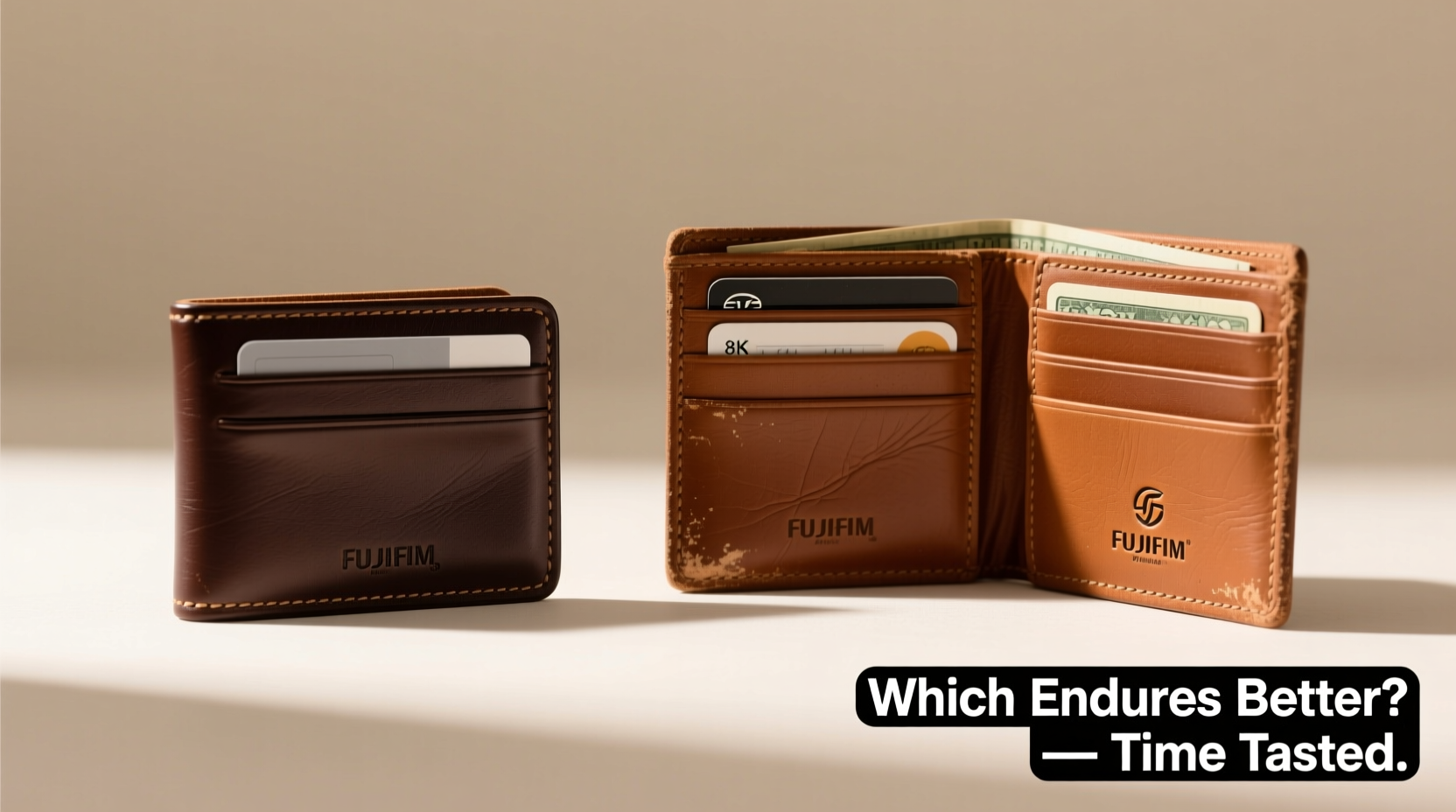
The lifespan of any wallet begins with its structure. Minimalist wallets are typically built with fewer materials—often a single piece of folded leather or metal frame—and designed to carry only the essentials: 3–6 cards and some cash. This streamlined construction reduces potential failure points. Fewer seams mean less chance for stitching to unravel, and reduced bulk lowers internal pressure on materials.
In contrast, bulky bi-fold wallets feature multiple compartments, bill sections, coin pockets, and often transparent ID windows. While this maximizes storage, it also increases complexity. Over time, repeated folding and stuffing cause creasing in leather, weakening at the spine. Stitching near the gusset—the inner fold—commonly frays first, especially in lower-quality models using glued layers instead of saddle stitching.
Materials play a crucial role. High-grade full-grain leather used in premium minimalist designs develops a patina and strengthens with age. Bi-folds made from top-grain or bonded leather may look good initially but tend to crack along folds after months of use. Synthetic alternatives like nylon or recycled plastics offer water resistance but lack structural memory, leading to sagging.
Material Longevity: Leather, Metal, and Modern Alternatives
Leather remains the dominant material in both categories, but how it’s used differs significantly. Minimalist wallets often use thicker, vegetable-tanned leather that molds to the user over time. Because they carry fewer items, the leather experiences less internal strain, preserving integrity. With proper care—occasional conditioning and dry storage—these wallets can last a decade or more.
Bulkier bi-folds, even when made from quality hides, suffer from constant expansion. Bills, receipts, and multiple cards create outward pressure, stretching the interior lining and distorting shape. Within 1–2 years, many users report “wallet bulge,” where the closed wallet no longer lies flat due to overstretched seams and compressed padding.
Metal minimalist wallets—typically crafted from titanium, aluminum, or stainless steel—introduce a different durability profile. Resistant to crushing, fire, and moisture, they outlast most fabric and leather counterparts. However, their rigidity can damage cards over time through micro-abrasion, and hinge mechanisms (in flip-style models) may wear out after thousands of openings.
“Wallet longevity isn’t just about material strength—it’s about load distribution. A well-designed minimalist wallet spreads stress evenly; a stuffed bi-fold concentrates it at weak points.” — Daniel Reed, Product Durability Analyst at Urban Gear Lab
Real-World Wear: A Year-Long User Comparison
To assess long-term performance, consider a side-by-side case study of two professionals using different wallet types over 12 months.
Case Study: Alex (Minimalist Front-Pocket Wallet)
Alex uses a slim, CNC-machined titanium wallet holding four cards and folded cash. After one year of daily front-pocket carry, the wallet shows minor surface scratches but no functional decline. The spring mechanism retains tension, and there’s no warping. Alex reports reduced back pain from sitting, easier access, and no loss of cards despite frequent bending while seated.
Case Study: Jordan (Traditional Leather Bi-Fold)
Jordan carries a full-sized bi-fold with six card slots, a coin pouch, and dual billfolds. By month nine, the center seam began lifting, and the leather spine developed deep creases. By month twelve, the ID window film peeled, and the wallet no longer closed smoothly due to internal swelling from accumulated lint and paper scraps. Despite being made from “genuine leather,” the item showed signs of premature aging.
This contrast illustrates how usage patterns amplify structural weaknesses. Even high-end bi-folds struggle under consistent overloading, while minimalist designs thrive on restraint.
Functional Longevity: How Usage Impacts Lifespan
A wallet’s usefulness diminishes not only through physical degradation but also through changing habits. Minimalist wallets encourage intentional carrying—users curate what they bring, reducing friction and wear. This behavioral shift extends product life. Fewer transactions involving card shuffling mean less abrasion on edges and magnetic strips.
Bi-fold wallets, while accommodating, often become catch-alls. Receipts, old gift cards, business cards, and expired coupons accumulate, increasing volume and weight. This habit accelerates material fatigue. Moreover, thick wallets in back pockets contribute to posture issues and seat wear, indirectly affecting perceived value and prompting earlier replacement.
Another factor is environmental exposure. Minimalist wallets, due to smaller size, spend less time exposed during transactions—reducing risk of drops, spills, and accidental damage. Their compactness also makes them easier to protect in adverse conditions (rain, sand, etc.). Bi-folds, with multiple flaps and protruding contents, are more vulnerable during use.
| Feature | Minimalist Wallet | Bulky Bi-Fold |
|---|---|---|
| Average Lifespan | 5–10 years (leather), 8+ years (metal) | 2–4 years |
| Common Failure Point | Hinge (metal), edge fraying (leather) | Center seam, spine cracking |
| Capacity Degradation | Low – maintains shape | High – expands and sags |
| Pocket Comfort | High – low profile | Low – causes bulge |
| Maintenance Needs | Occasional wipe-down, rare conditioning | Regular cleaning, frequent reshaping |
Choosing What Lasts: A Step-by-Step Decision Guide
Selecting a wallet that stands the test of time requires evaluating personal habits, priorities, and long-term goals. Follow this timeline to make an informed decision:
- Week 1: Audit Your Carry
Empty your current wallet and list every item. Identify what you *actually* use daily versus what’s just stored “just in case.” Most people find they regularly use only 3–4 cards and some cash. - Week 2: Test Minimalism
Transfer only essential items to a temporary slim sleeve or envelope. Carry it for seven days. Note comfort, accessibility, and whether you missed anything. - Week 3: Research Materials
Compare options: full-grain leather vs. titanium vs. synthetic composites. Prioritize brands known for repair programs or lifetime warranties (e.g., Secrid, Bellroy, Ridge Wallet). - Week 4: Assess Lifestyle Fit
Do you travel frequently? Work outdoors? Sit for long hours? A slim, durable wallet suits active or mobile lifestyles. If you handle cash regularly or need quick ID access, a hybrid model might balance function and form. - Month 2+: Make the Switch
Purchase based on evidence, not impulse. Choose a design proven in reviews and built for longevity. Break it in gradually, avoiding overloading during the first few weeks.
Expert-Backed Checklist for Long-Lasting Wallets
- ✅ Choose full-grain or chrome-tanned leather for organic durability
- ✅ Opt for saddle stitching over glued or machine stitching
- ✅ Limit card count to 4–6 to prevent internal stress
- ✅ Store in a cool, dry place away from direct sunlight
- ✅ Clean monthly with a dry cloth; condition leather every 6 months
- ✅ Rotate wallets if you own multiple, allowing materials to rest
- ✅ Avoid back pockets to reduce creasing and spinal misalignment
Frequently Asked Questions
Can a minimalist wallet really hold up if I carry cash and several cards?
Yes—many modern minimalist wallets are engineered for practical loads. Models with pull-tab mechanisms or layered card slots securely hold 4–6 cards and folded bills without bulk. Titanium frames resist deformation, and elastic bands (if used) are rated for thousands of stretches. Just avoid exceeding manufacturer limits.
Are bi-fold wallets obsolete, or do they still have a place?
They remain relevant for specific needs: users who handle large amounts of cash, require coin storage, or prefer visible ID display. However, for general urban use, their drawbacks—bulk, seam stress, and pocket discomfort—make them less sustainable long-term. Upgraded bi-folds with reinforced stitching and breathable linings can extend viability.
What’s the most durable wallet material overall?
Titanium ranks highest in tensile strength and corrosion resistance, making it ideal for extreme conditions. For natural materials, full-grain vegetable-tanned leather wins due to self-healing properties and patina development. Dyneema and carbon fiber composites offer ultralight resilience but at higher cost and limited repairability.
Final Verdict: Which Holds Up Over Time?
The evidence leans decisively toward minimalist wallets when evaluating long-term durability. Their simplified construction, reduced stress points, and promotion of mindful carrying result in longer functional lifespans. Whether made from resilient metal or high-quality leather, these designs resist deformation, maintain pocket comfort, and adapt gracefully to daily use.
Bulky bi-folds, while offering short-term convenience, succumb faster to the cumulative effects of overuse and poor ergonomics. Their complex architecture introduces more opportunities for failure, and their tendency to encourage clutter accelerates wear. Unless specifically needed for professional or lifestyle reasons, they represent a compromise on longevity.
Ultimately, choosing a wallet isn’t just about what fits your jeans—it’s about what fits your life over years, not weeks. A well-chosen minimalist wallet isn’t merely a trend; it’s an investment in simplicity, durability, and intentional living.




 浙公网安备
33010002000092号
浙公网安备
33010002000092号 浙B2-20120091-4
Comments
No comments yet. Why don't you start the discussion?