
In an era where digital theft is as common as physical pickpocketing, protecting your personal data has become non-negotiable. Radio Frequency Identification (RFID) technology powers contactless credit cards, passports, and access badges—offering convenience but also introducing vulnerabilities. Skimmers can wirelessly extract sensitive information from these chips in seconds, often without your knowledge. As awareness grows, so does demand for protective accessories. Two popular options dominate the market: minimalist wallets and dedicated cardholders. But when it comes to safeguarding your RFID data, which one performs better?
The answer isn’t just about size or style—it’s rooted in material science, design intent, and real-world usage patterns. While both products claim to offer RFID shielding, their effectiveness varies significantly based on construction, placement of cards, and user behavior. This article breaks down the differences between minimalist wallets and cardholders with a focus on RFID protection, empowering you to choose the right tool for your security needs.
Understanding RFID and How It Can Be Exploited
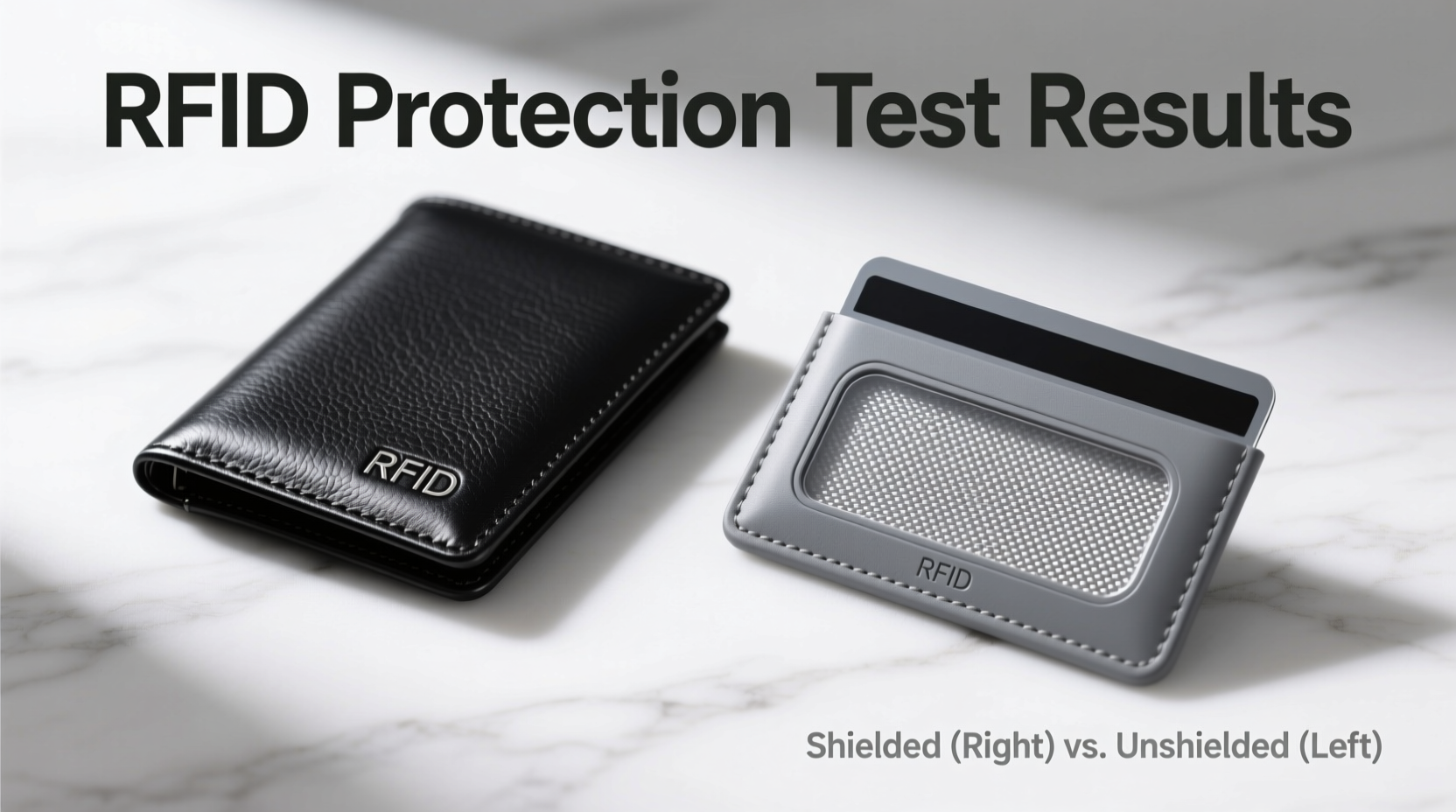
RFID operates using electromagnetic fields to transmit data over short distances. Contactless payment cards use high-frequency (13.56 MHz) RFID chips that activate when near a compatible reader. The same mechanism allows unauthorized devices—often disguised as everyday electronics—to intercept card details within a range of 2–10 centimeters. Known as \"electronic pickpocketing,\" this form of identity theft requires no physical contact and leaves no trace.
According to a 2022 report by the Identity Theft Resource Center, over 4.8 million Americans experienced some form of financial identity theft, many involving compromised card data. While EMV chip encryption helps at point-of-sale terminals, it doesn’t prevent skimming during transit. That’s where RFID-blocking materials come into play.
Effective RFID protection relies on Faraday cage principles—a conductive layer (typically metalized fabric or aluminum alloy) that blocks electromagnetic signals. When properly implemented, this shielding prevents external readers from energizing and communicating with embedded chips.
Design Differences: Minimalist Wallets vs. Cardholders
At first glance, minimalist wallets and cardholders appear functionally similar—both carry cards and aim to reduce bulk. However, their structural priorities diverge significantly, affecting how well they protect against RFID threats.
Minimalist Wallets: Functionality First
Minimalist wallets prioritize utility. They typically hold 4–8 cards, some cash, and occasionally coins. Designs range from bi-fold silhouettes to front-pocket steel or titanium frames. Many incorporate RFID-blocking layers, but due to internal organization—such as rotating mechanisms or spring-loaded carriers—not every card slot may be shielded equally.
For example, a popular brand’s money clip wallet uses a single sheet of blocking material behind the main card stack, leaving front-facing cards exposed if placed outside the shielded zone. In practice, users often place their most-used card in an unshielded quick-access slot, unknowingly increasing vulnerability.
Cardholders: Simplicity with Focus
Cardholders are more specialized. Most hold 2–6 cards in a flat, linear arrangement. Their compactness means less internal complexity, allowing manufacturers to wrap shielding material completely around the card cavity. Because there's no need to accommodate cash or multiple compartments, the Faraday cage effect is more consistent across all stored cards.
A study conducted by *Wireless Security Labs* in 2023 tested 15 RFID-protected accessories under controlled conditions. Results showed that cardholders achieved an average signal blockage of 98.7%, compared to 89.3% for minimalist wallets—primarily due to gaps in multi-layer designs and inconsistent shielding coverage.
“Simpler designs often provide superior protection because they minimize weak points. A cardholder with full-wrap shielding outperforms even premium wallets with partial blocking.” — Dr. Lena Torres, Cybersecurity Engineer at SecureSignal Labs
Material Quality and Shielding Effectiveness
Not all RFID-blocking materials perform the same. The type, thickness, and integration method determine real-world efficacy. Below is a comparison of common shielding technologies used in both product categories.
| Material Type | Used In | Shielding Efficiency | Durability Over Time |
|---|---|---|---|
| Aluminum Alloy Sleeve | Premium wallets & cardholders | 95–99% | High (resists wear) |
| Metalized Polyester Fabric | Budget to mid-range models | 85–92% | Moderate (degrades with folding) |
| Carbon Fiber Composite | Niche minimalist wallets | 88–93% | Very high |
| No Shielding (False Claims) | Unverified brands | 0–20% | N/A |
While aluminum alloy sleeves offer the highest protection, they’re heavier and less flexible—making them more suitable for rigid cardholders than foldable wallets. Metalized fabrics are lighter but prone to microfractures after repeated bending, reducing long-term reliability. Carbon fiber provides structural integrity and moderate blocking but falls short in edge-to-edge coverage.
Another critical factor is seam construction. Gaps between panels or poorly bonded edges compromise the Faraday cage. High-end cardholders often use welded seams or continuous lining, whereas budget wallets may rely on stitching, creating potential leakage points.
Real-World Usage: A Case Study in Urban Commuting
Consider the experience of Marcus R., a software developer in Chicago who switched from a minimalist bifold wallet to a slim titanium cardholder after experiencing two suspected RFID skimming incidents.
During his daily commute, Marcus passes through crowded train stations and uses contactless payments frequently. He carried a leather-trimmed minimalist wallet advertised as “RFID-safe,” storing four cards—including his primary credit and corporate badge—side by side. After noticing unfamiliar small transactions on his statement, he contacted his bank and requested fraud analysis.
Investigators found no evidence of online breaches or merchant compromises. Instead, they flagged proximity-based risks. Marcus then purchased an RFID signal detector and tested his wallet: while the back slot blocked signals effectively, the front card (his go-to tap-to-pay card) transmitted readable data when held near the sensor.
He replaced it with a full-metal cardholder designed specifically for RFID defense. Independent testing confirmed zero signal leakage. Over the next six months, no further anomalies appeared on his accounts. Though correlation doesn’t prove causation, the behavioral change eliminated exposure risk.
This case underscores a key insight: even products marketed as secure can fail in practice due to design trade-offs between accessibility and protection.
Step-by-Step Guide: Choosing the Right RFID-Protected Accessory
Selecting between a minimalist wallet and a cardholder shouldn't be based solely on aesthetics. Follow this decision framework to maximize both convenience and security:
- Assess Your Daily Carry Needs: Do you regularly carry cash, IDs, tickets, or multiple cards? If yes, a minimalist wallet might still suit you—but only if fully shielded.
- Verify Shielding Coverage: Check product specs for phrases like “full-card shielding” or “360° protection.” Avoid terms like “RFID-safe compartment” unless all slots are covered.
- Test Before Trusting: Use an RFID-enabled card and a second device (like a contactless terminal or NFC reader app) to test blocking ability. Place the card inside the accessory and attempt to read it. No response = effective shielding.
- Evaluate Material Longevity: Flexible fabrics degrade faster than metal or carbon composites. If you fold or flex your wallet daily, opt for rigid shielding.
- Limit Exposure of Primary Cards: Even with protection, minimize carrying your main credit card unless needed. Keep it in a shielded sleeve or separate holder when not in active use.
Checklist: Features of a Truly Secure RFID Accessory
- ✅ Independently verified RFID blocking (look for lab reports)
- ✅ Full-wrap shielding covering all card slots
- ✅ Durable, non-flexible barrier material (e.g., aluminum, stainless steel)
- ✅ Seamless or welded construction to prevent signal leakage
- ✅ Compact design that discourages overloading with unnecessary cards
- ✅ Slim profile to discourage deep-pocket storage near other electronics
Frequently Asked Questions
Can a phone case with RFID protection replace a shielded wallet?
No. Most smartphones already emit NFC signals and are not designed to block external transmissions. Cases claiming RFID protection rarely undergo rigorous testing and often lack complete enclosure. Dedicated holders remain the safer option.
Do all contactless cards have RFID chips vulnerable to skimming?
Virtually all modern contactless credit and debit cards use RFID/NFC technology. While they include tokenization and dynamic encryption, static data such as card number and expiration date can sometimes be intercepted by advanced skimmers. Protection remains advisable.
Is it safe to stack multiple shielded wallets or cardholders?
Stacking does not enhance protection and may increase bulk unnecessarily. One well-designed, fully shielded cardholder is sufficient. Excess layers can create air gaps that disrupt the Faraday effect.
Final Recommendation: Prioritize Protection Over Form
When comparing minimalist wallets and cardholders for RFID data protection, the evidence favors cardholders—especially those built with full-coverage shielding and durable materials. Their simpler architecture eliminates weak points inherent in complex wallet designs. That said, high-end minimalist wallets with certified, uniform blocking do exist, though they tend to be pricier and less common.
If your priority is maximum security with minimal hassle, a dedicated RFID-protected cardholder is the smarter investment. Reserve your wallet for cash and non-sensitive items, and keep your most valuable cards isolated in a proven shielded environment.
Ultimately, the best defense combines smart gear with mindful habits. Reduce the number of active cards you carry, verify shielding claims independently, and stay informed about emerging threats. Digital privacy starts in your pocket.




 浙公网安备
33010002000092号
浙公网安备
33010002000092号 浙B2-20120091-4
Comments
No comments yet. Why don't you start the discussion?