
In an age where efficiency and simplicity are prized, the debate between minimalist wallets and traditional bifolds has gained momentum. Both serve the same fundamental purpose—carrying cash, cards, and ID—but they do so in drastically different ways. One emphasizes sleekness and minimalism; the other prioritizes familiarity and storage. For the average person navigating daily errands, commutes, and social interactions, the choice isn’t just about style—it’s about practicality. How much space do you actually need? Is bulk really necessary, or is it just habit? This article breaks down the real-world performance of both wallet types to help you decide which better suits your lifestyle.
Design Philosophy: Simplicity vs Familiarity
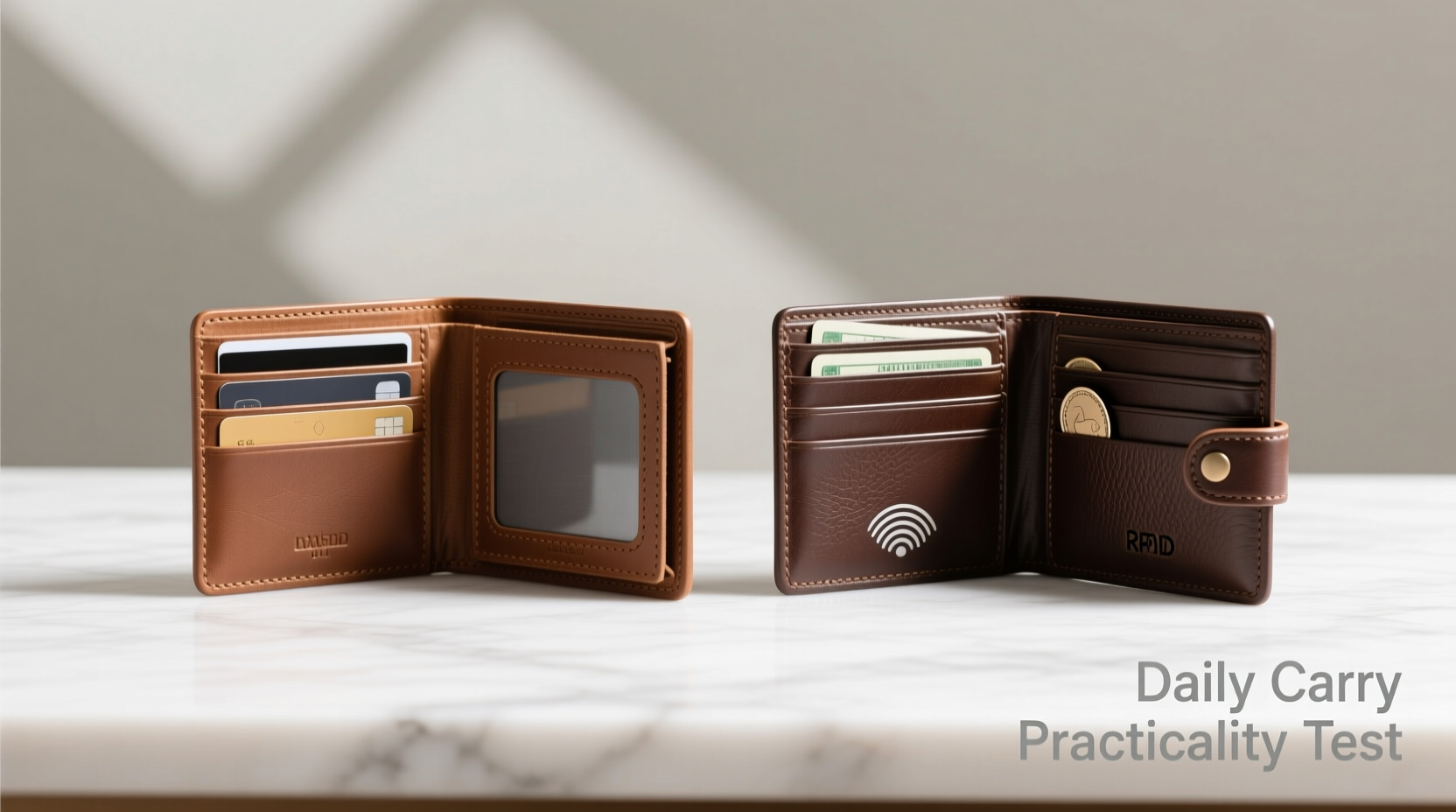
The core difference between a minimalist wallet and a traditional bifold lies in their design philosophy. Minimalist wallets are built on the principle of “less is more.” They aim to reduce clutter by holding only what’s essential—typically 4 to 6 cards and a folded bill or two. Constructed from materials like aluminum, titanium, carbon fiber, or compact leather, these wallets prioritize slim profiles and lightweight builds.
Traditional bifolds, on the other hand, follow a decades-old format: a center fold with multiple card slots, bill compartments, and often a clear ID window. Their design caters to users who carry several cards, receipts, loyalty slips, and even photos. While bulkier, they offer organizational features that many find indispensable.
Design influences not just aesthetics but also behavior. A minimalist wallet forces intentional curation—each card must earn its place. In contrast, a bifold enables passive accumulation, which can lead to overstuffed pockets and discomfort over time.
Capacity and Organization: What Can Each Hold?
When evaluating practicality, capacity matters. However, “more” doesn’t always mean “better.” The key question is whether the extra space improves functionality or merely encourages clutter.
| Feature | Minimalist Wallet | Traditional Bifold |
|---|---|---|
| Average Card Capacity | 4–6 (optimized access) | 6–12+ (with overflow) |
| Cash Storage | Limited (folded bills) | Full compartment (multiple bills) |
| ID Window | Rare (some models have it) | Common |
| Receipt/Slip Storage | Virtually none | Frequent (but disorganized) |
| Thickness (empty) | 3–7mm | 15–25mm |
| Material Options | Metal, leather, polymer | Leather, synthetic, fabric |
While bifolds clearly win in raw storage, minimalist designs excel in accessibility. Many feature quick-access card slots or spring-loaded mechanisms that let you retrieve a card with one hand. Bifolds, especially when full, require fumbling through layers to find the right card.
From an organizational standpoint, minimalist wallets promote discipline. Users tend to rotate cards based on current needs—work badge today, gym card tomorrow. Bifolds, while flexible, often become catch-alls for expired coupons, old business cards, and forgotten gift receipts.
Comfort and Carry Experience
No matter how functional a wallet is, if it causes discomfort, its practicality diminishes. This is where minimalist wallets consistently outperform traditional bifolds.
Sitting with a thick bifold in your back pocket can lead to posture issues, hip misalignment, and sciatic nerve pressure—a condition sometimes referred to as “wallet sciatica.” Orthopedic specialists have long warned against prolonged sitting with bulky items in the rear pocket.
“Carrying a thick wallet in your back pocket alters pelvic alignment and can contribute to chronic lower back pain.” — Dr. Alan Reed, Physical Medicine Specialist
Minimalist wallets, by virtue of their slim profile, eliminate this issue. They fit comfortably in front pockets, jacket pockets, or even pants side pockets without creating bulges or disrupting movement. Many users report forgetting they’re carrying one at all—often a sign of ideal ergonomics.
However, there are trade-offs. Some minimalist models made of metal can feel cold in winter or conduct heat in summer. Others lack a dedicated cash compartment, making transactions involving paper money slightly awkward. Leather-based minimalist wallets offer a warmer, more traditional feel but may stretch slightly over time.
Mini Case Study: Two Weeks, Two Wallets
James, a 34-year-old project manager in Chicago, decided to test both wallet types during his workweek. He started with his old leather bifold, which held 11 cards, three receipts, and various bills. By midweek, he noticed stiffness in his left hip after long meetings. His wallet had expanded to nearly 1 inch thick.
He switched to a titanium minimalist wallet holding only his driver’s license, credit card, work badge, and a folded $20 bill. Within days, the hip discomfort faded. At first, he missed having instant access to his rewards cards, but he began using mobile payment apps instead. After two weeks, he sold his bifold online and kept the minimalist version permanently.
His takeaway: “I didn’t lose functionality—I gained comfort and clarity. I now know exactly what I’m carrying.”
Durability and Long-Term Use
Durability is another critical factor in practicality. A wallet that wears out in six months isn’t practical, regardless of design.
High-end minimalist wallets made from aerospace-grade aluminum or titanium are nearly indestructible. They resist bending, water, and daily wear. However, cheaper metal versions may scratch easily or develop sharp edges over time. Leather minimalist wallets age beautifully but require conditioning to prevent drying.
Traditional bifolds, especially those made from full-grain leather, can last decades with proper care. But their stitching, card slots, and folding mechanisms are points of failure. Over time, elastic bands snap, leather creases crack, and seams loosen—particularly when overstuffed.
Interestingly, minimalist wallets often come with longer warranties due to confidence in materials. Some brands offer lifetime guarantees, whereas bifolds—especially mass-market ones—are frequently treated as disposable accessories.
Step-by-Step Guide: Transitioning from Bifold to Minimalist
Switching from a traditional bifold to a minimalist wallet requires adjustment. Follow this timeline to make the transition smooth and sustainable:
- Week 1: Audit Your Cards
Remove everything from your current wallet. Lay out all cards and ask: “Have I used this in the last 30 days?” Keep only essentials: ID, primary credit/debit, work badge. - Week 2: Digitize Where Possible
Add eligible cards to Apple Pay, Google Wallet, or Samsung Pay. Store digital copies of membership cards in your phone’s wallet app. - Week 3: Test a Minimalist Model
Purchase or borrow a minimalist wallet. Start with a leather or hybrid model if you're unsure about metal. Load only your curated cards and a single folded bill. - Week 4: Evaluate Daily Use
Track ease of access, comfort, and any situations where you felt underprepared. Adjust card selection accordingly. - Ongoing: Rotate Seasonally
Swap in seasonal cards (gym pass in winter, library card in summer) as needed. Treat your wallet like a toolset—only keep what you’re actively using.
Security and Theft Prevention
Practicality also includes safety. Minimalist wallets, being smaller and often carried in front pockets, are less prone to pickpocketing. Their compact size makes them harder to grab unnoticed in crowded areas.
Many minimalist designs include RFID-blocking materials to prevent electronic skimming of contactless cards. While not all bifolds offer this, higher-end models do. However, the sheer number of cards in a bifold increases exposure risk—if stolen, more data is compromised.
Additionally, minimalist wallets encourage carrying less cash, reducing loss impact. Combined with mobile payments, this creates a lean, secure system. That said, relying solely on digital payments isn’t foolproof—outages, dead batteries, or rural merchants without card readers can leave you stranded.
A balanced approach: use a minimalist wallet for daily essentials, but keep a backup card and cash in a separate location (like a jacket lining or bag).
FAQ
Can a minimalist wallet hold enough for international travel?
For short trips, yes—especially if you rely on mobile payments and carry a secondary card in your luggage. For extended stays, consider a slim travel wallet with added capacity, or rotate cards mid-trip.
Are minimalist wallets worth the higher price?
If you value durability, comfort, and long-term use, yes. While some cost $80–$150, their lifespan often exceeds 5–10 years. Compare that to replacing a $40 bifold every 1–2 years, and the math favors minimalism.
Do minimalist wallets damage cards?
Poorly designed metal wallets with sharp edges or tight springs can bend or scratch cards over time. Choose models with smooth interiors and adequate spacing. Leather or hybrid wallets typically pose no risk.
Checklist: Choosing the Right Wallet for You
- ✅ Assess how many cards you *actually* use daily (not just own)
- ✅ Consider your carry habits—back pocket, front pocket, or bag?
- ✅ Evaluate comfort—do you experience hip or back discomfort?
- ✅ Prioritize materials—metal for durability, leather for tradition
- ✅ Test RFID protection if you carry contactless cards
- ✅ Ensure quick card access—avoid designs that require two hands
- ✅ Think long-term: Will this still suit me in two years?
Conclusion
The minimalist wallet versus traditional bifold debate ultimately comes down to lifestyle alignment. If your routine involves frequent sitting, urban commuting, and reliance on digital tools, the minimalist option offers superior comfort, security, and intentionality. It streamlines your carry, reduces physical strain, and encourages mindful consumption of space.
However, if you regularly handle cash, manage multiple loyalty programs, or prefer the tactile reassurance of a full wallet, a well-organized bifold—kept deliberately light—can still be practical. The key is avoiding mindless accumulation.
True practicality isn’t measured by capacity alone, but by how seamlessly a tool integrates into your life. For most modern users, the minimalist wallet delivers that integration more effectively. It’s not just a trend—it’s a refinement of function.




 浙公网安备
33010002000092号
浙公网安备
33010002000092号 浙B2-20120091-4
Comments
No comments yet. Why don't you start the discussion?