
A bulging back pocket is more than just a fashion faux pas—it’s a silent contributor to chronic back pain, sciatica, and poor posture. For decades, the traditional billfold has reigned as the default choice for carrying cash, cards, and IDs. But in recent years, minimalist wallets have surged in popularity, promising slimmer profiles, better ergonomics, and a cleaner aesthetic. The real question isn’t just about convenience or trends; it’s about health and long-term well-being. How does your wallet affect your spine? And can going minimal actually improve both your physical comfort and personal style?
This article examines the ergonomic, functional, and stylistic differences between minimalist wallets and traditional billfolds. We’ll explore how each impacts spinal alignment, analyze real-world usage scenarios, and provide actionable insights to help you make a decision that supports both your body and your image.
The Hidden Cost of the Traditional Billfold
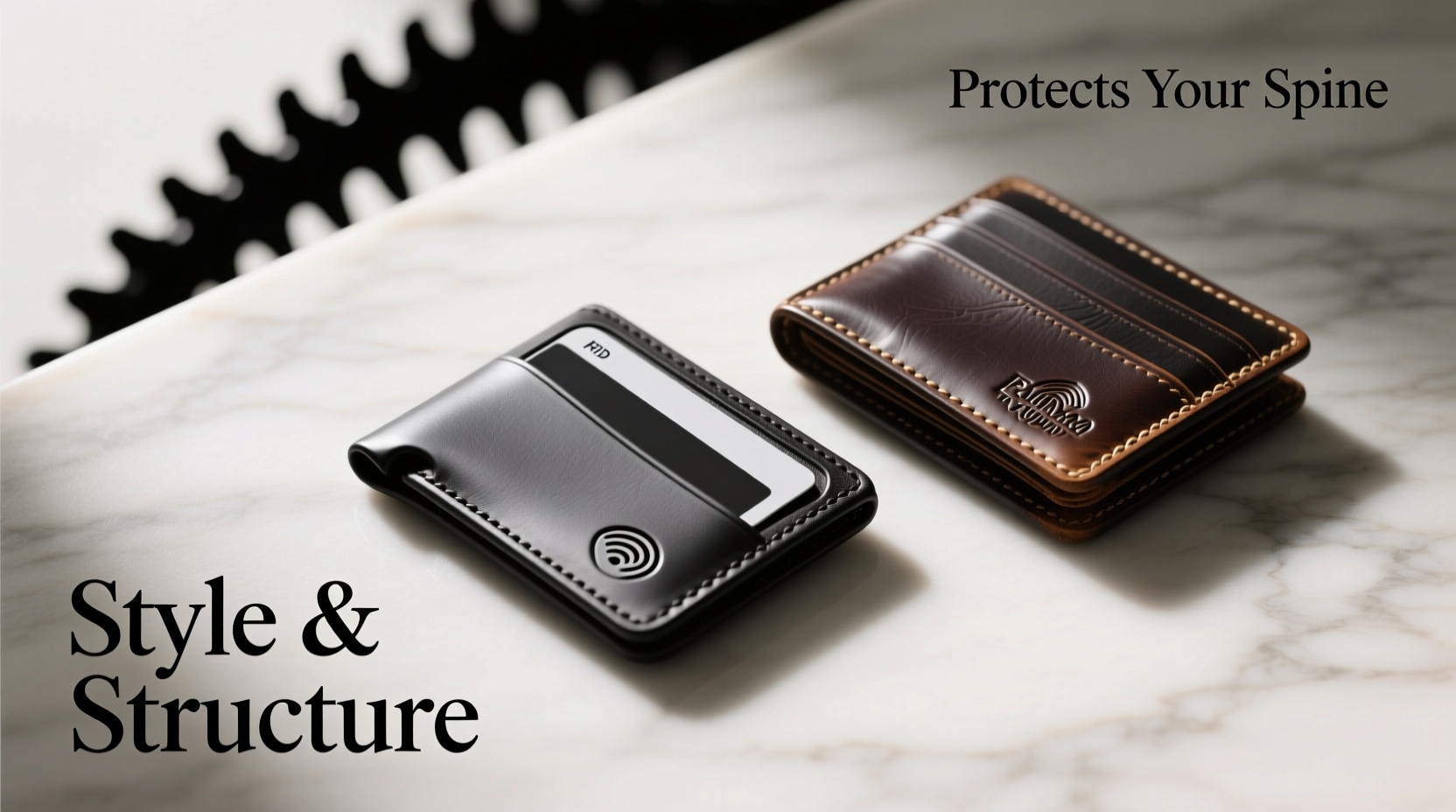
Traditional billfolds are designed with capacity in mind—multiple card slots, coin compartments, photo windows, and thick layers of leather. While this may seem practical, stacking these elements in your back pocket creates a host of biomechanical issues. When seated, a bulky wallet elevates one side of the pelvis, leading to pelvic tilt. This misalignment forces the spine to compensate, often resulting in lower back strain and uneven shoulder height over time.
Dr. Richard Guyer, spine specialist at the Texas Back Institute, explains:
“Sitting on a thick wallet for prolonged periods can induce sacroiliac joint dysfunction—a common but overlooked cause of chronic low back pain.”The condition arises when pressure from an uneven sitting surface irritates the joint connecting the spine to the pelvis. Many patients report relief simply by removing the wallet from their back pocket.
Beyond health, traditional billfolds contribute to visible wear on clothing. Constant friction stretches out back pockets, distorts fabric lines, and disrupts the clean silhouette of tailored trousers or jeans. Over time, this undermines even the most carefully curated wardrobe.
How Minimalist Wallets Support Spinal Health
Minimalist wallets are engineered with ergonomics and simplicity at their core. Typically made from lightweight materials like aluminum, titanium, or slim leather, they hold only essential cards and folded cash—usually 4 to 6 cards max. Their flat, compact design eliminates the need for deep back pockets, allowing users to store them comfortably in front pants pockets, shirt pockets, or even clipped inside a bag.
By reducing bulk, minimalist wallets prevent the pelvic imbalance caused by sitting on thick objects. A 2020 postural study conducted by the Journal of Physical Therapy Science found that participants who switched from traditional to minimalist wallets reported a 37% reduction in lower back discomfort after four weeks of consistent use. The improvement was attributed not only to reduced pressure but also to increased awareness of posture and carrying habits.
Moreover, minimalist wallets encourage intentional organization. With limited space, users naturally prioritize what they carry, reducing clutter and improving efficiency. This shift aligns with broader lifestyle trends toward digital minimalism and mindful consumption.
Real-World Example: Office Worker Relief
James, a 38-year-old project manager in Chicago, had suffered from recurring lower back pain for over two years. Despite regular chiropractic visits and core strengthening exercises, his discomfort persisted. During a routine consultation, his physiotherapist noticed James kept a 1.5-inch-thick leather billfold in his right back pocket—packed with receipts, expired loyalty cards, and seven credit cards.
After switching to a slim RFID-blocking metal wallet and relocating it to his front pocket, James reported noticeable improvement within ten days. “I didn’t think something so small could make such a difference,” he said. “My posture feels more balanced, and I don’t wince every time I sit down.”
Style Implications: Form Meets Function
Fashion is no longer just about appearance—it’s about how clothing fits and moves with the body. A protruding wallet breaks clean lines, adds unnecessary volume, and creates unsightly bulges. In contrast, minimalist wallets preserve the drape of modern tailoring, enhancing the sleekness of slim-fit suits, chinos, and casual wear alike.
Designers like Thom Browne and Alessandro Michele have long emphasized streamlined silhouettes, where every element contributes to visual harmony. Carrying a minimalist wallet supports this philosophy by eliminating distractions and maintaining proportion. Even in casual settings, a low-profile wallet projects intentionality and attention to detail—qualities increasingly associated with quiet luxury and understated confidence.
Additionally, minimalist wallets come in a variety of finishes—brushed metal, carbon fiber, hand-stitched leather—that offer tactile sophistication without excess. Some models feature quick-access mechanisms, magnetic closures, or modular inserts, blending innovation with elegance.
Comparative Analysis: Key Features Side-by-Side
| Feature | Minimalist Wallet | Traditional Billfold |
|---|---|---|
| Thickness | 3–8 mm | 15–30 mm |
| Card Capacity | 4–6 cards (expandable in some) | 6–12+ cards |
| Primary Carry Location | Front pocket, jacket, bag | Back pocket |
| Impact on Posture | Neutral or positive (reduces pelvic tilt) | Negative (causes spinal misalignment) |
| Durability | High (especially metal models) | Varies (leather wears over time) |
| Style Integration | Enhances clean lines and modern aesthetics | Can disrupt fit and create bulges |
Choosing the Right Option: A Practical Checklist
Selecting between a minimalist wallet and a traditional billfold shouldn’t be based solely on trendiness or marketing claims. Consider your daily habits, lifestyle needs, and long-term health. Use this checklist to guide your decision:
- Do you spend more than two hours a day sitting? → Lean toward minimalist to protect your spine.
- Do you carry more than six cards regularly? → Evaluate if all are necessary; consolidate or digitize.
- Do you value quick access to cash? → Look for minimalist designs with pull-tab or spring-loaded mechanisms.
- Are you concerned about RFID theft? → Choose a model with built-in shielding.
- Do you wear tailored clothing frequently? → A slim wallet preserves garment integrity.
- Do you travel often? → Lightweight, durable materials reduce baggage weight and streamline security checks.
- Are you open to changing habits? → Minimalism requires discipline in curation and organization.
Transitioning Smoothly: A Step-by-Step Guide
Moving from a traditional billfold to a minimalist wallet involves more than just purchasing new gear—it’s a behavioral shift. Follow this timeline to ensure a seamless transition:
- Week 1: Audit Your Contents
Empty your current wallet. Remove expired cards, duplicates, and unnecessary items. Keep only essentials: ID, primary debit/credit card, health insurance, and one backup card. - Week 2: Digitize What You Can
Use mobile wallets (Apple Pay, Google Pay) for frequent purchases. Store digital copies of membership cards and IDs in secure apps like LastPass or Google Drive. - Week 3: Select Your Model
Choose a minimalist wallet based on material preference (metal, leather, composite), closure type (elastic, magnetic, flip), and carry method (front pocket, clip-on, sleeve). - Week 4: Reorganize Daily Routine
Practice retrieving cards quickly. Train muscle memory by placing the wallet in the same spot daily—like your jacket inner pocket or front trouser pocket. - Ongoing: Maintain Discipline
Regularly review contents. Avoid letting receipts or business cards accumulate. Treat your wallet like a curated tool, not a storage bin.
Expert Insight: The Long-Term View
According to Dr. Laura Miranda, a physical therapist specializing in occupational ergonomics:
“The cumulative effect of poor carrying habits can manifest years later as chronic pain. Small adjustments today—like switching to a flat wallet—can prevent degenerative changes in the lumbar spine.”She emphasizes that preventive care starts with everyday choices, many of which go unnoticed until symptoms arise.
Fashion historian and style consultant Marcus Reed adds:
“True style isn’t about what you carry—it’s how you carry it. A man who moves freely, dressed in clothes that fit properly, exudes more confidence than one weighed down by outdated accessories.”
Frequently Asked Questions
Can a minimalist wallet hold cash securely?
Yes. Most minimalist wallets are designed with cash retention in mind. Leather sleeves use tension grips, while metal models often feature ridged interiors or elastic straps. Folded bills stay in place during movement, though very large stacks may require trimming or redistribution.
Isn’t a front pocket less secure than a back pocket?
Actually, front pockets are harder to access surreptitiously. Pickpockets target back pockets because they’re less monitored. Front pockets keep your wallet within your field of awareness and natural arm movement, increasing security through proximity.
What if I need to carry more than six cards?
Consider a tiered system: keep essentials in your minimalist wallet and store backups in a slim secondary holder at home or in your bag. Alternatively, use digital alternatives for infrequent cards like library or gym memberships.
Conclusion: Protect Your Body, Elevate Your Style
The choice between a minimalist wallet and a traditional billfold extends far beyond aesthetics or convenience. It’s a decision that affects your posture, spinal health, clothing longevity, and personal presentation. While the traditional billfold offers high capacity, its impact on the body and style often outweighs its utility—especially in a world where digital payments reduce the need for multiple cards.
Minimalist wallets represent a smarter, healthier alternative. They promote better sitting mechanics, support modern fashion sensibilities, and encourage intentional living. By making the switch, you’re not just adopting a trend—you’re investing in long-term well-being and refined self-image.




 浙公网安备
33010002000092号
浙公网安备
33010002000092号 浙B2-20120091-4
Comments
No comments yet. Why don't you start the discussion?