
In an era where sleek design and functional minimalism dominate lifestyle choices, the debate between minimalist wallets and traditional card holders has gained traction. Consumers are increasingly questioning whether reducing bulk actually improves daily comfort or if it's merely a trend-driven aesthetic preference. The answer isn't straightforward—comfort depends on usage patterns, clothing fit, pocket design, and personal habits. This article dissects the differences between minimalist wallets and card holders, evaluates how thickness impacts real-world wearability, and helps you determine which option aligns best with your lifestyle.
The Anatomy of Bulk: What Makes a Wallet “Thick”?
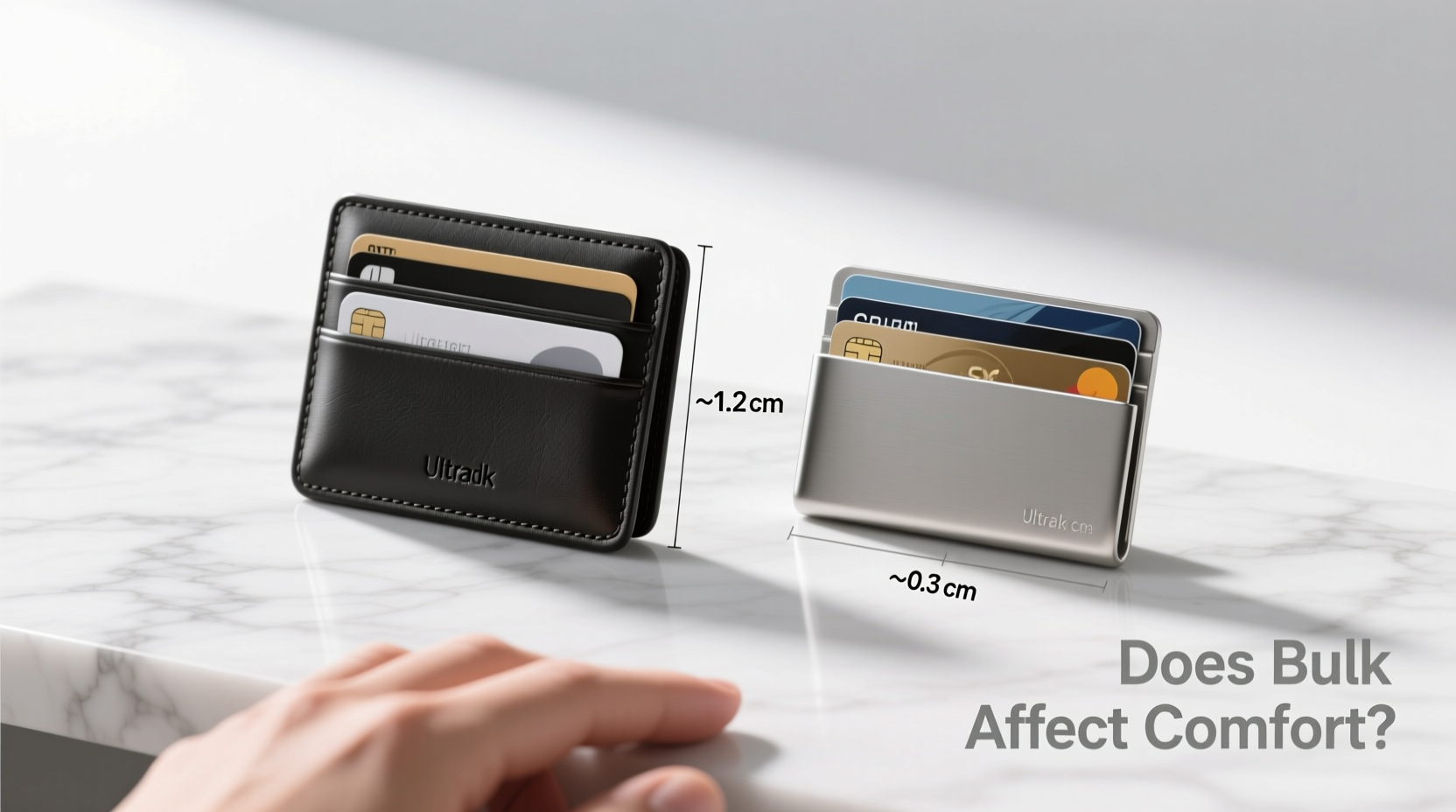
Bulk in wallets typically comes from three sources: material layers, number of card slots, and cash capacity. Traditional bifold or trifold wallets often contain multiple compartments for cards, IDs, receipts, and folded bills, creating a layered stack that expands over time. In contrast, minimalist wallets aim to reduce each of these elements—using slimmer materials like aluminum, titanium, or ultra-thin leather, limiting card storage to 3–6 cards, and accommodating only one or two folded bills at most.
Card holders, meanwhile, sit somewhere in between. They usually lack bill compartments entirely and are designed strictly for storing credit cards, driver’s licenses, and transit passes. Their structure is often flat and rigid, making them ideal for front-pocket carry but less practical for those who frequently use cash.
Comfort Metrics: How Thickness Affects Daily Carry
Comfort isn’t just about thinness—it’s about pressure distribution, movement restriction, and long-term ergonomics. Carrying a thick wallet in your back pocket can lead to posture issues, hip misalignment, and even sciatic nerve irritation over time. According to Dr. Robert Hayden, a chiropractor specializing in posture-related pain, “Prolonged sitting with a bulky object in the rear pocket creates pelvic tilt, leading to lower back strain.”
Front-pocket carry, favored by minimalist wallet users, eliminates this risk. However, it introduces new considerations: thigh movement during walking, seatbelt pressure when driving, and fabric stretch in tight jeans. A wallet under 3mm thick may go unnoticed after a few hours, while anything exceeding 6mm becomes detectable—especially in slim-fit trousers.
“Even a quarter-inch difference in wallet thickness can influence gait symmetry after several hours of standing or walking.” — Dr. Lena Torres, Biomechanics Researcher, University of Colorado
Comparative Breakdown: Minimalist Wallets vs Card Holders
| Feature | Minimalist Wallet | Card Holder |
|---|---|---|
| Average Thickness | 3–6 mm | 2–4 mm |
| Card Capacity | 4–8 cards (some with quick-access) | 3–6 cards (flat storage) |
| Cash Accommodation | Limited (1–3 folded bills) | Rarely included |
| Material Options | Leather, metal, carbon fiber, recycled plastics | Leather, metal, silicone |
| Pocket Compatibility | Front or back (depending on model) | Primarily front-pocket optimized |
| Durability | High (especially metal builds) | Moderate to high |
| RFID Protection | Common in premium models | Available, but not standard |
While both options prioritize slim profiles, minimalist wallets tend to offer slightly more versatility. Many include mechanisms like pull-tabs or spring-loaded ejectors for easier card access, whereas card holders rely on manual sliding, which can be awkward in tight pockets.
Real-World Usage: A Day in the Life
Consider Mark, a 34-year-old urban commuter who wears tailored chinos and values efficiency. He used to carry a full-size bifold with eight cards, loyalty receipts, and folded bills. After experiencing lower back discomfort, he switched to a titanium minimalist wallet holding four essential cards and a single bill. Within a week, he noticed reduced hip pressure while sitting and greater freedom of movement during his daily walk to the subway.
However, challenges emerged. At coffee shops, retrieving his card required fumbling through tight spaces. When traveling, he missed having a dedicated space for boarding passes. Eventually, Mark adopted a hybrid approach: using a minimalist wallet for weekdays and switching to a compact bi-fold for weekends and trips.
This case illustrates a key insight: optimal comfort is contextual. For office workers in slim-cut clothing, every millimeter counts. But for travelers, parents, or those in service industries, some added bulk may be a necessary trade-off for convenience.
Design Innovations That Reduce Perceived Bulk
Manufacturers have responded to demand for thinner yet functional designs with several innovations:
- Fan-style card arrangements: Cards radiate outward like a fan, allowing access without removing the entire stack.
- Ejection mechanisms: Spring-loaded sliders push cards partway out with the press of a button.
- Flexible composites: Materials like polycarbonate-leather blends conform slightly to pocket shape, reducing pressure points.
- Curved edges: Rounded corners prevent digging into the thigh during prolonged sitting.
These features don’t eliminate bulk but redistribute its impact, enhancing perceived comfort even if overall dimensions remain similar.
Step-by-Step Guide: Choosing Based on Your Lifestyle
- Assess your daily essentials: List every card and note how often you use cash. If you carry fewer than five items regularly, a card holder may suffice.
- Evaluate your clothing: Do you wear slim-fit pants or suits? Front-pocket compatibility becomes critical in tighter garments.
- Test your current carry: Place your existing wallet in your pocket and sit down. Does it create a noticeable bulge or tilt your pelvis? If yes, bulk is affecting your posture.
- Try a temporary swap: Use a business card sleeve or folded piece of cardboard (measuring ~3x4 inches) as a mock wallet for two days. Note any discomfort or inconvenience.
- Select based on priority: Choose a minimalist wallet if you value cash access and durability; opt for a card holder if maximum thinness and simplicity are paramount.
Common Misconceptions About Minimalist Design
Many assume that “minimalist” automatically means “more comfortable.” This isn’t always true. Some metal card holders, while extremely thin, have sharp edges that dig into the leg. Others lack cushioning, transferring all pressure directly to the skin. Additionally, ultra-slim designs often sacrifice security—cards can fall out if the wallet is dropped or jostled.
Another myth is that RFID blocking is essential in all cases. In reality, contactless skimming requires proximity within inches and sustained exposure—rare in everyday scenarios. Yet many minimalist wallets incorporate bulky shielding layers, adding unnecessary thickness.
“True minimalism isn’t about removing everything—it’s about keeping only what adds value.” — Dieter Rams, Industrial Designer
Checklist: Is a Slim Wallet Right for You?
- ✅ I carry fewer than six cards daily
- ✅ I rarely use cash or prefer digital payments
- ✅ I wear slim or fitted pants regularly
- ✅ I experience back or hip discomfort from my current wallet
- ✅ I prioritize portability over storage capacity
- ✅ I’m willing to adjust habits (e.g., removing excess cards)
If you checked most of these, transitioning to a minimalist wallet or card holder could enhance comfort. If not, consider a compact bi-fold instead—a middle ground that balances slimness with utility.
Frequently Asked Questions
Can a card holder replace a wallet completely?
For many people, yes—especially those using mobile payments and carrying only ID, credit, and transit cards. However, if you frequently pay with cash, need coin storage, or carry receipts, a traditional or minimalist wallet remains more practical.
Do minimalist wallets last longer than regular ones?
It depends on materials. Metal minimalist wallets resist wear and tear better than leather, but can dent or scratch. High-quality leather versions age well but may stretch over time. Traditional wallets fail mainly due to seam stress from overstuffing, so minimalist designs inherently avoid this issue by limiting capacity.
Is front-pocket carry safer than back-pocket?
Safety-wise, front-pocket carry reduces theft risk since your wallet stays in your line of sight. Ergonomically, it prevents spinal imbalance caused by sitting on a back-pocket wallet. However, front pockets expose the wallet to accidental drops when sitting or bending, so secure closure mechanisms are important.
Conclusion: Comfort Is Personal—But Bulk Matters More Than You Think
The question isn’t whether minimalist wallets or card holders are objectively better—it’s whether their design aligns with how you live. For those in fast-paced, urban environments wearing form-fitting clothes, even minor bulk can disrupt comfort and posture over time. In these cases, shedding millimeters delivers tangible benefits. For others, especially those needing cash access or managing multiple cards, a slightly thicker but more functional wallet makes more sense.
The takeaway is clear: bulk does matter for comfort, but not universally. The smartest choice involves self-assessment, trial, and willingness to adapt. Whether you choose a feather-light card holder or a feature-rich minimalist wallet, the goal should be intentional design—owning what you need, not what fits.




 浙公网安备
33010002000092号
浙公网安备
33010002000092号 浙B2-20120091-4
Comments
No comments yet. Why don't you start the discussion?