
In a world saturated with fast fashion, influencer hauls, and seasonal trends, a growing number of people are asking: Can I actually be happy wearing just 30 pieces of clothing? The minimalist wardrobe movement has gained traction over the past decade, promising clarity, simplicity, and freedom from decision fatigue. On the other side, maximalism celebrates self-expression through bold colors, layered textures, and curated excess. But is one inherently better than the other? Or can happiness in fashion exist somewhere in between?
The truth isn’t binary. Happiness in dressing doesn’t come from a specific number of garments but from alignment—with your values, lifestyle, and identity. Whether you're drawn to the quiet elegance of a capsule closet or the vibrant chaos of a packed wardrobe, the key lies in intentionality.
The Allure of the 30-Item Wardrobe
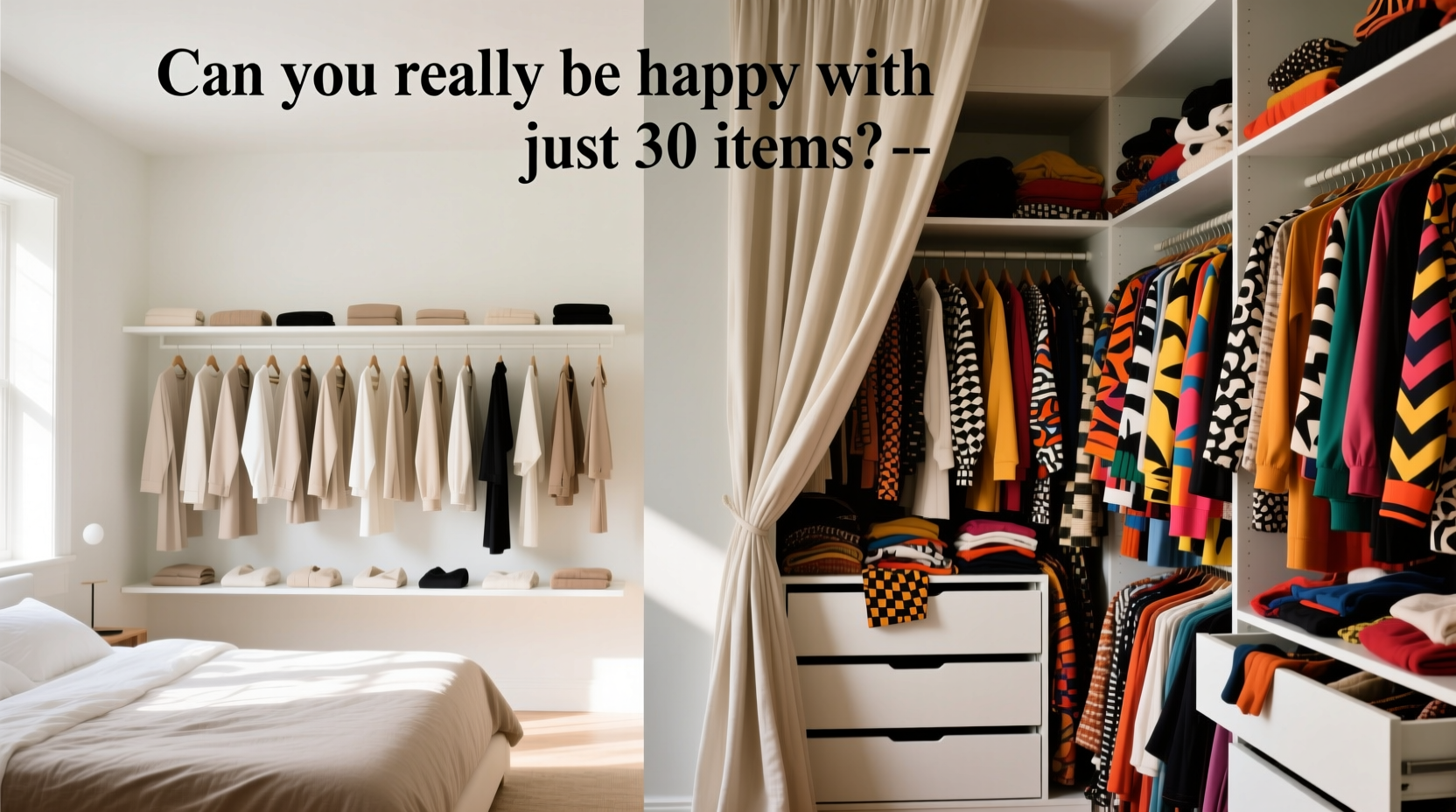
The minimalist wardrobe, often associated with capsule wardrobes popularized by figures like Project 333 founder Courtney Carver, suggests that limiting yourself to around 30 pieces (excluding sleepwear, undergarments, and activewear) can reduce stress, save money, and streamline daily choices. Proponents argue that owning fewer clothes forces you to wear what you love, maintain what you own, and avoid impulse purchases.
A 30-item limit typically includes tops, bottoms, dresses, outerwear, and shoes—everything needed for three months of versatile styling. The philosophy hinges on quality over quantity: each piece should be durable, timeless, and mixable. Neutral palettes dominate, favoring black, white, beige, navy, and gray for their compatibility.
But does this model work for everyone? For some, it’s liberating. For others, it feels restrictive—like trading self-expression for efficiency.
Maximalism: Fashion as Art and Identity
Maximalism rejects the idea that less is more. Instead, it embraces abundance—bold prints, contrasting patterns, vintage finds, and statement accessories. Maximalists see clothing as a form of storytelling, where every outfit communicates mood, heritage, creativity, or rebellion.
This approach thrives in cultures and communities where dress is performative: think drag, streetwear, festival fashion, or avant-garde designers like Jeremy Scott or Alessandro Michele at Gucci. For these individuals, fashion isn't about utility alone—it's art, armor, and autobiography.
Critics argue maximalism encourages overconsumption and clutter. Yet many maximalists are deeply intentional collectors. Their closets may be full, but they’re also curated. A vintage jacket might have been sourced over years; a hand-embroidered skirt passed down through generations. The value isn’t in scarcity but in significance.
“Clothing is one of the most personal forms of expression we have. To impose a universal standard—like ‘you must own fewer than 30 things’—is to misunderstand why people dress at all.” — Dr. Lila Monroe, Cultural Anthropologist, Fashion & Identity Research Group
Minimalist vs Maximalist: A Practical Comparison
| Aspect | Minimalist Wardrobe | Maximalist Style |
|---|---|---|
| Mindset | Less is more. Focus on essentials. | More is more. Celebrate abundance. |
| Core Principle | Intentionality through limitation. | Self-expression through variety. |
| Color Palette | Neutral, monochromatic, earth tones. | Bold, clashing, high-contrast. |
| Purchase Frequency | Rare, deliberate, slow fashion. | Occasional splurges or frequent discoveries. |
| Storage Needs | Compact, organized, visible. | Larger, possibly chaotic, treasure-filled. |
| Emotional Benefit | Clarity, calm, control. | Excitement, joy, transformation. |
| Common Risk | Outfits feel repetitive or dull. | Decision fatigue or unused items. |
Can You Be Happy With Just 30 Items?
Happiness in fashion depends less on quantity and more on congruence. If your life is predictable—office work, home, gym—and you dislike daily outfit decisions, a 30-piece wardrobe could bring genuine relief. But if your job involves creative presentations, social events, or cultural performances, such limits may feel impractical or even oppressive.
Consider Sarah, a UX designer in Portland who adopted Project 333 five years ago. She found that paring down her closet reduced morning anxiety and saved hundreds monthly. Her 30 items—mostly linen, cotton, and wool in soft neutrals—are rotated seasonally and meticulously cared for. “I don’t miss variety,” she says. “I feel freer because I’m not chasing trends.”
Contrast that with Malik, a performer and stylist in New York. His wardrobe exceeds 200 pieces, including vintage denim, custom jackets, and theatrical accessories. “My clothes are part of my craft,” he explains. “Wearing the same thing twice in a week would feel like repeating a line in a play. I need variety to stay inspired.”
Neither is wrong. Both are aligned—with their routines, values, and emotional needs.
Finding Your Personal Style Equilibrium
The real question isn’t whether minimalism or maximalism is better—but which approach supports *your* life. Some thrive in structure; others bloom in chaos. The healthiest wardrobes aren’t defined by item count but by coherence.
Start by assessing your lifestyle:
- Do you attend formal events regularly?
- Do you work remotely or in a creative field?
- Do you travel frequently across climates?
- Do you enjoy shopping, or does it drain you?
If your answers lean toward routine and simplicity, minimalism may suit you. If you crave change, surprise, and transformation, maximalism might be your language.
Or consider a hybrid model: a minimalist base with maximalist accents. Keep a core of 20–30 versatile staples (jeans, tees, blazers, boots), then rotate in expressive layers—scarves, jewelry, hats, or seasonal statement pieces. This balances practicality with personality.
Step-by-Step: Build Your Intentional Wardrobe
- Declutter ruthlessly. Remove anything unworn in the past year, damaged beyond repair, or that no longer fits your body or identity.
- Identify your style anchors. Pick 5 outfits you love. What makes them work? Note colors, silhouettes, fabrics.
- Define your non-negotiables. List activities you dress for: work, exercise, socializing, etc. Allocate pieces accordingly.
- Set a realistic cap (if desired). It doesn’t have to be 30. Try 50, 70, or 100—whatever feels manageable.
- Shop with purpose. Before buying, ask: Does this align with my anchors? Will I wear it at least 30 times?
- Rotate seasonally. Store off-season items neatly. Reintroduce them with fresh perspective.
- Reassess quarterly. Fashion evolves, and so do you. Adjust as needed.
Checklist: Is Your Wardrobe Serving You?
- ✅ Over 80% of my clothes fit well and make me feel confident.
- ✅ I rarely face \"nothing to wear\" moments despite having limited options.
- ✅ My go-to outfits reflect my current lifestyle and values.
- ✅ I mend or recycle damaged items instead of discarding them.
- ✅ I feel excited—not guilty—about how I dress.
- ✅ I can pack a weekend bag in under 10 minutes without stress.
Mini Case Study: From Overwhelm to Alignment
Jenna, a 34-year-old teacher from Austin, once owned over 150 tops alone. After a move and a bout of burnout, she felt exhausted by her closet. She decided to try a 30-item challenge for 90 days.
The first two weeks were difficult. She missed variety. But by week three, she noticed something: she was spending less time choosing outfits and more time enjoying her mornings. She repaired a favorite cardigan instead of replacing it. She donated 80% of her old clothes to a women’s shelter.
After the challenge, she didn’t stick rigidly to 30 items—but she kept the mindset. Her new wardrobe sits at 65 carefully chosen pieces. “I realized I don’t need more clothes,” she says. “I needed more clarity.”
Meanwhile, her friend Diego, a DJ, tried the same challenge and hated it. “I express different energies through my sets,” he said. “My red sequin jacket isn’t ‘excess’—it’s part of the performance.” He returned to his vibrant, expansive collection—but now curates it more thoughtfully, removing pieces that no longer match his evolving sound.
Both found peace—not through a number, but through awareness.
Frequently Asked Questions
Is a 30-item wardrobe realistic for parents or people with active lifestyles?
It can be challenging. Parents often need durable, washable clothes that withstand messes. Active lifestyles may require separate gear for work, gym, and leisure. In such cases, expand the definition: include uniforms, sportswear, or work-specific attire outside the count. The goal is mindfulness, not arbitrary restriction.
Does minimalism mean dressing boring or neutral all the time?
No. Minimalism is about curation, not color. You can have a minimalist wardrobe in bright hues or bold patterns—as long as each piece is essential and harmonizes with others. Think of artist Yayoi Kusama: her iconic polka dots are repeated, refined, and deeply intentional.
Can I embrace both styles at different times?
Absolutely. Your wardrobe can evolve with seasons, roles, or phases of life. You might adopt minimalism during a busy work period for mental clarity, then expand creatively during a sabbatical. Flexibility is a sign of wisdom, not inconsistency.
Conclusion: Dress for Who You Are—Not Who You’re Supposed to Be
The minimalist wardrobe vs maximalist style debate ultimately misses the point. True satisfaction in fashion comes not from following rules, but from understanding yourself. Whether you own 30 pieces or 300, what matters is that your clothes serve you—not the other way around.
Happiness isn’t found in a magic number. It’s found in the quiet confidence of wearing what feels right, the joy of rediscovering a forgotten gem in your closet, and the freedom to express who you are without apology.
You don’t need permission to simplify. And you don’t need permission to shine boldly. What you need is honesty: about your life, your values, and what brings you genuine delight.




 浙公网安备
33010002000092号
浙公网安备
33010002000092号 浙B2-20120091-4
Comments
No comments yet. Why don't you start the discussion?