
In an age where technology dominates our wrists as much as our pockets, the question isn’t just about what time it is—it’s about what your watch says about you. The minimalist watch has long stood as a symbol of refined taste: clean lines, understated dials, and timeless elegance. On the other side, the smartwatch offers real-time health tracking, notifications, GPS, and voice assistants—all packed into a sleek digital interface. But can you truly have both style and function without compromise?
The answer isn’t binary. It depends on your lifestyle, aesthetic preferences, and how you define utility. Some people wear watches purely for fashion; others rely on them as essential tools. The good news? The gap between minimalism and intelligence is narrowing. Designers and engineers are now collaborating to create timepieces that don’t force you to choose between looking good and staying connected.
The Allure of the Minimalist Watch
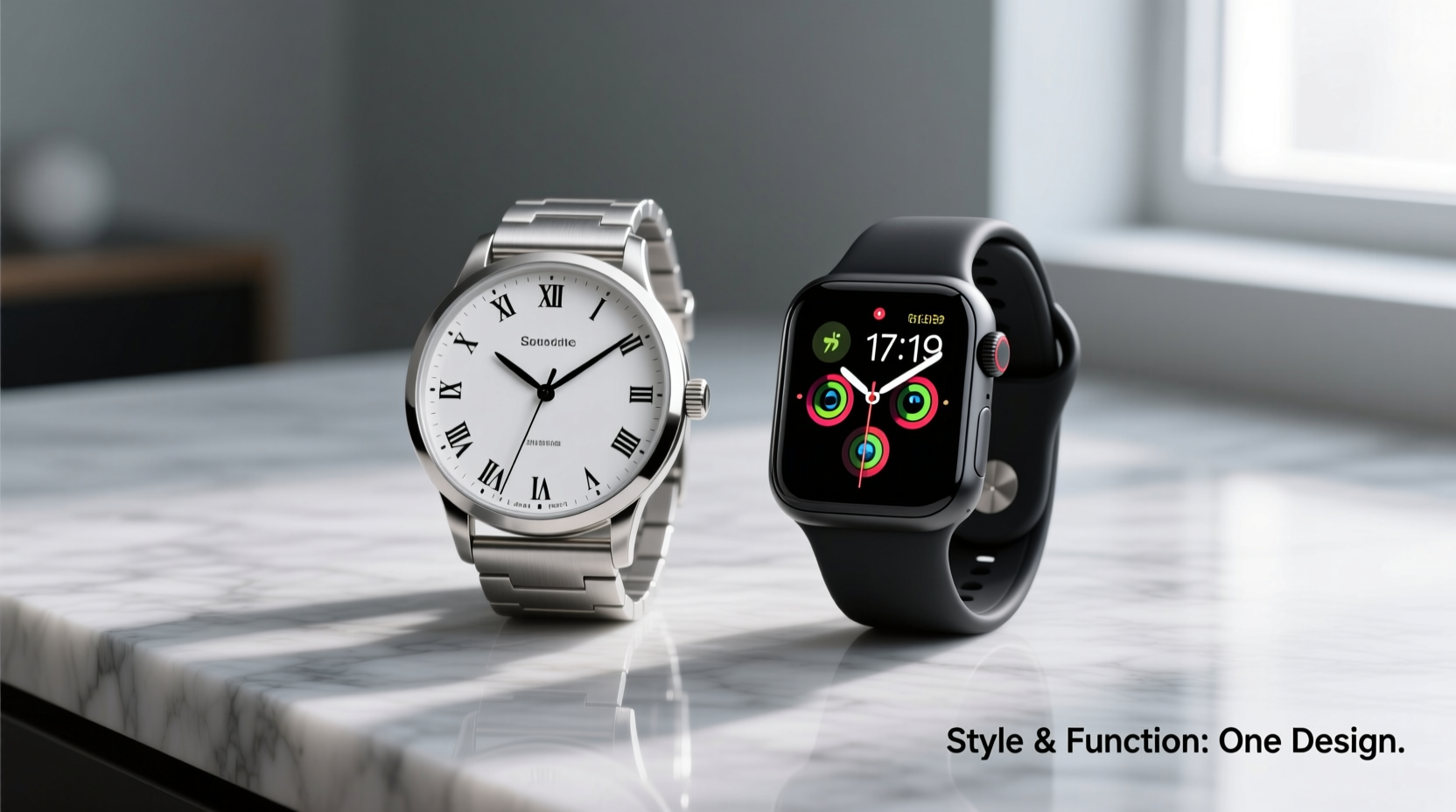
A minimalist watch strips away excess. No chronographs, no date windows cluttering the face, no oversized bezels. Instead, it focuses on proportion, legibility, and material quality. Brands like Nomos Glashütte, Junghans, and Daniel Wellington have built reputations on this philosophy—proving that less really can be more.
These watches appeal to those who value craftsmanship over convenience. A well-made minimalist timepiece often uses mechanical or automatic movements, which many collectors appreciate for their engineering and heritage. Wearing one signals intentionality—a deliberate choice to slow down in a fast-paced world.
But minimalism doesn’t mean impracticality. Many minimalist designs still offer water resistance, sapphire crystal glass, and durable straps made from leather or stainless steel. The key difference lies in purpose: these watches aren’t trying to do everything. They aim to tell time beautifully—and nothing more.
What Smartwatches Bring to the Table
Smartwatches, by contrast, are multitaskers. From Apple and Samsung to Garmin and Fitbit, modern models track heart rate, sleep patterns, blood oxygen levels, and even ECG readings. They sync with smartphones to deliver messages, calls, calendar alerts, and navigation prompts directly to your wrist.
For fitness enthusiasts, parents, professionals, or anyone managing a complex schedule, a smartwatch isn’t just convenient—it’s transformative. Notifications reduce phone dependency, while health monitoring provides early warnings for potential issues. Some models even support contactless payments, music streaming, and standalone cellular connectivity.
Yet, despite their capabilities, smartwatches often struggle with longevity in terms of style. Their bulky profiles, digital interfaces, and frequent software updates make them feel ephemeral compared to analog classics. Most look outdated within two or three years, both technically and aesthetically.
“Technology evolves rapidly, but elegance endures. The challenge is embedding innovation within enduring design.” — Clara Lin, Industrial Designer at Swiss Time Lab
Bridging the Gap: Hybrid and Elevated Smartwatches
The most promising development in wearable tech isn’t a full retreat to analog—but a thoughtful fusion. Enter hybrid smartwatches and elevated digital models that borrow cues from traditional watchmaking.
Hybrid watches, such as those from Withings or Frederique Constant’s Hybrid Manufacture line, feature physical hands and a classic dial, but include hidden sensors for step counting, sleep tracking, and smartphone alerts. These subtle vibrations nudge you when you receive a call or exceed your step goal—without flashing screens or beeping alarms.
Meanwhile, premium smartwatches like the Apple Watch Ultra 2 with titanium casing or the Montblanc Summit series use high-grade materials and refined case shapes to mimic luxury timepieces. Paired with leather bands or metal bracelets, they blur the line between gadget and heirloom.
| Feature | Minimalist Watch | Traditional Smartwatch | Elevated/Hybrid Option |
|---|---|---|---|
| Primary Function | Timekeeping & Style | Health/Notifications/Data | Blended Utility + Aesthetics |
| Design Language | Clean, Analog, Slim | Digital, Functional, Bulky | Sleek, Balanced, Refined |
| Battery Life | Years (mechanical) | 1–7 days | Up to 30 days (hybrids) |
| Fashion Longevity | Decades | 2–4 years | 5+ years (with proper styling) |
| Price Range | $200–$5,000+ | $200–$800 | $400–$2,000 |
This convergence allows users to enjoy meaningful functionality without sacrificing sophistication. You can attend a board meeting looking polished, then go for a run and track your performance—all with the same device.
Real-World Example: The Executive Who Switched Twice
James R., a 42-year-old financial advisor based in Zurich, spent years rotating between a vintage Omega Seamaster for client meetings and an Apple Watch during workouts and travel. He found the constant switching inconvenient and eventually explored alternatives.
After testing several models, he settled on the Montblanc Summit 3 with a black ceramic case and alligator strap. “At first glance,” he says, “clients assume I’m wearing a traditional dress watch. Only I know it’s silently tracking my stress levels and reminding me to stand after long calls.”
He pairs it with interchangeable straps—one leather for formal settings, one fluoroelastomer for weekends. The result? One watch serves nearly every scenario, eliminating wardrobe friction and reducing clutter. “I used to think I needed two identities—one analog, one digital. Now I realize I just needed a better-designed bridge.”
How to Choose What Works for You
Deciding between a minimalist watch and a smartwatch—or finding a middle ground—requires honest self-assessment. Consider not just what features you want, but how you live day-to-day.
Ask yourself:
- Do I check my phone constantly, or do I prefer focused attention?
- Am I drawn to mechanical craftsmanship or digital efficiency?
- Is health tracking a priority, or just a nice-to-have?
- Will I wear this to formal events, workouts, or both?
- How important is battery life versus charging convenience?
Based on your answers, follow this step-by-step decision path:
- Define your primary use case: Is it professional presentation, athletic performance, daily wellness, or all of the above?
- Set a style boundary: Decide whether digital displays clash with your wardrobe or if you can embrace them tastefully.
- Test wearability: Try different case sizes and weights. A 42mm smartwatch may feel heavy if you’re used to 36mm minimalist pieces.
- Assess ecosystem compatibility: If you own an iPhone, Apple Watch integration is seamless. Android users may prefer Wear OS devices like the Samsung Galaxy Watch.
- Consider long-term ownership: Will you upgrade every year, or keep one device for five years? Minimalist watches typically age better.
Your Action Checklist: Balancing Style and Function
If you're ready to make a decision, use this checklist to guide your purchase:
- ☐ Identify your top three desired functions (e.g., heart rate monitor, sleep tracker, silent alarms)
- ☐ Determine your preferred case size (under 40mm for subtlety, 42mm+ for screen visibility)
- ☐ Choose a material that matches your lifestyle (titanium for lightness, stainless steel for durability)
- ☐ Look for customizable watch faces that mimic analog dials
- ☐ Prioritize models with third-party strap compatibility
- ☐ Check if firmware updates are long-term supported
- ☐ Read reviews focusing on everyday wear, not just specs
Frequently Asked Questions
Can a smartwatch ever be considered stylish enough for formal occasions?
Yes—but only certain models. Premium smartwatches with slim profiles, metal cases, and classic strap options (like the Apple Watch Hermès edition or TAG Heuer Connected) are designed specifically for versatility. Pair them with a leather band and avoid bright digital faces to maintain formality.
Are minimalist watches obsolete in a tech-driven world?
No. While they lack data-tracking capabilities, minimalist watches fulfill a different need: presence over productivity. They encourage mindfulness, punctuality, and personal expression without distraction. In fact, their popularity has grown as digital fatigue increases.
Is there a watch that truly does everything well?
Not perfectly—but close. The best compromises come from brands investing in both horology and human-centered design. For example, the Citizen Eco-Drive Bluetooth series combines solar power, automatic time syncing, and a clean analog appearance. It tracks location-based time zones quietly, without a touchscreen. This kind of invisible intelligence may represent the future of functional elegance.
Conclusion: Harmony Over Hierarchy
The debate between minimalist watches and smartwatches doesn't have to end in choosing one over the other. The real evolution lies in redefining what we expect from our accessories—not just to inform or impress, but to integrate seamlessly into our lives.
You can have style and function in one. It requires being intentional: selecting a device that aligns with your values, fits your body and wardrobe, and enhances rather than interrupts your day. Whether you lean toward the quiet precision of a hand-finished movement or the responsive intelligence of a sensor-packed display, the right watch should feel like an extension of yourself—not a compromise.




 浙公网安备
33010002000092号
浙公网安备
33010002000092号 浙B2-20120091-4
Comments
No comments yet. Why don't you start the discussion?