
Keychains are more than just functional accessories—they're personal statements. Whether clipped to a bag, belt loop, or set of keys, they reflect taste, lifestyle, and sometimes even sentiment. Among the most visually striking options today are mink fur keychains and resin keychains. One exudes soft luxury; the other offers bold, customizable design. But when it comes to longevity and aesthetic appeal, which truly wins? This in-depth comparison breaks down materials, durability, maintenance, and visual impact to help you decide what’s best for your everyday carry.
Durability: How Long Do They Really Last?
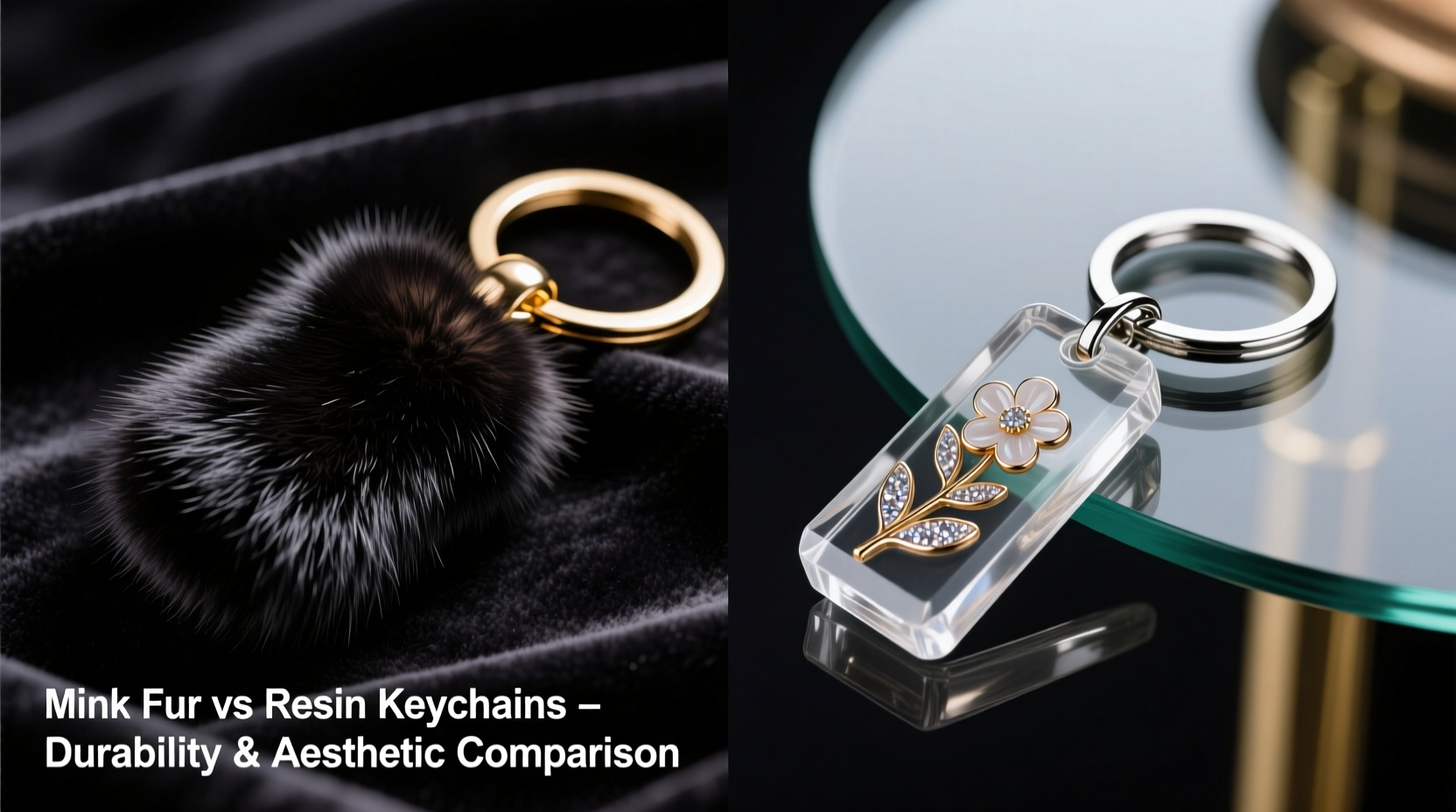
The lifespan of a keychain depends heavily on material resilience, environmental exposure, and usage frequency. Mink fur and resin represent two very different approaches to construction—one natural and organic, the other synthetic and engineered.
Mink fur keychains are made from real animal pelts, typically sourced as a byproduct of the fashion industry. When properly processed, mink fur is soft, dense, and naturally insulating. However, its organic nature makes it vulnerable to moisture, friction, and UV degradation. Over time, exposure to rain, sweat, or direct sunlight can cause the fur to mat, fade, or lose its luster. Regular handling—especially with dirty hands—can accelerate wear. With careful use, a high-quality mink fur keychain may last 1–3 years before showing significant deterioration.
In contrast, resin keychains are made from liquid epoxy or polyester resins poured into molds and cured into solid form. Resin is inherently water-resistant, scratch-resistant (when coated), and impervious to biological decay. It doesn’t degrade under UV light unless low-grade pigments are used. Because it’s non-porous, it won’t absorb odors or stains. In real-world testing, resin keychains have been observed to maintain their appearance for 5 years or more—even with daily use. Unlike fur, resin doesn’t shed, fray, or compress over time.
Aesthetic Appeal: Style, Shine, and Personalization
Appearance matters—especially for an accessory that travels with you everywhere. Aesthetics aren’t just about initial impression; they include how the item ages and whether it continues to look good over time.
Mink fur keychains offer a tactile richness that few materials can match. Their plush texture and natural sheen give off a sense of opulence. Available in dyed colors like pastel pink, black, white, or silver, they’re popular among fashion-forward users who want a touch of glamour. The softness invites touch, making them a sensory experience. However, this same softness means they show dirt quickly and can appear “flattened” after months of being stuffed in pockets or bags.
Resin keychains, meanwhile, excel in versatility. They can be transparent, opaque, glitter-infused, or layered with embedded objects like dried flowers, foil, or miniature figures. Designers use molds to create intricate shapes—from animals to logos to abstract art. High-gloss finishes enhance depth and color vibrancy, giving them a jewel-like quality. Because resin doesn’t change texture over time, it maintains its original shine and clarity, assuming it’s not scratched. Some premium resin pieces are indistinguishable from glass or crystal.
“Resin allows for infinite creativity without sacrificing structural integrity. It’s one of the most durable decorative materials available today.” — Lila Tran, Industrial Designer & Material Specialist
Comparison Table: Key Features at a Glance
| Feature | Mink Fur Keychains | Resin Keychains |
|---|---|---|
| Material Type | Natural animal fur | Synthetic polymer (epoxy/polyester) |
| Lifespan | 1–3 years (with care) | 5+ years (often much longer) |
| Water Resistance | Poor – absorbs moisture | Excellent – fully waterproof |
| Scratch Resistance | Low – fibers snag easily | High – especially with UV coating |
| UV Resistance | Fair – fades in sunlight | Good to excellent (depends on pigment) |
| Customization | Limited to color/dye | Highly customizable (shapes, colors, inclusions) |
| Eco-Friendliness | Biodegradable but raises ethical concerns | Non-biodegradable but recyclable in some cases |
| Care Required | Regular brushing, dry storage | Occasional wipe-down |
Maintenance and Care: What’s Involved?
Caring for your keychain directly affects how long it lasts and how good it looks. The difference in maintenance between mink fur and resin couldn’t be starker.
Mink fur requires active upkeep. To prevent matting, it should be gently brushed with a soft pet brush every few weeks. It must never be submerged in water or cleaned with chemicals. If it gets damp, it should be air-dried away from heat sources. Storing it in a breathable fabric pouch when not in use helps preserve its shape. Exposure to perfumes, lotions, or cigarette smoke can stain or odorize the fur permanently.
Resin, by comparison, is nearly maintenance-free. A quick wipe with a damp cloth removes dust and fingerprints. Avoid abrasive scrubbing to prevent micro-scratches. For deep cleaning, mild soap and water are safe. High-end resin pieces often come with a protective topcoat that resists yellowing and enhances gloss. No brushing, drying, or special storage is required.
Real-World Example: Two Years of Daily Use
Consider the case of Sarah, a college student who bought both a pink mink fur keychain and a custom resin keychain shaped like a galaxy marble during her freshman year. She used both interchangeably on her backpack.
By the end of the first year, the mink fur had begun to flatten and collect lint. After being caught in the rain twice, it developed dark spots and lost its fluffiness. She stopped using it regularly by month 14. The resin keychain, however, looked almost new. Despite being dropped on pavement multiple times and exposed to sun and rain, its surface remained glossy and intact. Only minor edge scuffs were visible upon close inspection. By graduation, the resin piece was still her go-to accessory, while the fur keychain had been donated due to its worn appearance.
This scenario reflects broader user trends reported in accessory forums and retail reviews: resin outperforms fur in real-life conditions, especially for students, travelers, and outdoor workers.
Step-by-Step Guide: Choosing the Right Keychain for You
- Assess Your Lifestyle: Do you commute in all weather? Work outdoors? Carry your keys in a crowded bag? If so, durability is critical—resin is the better fit.
- Evaluate Aesthetic Priorities: Are you drawn to soft textures and natural materials? Or do you prefer bold colors and artistic designs? Fur appeals to tactile luxury lovers; resin suits creative expressionists.
- Consider Ethical Values: Mink fur involves animal products, which may conflict with vegan or cruelty-free principles. Resin is synthetic but may involve environmental trade-offs in production.
- Review Maintenance Willingness: Be honest—will you remember to care for delicate fur? Or do you prefer “set it and forget it” accessories?
- Set a Budget: High-end mink fur keychains range from $25–$60. Custom resin pieces can cost $15–$50, with mass-produced versions often under $10. Resin offers better value over time due to longevity.
FAQ
Can mink fur keychains be restored once they start looking worn?
Minor flattening can sometimes be revived with gentle steaming and brushing, but stained or matted fur is difficult to restore. Prevention through proper care is more effective than repair.
Do resin keychains turn yellow over time?
Lower-quality resins with poor UV stabilizers can yellow, especially in direct sunlight. Premium resin formulations include anti-yellowing agents and can stay clear for years.
Are resin keychains safe to use with children’s backpacks?
Yes, once fully cured, resin is non-toxic and safe. Ensure edges are smooth and the attachment ring is securely sealed to prevent choking hazards.
Conclusion: Which One Wins?
When comparing mink fur and resin keychains, the answer depends on priorities. For short-term style and sensory appeal, mink fur delivers undeniable charm. But for lasting durability, consistent appearance, and minimal upkeep, resin is the superior choice. It withstands the rigors of daily life far better and retains its visual impact over years, not months.
If you value sustainability, customization, and long-term value, resin is the logical winner. If you prioritize natural materials and don’t mind replacing your keychain every year or two, mink fur remains a stylish option—just be prepared for higher maintenance and shorter lifespan.




 浙公网安备
33010002000092号
浙公网安备
33010002000092号 浙B2-20120091-4
Comments
No comments yet. Why don't you start the discussion?