
Every day brings unexpected moments that call for a quick glance in the mirror—a smudge of lipstick, a stray hair, or a speck of food caught between teeth. In these instances, having a reliable reflective surface on hand can make all the difference. Two popular solutions dominate the personal grooming space: the compact vanity mirror and the increasingly ubiquitous mirror keychain. While both serve the same basic purpose, their differences in design, usability, and practicality reveal distinct advantages depending on lifestyle and needs.
This analysis cuts through marketing hype to deliver an honest, experience-driven evaluation of which tool truly wins when it comes to convenience, clarity, and consistent utility during fast-paced daily routines.
Design and Portability: Size Isn’t Everything
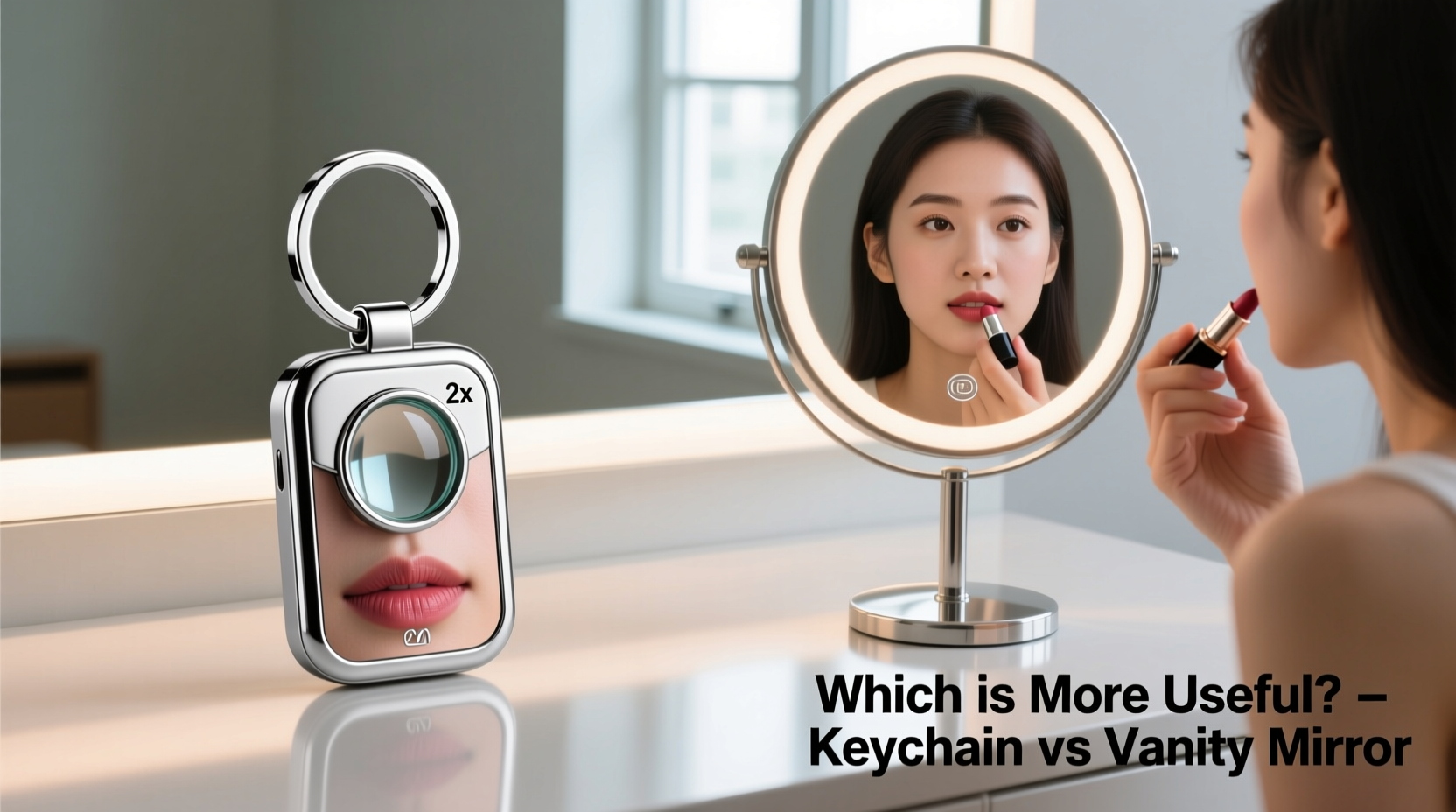
The most apparent distinction lies in physical form. Mirror keychains are typically no larger than a coin, attached directly to a keyring. Their primary advantage is automatic portability—since keys are rarely left behind, neither is the mirror. This ensures constant access, even in spontaneous situations like post-lunch checks at a café or pre-meeting composure checks in an elevator.
Vanity mirrors, by contrast, range from credit-card size to palm-sized compacts, often folding shut with protective covers. They offer larger reflective surfaces and sometimes include dual-sided views (magnified and standard). However, they require intentional carrying—either in a purse, pocket, or glove compartment—making them easy to forget.
Portability alone doesn’t guarantee usefulness. A tiny reflection might confirm whether your hair is standing up, but it won’t help assess subtle makeup blending or spot fine mascara smears. The trade-off becomes clear: maximum accessibility versus functional visibility.
Functional Comparison: Clarity, Magnification, and Usability
A critical factor in touch-up effectiveness is image quality. Most mirror keychains provide a single, flat reflection without magnification. Due to their miniature size, users must hold them unusually close to the face, distorting peripheral vision and limiting the ability to see full facial features in context.
Vanity mirrors, especially higher-end models, often feature a 1x (standard) side and a 5x or 10x magnified side. This allows users to first evaluate overall appearance, then zoom in on details like eyeliner precision or blemishes. The larger surface also supports better lighting alignment—natural or artificial light can be positioned effectively when both hands are free.
| Feature | Mirror Keychain | Vanity Mirror |
|---|---|---|
| Average Size | 1–2 inches | 3–4 inches (open) |
| Magnification | Rarely available | Common (5x–10x typical) |
| Hands-Free Use | No | Sometimes (standable designs) |
| Durability | High (metal casing common) | Variable (plastic hinges may break) |
| Light Integration | None | Some models include LED lights |
The absence of magnification in nearly all keychain mirrors severely limits their diagnostic value. As dermatologist Dr. Lena Torres explains:
“Effective skin and makeup assessment requires seeing texture and fine lines clearly. Without at least 5x magnification, you’re essentially guessing at corrections.” — Dr. Lena Torres, Cosmetic Dermatologist
Real-World Scenarios: Who Actually Benefits From Each?
Consider Sarah, a sales executive who travels three days a week. Her routine involves airport lounges, rental cars, and client dinners. She keeps a slim LED-lit vanity mirror in her crossbody bag. During a layover, she uses the magnified side to reapply concealer after a long flight. The larger view helps her blend evenly under harsh terminal lighting. Though she occasionally forgets it in hotel drawers, its superior functionality makes re-purchasing worthwhile.
Then there’s Mark, a college student and part-time barista. He never carries a bag and relies solely on his keys, wallet, and phone. His mirror keychain, clipped to his dorm keys, has helped him catch coffee grounds on his lip and fix bedhead before class. It’s not perfect—he can’t see his eyebrows well—but it’s better than nothing, and always there when needed.
These examples highlight a core truth: usefulness depends on context. For those already carrying purses or backpacks, a vanity mirror enhances grooming precision. For minimalists or those who avoid accessories, a keychain mirror provides a baseline level of self-check capability.
Step-by-Step: Choosing the Right Tool for Your Lifestyle
Selecting between these options isn’t about which is objectively better—it’s about matching function to habit. Follow this decision path:
- Assess your carrying habits: Do you regularly use a bag, backpack, or clutch? If yes, a vanity mirror is feasible. If you only carry keys and phone, lean toward a keychain.
- Evaluate your touch-up needs: Are you applying full makeup daily, managing acne, or wearing glasses that smudge? High-detail tasks favor vanity mirrors. Basic checks (hair, teeth) can suffice with a keychain.
- Test visibility: Hold a coin near your face and try to inspect your nose area. If details blur, a larger mirror will serve you better.
- Check durability preferences: Keychain mirrors endure drops and jostling; vanity mirrors need gentle handling. If you’re rough on gear, simplicity wins.
- Consider upgrades: Some modern vanity mirrors now come in ultra-slim, magnetic forms that attach to phones—offering both portability and clarity.
FAQ: Common Questions Answered
Can a mirror keychain replace a vanity mirror entirely?
For basic visual confirmation—like checking for food debris or general hair direction—yes. But it cannot replicate the detailed inspection possible with a larger, magnified surface. If precise grooming matters to you, a keychain should supplement, not replace, a proper compact.
Are there hybrid options available?
Yes. Several brands now offer foldable mini-mirrors with keychain attachments. These maintain a 2.5–3 inch viewing area while remaining portable. Others integrate mirrors into smart trackers (like AirTag holders), combining location tracking with utility.
Do mirrored phone screens count as a substitute?
Not reliably. While phone screens reflect, they lack true optical clarity and often distort due to ambient light or screen coatings. Additionally, unlocking your phone just to check your face adds friction. A dedicated mirror remains faster and more intuitive.
Final Verdict: Functionality Wins Over Convenience
In direct comparison, the vanity mirror proves more useful for actual touch-ups. Its larger size, frequent inclusion of magnification, and better ergonomics allow for accurate assessments and precise corrections. While the mirror keychain excels in availability, it sacrifices too much functionality to be considered a primary grooming tool.
That said, dismissing the keychain entirely would ignore its role as a fail-safe. When no other option exists, it delivers marginal value over none at all. The ideal approach is layered: rely on a quality vanity mirror for daily maintenance, and consider a durable keychain as a backup for minimalist outings.
Ultimately, grooming tools should support confidence, not compromise it. Settling for inadequate reflection risks missed details that undermine otherwise polished appearances. Investing in a good compact mirror—and remembering to bring it—pays dividends in professionalism, self-assurance, and social comfort.




 浙公网安备
33010002000092号
浙公网安备
33010002000092号 浙B2-20120091-4
Comments
No comments yet. Why don't you start the discussion?