
Building a mob farm in Minecraft is one of the most effective ways to generate experience, loot, and resources. Yet, even experienced players often find themselves staring at an empty spawner or silent platform wondering why nothing is spawning. When your mob farm isn’t working, the issue usually lies in overlooked mechanics related to spawning rules, light levels, player proximity, or environmental conditions. This guide breaks down every possible reason your mob farm may be failing and how to fix it—step by step.
Understanding Mob Spawning Mechanics
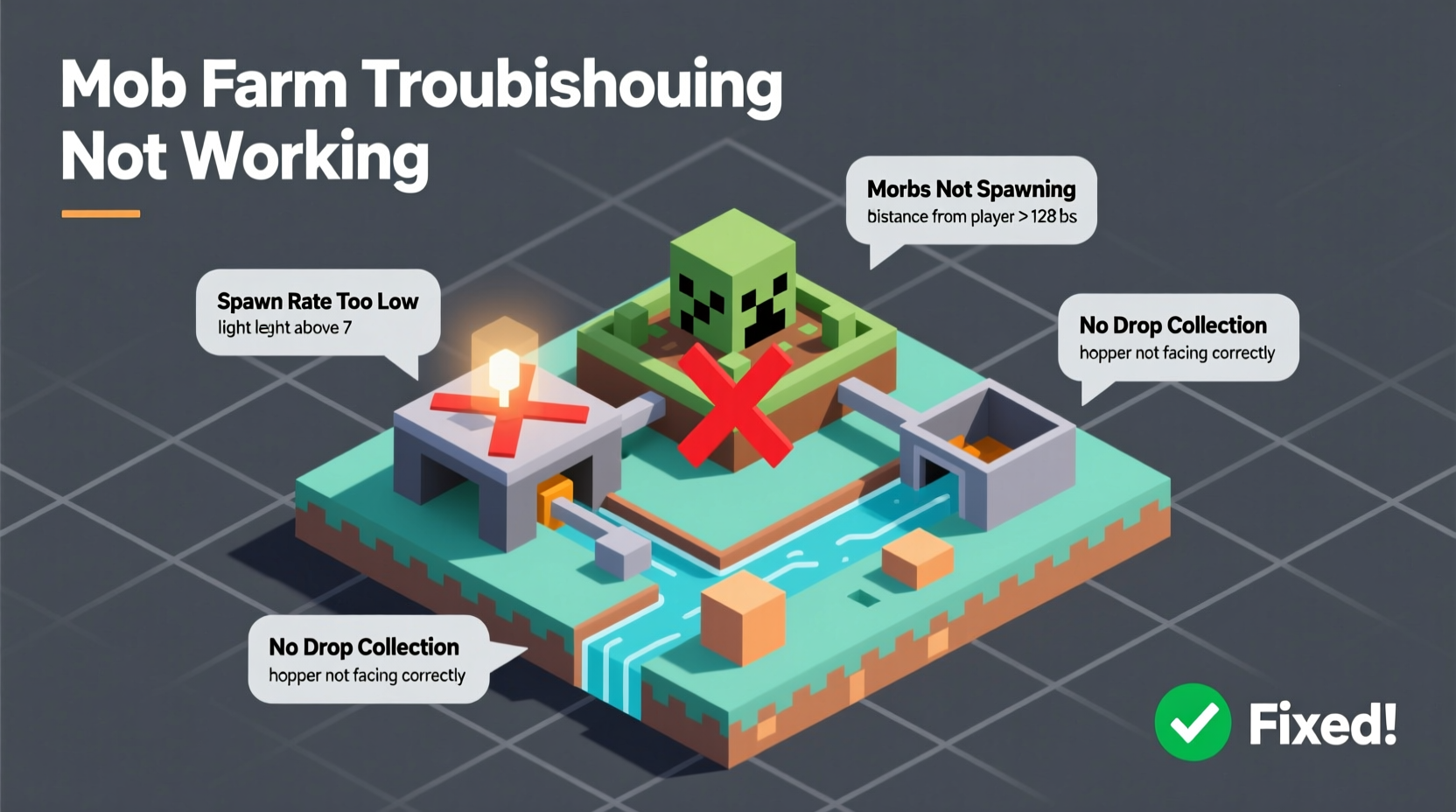
Minecraft’s mob spawning system follows strict rules defined by the game’s algorithm. Mobs don’t spawn randomly within a farm; they require specific conditions to be met. These include:
- Sufficient dark space (light level 7 or lower)
- Adequate spawning surface (opaque blocks only)
- Proper vertical spacing between platforms
- Player within spawning range (but not too close)
- No competing spawn areas nearby
If any of these conditions are unmet, mobs simply won’t appear—even if the design looks correct from a visual standpoint. The key is understanding that spawning occurs in \"chunks,\" and only certain chunks are active based on player position.
“Mob farms fail not because of bad design, but because of misunderstood game mechanics.” — Alex Turner, Minecraft Redstone Engineer & Content Creator
Step-by-Step Troubleshooting Guide
Follow this logical sequence to diagnose and resolve your non-functional mob farm.
- Verify Player Distance: Mobs only spawn when the player is between 24 and 128 blocks away horizontally. If you're standing too close, no spawns occur. Too far, and the chunk stops processing. Position yourself at about 30–40 blocks away while remaining in the same dimension.
- Check Light Levels: Hostile mobs require a light level of 7 or less. Use F3 (or Debug Screen) to inspect light values on potential spawn surfaces. Torches, glowstone, or even torches placed above can leak light downward and prevent spawning.
- Confirm Valid Spawn Surfaces: Only opaque blocks allow mob spawning. Slabs, glass, water, and transparent blocks do not count. Ensure all spawn platforms are made of full blocks like stone or dirt.
- Inspect Vertical Clearance: Most hostile mobs need 2–3 blocks of vertical space to spawn. A ceiling one block above the floor will block spider spawns (which need 1x1x2). Adjust ceiling height accordingly based on target mob.
- Test Chunk Boundaries: Your farm might span inactive chunks. Build entirely within loaded chunks, or use multiple players/beds to keep adjacent chunks active.
Common Design Flaws and Fixes
Even structurally impressive farms can suffer from subtle flaws that halt spawning. Below are frequent pitfalls and their solutions:
| Issue | Effect | Solution |
|---|---|---|
| Light sources inside farm | Prevents spawns on nearby blocks | Move lighting outside visible range or use sea lanterns below collection tunnels |
| Floor made of slabs (bottom) | Invalid spawn surface | Replace with full blocks like cobblestone |
| Collection water touching spawn platform | Washes mobs away before they fully spawn | Add a 1-block dry buffer zone around edges |
| Too many alternative spawn areas nearby | Spawns diverted to caves or dark rooms | Illuminate surrounding areas up to 128 blocks |
| Player standing directly above/below | Disables spawning in that chunk | Build observation decks at least 25 blocks away |
Real Example: The Silent Zombie Farm
Consider a builder who constructed a sleek iron golem-powered zombie farm in the desert. Despite perfect schematics, no zombies appeared. After days of confusion, they discovered three issues:
- The spawn room had bottom-half slabs as flooring—technically not valid spawn terrain.
- A redstone lamp used for timing emitted light level 15, flooding the entire chamber.
- The player stood on a glass balcony just 15 blocks away, disabling spawn processing.
After replacing slabs with stone, relocating the lamp outside the chamber, and moving observation distance to 35 blocks, zombies began spawning immediately. The farm went from zero to 10,000 XP/hour overnight.
Essential Checklist Before Testing
Before concluding your mob farm doesn’t work, run through this final checklist:
- ✅ All spawn platforms are full, opaque blocks
- ✅ Light level is ≤7 across entire surface area
- ✅ At least 2 vertical blocks of clearance above each platform
- ✅ No water or lava flows touching spawn zones
- ✅ You are between 24 and 128 blocks away from spawn area
- ✅ Surrounding region (up to 128 blocks) is well-lit or enclosed
- ✅ Farm is built in a permanently loaded chunk (via spawn point or player beds)
- ✅ Game difficulty is set to Normal or Hard (Peaceful disables hostile spawns)
Advanced Considerations: Spawning Caps and Server Settings
Minecraft enforces global and regional mob caps. The game limits the total number of certain mobs per world. For example, there’s a cap on how many zombies, skeletons, or creepers can exist at once. If your world already has dozens of strays in icy biomes or pillagers in outposts, your farm may struggle to spawn additional mobs.
To mitigate this:
- Kill off stray mobs in villages or abandoned mineshafts.
- Use commands like
/kill @e[type=minecraft:skeleton]to clear excess spawns (in creative or admin mode). - On servers, check if plugins like WorldGuard restrict mob spawning or limit entity counts.
Additionally, some server configurations disable mob spawning in certain regions or during specific events. Always verify with server operators if playing on a hosted environment.
FAQ
Why are mobs spawning but not falling into my collection system?
This typically means your fall shaft is misaligned or too shallow. Ensure the drop is at least 22 blocks high to reduce health below half-heart (for easy killing), and that water currents correctly funnel mobs toward the chute.
Can I use torches anywhere near my mob farm?
Yes—but not inside the spawn chambers. Place torches beneath the farm, behind walls, or in adjacent tunnels. Even indirect light leaking into the spawning area can raise light levels above threshold.
Do mob farms work in the Nether or End?
Standard hostile mob farms (zombies, skeletons) only work in the Overworld. The Nether and End have unique spawning rules and limited mob types. Blaze farms, for example, must follow different designs using soul sand and nether warts.
Final Steps: Optimizing Output
Once spawning begins, optimize efficiency:
- Add hoppers under kill chambers to auto-collect loot.
- Use daylight sensors or redstone clocks to control lighting cycles if farming intermittently.
- Upgrade to a wither skeleton farm or ghast farm in the Nether using similar principles—just adjust for biome-specific rules.
Conclusion
A non-working mob farm is rarely broken—it’s usually misunderstood. By methodically verifying light levels, spawn surfaces, player distance, and environmental interference, you can revive even the most lifeless setup. Remember, Minecraft rewards patience and precision. Revisit your design with fresh eyes, apply these fixes, and watch your farm transform from stagnant to highly productive.




 浙公网安备
33010002000092号
浙公网安备
33010002000092号 浙B2-20120091-4
Comments
No comments yet. Why don't you start the discussion?