
In the past decade, smartphones have evolved from communication tools into powerful handheld computers capable of running high-end games. Meanwhile, consoles like the PlayStation 5 and Xbox Series X continue to push the boundaries of graphical fidelity, processing power, and immersive gameplay. The question now isn't whether mobile games are fun—it's whether they can genuinely rival console experiences in terms of quality. As mobile hardware improves and game developers target broader audiences, the line between platforms is blurring. But can phones truly compete?
The Evolution of Mobile Gaming Power
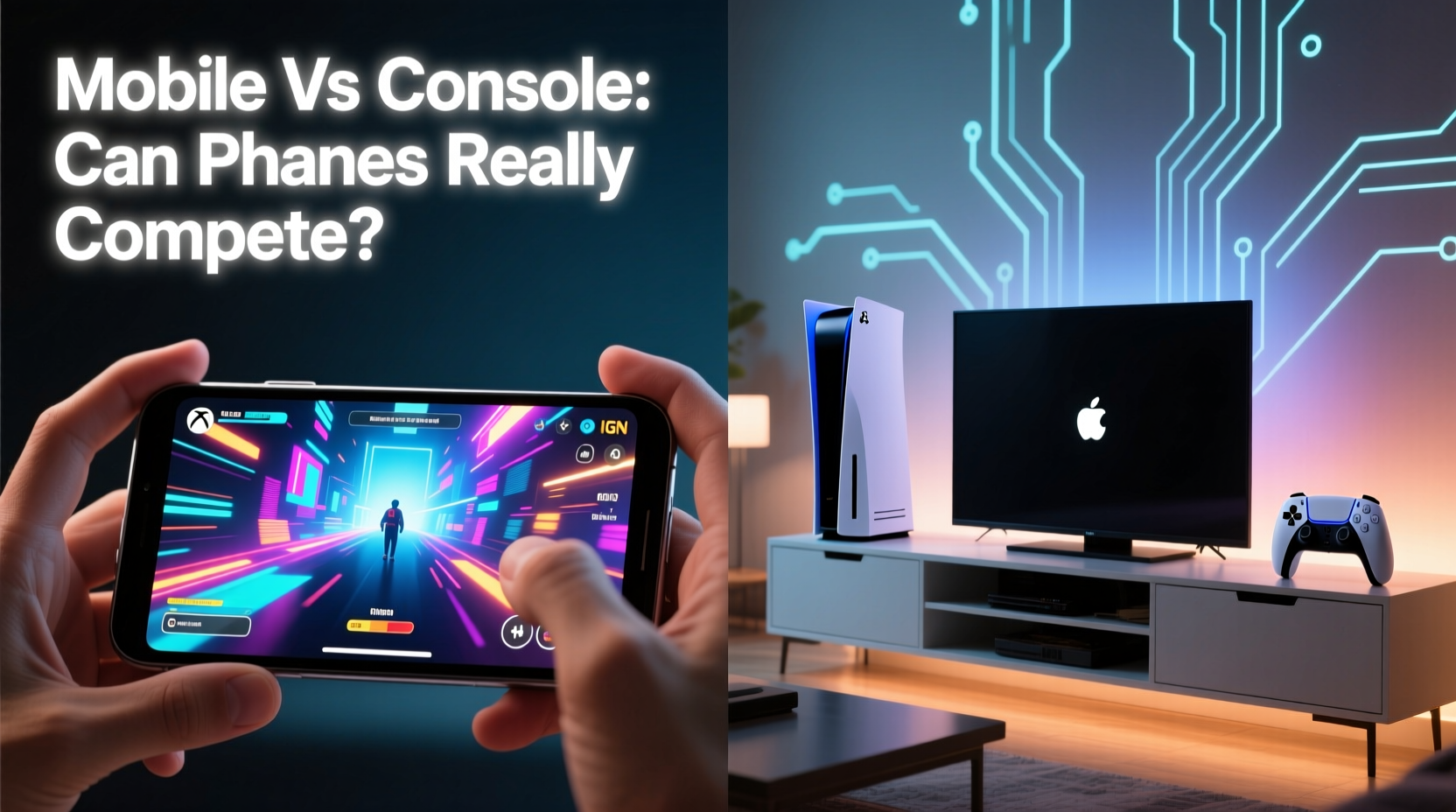
Modern smartphones are equipped with processors that rival mid-tier laptops. Flagship devices use custom System-on-Chips (SoCs) like Apple’s A17 Pro and Qualcomm’s Snapdragon 8 Gen 3, which are designed not just for multitasking but specifically optimized for gaming. These chips integrate advanced GPUs, AI accelerators, and thermal management systems that allow sustained performance during extended play sessions.
For example, the iPhone 15 Pro supports hardware-accelerated ray tracing and runs native ports of titles like *Resident Evil Village*—a feat unimaginable on mobile just five years ago. Similarly, Android flagships such as the ASUS ROG Phone 8 or Samsung Galaxy S24 Ultra deliver frame rates up to 120Hz and support external controllers, enhancing the console-like feel.
However, raw specs don’t tell the whole story. Thermal throttling remains a significant limitation. Unlike consoles, which have dedicated cooling systems and larger chassis, phones must balance performance with heat dissipation in a compact form factor. This often leads to reduced frame rates after prolonged use, especially in graphically intensive games.
Graphics and Visual Fidelity: A Clear Divide
When comparing visual quality, the gap between mobile and console gaming remains noticeable. Consoles benefit from higher-resolution displays (4K output), superior texture filtering, advanced lighting techniques, and stable frame rates (typically 30–60fps, with some hitting 120fps). Games like *God of War Ragnarök* or *Halo Infinite* utilize full-fat rendering pipelines, dynamic shadows, and complex physics simulations that demand substantial GPU memory and bandwidth.
Mobile games, even those built with Unreal Engine 5, must make compromises. Developers reduce polygon counts, lower texture resolution, simplify shaders, and limit draw distances to maintain playable frame rates. While titles like *Genshin Impact*, *PUBG Mobile*, and *Call of Duty: Mobile* look impressive on a 6-inch screen, they fall short when viewed side-by-side with their console counterparts.
One key bottleneck is memory bandwidth. Consoles use GDDR6 memory with bandwidth exceeding 448 GB/s (PS5), while mobile LPDDR5X typically maxes out around 64 GB/s. This limits how much data can be processed per second, directly affecting scene complexity and streaming capabilities.
“While mobile GPUs are catching up in raw teraflops, architectural maturity and memory hierarchy still give consoles a decisive edge in sustained graphical performance.” — Dr. Lena Park, Hardware Analyst at TechInsight Labs
Game Library and Exclusivity: Where Consoles Still Dominate
No discussion about quality is complete without addressing content. Console ecosystems offer deep, narrative-driven experiences with hundreds of hours of gameplay—titles like *The Last of Us Part I*, *Elden Ring*, and *Spider-Man 2*. These games feature cinematic storytelling, voice acting, motion capture, and expansive open worlds that require both development time and platform stability.
Mobile gaming, by contrast, leans heavily toward free-to-play models with shorter session lengths. While there are premium exceptions (*Sky: Children of the Light*, *Diablo Immortal*), most top-grossing apps rely on microtransactions, battle passes, and in-app purchases. This business model shapes design priorities—encouraging repetitive loops over long-term engagement.
Additionally, true exclusives remain rare on mobile. Most high-profile mobile titles are either scaled-down versions of PC/console games (*Fortnite*, *Minecraft*) or cross-platform adaptations. Few studios invest in building AAA-level IPs solely for mobile due to monetization risks and fragmented hardware support.
| Aspect | Console Gaming | Mobile Gaming |
|---|---|---|
| Max Resolution Output | Up to 4K @ 120Hz | Up to 1440p @ 120Hz (on select devices) |
| Avg. Game File Size | 50–100 GB | 2–10 GB (often more with updates) |
| Primary Monetization | Premium purchase + DLCs | F2P + in-app purchases |
| Control Scheme | Dedicated controller | Touchscreen (optional Bluetooth controller) |
| Exclusive Titles | High (e.g., *Horizon Zero Dawn*, *Demon’s Souls*) | Low (few original AAA mobile-only IPs) |
User Experience and Accessibility: Mobile’s Strong Suit
Where mobile excels is accessibility. Anyone with a smartphone can download and play a game instantly—no setup, no downloads beyond initial install, no need for additional peripherals. This democratization has brought gaming to billions who might never own a console.
Games like *Among Us*, *Stumble Guys*, and *Subway Surfers* thrive because they’re easy to learn, quick to play, and socially engaging. They fit naturally into daily routines—commuting, waiting in line, taking breaks. This “snackable” format aligns perfectly with modern lifestyles.
Moreover, cloud gaming services like Xbox Cloud Gaming (xCloud), NVIDIA GeForce NOW, and PlayStation Plus Premium are bridging the quality gap. By streaming console-grade games directly to phones, these platforms allow users to experience high-fidelity titles without owning expensive hardware. However, success depends entirely on internet speed and latency—issues that still plague rural and congested urban areas.
Real-World Example: The Rise of Cross-Platform Play
Consider the case of *Fortnite*. Originally a console and PC phenomenon, Epic Games aggressively expanded to mobile in 2018, releasing a version for iOS and Android. The mobile edition featured touch controls, simplified UI, and reduced visual effects—but retained core gameplay mechanics and real-time multiplayer sync across all platforms.
This created a unified ecosystem where a player on PS5 could team up with someone on an iPhone. While the mobile user faced inherent disadvantages—smaller screen, imprecise aiming—the game’s design compensated through assistive aim and adaptive difficulty scaling. Over time, Epic introduced optional controller support and performance modes to level the playing field.
The result? Millions of new players entered the *Fortnite* universe through mobile, significantly expanding its audience. Yet, competitive tournaments still favor console and PC players due to input precision and display clarity. This illustrates a critical truth: mobile can participate in high-quality ecosystems, but it doesn’t yet lead them.
Future Outlook: Can Phones Close the Gap?
The trajectory suggests gradual convergence. Advancements in chip efficiency, 5G connectivity, foldable displays, and augmented reality could redefine what mobile gaming is capable of. Apple’s Vision Pro hints at spatial computing integration, while companies like Razer and Black Shark experiment with gaming-centric phones featuring active cooling and ultrasonic triggers.
Meanwhile, Unreal Engine 5’s Nanite and Lumen technologies are being adapted for mobile, enabling more detailed environments and realistic lighting on supported devices. Google’s rumored next-gen Pixel gaming device may also signal a shift toward dedicated mobile gaming hardware.
Still, fundamental limitations persist. Battery life restricts sustained performance; screen size limits immersion; and touchscreen controls lack tactile feedback essential for precise inputs. Until haptic innovation and foldable OLEDs mature, mobile will remain complementary rather than competitive in the realm of premium gaming.
Checklist: How to Get the Best Possible Mobile Gaming Experience
- Use a flagship phone with latest-generation SoC (A17 Pro, Snapdragon 8 Gen 3)
- Pair with a Bluetooth controller for improved accuracy
- Play on Wi-Fi 6 or stable 5G connection to minimize lag
- Enable performance mode and disable battery saver
- Install games from official stores to avoid malware
- Use headphones for spatial audio cues
- Keep software updated for optimal compatibility
Frequently Asked Questions
Can a phone run the same games as a PS5?
Not natively. While some games like *Death Stranding* and *Resident Evil Village* have been ported to iOS via Apple’s Metal API, most PS5 titles require architecture and storage capabilities unavailable on mobile. Cloud streaming offers partial parity, but requires strong internet.
Are mobile games worth playing if I own a console?
Absolutely. Mobile games excel in convenience and social interaction. Use them for quick sessions, casual fun, or when away from home. Many also sync progress with console versions (e.g., *Minecraft*, *Genshin Impact*).
Will mobile ever replace consoles?
Unlikely in the near term. Consoles serve a different purpose: delivering immersive, high-fidelity experiences. Mobile fills the niche for accessible, portable entertainment. Rather than replacement, expect deeper integration—cross-save, cross-play, and shared universes.
Conclusion
Mobile gaming has made extraordinary strides, transforming smartphones into legitimate gaming devices. Yet, when measured against console standards of graphical depth, control precision, and narrative scope, phones still operate in a different league. They complement rather than compete—offering breadth over depth, accessibility over intensity.
The future lies not in choosing one over the other, but in leveraging both. As cloud infrastructure improves and hybrid gameplay evolves, we’ll see more seamless transitions between platforms. For now, consoles remain the gold standard for quality, while mobile reigns supreme in reach and convenience.




 浙公网安备
33010002000092号
浙公网安备
33010002000092号 浙B2-20120091-4
Comments
No comments yet. Why don't you start the discussion?