
For many home cooks and even seasoned eaters, the phrase “moderate level of spiciness” appears frequently on menus, spice labels, and recipe instructions—yet its meaning often remains ambiguous. Unlike precise measurements such as teaspoons or degrees Celsius, \"moderate\" is subjective, varying from person to person and cuisine to cuisine. However, understanding what constitutes moderate heat is essential for creating balanced, flavorful dishes without overwhelming the palate. This article demystifies the concept by defining moderate spiciness in measurable terms, exploring its role in global cuisines, and providing practical guidance for using it confidently in everyday cooking.
The perception of spiciness isn’t a taste but a sensation—a neurological response triggered by compounds like capsaicin in chili peppers. While individual tolerance varies widely, a moderate level generally refers to a noticeable warmth that enhances food without dominating it. It should complement other flavors rather than mask them, allowing the dish’s complexity to shine through. Recognizing this balance is key to mastering spice-driven cooking across cultures—from Thai curries to Mexican moles and Indian dals.
Definition & Overview
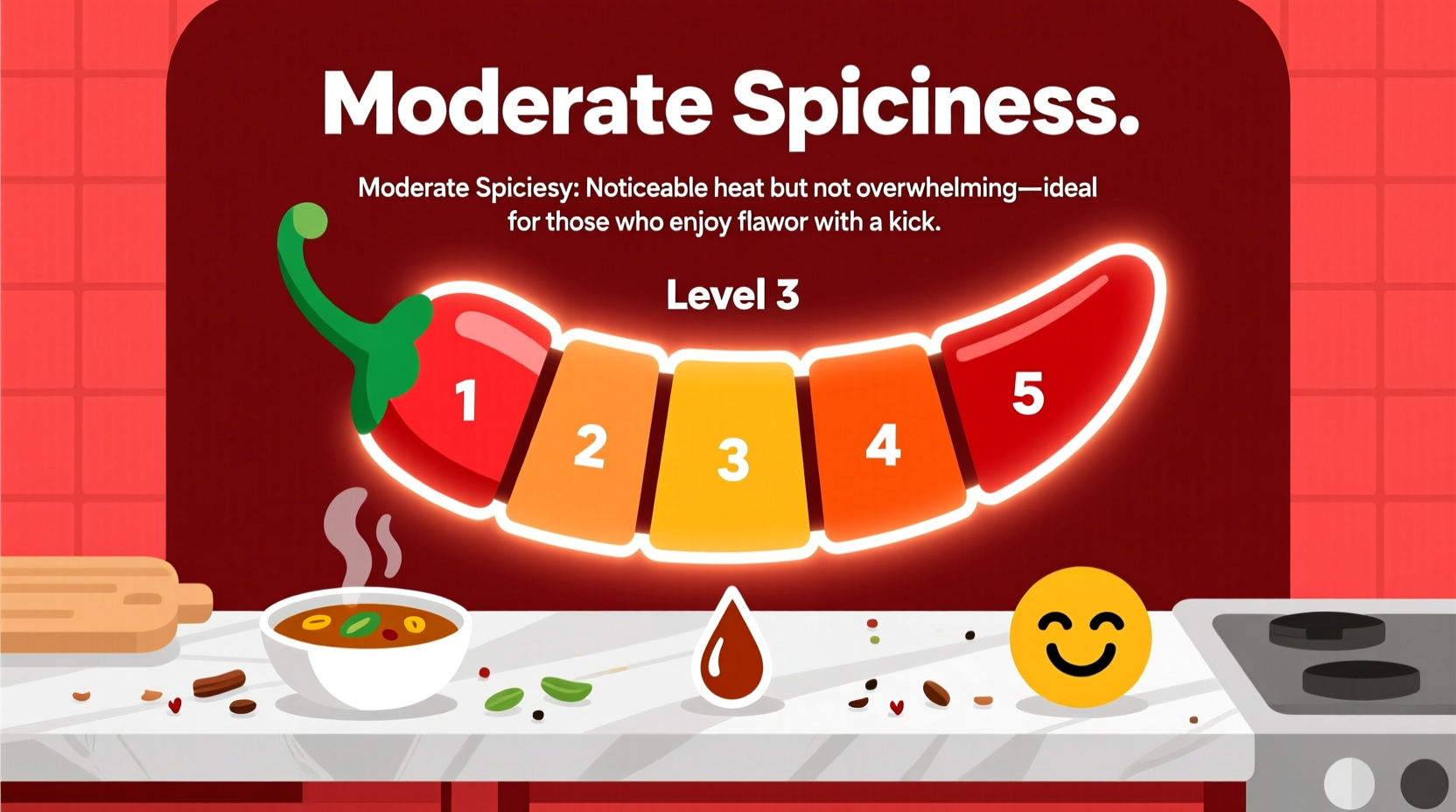
“Moderate spiciness” describes a mid-range heat intensity that registers clearly on the tongue and palate but does not cause discomfort or overwhelm other flavor components. It sits between mild (barely perceptible heat) and hot (intense, lingering burn). In culinary science, this range typically corresponds to 1,000–30,000 Scoville Heat Units (SHU), though contextual factors such as serving size, fat content, and accompanying ingredients influence perceived heat.
This level of spiciness is common in a wide array of international dishes designed for broad appeal. For example, a well-made green curry paste or a classic enchilada sauce often falls into the moderate category—not so fiery that it requires milk on standby, but with enough kick to stimulate the senses and elevate flavor depth. Moderate heat engages the trigeminal nerve, increasing salivation and aroma perception, which can actually enhance overall enjoyment when properly calibrated.
It’s important to distinguish spiciness from pungency or sharpness. Spiciness specifically refers to the burning sensation caused by capsaicinoids, whereas pungency (as in raw garlic or horseradish) involves different chemical compounds like allicin or allyl isothiocyanate. A dish can be both spicy and pungent, but they are not interchangeable terms.
Key Characteristics of Moderate Spiciness
- Heat Level: Detectable warmth without pain; subsides within 30 seconds to 2 minutes.
- Flavor Role: Enhances complexity, adds dimension, stimulates appetite.
- Sensory Impact: Triggers mild endorphin release, increases saliva production.
- Culinary Function: Acts as a background accent, not the dominant note.
- Common Sources: Jalapeños, serranos, medium-hot paprika, gochujang, certain curry pastes.
- Shelf Life Influence: Dried chilies retain heat longer than fresh; fermented sauces mellow slightly over time.
- Aroma: Often accompanied by earthy, smoky, or fruity notes depending on pepper variety.
| Spice Level | Scoville Heat Units (SHU) | Common Examples |
|---|---|---|
| Mild | 0–1,000 | Bell pepper, banana pepper |
| Moderate | 1,000–30,000 | Jalapeño (2,500–8,000), Serrano (10,000–23,000), Pepperoncini (100–500) |
| Hot | 30,000–100,000 | Cayenne, Tabasco pepper |
| Very Hot | 100,000+ | Habanero, Ghost pepper, Carolina Reaper |
Note that actual experience may vary due to individual sensitivity, preparation method (e.g., seeds vs. flesh), and food matrix (fat reduces perceived heat).
Practical Usage: How to Use Moderate Spiciness in Cooking
Incorporating moderate spiciness successfully hinges on control, timing, and pairing. The goal is to achieve harmony—where heat supports, rather than overshadows, other elements like salt, acid, sweetness, and umami.
Start Small and Build Gradually
Begin with less spice than you think you need. Add dried spices early in dry-roasting or sautéing to bloom their flavors in oil; introduce fresh chilies midway through cooking to preserve brightness. Taste after each addition and allow five minutes for heat to develop before adjusting further. Remember: you can always add more, but you cannot remove excess heat.
Balance with Complementary Flavors
Fat, sugar, and acidity mitigate perceived spiciness:
- Dairy: Yogurt, sour cream, or coconut milk coat the mouth and dissolve capsaicin.
- Sweetness: Honey, palm sugar, or fruit balances heat in sauces and marinades.
- Acidity: Lime juice, vinegar, or tamarind lifts richness and cuts through burn.
Pairing Guidelines by Cuisine
- Mexican: Pair serrano peppers with roasted tomatoes, cilantro, and lime for salsas; use canned chipotles in adobo for smoky depth.
- Thai: Combine red curry paste (moderately spicy) with coconut milk, kaffir lime leaves, and galangal for aromatic balance.
- Indian: Use Kashmiri red chili powder for color and mild-to-moderate heat in tandoori marinades or lentil dishes.
- Korean: Gochujang (fermented chili paste) offers moderate heat with savory-sweet complexity—ideal for stews, glazes, and dipping sauces.
- Mediterranean: Aleppo pepper flakes add gentle warmth and fruity tang to grilled meats, salads, and hummus.
Pro Tip: Remove seeds and inner membranes from fresh chilies to reduce heat significantly. These contain most of the capsaicin. For example, deseeded jalapeños can feel nearly mild compared to their seeded counterparts.
Recipe Application Example: Moderately Spicy Tomato Sauce
To illustrate controlled heat application, consider a weekday pasta sauce:
- Sauté one finely chopped shallot and two minced garlic cloves in olive oil until soft.
- Add one deseeded and finely diced jalapeño; cook for 2–3 minutes to mellow raw bite.
- Stir in two tablespoons tomato paste and toast briefly to deepen flavor.
- Pour in 800g crushed tomatoes and simmer 20 minutes.
- Season with salt, a pinch of sugar, and fresh basil. Adjust final heat with a dash of crushed red pepper flakes if needed.
This yields a sauce with a steady, pleasant warmth—ideal for family meals or guests with average spice tolerance.
Variants & Types of Moderately Spicy Ingredients
Not all moderate heat sources are created equal. They differ in origin, processing, and flavor profile. Understanding these distinctions allows for more nuanced cooking.
Fresh Chilies
- Jalapeño: Green or red; crisp texture, grassy notes. Widely available and versatile.
- Serrano: Smaller and hotter than jalapeño; bright, clean heat. Excellent raw in salsas or pickled.
- Fresno: Similar in heat to jalapeño but slightly fruitier; great for roasting or stuffing.
Dried Chilies
- Guajillo: Mild to moderate heat (2,500–5,000 SHU); tangy, berry-like flavor. Used in Mexican red sauces.
- Chipotle (smoked jalapeño): Moderate heat with deep smokiness. Rehydrate for sauces or grind into powder.
- Aleppo Pepper: Syrian/Turkish origin; 10,000 SHU; fruity, saline finish. Sprinkle as a finishing spice.
Fermented & Paste Forms
- Gochujang: Korean fermented chili paste; combines moderate heat with umami and sweetness. Shelf-stable and rich in depth.
- Sambal Oelek: Indonesian fresh chili paste; pure heat with minimal additives. More controllable than bottled hot sauces.
- Harissa: North African chili paste; often includes cumin, coriander, and garlic. Varies by brand—check label for heat level.
Spice Blends
- Paprika (Sweet to Hot): Hungarian paprika ranges from sweet (0 SHU) to hot (up to 15,000 SHU). Choose “semi-sweet” or “hot” for moderate impact.
- Curry Powder: Typically blends turmeric, coriander, cumin, and chili. Heat varies—start with 1 tsp per serving.
- Chinese Five-Spice + Chili: Some regional blends incorporate moderate heat with warm spices for complexity.
| Ingredient | Heat Range (SHU) | Best Used In | Flavor Notes |
|---|---|---|---|
| Jalapeño (fresh) | 2,500–8,000 | Salsas, nachos, poppers | Grassy, vegetal |
| Chipotle in Adobo | 5,000–10,000 | Stews, marinades, rubs | Smoky, tangy |
| Gochujang | 4,000–8,000 | Bibimbap, tteokbokki, glazes | Umami-rich, sweet-fermented |
| Aleppo Pepper | 10,000 | Finishing spice, dressings | Fruity, slightly salty |
| Hot Paprika | 5,000–15,000 | Goulash, deviled eggs, soups | Earthy, slightly bitter |
Comparison with Similar Ingredients
Moderate spiciness is often confused with high heat or mistaken for other sensory experiences. Clarifying these differences improves precision in cooking.
Moderate vs. Mild Spiciness
- Moderate: Clearly perceptible heat; lingers briefly; requires attention.
- Mild: Subtle warmth; background presence; suitable for children or sensitive palates.
- Example: A dish made with cayenne (moderate+) will feel significantly hotter than one using only black pepper (mild pungency).
Moderate vs. Fermented Pungency
- Moderate Spiciness: Caused by capsaicin; burns uniformly on lips, tongue, throat.
- Fermented Pungency: From acids and volatile compounds; sharp, nose-tingling (e.g., kimchi brine).
- Key Difference: Milk soothes capsaicin burn; water or bread helps more with acidic pungency.
Moderate vs. High Heat
“A moderately spicy dish invites you back for another bite. A very spicy one dares you to take one more.” — Chef Elena Torres, Culinary Institute of Mexico
- Moderate: Enhances flavor; encourages eating.
- High Heat: Dominates palate; can numb taste buds temporarily.
- Practical Test: If someone reaches for water immediately after the first bite, it’s likely beyond moderate.
Practical Tips & FAQs
How do I measure “moderate” when recipes don’t specify?
Use standardized references: one seeded jalapeño per four servings typically delivers moderate heat. For dried spices, start with ¼ to ½ teaspoon per serving and adjust.
Can I reduce spiciness after a dish is too hot?
Yes, but effectiveness depends on the stage:
- Dilution: Add more base ingredients (tomatoes, broth, beans).
- Fat: Stir in coconut milk, yogurt, or cream.
- Sweetness: A small amount of sugar, honey, or grated apple can counteract heat.
- Acid: Lemon juice or vinegar brightens and distracts from burn.
Does cooking affect spiciness level?
Yes. Long simmering can mellow fresh chilies slightly, while drying or smoking concentrates certain flavor compounds. Toasting dried chilies enhances aroma but doesn’t increase SHU. Fermentation, as in gochujang, integrates heat into a broader flavor profile, making it feel less aggressive.
How long do moderately spicy ingredients last?
- Fresh chilies: 7–10 days in crisper drawer; up to 3 weeks in a paper bag.
- Dried chilies: 6–12 months in airtight container away from light.
- Pastes (gochujang, harissa): 6+ months refrigerated; check for mold or off smells.
- Ground spices: 6 months for peak potency; label containers with purchase date.
What are good substitutes for moderate chilies?
| Original Ingredient | Substitute | Adjustment Notes |
|---|---|---|
| Jalapeño | Serrano (use half) | Serrano is hotter; reduce quantity. |
| Serrano | Jalapeño (use double) | Milder; compensate with volume. |
| Chipotle in adobo | Smoked paprika + pinch of cayenne | No liquid component; add vinegar for tang. |
| Gochujang | Miso + sambal oelek + sesame oil | Replicates umami and heat; ratio 2:1:½. |
Is moderate spiciness safe for kids?
Many children over age 5 can tolerate moderate heat in small amounts, especially when balanced with fat and sweetness (e.g., chicken tikka masala). Introduce gradually and observe reactions. Avoid forcing consumption—early negative experiences can create long-term aversions.
Storage Tip: Freeze whole jalapeños or serranos on a tray, then transfer to a bag. They’ll last up to 6 months and are easy to grate or chop straight from frozen—ideal for soups and sauces.
Summary & Key Takeaways
A moderate level of spiciness occupies a crucial middle ground in flavor design—present enough to energize a dish, restrained enough to remain approachable. It bridges cultural preferences, satisfies adventurous palates, and enhances gastronomic pleasure without intimidation. By understanding its scientific basis, recognizing reliable sources, and applying thoughtful technique, cooks at every level can harness moderate heat with confidence.
- Moderate spiciness typically ranges from 1,000 to 30,000 Scoville units and is defined by balance, not intensity.
- Common ingredients include jalapeños, gochujang, chipotles, and hot paprika—each bringing unique flavor dimensions beyond heat.
- Control comes from preparation: removing seeds, balancing with fat/sugar/acid, and building gradually.
- Different forms—fresh, dried, fermented—offer varied applications and shelf lives.
- Substitutions are possible with attention to heat level and flavor profile.
- Storage and handling practices preserve quality and safety.
Mastering moderate spiciness isn’t about enduring heat—it’s about integrating it as a harmonious element in the culinary symphony. Whether you're crafting a weeknight stir-fry or a weekend curry, treating spice as a seasoning rather than a shock transforms your cooking from functional to exceptional.
Next Step: Experiment with one new moderately spicy ingredient this week—try Aleppo pepper on roasted vegetables or add a spoonful of gochujang to your next soup. Note how it changes the dish’s character and share your findings with fellow cooks.




 浙公网安备
33010002000092号
浙公网安备
33010002000092号 浙B2-20120091-4
Comments
No comments yet. Why don't you start the discussion?