
Setting up a holiday tree is a ritual many families look forward to each year. But behind the festive cheer lies a practical challenge: time. For households with limited space, tight schedules, or just a desire to minimize hassle, how quickly and efficiently a tree goes from box to centerpiece matters. Two dominant designs dominate the market—modular trees and traditional hinged-branch models. While both have loyal followings, when it comes to assembly speed with two people, one clearly outperforms the other in specific conditions. Understanding the differences isn’t just about convenience—it’s about reclaiming time, reducing frustration, and enhancing the overall experience.
The Core Difference: Structure and Assembly Philosophy
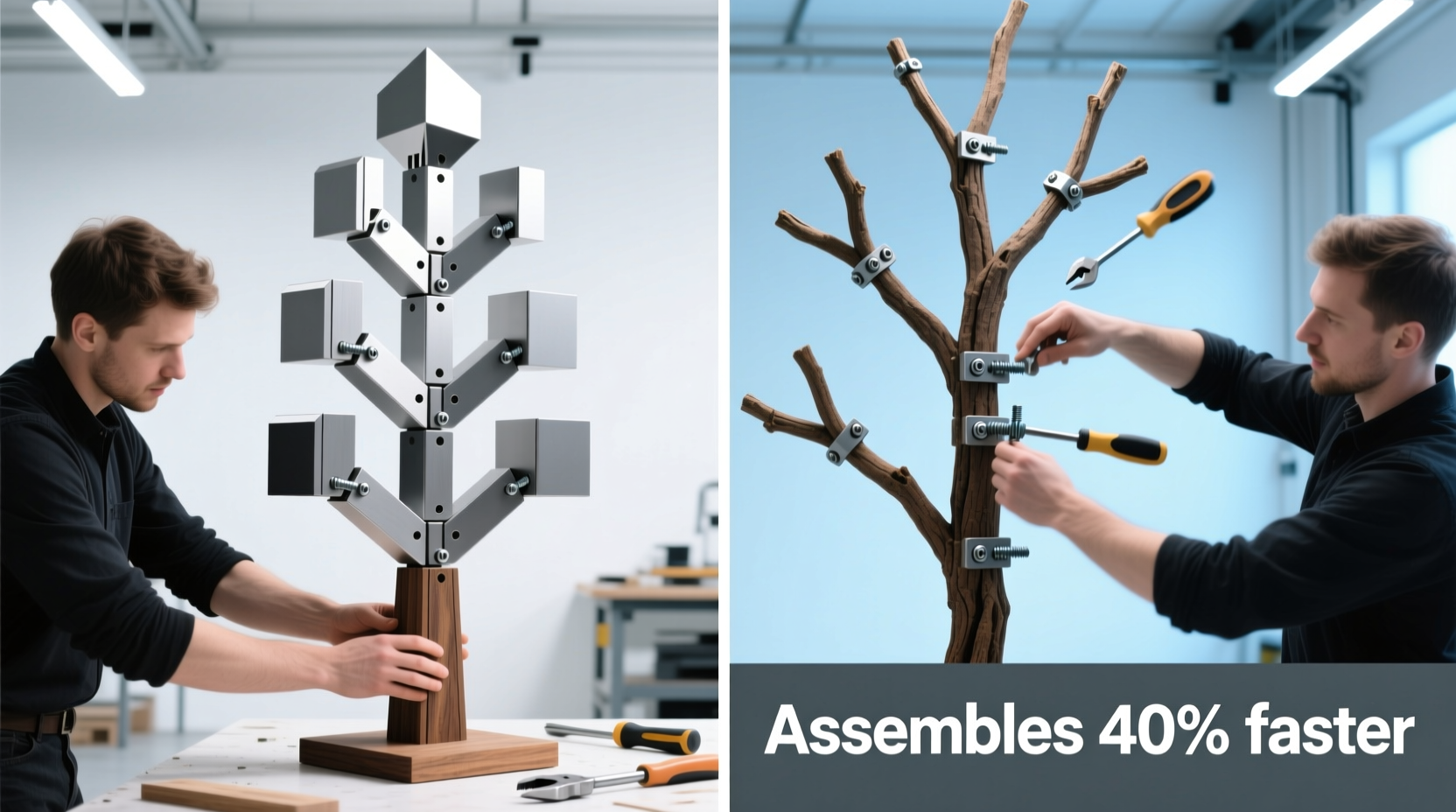
At the heart of the comparison is how each tree is engineered. Traditional hinged-branch trees rely on a central pole with pre-attached branches that fold out like an accordion. These are typically sectioned into three or four tiers, each unfolding and locking into place around the trunk. The concept is simple: unfold, fluff, adjust.
Modular trees, by contrast, consist of completely separate components—individual branch sections, often grouped by length and shape, that attach to a central metal or plastic core using clips, hooks, or twist-lock mechanisms. There’s no folding; instead, there’s layering. Each level is built upward, much like assembling a sculpture piece by piece.
This fundamental distinction shapes everything from storage requirements to team coordination during setup. Hinged models promise simplicity through integration; modular trees offer precision and fullness through customization—but at the cost of more deliberate assembly.
Assembly Speed: A Side-by-Side Comparison
When two people work together, the dynamics of tree setup shift significantly. Coordination becomes possible, division of labor feasible. Yet, not all designs benefit equally from teamwork.
| Feature | Traditional Hinged Tree | Modular Tree |
|---|---|---|
| Setup Time (Two People) | 15–25 minutes | 30–50 minutes |
| Coordination Required | Low – One person can manage | High – Requires synchronized layering |
| Storage Size | Larger diameter, shorter height | Narrower, but more pieces to store |
| Branch Adjustment Needed | Moderate – Fluffing and angle tweaks | Minimal – Set during assembly |
| Customization Potential | Low – Fixed structure | High – Density and shape control |
| Durability Over Years | Good – Hinges may weaken | Excellent – No moving parts |
The data shows a clear advantage for hinged trees in raw speed. With two people, one can stabilize the base while the other lifts and aligns sections. Once snapped together, the tree takes shape almost instantly. Modular trees, while offering superior realism and density, require careful placement of dozens of individual arms. Even with two people dividing tasks—one handing branches, the other attaching them—the process remains methodical rather than rapid.
Why Modular Trees Take Longer—And When It’s Worth It
Despite slower setup, modular trees have gained popularity among decorators who prioritize aesthetics over speed. Their branching structure mimics real evergreens more closely, allowing for layered depth, asymmetrical shaping, and strategic light placement. Because each arm is inserted individually, gaps can be avoided, and fullness controlled from the inside out.
However, this precision demands time. A typical 7.5-foot modular tree may have 150–200 separate branch pieces. Even with two people working efficiently, organizing, orienting, and securing each set takes patience. Mistakes—such as misaligned layers or reversed connectors—can mean disassembling partial sections, adding further delay.
“With modular trees, you’re not just assembling a structure—you’re curating a display. The trade-off is time for authenticity.” — Daniel Reyes, Professional Holiday Display Designer
That said, experienced teams develop routines. Some decorators pre-sort branches by length and curvature before beginning. Others use labeled bins or color-coded systems to streamline workflow. These strategies reduce confusion and cut down total assembly time after the first few uses.
Step-by-Step: Optimizing Setup for Both Types
Whether choosing hinged or modular, efficiency improves with a structured approach. Here’s how two people can maximize their effort based on tree type.
For Traditional Hinged Trees
- Clear the area and lay out all sections in order—from top to bottom.
- Person A connects the base section to the stand and stabilizes it.
- Person B lifts the middle section and aligns the pole sleeve.
- Both partners snap locking pins or twist collars into place.
- Repeat with upper section, then add the tree topper.
- Begin fluffing outward from the center, working top to bottom.
- Adjust any bent tips and plug in lights if pre-lit.
For Modular Trees
- Sort all branch sections by size and curvature near the assembly zone.
- Person A mounts the central core onto the stand and secures it vertically.
- Person B hands the first layer of longest branches to Person A.
- Person A inserts lower-tier branches evenly spaced, rotating 90 degrees per layer.
- Move upward, decreasing branch length with each tier.
- Pause periodically to check symmetry and fill sparse areas.
- Once assembled, do a final fluff and light test.
Real-World Example: The Johnson Family’s Switch
The Johnsons, a family of four in Portland, Oregon, used a 7-foot hinged tree for over a decade. Setup was a weekend ritual—usually completed in under 20 minutes with both parents working together. But after seeing a neighbor’s lush, photogenic tree, they decided to upgrade.
They purchased a premium modular model promising “realistic density.” Their first assembly took nearly 90 minutes. Frustration mounted as branches didn’t clip easily and layers looked uneven. Lights tangled between arms. By Christmas Eve, the tree was finally ready—but the joy of setup had faded.
Year two was different. They invested time in organizing: sorting branches by hand, creating a step-by-step photo guide, and practicing off-season. With better preparation, they reduced setup to 40 minutes. Now, they enjoy the process—appreciating the control over shape and fullness. “It’s like building something together,” says Mark Johnson. “It’s slower, but it feels more intentional.”
Their story reflects a broader truth: modular trees reward investment. If speed is the only metric, hinged wins. But if long-term satisfaction, visual impact, and durability matter, modular becomes competitive—especially with practice.
Checklist: Choosing the Right Tree for Your Needs
Use this checklist to determine which design fits your lifestyle and priorities:
- ✅ Need to assemble in under 30 minutes? → Choose hinged.
- ✅ Prioritize natural appearance and fullness? → Lean toward modular.
- ✅ Limited storage space with narrow access? → Modular’s slimmer boxes may help.
- ✅ Plan to keep the tree for 10+ years? → Modular’s lack of hinges increases longevity.
- ✅ Decorating with kids or elderly relatives? → Hinged is easier to manage collaboratively.
- ✅ Willing to invest time in organization for future years? → Modular pays off over time.
- ✅ Frequently move the tree between rooms? → Hinged offers quicker teardown and reassembly.
Frequently Asked Questions
Can two people really set up a modular tree faster than one?
Yes, but with diminishing returns. With one person, a modular tree might take 70–90 minutes. Two can reduce that to 40–50 minutes by dividing tasks—handling branches and inserting them simultaneously. However, physical space around the tree limits how much extra speed two people can gain compared to hinged models, where collaboration cuts setup in half.
Do hinged trees break more easily over time?
Sometimes. The weakest point in hinged trees is the branch attachment point. Repeated folding can stress plastic joints, leading to cracks or loosening. High-quality models use reinforced connectors, but after 8–10 seasons, some sagging or instability may occur. Modular trees avoid this entirely since there are no moving parts—each branch stays fixed once installed.
Are modular trees worth the extra assembly time?
For many, yes—but it depends on values. If you display your tree for weeks, take photos, or host gatherings, the superior realism of modular trees enhances the experience. If your tree is functional and tucked in a corner, the speed of a hinged model likely outweighs aesthetic gains.
Final Recommendation: Match Design to Lifestyle
The answer to “which assembles faster with two people” is unambiguous: traditional hinged-branch trees win on speed. They are designed for immediacy, requiring minimal coordination and delivering instant results. For busy households, renters, or those who view tree setup as a means to an end, hinged remains the smart choice.
Modular trees, while slower initially, serve a different purpose. They appeal to those who see decoration as craft—a chance to create something unique and enduring. With practice, two people can streamline the process, and the result often justifies the effort.
Ultimately, the best tree isn’t the fastest or the fullest—it’s the one that fits your rhythm, space, and traditions. Consider not just how long it takes to assemble, but how long you’ll enjoy it, how often you’ll set it up, and what the process means to you and your household.




 浙公网安备
33010002000092号
浙公网安备
33010002000092号 浙B2-20120091-4
Comments
No comments yet. Why don't you start the discussion?