
Choosing a clover pendant is more than a fashion decision—it’s a personal statement. Whether gifted or self-purchased, it carries meaning. But when it comes to selecting the gemstone at its heart, many face a dilemma: natural diamond or moissanite? Both offer fire, brilliance, and elegance, but they differ significantly in origin, price, and performance. Understanding these differences helps determine whether the premium cost of a diamond is truly justified by its sparkle—or if moissanite delivers comparable beauty at a fraction of the price.
The Allure of the Clover Pendant
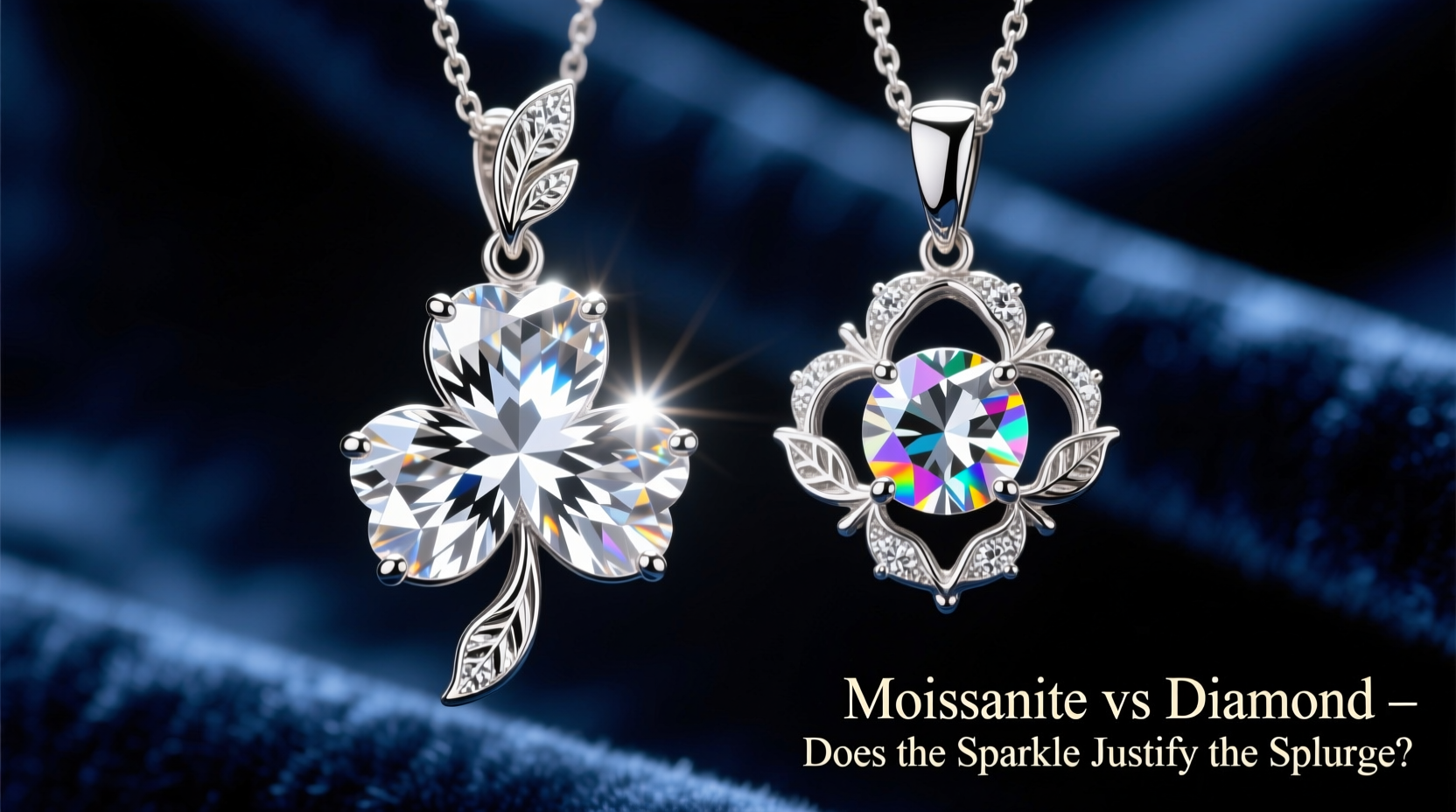
The clover design, particularly the four-leaf variety, symbolizes luck, love, hope, and faith. Its delicate shape makes it ideal for fine jewelry, especially pendants worn close to the heart. When adorned with a central gemstone, the clover becomes both eye-catching and sentimental. The choice of stone—diamond or moissanite—shapes not only the aesthetic but also the long-term value, maintenance, and ethical footprint of the piece.
Diamonds have long been the default choice for luxury jewelry, associated with timelessness and status. Moissanite, while increasingly popular, still faces misconceptions. Some view it as “fake” or inferior, but in reality, it’s a scientifically advanced gem with unique optical properties that often outperform diamonds in key areas like brilliance and fire.
Optical Performance: Sparkle Showdown
Sparkle isn’t just about brightness—it’s a combination of three elements: brilliance (white light reflection), fire (colored flashes), and scintillation (dynamic sparkle when the stone moves). These are measured by refractive index, dispersion, and cut quality.
| Property | Moissanite | Natural Diamond |
|---|---|---|
| Refractive Index | 2.65–2.69 | 2.42 |
| Dispersion (Fire) | 0.104 | 0.044 |
| Hardness (Mohs Scale) | 9.25 | 10 |
| Average Price (1 ct, GIA-certified) | $300–$600 | $4,000–$8,000+ |
Moissanite has a higher refractive index and nearly double the dispersion of diamond. This means it bends light more dramatically and produces more colorful flashes—especially noticeable in daylight or under bright indoor lighting. Many wearers report that their moissanite clover pendants “draw compliments constantly” due to their intense sparkle.
“Moissanite doesn’t mimic diamond—it competes on its own terms. In terms of visual impact per dollar, it’s unmatched.” — Dr. Lena Patel, Gemologist and Materials Scientist
Cost vs. Value: What Are You Really Paying For?
A one-carat diamond clover pendant from a traditional jeweler can easily exceed $7,000. The same design with a premium moissanite center might cost $800–$1,200, including the gold chain and setting. That difference isn’t just about the gem—it reflects mining costs, supply chain logistics, branding, and market perception.
Diamonds derive much of their value from scarcity and marketing. While natural diamonds are rare, lab-grown diamonds—which share the same chemical structure—are now widely available at 70–90% less than mined stones. Yet even lab diamonds typically cost more than moissanite with greater fire and similar durability.
For budget-conscious buyers, moissanite offers a way to invest in craftsmanship, metal quality (e.g., 14k gold), and design without sacrificing visual impact. It allows for larger carat sizes within the same budget—ideal for a statement pendant like a clover.
Real Example: Emma’s Choice
Emma wanted a meaningful gift for her sister’s graduation: a 14k white gold clover pendant with a center stone. She had $1,500 to spend. At a local jewelry store, she was shown a 0.70 ct diamond pendant priced at $1,450—near the edge of her budget. Online, she found a custom-designed moissanite version with a 1.0 ct premium Forever One stone, intricate milgrain detailing, and a matching chain for $1,100. She chose the moissanite. Her sister later said, “Everyone thinks it’s a diamond—and honestly, I wouldn’t have known the difference.”
Durability and Long-Term Wear
A pendant is exposed to daily friction, lotions, and occasional impacts. Durability matters. On the Mohs hardness scale, diamonds rank 10—the hardest natural substance. Moissanite ranks 9.25, making it suitable for everyday wear. Only sapphire (9) and diamond (10) are harder.
In practice, this half-point difference rarely affects longevity. Moissanite resists scratching under normal conditions and maintains its polish for decades. However, it has a slight double refraction, which can create a “ghost facet” effect when viewed under magnification. To the naked eye, this is usually imperceptible—especially in smaller stones used in pendants.
- Moissanite is resistant to heat and chemicals.
- It does not cloud over time if properly cleaned.
- Like all jewelry, it benefits from periodic cleaning with mild soap and water.
Ethics and Sustainability: A Growing Consideration
Increasingly, consumers ask where their jewelry comes from. Mined diamonds, despite industry improvements, still carry risks related to environmental damage and human rights concerns in certain regions. Even “conflict-free” certifications don’t guarantee full traceability or ecological sustainability.
Moissanite is lab-created, requiring no mining. The production process uses significantly less water and energy than diamond mining. Most manufacturers use renewable energy and closed-loop systems to minimize waste. For environmentally conscious buyers, this makes moissanite a compelling alternative.
“We’re seeing a generational shift. Younger consumers care less about tradition and more about transparency.” — Jordan Lee, Ethical Jewelry Advocate
Step-by-Step Guide: Choosing Your Clover Pendant
- Define your priorities: Is maximum sparkle most important? Or do you value tradition and resale potential?
- Set a realistic budget: Decide how much you’re willing to spend on the entire piece—not just the stone.
- Compare options side by side: View moissanite and diamond pendants in natural light. Note differences in fire and brilliance.
- Check the setting and metal: Ensure the prongs, bail, and chain are well-made. 14k gold is ideal for balance of durability and luster.
- Verify certifications: For diamonds, look for GIA or AGS reports. For moissanite, reputable brands include Charles & Colvard (Forever One) and HarroGem.
- Consider future maintenance: Will you clean it yourself? Can it be serviced easily?
- Make your choice confidently: Remember, beauty is subjective—and both stones can create a stunning heirloom.
Frequently Asked Questions
Can people tell the difference between moissanite and diamond?
To the untrained eye, no—especially in a pendant setting. Under magnification, gemologists may detect double refraction in moissanite or specific inclusions in diamonds, but in everyday wear, they appear nearly identical.
Does moissanite lose its sparkle over time?
No. High-quality moissanite retains its brilliance indefinitely. Temporary dullness can occur from oil or residue buildup, but this is easily remedied with cleaning.
Is a moissanite clover pendant a good investment?
If you define investment as emotional value and daily enjoyment, absolutely. Financially, neither moissanite nor most diamond pendants appreciate in value. Moissanite offers superior aesthetics per dollar spent.
Final Verdict: Does the Sparkle Justify the Splurge?
The answer depends on what you value. If prestige, tradition, and legacy matter most, a natural diamond clover pendant holds symbolic weight. But if brilliance, affordability, and ethical sourcing are priorities, moissanite doesn’t just compete—it often surpasses.
The “splurge” on a diamond may feel justified by its reputation, but in practical terms, moissanite delivers equal—if not greater—visual impact at a fraction of the cost. For a piece meant to be worn daily and cherished for years, performance and personal meaning outweigh pedigree.




 浙公网安备
33010002000092号
浙公网安备
33010002000092号 浙B2-20120091-4
Comments
No comments yet. Why don't you start the discussion?