
When shopping for a fine jewelry piece like a bracelet, especially one meant to shine on special occasions or as an everyday luxury, the choice between moissanite and lab-grown diamonds can be difficult. Both offer exceptional brilliance and ethical appeal, but subtle differences in optical performance, cost, and long-term wearability matter. The central question—is the sparkle really the same?—deserves a closer look beyond marketing claims and surface-level comparisons.
While both stones dazzle under light, their atomic structure, refractive behavior, and visual character diverge in ways that affect how they catch the eye. Understanding these nuances helps buyers make informed decisions based not just on budget, but on personal taste and lifestyle.
Understanding the Science of Sparkle
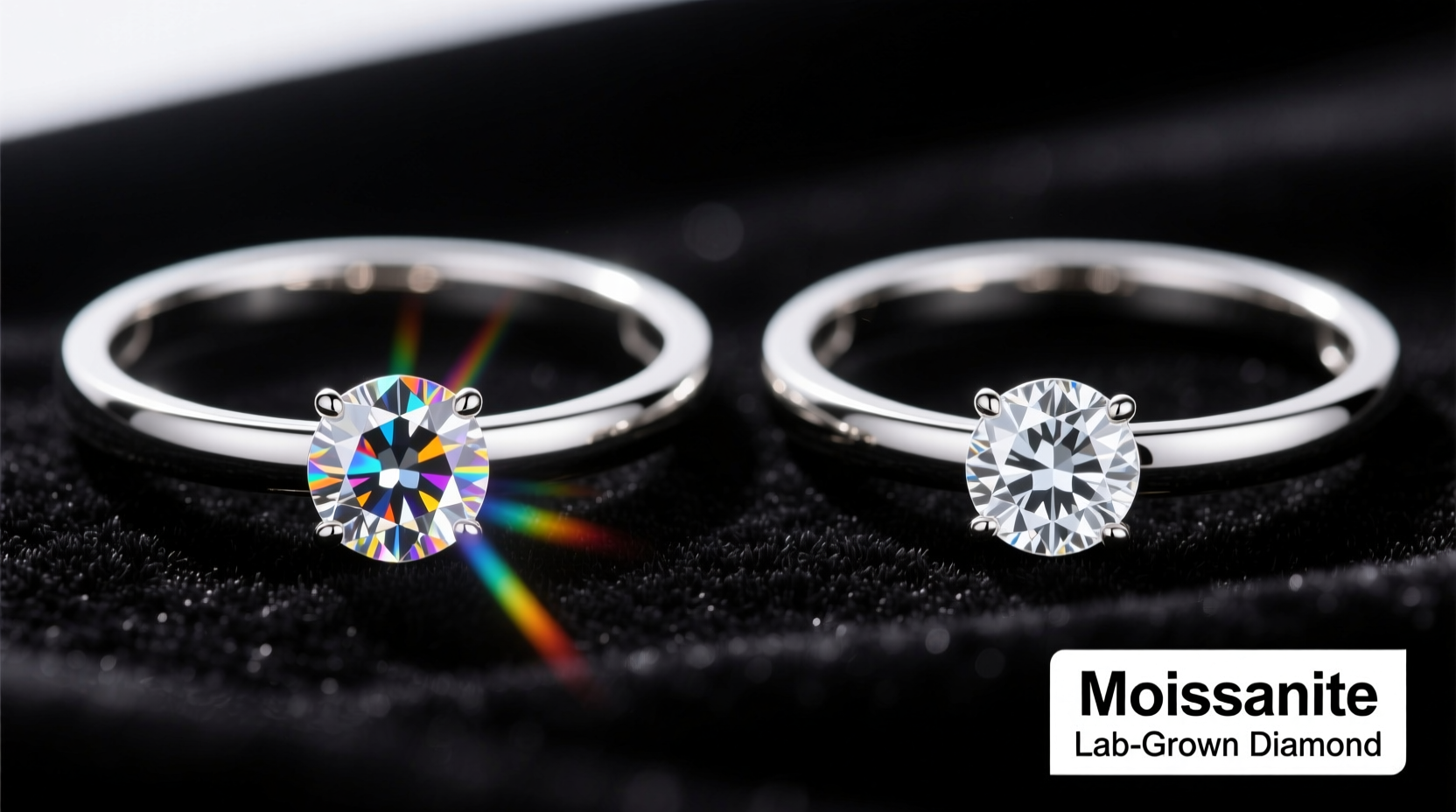
Sparkle isn’t just about brightness—it’s a combination of three optical properties: brilliance (white light reflection), fire (dispersion of light into spectral colors), and scintillation (the dynamic flashes when the stone moves). These are influenced by cut quality, clarity, and the material’s inherent optical characteristics.
Lab-grown diamonds are chemically, physically, and optically identical to mined diamonds. They score 10 on the Mohs hardness scale and have a refractive index of 2.42. Moissanite, composed of silicon carbide, ranks 9.25 in hardness and has a higher refractive index—between 2.65 and 2.69—meaning it bends light more dramatically than diamond.
This higher refraction gives moissanite greater fire, producing more colorful flashes under direct light. However, this intense rainbow sparkle can appear less subtle than the balanced, crisp white brilliance of a well-cut lab diamond. In natural daylight or soft indoor lighting, lab diamonds often mimic the classic “diamond look” more closely, while moissanite may exhibit a slightly more electric or fiery appearance.
Visual Comparison: Moissanite vs Lab Diamond Bracelets
A side-by-side comparison reveals distinctions that go beyond numbers. On a bracelet, where stones are often smaller and set close together, these differences become more nuanced.
| Feature | Moissanite | Lab-Grown Diamond |
|---|---|---|
| Refractive Index | 2.65–2.69 | 2.42 |
| Fire (Dispersion) | High – noticeable rainbow flashes | Moderate – balanced color return |
| Brilliance | Very high, slightly more “glassy” | Sharp, crisp white sparkle |
| Hardness (Mohs) | 9.25 | 10 |
| Durability Over Time | Excellent, but slightly more prone to micro-abrasions | Exceptional, maintains polish longer |
| Price (5mm round) | $200–$350 | $600–$1,200 |
| Double Refraction | Yes – may show slight doubling under magnification | No – single refraction only |
The double refraction in moissanite—a result of its crystal structure—can cause a subtle doubling of facet lines when viewed through a loupe. While invisible to the naked eye in most settings, it's a telltale sign for gemologists. In a bracelet with multiple small stones, this effect is rarely noticeable, but it contributes to the overall visual texture of the piece.
Real-World Wear: A Mini Case Study
Sarah, a graphic designer from Portland, wanted an elegant tennis bracelet for her anniversary. She loved the idea of a sustainable gemstone but was torn between moissanite and lab diamond. She tested both at a local boutique: a 6-carat total weight moissanite tennis bracelet priced at $1,400 and a comparable lab diamond version at $4,200.
Under store lights, the moissanite dazzled with vibrant fire—“like disco balls,” she laughed. But when she stepped outside, the lab diamond held a cooler, more refined glow. After wearing loaner samples for a week, Sarah noticed the moissanite attracted more attention due to its flashiness, while the lab diamond felt more understated and luxurious.
She ultimately chose the lab diamond, citing long-term value and a desire for timeless elegance. “I don’t want people to notice the stone first,” she said. “I want them to notice *me* wearing something beautiful.”
“The difference in sparkle is not just scientific—it’s emotional. Moissanite excites. Diamond endures.” — Dr. Lena Patel, GIA-Certified Gemologist
Choosing Based on Lifestyle and Values
Your daily routine influences which stone performs better over time. If you work with your hands, type frequently, or engage in active hobbies, durability matters. While both stones are resilient, lab diamonds resist scratching and abrasion slightly better. Their perfect cleavage requires careful setting, but once secured, they maintain polish and luster with minimal maintenance.
Moissanite, though nearly as hard, can accumulate micro-scratches faster on the crown facets due to prolonged exposure. Regular cleaning restores its shine, but over decades, repolishing may be needed—though this service is rare and affordable.
Ethically, both options outperform mined diamonds. Lab diamonds are grown using renewable-powered reactors with full traceability. Moissanite is entirely lab-created and requires fewer resources per carat. For eco-conscious buyers, either choice reflects responsible consumption.
Step-by-Step Guide to Making Your Decision
- Define your aesthetic goal: Do you prefer bold, colorful sparkle (moissanite) or classic, icy brilliance (lab diamond)?
- Set a realistic budget: Lab diamonds typically cost 30–50% less than mined ones, but still significantly more than moissanite.
- Visit a jeweler with both options: Compare bracelets side by side in different lighting conditions.
- Ask about warranties and certifications: Reputable vendors provide grading reports (e.g., IGI for lab diamonds, Charles & Colvard for premium moissanite).
- Consider long-term value: Lab diamonds hold resale value better; moissanite offers maximum sparkle per dollar spent.
Frequently Asked Questions
Can people tell the difference between moissanite and lab diamond in a bracelet?
To the untrained eye, no—especially in smaller stones typical of bracelets. Only under magnification or in controlled lighting might experts detect differences in fire or double refraction. Most observers will simply see a sparkling, high-quality piece.
Does moissanite lose its sparkle over time?
No, moissanite does not dull with age. However, like any gem, it can accumulate oils and debris. Regular cleaning ensures it maintains maximum brilliance. Its refractive properties remain unchanged for generations.
Are lab diamonds considered “real” diamonds?
Yes. Lab-grown diamonds are real diamonds—identical in composition, hardness, and optical properties to mined diamonds. The FTC recognizes them as such, and major gem labs grade them accordingly.
Final Thoughts: Sparkle Is Personal
The sparkle of a moissanite versus a lab diamond bracelet isn’t objectively better—it’s different. Moissanite delivers more fire and flash, appealing to those who love dramatic brilliance. Lab diamonds offer a subtler, more traditional radiance prized for its elegance and longevity.
There’s no universal answer to whether the sparkle is “the same.” What matters is what resonates with you. Are you drawn to exuberant light play or refined sophistication? Do you prioritize cutting-edge ethics and affordability, or heirloom-grade durability and market recognition?
In the end, both stones represent progress—away from environmental harm and toward accessible luxury. Whether you choose moissanite or lab diamond, you’re choosing intelligence, integrity, and beauty.




 浙公网安备
33010002000092号
浙公网安备
33010002000092号 浙B2-20120091-4
Comments
No comments yet. Why don't you start the discussion?