
In an age where minimalism meets functionality, the debate between money clips and small wallets isn't just about style—it's about how you live day to day. Both promise slim profiles and streamlined carry, but their performance varies dramatically depending on your habits, needs, and environment. Whether you're a commuter, a frequent traveler, or someone who values quick access over bulk, understanding the subtle differences can save you frustration and even improve security.
This isn’t a matter of personal preference alone. Practicality hinges on capacity, durability, organization, and how each item holds up under real-life conditions—from jostling in your pocket during a crowded subway ride to surviving a downpour. Let’s break down what each option offers and where it falls short.
Understanding the Basics: What Each Option Offers
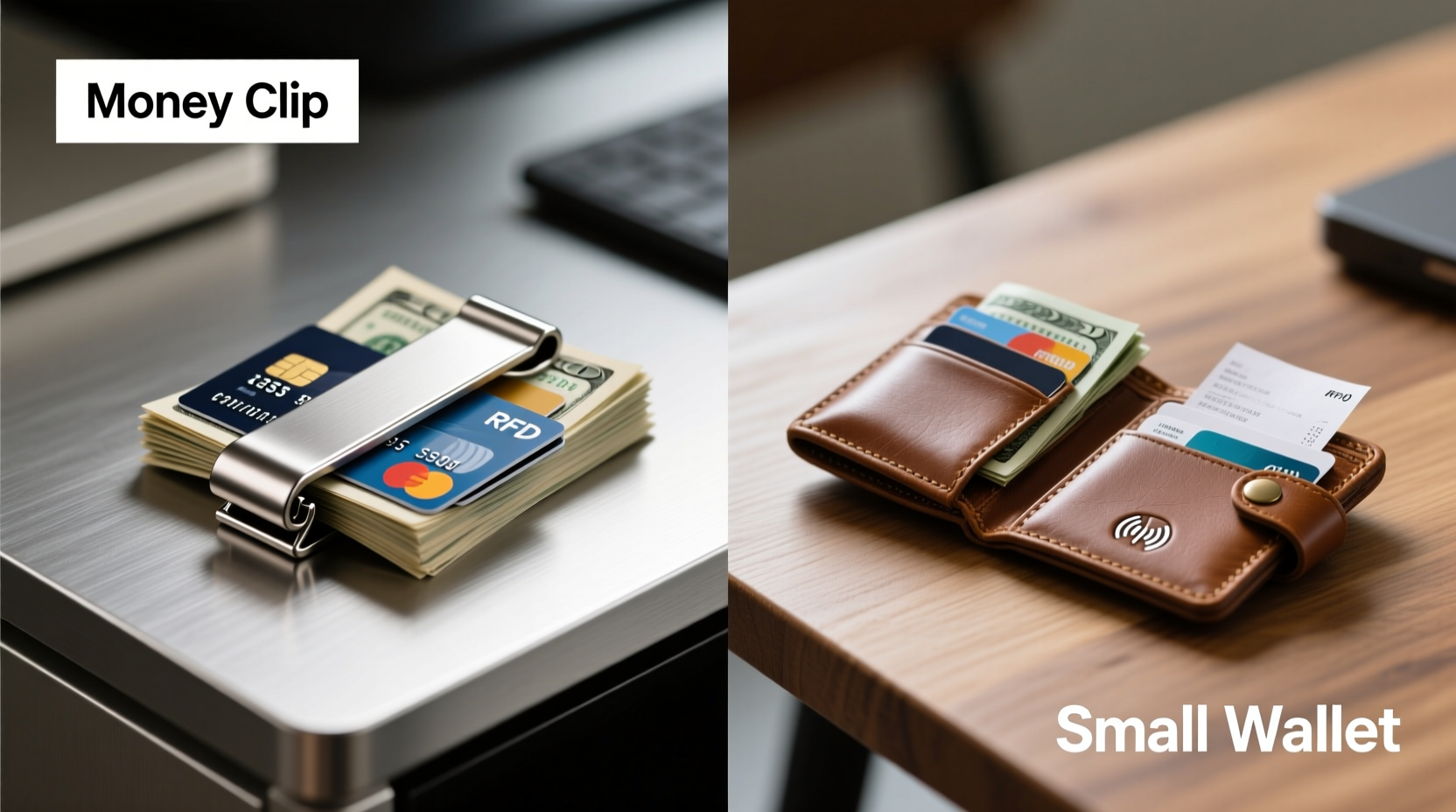
A **money clip** is typically a spring-loaded or magnetic bar designed to hold folded bills securely. Some models include card slots, while others are purely for cash. They’re often made from metal—such as titanium, aluminum, or stainless steel—and emphasize sleekness and rigidity.
A **small wallet**, by contrast, refers to compact bifold, trifold, or front-pocket designs that usually feature multiple card pockets and a central bill compartment. These range from traditional leather bi-fold wallets trimmed down for minimalism to modern RFID-blocking models made from advanced synthetics.
The key distinction lies in structure: money clips prioritize compression and thinness, while small wallets offer compartmentalization at the cost of slight added thickness.
Capacity and Organization: How Much Can You Realistically Carry?
One of the most overlooked aspects in this comparison is daily utility. Ask yourself: how many cards do you actually use? Do you keep transit passes, loyalty cards, or business cards on hand? And how much cash do you typically carry?
Most standard money clips handle 10–20 folded bills comfortably. Beyond that, they lose structural integrity and become awkward to open. Cards, if supported at all, are often limited to one or two behind the clip—poorly secured and prone to slipping out.
Small wallets, especially minimalist front-pocket styles, commonly accommodate 4–6 cards in dedicated slots plus a separate cash sleeve. This makes accessing individual items faster and reduces wear on both cards and bills. No more fumbling through a stack of crumpled receipts and IDs.
“From a functional design standpoint, organization equals efficiency. A well-structured small wallet reduces decision fatigue and retrieval time.” — Daniel Reed, Industrial Designer specializing in EDC (Everyday Carry) gear
Practical Comparison: Money Clip vs Small Wallet
| Feature | Money Clip | Small Wallet |
|---|---|---|
| Thickness | Extremely thin (3–5mm) | Slightly thicker (8–12mm), but still pocket-friendly |
| Cash Capacity | Good for 10–20 bills; degrades with volume | Stable hold regardless of bill count |
| Card Storage | Limited (0–2 cards loosely held) | 4–8 cards securely slotted |
| Durability | High (metal builds resist wear) | Varies (leather ages well; synthetic lasts longer) |
| Security | Moderate (cash can slip if clip weakens) | High (zipped or snap-closed versions add protection) |
| Access Speed | Fast for cash only | Balanced—easy card and cash access |
| Pocket Comfort | Excellent when empty; stiff with full load | Consistent, especially in front-pocket cut models |
Real-World Scenario: Who Benefits From Which?
Consider Mark, a software developer living in downtown Seattle. He walks to work, uses public transit, and carries his phone, keys, and wallet in his jeans’ front pocket. He dislikes bulk and has experienced back strain from sitting with thick back-pocket wallets.
He tried a titanium money clip first. It felt great initially—ultra-slim and modern. But within weeks, he noticed issues: his ID kept falling out, rain damaged a $20 bill tucked behind the clip, and withdrawing cash from an ATM required unfolding and refolding bills every time.
Switching to a slim leather front-pocket wallet changed everything. His cards stayed organized, cash remained flat and protected, and the slight increase in thickness didn’t affect comfort. After three months, he reported fewer lost items and greater confidence in daily use.
This mirrors broader user trends: those who value long-term reliability over initial novelty tend to prefer small wallets—even if they start with a money clip for aesthetic reasons.
When a Money Clip Makes Sense
There are legitimate cases where a money clip shines. If you're someone who:
- Carries mostly cash (e.g., works in hospitality or prefers anonymity)
- Wears tight-fitting clothing where every millimeter counts
- Values ceremonial elegance (e.g., formal events, suits without jacket pockets)
- Uses only 1–2 cards daily and keeps the rest at home
…then a high-quality money clip could be ideal. Premium models with built-in RFID shielding and secondary card sleeves bridge the gap slightly, though they still lag behind wallets in versatility.
Step-by-Step: Choosing the Right Option for Your Lifestyle
- Inventory your daily carry: List every card and amount of cash you use regularly.
- Assess your clothing: Do you wear slim-fit pants or carry items in suit pockets?
- Test pocket placement: Try placing a smartphone in your front pocket—can a wallet fit beside it without bulging?
- Evaluate access frequency: How often do you pay, swipe transit cards, or show ID?
- Simulate stress scenarios: Walk briskly, sit down, bend over—does your current or potential carry stay secure?
- Choose based on results: Prioritize security and ease if you’re active; go for thinness only if space is critical.
Frequently Asked Questions
Can a money clip damage my credit cards?
Yes—especially if the clip exerts constant pressure on the magnetic strip or EMV chip. Over time, this can lead to read failures. Additionally, carrying cards folded with cash increases creasing and structural fatigue in the plastic.
Are small wallets less secure than money clips?
No, quite the opposite. Most small wallets include features like snap closures, zippers, or tight elastic bands that prevent accidental loss. Money clips rely solely on tension, which weakens with use and can fail unexpectedly.
Do money clips last longer than wallets?
Metal money clips generally outlast fabric or leather components—but only if used correctly. Springs fatigue, edges scratch other items, and finishes wear off. A well-maintained leather wallet can easily last 5–10 years with proper care.
Final Verdict: Which Is Actually More Practical?
The answer depends on your priorities, but objectively, **a small wallet wins in overall practicality** for most people. It balances slimness with functionality, protects your essentials, and adapts to changing needs throughout the day.
While money clips have undeniable appeal—especially in fashion-forward circles—they sacrifice too much in organization and security for marginal gains in thinness. Unless you live a deliberately cash-heavy, low-card lifestyle, the trade-offs rarely justify long-term use.
Modern slim wallets have closed the gap significantly. Many now match the profile of money clips while offering superior ergonomics, material resilience, and peace of mind.
Take Action Today
Don’t settle for discomfort or inefficiency. Reassess what you carry every day. Remove unused cards, evaluate your payment habits, and try a minimalist front-pocket wallet for a week. You might find that true practicality isn’t about being the thinnest—it’s about working seamlessly with your life.




 浙公网安备
33010002000092号
浙公网安备
33010002000092号 浙B2-20120091-4
Comments
No comments yet. Why don't you start the discussion?