
The nativity scene is more than a seasonal decoration—it’s a narrative frozen in time, meant to convey reverence, warmth, and the quiet miracle of Christmas. At the heart of this storytelling lies one often-overlooked element: lighting. Whether it casts a soft, eternal glow or flickers to life as someone approaches, lighting shapes how we experience the scene. But when comparing motion-activated versus static lighting, which truly enhances the story? The answer depends not just on technology, but on intention, environment, and emotional resonance.
The Role of Lighting in Storytelling
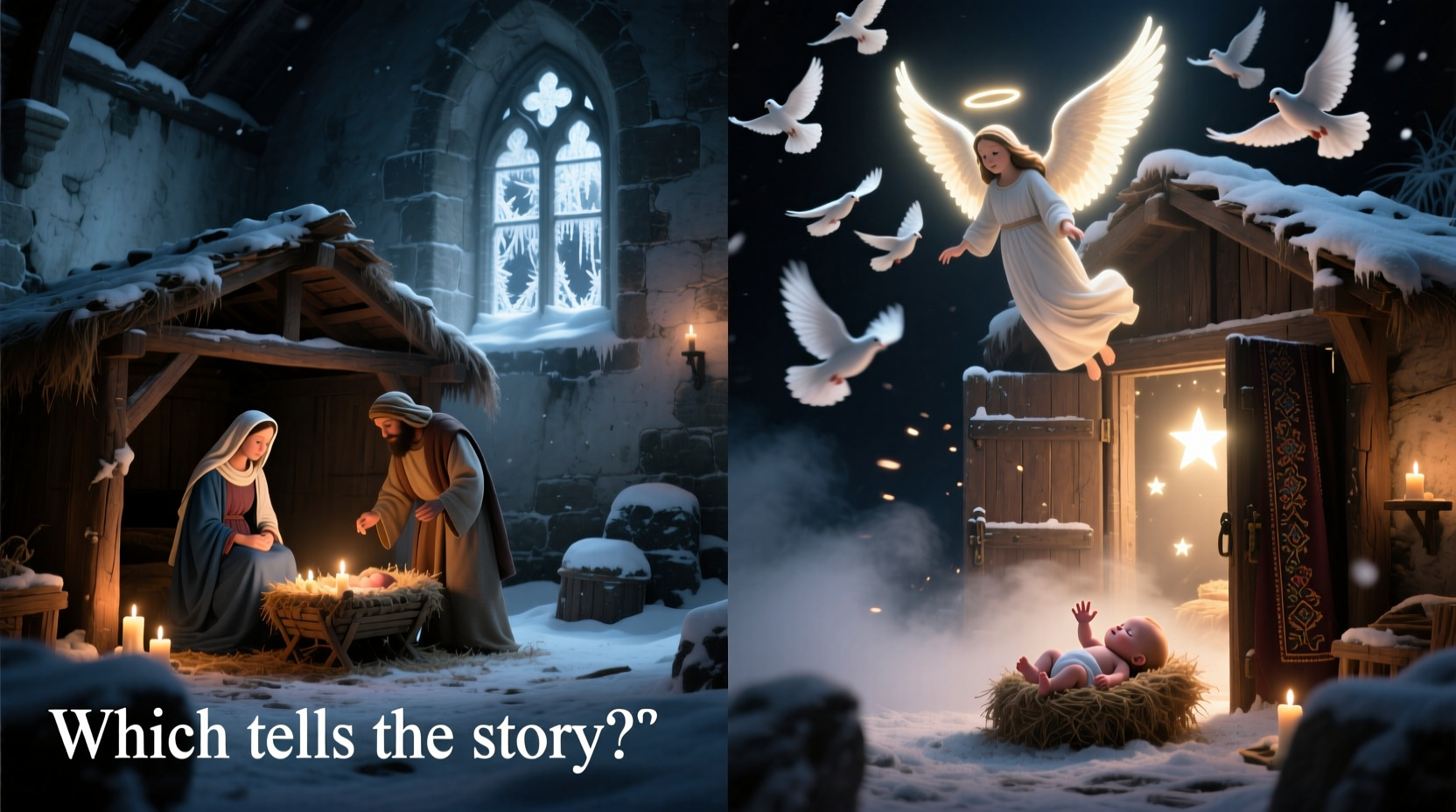
Lighting has long been a tool for guiding attention and evoking emotion. In theater, film, and even religious ceremonies, light directs focus, establishes mood, and signals transitions. A nativity scene, though stationary, relies on similar principles. The way light falls on Mary’s face, glimmers in the manger, or outlines the shepherds’ silhouettes can elevate a simple display into a moment of contemplation.
Static lighting provides a constant presence—steady, predictable, and always available. It ensures visibility and maintains atmosphere regardless of who’s watching. Motion-activated lighting, by contrast, introduces timing and surprise. It waits, then reveals—like a whispered secret shared only with those who draw near.
This fundamental difference isn’t just technical; it’s narrative. One approach says, “The story is always here.” The other whispers, “Come closer, and you’ll see.”
How Static Lighting Shapes the Experience
Static lighting offers reliability. Once installed, it remains illuminated throughout the evening, providing consistent visibility and ambiance. This makes it ideal for outdoor displays viewed from a distance, such as church lawns or public squares where passersby may not come within sensor range.
In residential settings, static lighting creates a welcoming glow—a beacon of peace during the winter months. Homeowners often use warm white LEDs strung gently around figures or embedded beneath canopies to simulate candlelight. Because the light never wavers, it fosters a sense of permanence and reverence.
However, static lighting lacks dynamism. After the initial viewing, there's little incentive to return. The entire scene is revealed at once, leaving no mystery. Over time, familiarity can dull its impact, especially if left on all night every night.
Advantages of Static Lighting
- Constant visibility for maximum exposure
- Simpler installation and maintenance
- Compatible with timers and smart home systems
- Ideal for large-scale or public installations
Limits of Static Lighting
- Potential for light pollution or neighbor complaints
- Higher energy consumption over extended periods
- Less interactive or engaging after repeated viewings
- Risk of becoming background noise rather than focal point
Motion-Activated Lighting: Drama Through Delay
Motion-activated lighting transforms the act of viewing into an event. Instead of being constantly visible, the nativity scene awakens when someone approaches. Sensors detect movement—perhaps a family walking the dog, a visitor arriving, or children peering through the fence—and trigger a sequence: first a faint glow, then the full tableau emerging from darkness.
This delayed reveal mimics the unfolding nature of revelation itself. Just as the shepherds were called to witness something extraordinary, so too must the viewer be present, attentive, and proximate to receive the message.
“The power of sacred stories often lies not in their availability, but in their accessibility. You have to seek them.” — Dr. Lila Thompson, Liturgical Design Scholar
From a design standpoint, motion-activated systems allow for greater creativity. Lights can follow a sequence—first illuminating the star above the stable, then revealing the animals, then the Holy Family—creating a mini-drama that unfolds over seconds. Some advanced setups even integrate gentle soundscapes: distant chimes, soft hymns, or ambient night sounds that begin only when triggered.
Benefits of Motion Activation
- Creates memorable, immersive moments
- Reduces energy usage by limiting active time
- Minimizes light pollution
- Encourages intentional engagement rather than passive observation
- Adds an element of wonder, especially for children
Challenges to Consider
- Sensors may fail in extreme weather or due to obstructions
- May not activate reliably for slow-moving viewers or pets
- Initial setup is more complex and potentially costly
- Not ideal for high-traffic areas with constant triggering
Comparative Analysis: Which Tells a Better Story?
To determine which lighting method \"tells a better story,\" we must define what makes a story effective. Is it clarity? Emotional impact? Repeatability? Depth? The answer varies depending on context.
| Criteria | Static Lighting | Motion-Activated Lighting |
|---|---|---|
| Narrative Engagement | Moderate – immediate but fixed | High – builds anticipation and reward |
| Emotional Impact | Consistently peaceful | Surprising, reverent, intimate |
| Energy Efficiency | Lower – runs continuously | Higher – activates only when needed |
| Visibility Range | Excellent – visible from afar | Limited – requires proximity |
| Maintenance Needs | Low – simple circuits | Moderate – sensors require calibration |
| Best For | Public displays, driveways, broad audiences | Front porches, contemplative spaces, personal devotion |
The table suggests a key insight: neither option is universally superior. Static lighting excels in reach and consistency. Motion-activated lighting wins in intimacy and storytelling depth. If your goal is widespread visibility—say, a church lawn seen by hundreds each night—static is likely the better choice. But if you aim to create a personal moment of reflection, perhaps for family or neighbors who walk by regularly, motion activation invites deeper connection.
A Real Example: Two Homes, Two Approaches
Consider two neighboring homes on Maple Street. Both set up traditional nativity scenes each December. Both care deeply about sharing the meaning of Christmas.
Home A uses static lighting. Their display shines brightly from dusk till dawn, visible from the street and sidewalk. Neighbors appreciate the steady glow, and drivers often slow down to glance. On Christmas Eve, dozens gather across the street for caroling, drawn in part by the warm illumination. Yet, by mid-January, many admit they’ve stopped really seeing it—it’s become part of the scenery.
Home B takes a different path. They install motion-activated LED strips under each figure, wired to a central sensor facing the sidewalk. When someone walks within ten feet, the scene gradually lights up over five seconds—beginning with the star, then the manger, then the surrounding figures. A small sign reads: “Come closer to see the light.”
At first, people are startled. Then intrigued. Children rush ahead to “wake” the scene. Adults pause, smile, and often linger longer than expected. One elderly neighbor later shares that the gradual reveal reminded her of how faith sometimes comes—not all at once, but in stages.
Neither display is wrong. But Home B’s choice turned viewing into participation. It didn’t just tell the story—it invited people into it.
Step-by-Step Guide: Choosing and Installing the Right System
Selecting between motion-activated and static lighting shouldn’t be arbitrary. Follow these steps to ensure your decision aligns with your goals.
- Define Your Purpose: Are you aiming for broad visibility or intimate engagement? Public outreach or personal reflection?
- Assess Your Space: Is the scene near a sidewalk or front porch (ideal for motion sensors), or set back from foot traffic (better for static)?
- Check Power Access: Do you have an outdoor outlet? Solar-powered options work well for motion lights in sunny spots.
- Choose Bulb Temperature: Opt for warm white (2700K–3000K) to mimic candlelight and enhance reverence.
- Test Sensor Placement: For motion systems, position sensors to cover natural pathways without false triggers from trees or passing cars.
- Install Gradually: Start with core elements lit, then add layers. For motion setups, test activation range and delay timing.
- Add a Timer (Optional): Even motion lights can be restricted to nighttime hours (e.g., 5 PM–11 PM) to conserve battery and reduce disturbance.
Hybrid Solutions: Best of Both Worlds?
Some homeowners and churches now blend both methods. A low-level static glow keeps the outline visible from afar, ensuring the scene is never completely dark. Then, when motion is detected, additional spotlights or color-washed LEDs activate, highlighting key figures or adding animation.
This hybrid model balances visibility with drama. Distant viewers still benefit from the calming presence of light, while close observers receive a richer, layered experience. It’s particularly effective in multi-tiered displays—where the outer ring stays softly lit, and the inner manger ignites upon approach.
Technology continues to expand these possibilities. Smart lighting systems like Philips Hue or LIFX Outdoor can be programmed to respond to motion, time, or even voice commands. Imagine a nativity scene that dims automatically at midnight, or brightens only when a child says, “Show me the baby Jesus.”
Frequently Asked Questions
Can I convert my existing static-lit nativity to motion-activated?
Yes. Retrofit kits with wireless motion sensors and plug-in receivers are widely available. Simply disconnect your current lights from the outlet, plug in the sensor module, and reattach the lights. Position the sensor to cover your desired detection zone.
Do motion sensors work well in snowy climates?
Most modern sensors are rated for cold weather, but heavy snow buildup can block detection. Choose models with wide-angle lenses and install them under eaves or protective covers. Clear snow regularly from the sensor lens.
Which uses more electricity—static or motion lighting?
Static lighting consumes more overall because it runs continuously. A typical LED nativity set uses 5–10 watts per hour. Over 60 days at 8 hours nightly, that’s 2.4–4.8 kWh. Motion-activated systems, running only 10–20 minutes per day on average, may use less than 0.5 kWh total—making them far more efficient.
Final Recommendation: Match Light to Message
The question isn’t whether motion-activated or static lighting is objectively better—it’s which serves your story best.
If your goal is presence—if you want the world to know that this story matters, that it stands firm through darkness and distraction—then static lighting is a powerful symbol of constancy. It says: This truth does not hide. It is always here.
But if you hope to spark curiosity, invite reflection, or recreate the hush of Bethlehem’s night—where only those who followed the star got to witness the miracle—then motion-activated lighting offers a profound metaphor. It says: Draw near. Be still. The light is for those who seek it.
For most, the answer lies somewhere in between. Begin with your intention. Ask: Who is this for? What do I hope they feel? Then let the light follow the story—not the other way around.




 浙公网安备
33010002000092号
浙公网安备
33010002000092号 浙B2-20120091-4
Comments
No comments yet. Why don't you start the discussion?