
In 2017, the smartphone market offered a clear divide between premium flagships and budget-friendly mid-rangers. The Samsung Galaxy S7 stood as one of the last great pre-foldable flagships, while Motorola’s Moto G5 Plus carved its niche as a high-value Android experience under $300. For users torn between sticking with a capable mid-tier device or stepping up to a flagship, the decision wasn’t just about specs—it came down to real-world usability, longevity, and whether the price jump delivered proportional gains.
This comparison dives deep into the practical differences between the Moto G5 Plus and the Galaxy S7, examining camera quality, performance, battery life, software, and overall user satisfaction. Was spending nearly double on the S7 truly justified?
Performance and Hardware: Power vs Practicality
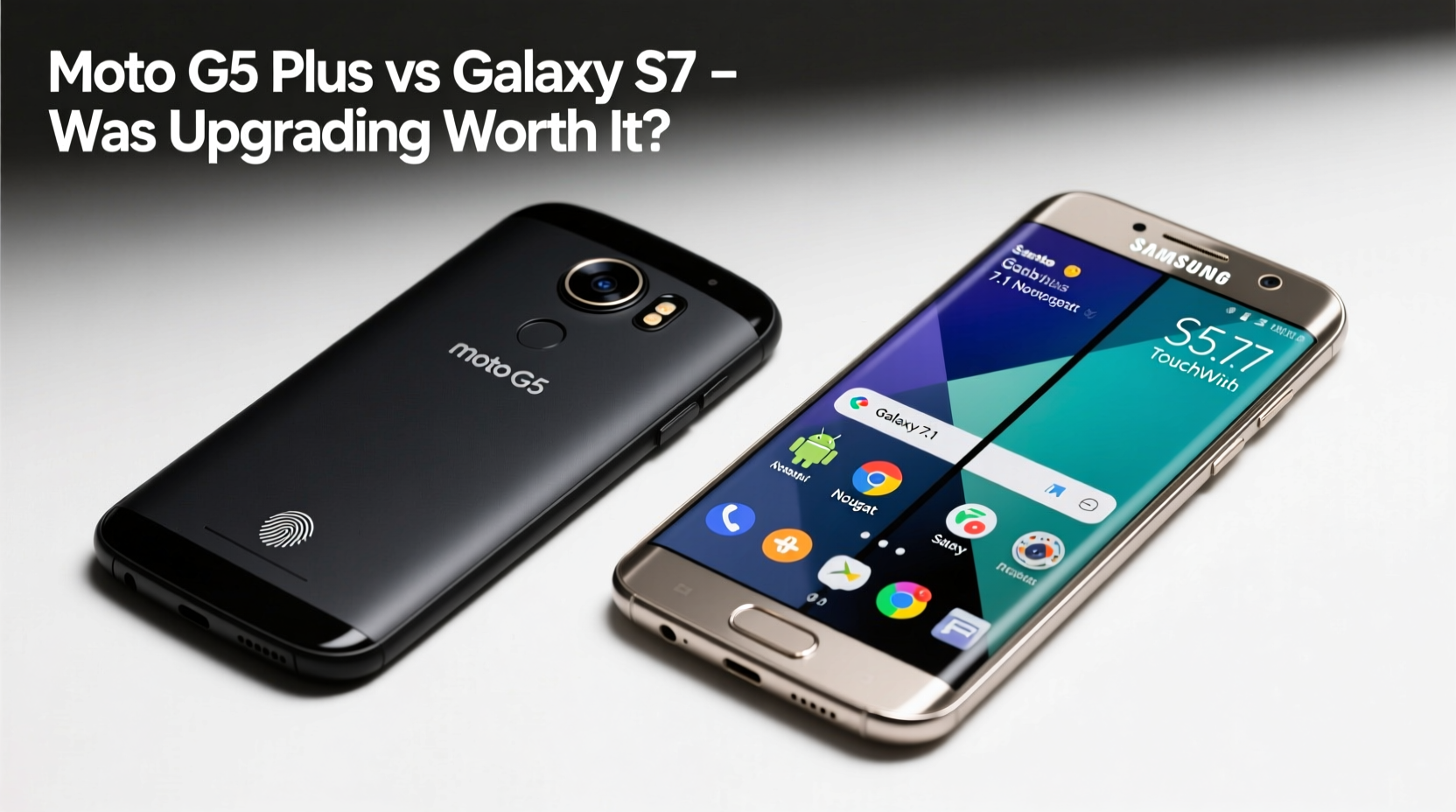
The hardware gap between these two phones is stark on paper. The Galaxy S7 ran on either the Qualcomm Snapdragon 820 (in most regions) or the Exynos 8890, both high-end chips at the time. Paired with 4GB of RAM and UFS 2.0 storage, the S7 handled multitasking, gaming, and UI animations with ease—even years after release.
In contrast, the Moto G5 Plus used the Snapdragon 430, a mid-range octa-core processor with Adreno 505 graphics and 2GB or 3GB of RAM. While adequate for everyday tasks like browsing, messaging, and light media consumption, it struggled with heavier apps and sustained workloads. App switching was noticeably slower, and background app retention was limited.
However, Motorola optimized near-stock Android well. With minimal bloatware and clean software, the G5 Plus felt snappier than similarly specced competitors. But make no mistake—the Galaxy S7 operated in a different league when it came to raw processing power and future-proofing.
Display and Build Quality: Glass vs Metal
The Galaxy S7 featured a 5.1-inch Quad HD Super AMOLED display with a resolution of 1440 x 2560 pixels. Colors were vibrant, blacks were deep, and outdoor visibility was excellent. The curved glass design gave it a premium feel, enhanced by IP68 water and dust resistance—a rare feature even among flagships at the time.
The Moto G5 Plus had a 5.2-inch Full HD IPS LCD screen (1080 x 1920). While sharp and color-accurate for its class, it lacked the punch and contrast of AMOLED. Viewing angles were good but not exceptional, and brightness fell short in direct sunlight.
| Feature | Moto G5 Plus | Galaxy S7 |
|---|---|---|
| Display Type | IPS LCD | Super AMOLED |
| Resolution | 1080 x 1920 | 1440 x 2560 |
| Build Material | Aluminum unibody | Front/back glass, aluminum frame |
| Water Resistance | No official rating | IP68 certified |
| Fingerprint Sensor | Rear-mounted, fast | Front home button, reliable |
The S7’s build exuded luxury, but also fragility—glass backs cracked easily without protection. The G5 Plus, though less flashy, offered a sturdy metal body that resisted scratches and minor drops better. Neither came with included cases, but the S7 practically demanded one.
Camera Comparison: Moments vs Memories
Photography was where the Galaxy S7 pulled far ahead. Its 12MP Dual Pixel rear sensor captured stunning low-light shots thanks to an f/1.7 aperture and larger pixel size (1.4µm). Fast autofocus and dynamic range made it a favorite among mobile photographers in 2016–2017.
The Moto G5 Plus had a 12MP rear camera with an f/2.0 aperture and PDAF. Daylight photos were decent—well-exposed and reasonably detailed—but lacked the depth and color fidelity of the S7. Low-light performance was mediocre, with noticeable noise and blur. The front-facing 5MP shooter was average for selfies.
“Smartphone cameras aren’t just about megapixels—they’re about sensor size, aperture, and image processing. The Galaxy S7 set a benchmark for low-light photography that few budget phones have matched since.” — David Lin, Mobile Imaging Analyst
If capturing high-quality photos in varied lighting was important, the S7 was unquestionably superior. For casual snaps and social media sharing, the G5 Plus sufficed, but enthusiasts would feel constrained.
Battery Life and Charging: Efficiency vs Endurance
The Moto G5 Plus packed a 3000mAh battery with Turbo Charging support—15 minutes of charging provided about 6 hours of use. This was a major selling point. In real-world use, moderate users could stretch it to a full day and a half, especially with Doze mode optimizations.
The Galaxy S7 had a slightly smaller 3000mAh battery (S7 edge had 3600mAh), but due to its more power-hungry display and processor, endurance was typically just a full day under mixed use. It supported fast charging too, but wireless charging was an added bonus.
While the S7 offered more features, the G5 Plus won in charging convenience and consistent battery reliability. Users who hated daily charging found the Moto model more forgiving.
Software Experience and Longevity
Both phones launched with Android 7.0 Nougat. Motorola stuck close to stock Android, delivering timely updates and a clean interface. The G5 Plus received one major OS update (to Android 8.1 Oreo) and regular security patches for about 18 months.
Samsung’s TouchWiz (later rebranded as Experience) layered heavily over Android, adding features like Always-On Display, multi-window, and enhanced camera modes. However, this bloated interface slowed down over time. Despite being a flagship, the S7 stopped receiving major OS updates after Android 8.0, though it got longer security support than the Moto.
In terms of long-term usability, neither phone remains viable as a primary device today due to app compatibility and security concerns. But during their prime, the G5 Plus offered a smoother, cleaner experience, while the S7 gave access to more advanced features and ecosystem integration (Samsung Pay, Dex-like multitasking).
Mini Case Study: Sarah’s Upgrade Dilemma
Sarah owned a Moto G4 Plus and considered upgrading in early 2017. She valued good battery life, liked taking photos at her daughter’s school events, and wanted something that would last two years. She weighed spending $250 on the G5 Plus versus $650 for a refurbished Galaxy S7.
She chose the S7, attracted by the camera and water resistance. Initially thrilled, she noticed slowdowns within a year and grew frustrated with pre-installed apps she couldn’t remove. After 18 months, the battery degraded significantly, requiring replacement. While the camera still impressed, she admitted she might have been better off with a newer mid-tier phone later rather than stretching a flagship beyond its optimal window.
Her takeaway: “The S7 was amazing for six months. After that, the G5 Plus might’ve given me better value over time.”
Was Upgrading Worth It? A Balanced Verdict
For power users, photographers, or those invested in the Samsung ecosystem, upgrading from a mid-tier phone like the G5 Plus to the Galaxy S7 made sense. The improvements in display quality, camera performance, and processing power were tangible and impactful.
But for average users—those primarily using phones for calls, messaging, social media, and occasional photos—the leap wasn’t transformative. The G5 Plus handled these tasks capably, offered faster charging, better build durability, and cost less than half the price.
- Budget-conscious users: The G5 Plus delivered excellent value.
- Power users and creatives: The S7 justified its cost with superior components.
- Long-term thinkers: Neither phone aged gracefully past three years, but the S7 held resale value better.
Checklist: Should You Upgrade from a Mid-Tier to a Flagship?
- Do you regularly take photos in low light or edit images?
- Do you play graphics-intensive games or use AR apps?
- Is water resistance or wireless charging important to you?
- Are you planning to keep the phone for more than two years?
- Does your carrier offer trade-in discounts or financing?
If you answered yes to three or more, a flagship like the S7 may be worth the investment. Otherwise, a well-chosen mid-tier phone often provides 80% of the experience at 50% of the cost.
FAQ
Did the Moto G5 Plus support SD cards?
Yes, it had a microSDXC slot that allowed expansion up to 128GB, which was a significant advantage over the Galaxy S7, which did not support expandable storage.
Could the Galaxy S7 run Fortnite or high-end games smoothly?
Yes, at launch and through 2018, the Galaxy S7 handled demanding games like Fortnite at medium to high settings. Performance dipped slightly over time due to thermal throttling and software bloat.
Which phone received faster Android updates?
Motorola generally delivered OS updates faster than Samsung due to its lighter software skin. However, Samsung provided longer security patch support for the S7 compared to the G5 Plus.
Final Thoughts
The choice between the Moto G5 Plus and Galaxy S7 wasn’t just technical—it reflected priorities. The S7 offered prestige, performance, and photographic excellence. The G5 Plus championed efficiency, affordability, and thoughtful design. Upgrading wasn’t automatically “worth it” unless your needs aligned with what the flagship uniquely provided.
Today, both phones are relics, but their legacy underscores a timeless truth: value isn’t measured solely by specs. It’s defined by how well a device fits your life. Before chasing the latest flagship, ask whether its advantages will actually improve your daily experience—or just sit unused beneath a glossy screen.




 浙公网安备
33010002000092号
浙公网安备
33010002000092号 浙B2-20120091-4
Comments
No comments yet. Why don't you start the discussion?