
Choosing between older smartphones like the Moto G5 and Samsung Galaxy J5 (2016) might seem like a minor decision, but for users still relying on budget devices from that era, the upgrade path matters. Both phones were popular mid-range options in 2016–2017, offering decent value at the time. But now, in today’s app-heavy, update-dependent mobile ecosystem, their relevance has significantly diminished. So, if you're currently using one and considering switching to the other—especially from the Moto G5 to the J5 2016—is it actually worth it?
The short answer: no, not really. But the full picture depends on your expectations, usage patterns, and what “upgrading” means to you. Let’s break down both devices across key categories to understand where each stands in 2024 and whether such a move makes practical sense.
Performance and Hardware Comparison
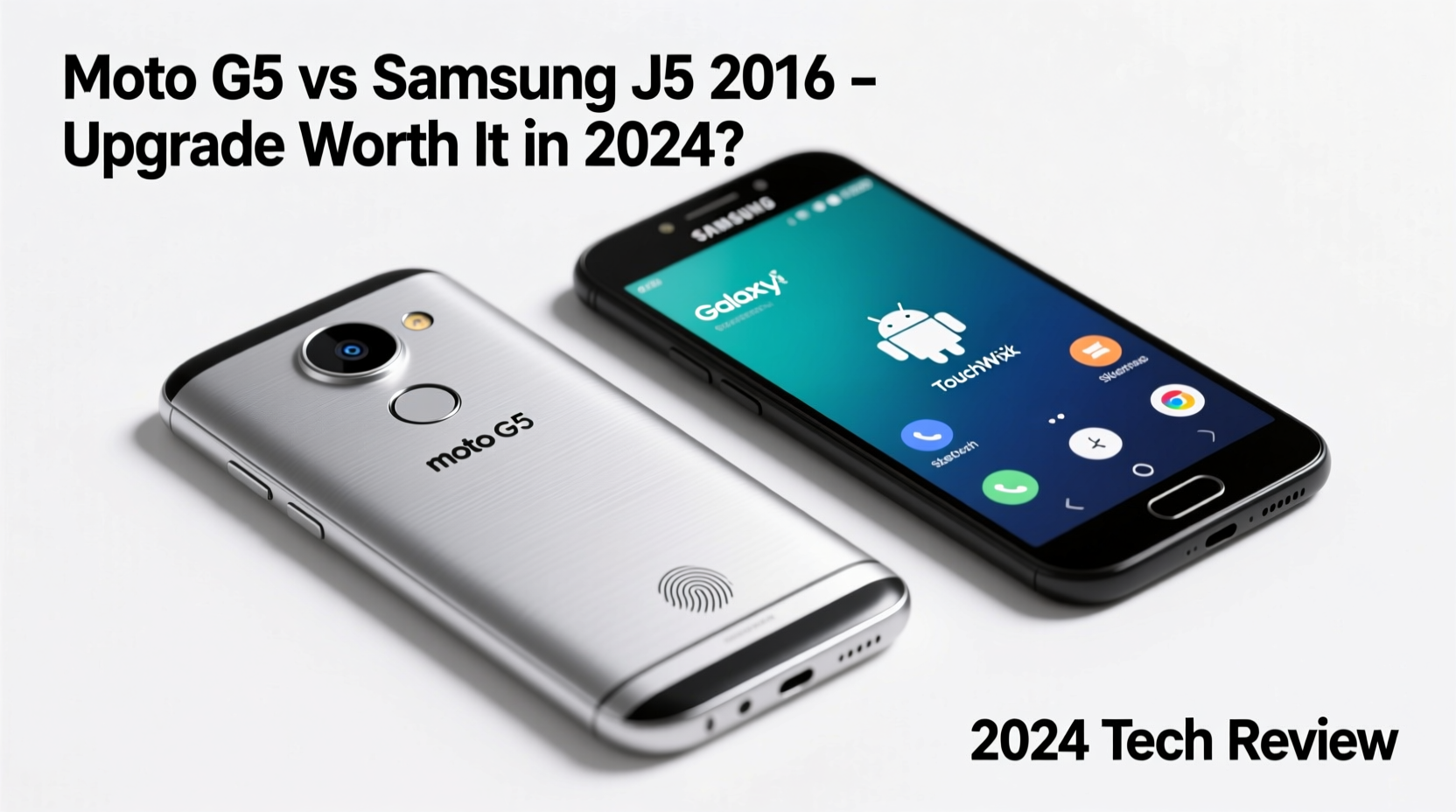
At launch, both phones targeted similar market segments but took different approaches to hardware design and processing power.
| Feature | Moto G5 | Samsung J5 2016 |
|---|---|---|
| Processor | Qualcomm Snapdragon 430 (Octa-core) | Snapdragon 410 (Quad-core) |
| RAM | 2GB or 3GB | 2GB |
| Storage | 16GB or 32GB (expandable) | 16GB (expandable) |
| Battery | 2800 mAh with Turbo Charging | 2600 mAh, non-removable |
| Display | 5.0” Full HD IPS LCD | 5.2” HD Super AMOLED |
| OS at Launch | Android 7.0 Nougat | Android 6.0 Marshmallow |
| Final OS Update | Android 8.1 Oreo | Android 7.1.1 Nougat |
The Moto G5 clearly had the edge in raw performance thanks to its more advanced processor and support for faster charging. The Snapdragon 430, while modest by today’s standards, handled multitasking better than the aging 410 chip in the J5. Additionally, Motorola offered a cleaner Android experience with near-stock software, which generally resulted in smoother day-to-day operation even with limited RAM.
In contrast, the J5 2016 ran Samsung’s TouchWiz UI, which added bloat and lag despite having identical RAM. Over time, this became more noticeable as apps grew heavier and background processes increased.
Software Support and Security
This is where the reality check hits hardest. Neither phone receives official security updates anymore. Google stopped supporting the Moto G5 after Android 8.1, and Samsung ended support for the J5 2016 shortly after rolling out Nougat.
“Devices without regular security patches are vulnerable to known exploits. Even basic web browsing can pose risks.” — David Lin, Mobile Security Analyst at CyberShield Labs
In 2024, running outdated Android versions means missing critical protections against malware, phishing, and data theft. Modern banking apps, messaging platforms, and even some social media services may refuse to run or function poorly due to compatibility issues.
While custom ROMs like LineageOS offer a lifeline for technically inclined users, installing them requires unlocking the bootloader, voiding warranties (if any remain), and accepting potential instability. For most average users, this isn’t a viable solution.
Camera Quality and Everyday Use
Both phones featured 13MP rear cameras and 5MP front shooters, but results varied significantly based on tuning and sensor quality.
- Moto G5: Delivered sharper images in daylight with accurate colors and decent dynamic range. Low-light performance was weak, but acceptable for casual snaps.
- J5 2016: Produced softer images with oversharpening artifacts. While the Super AMOLED display made photos look vibrant during review, actual detail retention suffered.
Video recording maxed out at 1080p on the Moto G5 and only 720p on the J5—a notable difference for anyone interested in content creation or preserving memories.
In daily use, neither camera holds up well against modern budget phones under $100, which now include AI enhancements, night modes, and dual-lens setups. Upgrading from the G5 to the J5 2016 would mean taking a step backward in photo quality, not forward.
Real-World Example: Maria’s Dilemma
Maria, a small business owner in Manila, relied on her Moto G5 for managing orders, communicating with suppliers, and posting updates on social media. By late 2023, she noticed apps crashing frequently, slow load times, and increasing difficulty logging into her bank’s app due to unsupported OS requirements.
She considered switching to a used Samsung J5 2016 because a friend gave her one for free. After testing it for a week, she found WhatsApp notifications delayed by minutes, Instagram stories failed to upload, and the phone overheated during simple tasks. She ultimately invested in a newer model instead—and saw immediate improvements in reliability and productivity.
Maria’s experience reflects a growing trend: clinging to outdated hardware often costs more in lost time and frustration than the price of a modest upgrade.
Is It Worth Upgrading? A Practical Checklist
Before deciding whether to switch from the Moto G5 to the J5 2016—or vice versa—ask yourself the following:
- Am I experiencing frequent app crashes or freezes?
- Have major apps (banking, messaging, email) stopped working or become unstable?
- Do I need reliable camera performance for work or personal use?
- Is my current phone blocking access to essential online services?
- Can I afford even a minimal investment ($80–$120) for a newer entry-level phone?
If you answered “yes” to three or more of these, staying within this generation of devices isn’t solving your problem—it’s prolonging it.
Frequently Asked Questions
Can I still use the Moto G5 or J5 2016 safely in 2024?
You can, but not securely. Without security patches, both devices are vulnerable to malware, especially when downloading files or visiting untrusted websites. Avoid entering sensitive information like passwords or credit card details on these phones.
Which phone has better battery life today?
The Moto G5 wins here. Its Turbo Charging support allows quicker top-ups, and the slightly larger battery combined with more efficient software management gives it an edge. However, after 7+ years, battery degradation likely affects both models severely unless replaced.
Should I upgrade to a newer phone instead?
Absolutely. For less than $100, you can get a phone with modern Android (Android 13 Go Edition or higher), 3+ years of guaranteed updates, 3GB+ RAM, and vastly superior performance. Brands like Motorola, Nokia, and Samsung offer reliable entry-level models that outperform both the G5 and J5 in every category.
Conclusion: Move Forward, Not Sideways
Swapping between the Moto G5 and Samsung J5 2016 isn’t an upgrade—it’s a lateral move with diminishing returns. Both devices are well beyond their intended lifecycle, lacking not just performance but also critical software support needed to function safely in today’s digital world.
Rather than choosing between two obsolete options, consider what you truly need: a dependable device that opens apps quickly, receives security updates, and supports modern services without constant troubleshooting. That level of functionality is now accessible at very low cost.
Don’t let nostalgia or frugality trap you in technological limbo. Take the next step forward. Your time, data, and peace of mind are worth far more than clinging to a phone that’s already given its all.




 浙公网安备
33010002000092号
浙公网安备
33010002000092号 浙B2-20120091-4
Comments
No comments yet. Why don't you start the discussion?