
Choosing between two budget smartphones from the late 2010s might seem outdated in 2024, but for millions of users still relying on aging devices, the decision between holding onto an older model like the Moto G7 Supra or upgrading to something slightly newer—like the Samsung Galaxy A11—remains practical. Both phones were released within months of each other (Moto G7 Supra in early 2019, Galaxy A11 in mid-2020), targeting budget-conscious buyers. But does either hold up today? And if you're clinging to one of them, is it time to upgrade—or at least make a calculated switch?
This comparison isn’t about raw specs alone. It’s about real-world usability in 2024: software support, app compatibility, battery longevity, and whether these devices can handle daily tasks like messaging, browsing, video calls, and light social media without constant frustration.
Performance and Hardware: Can They Keep Up?
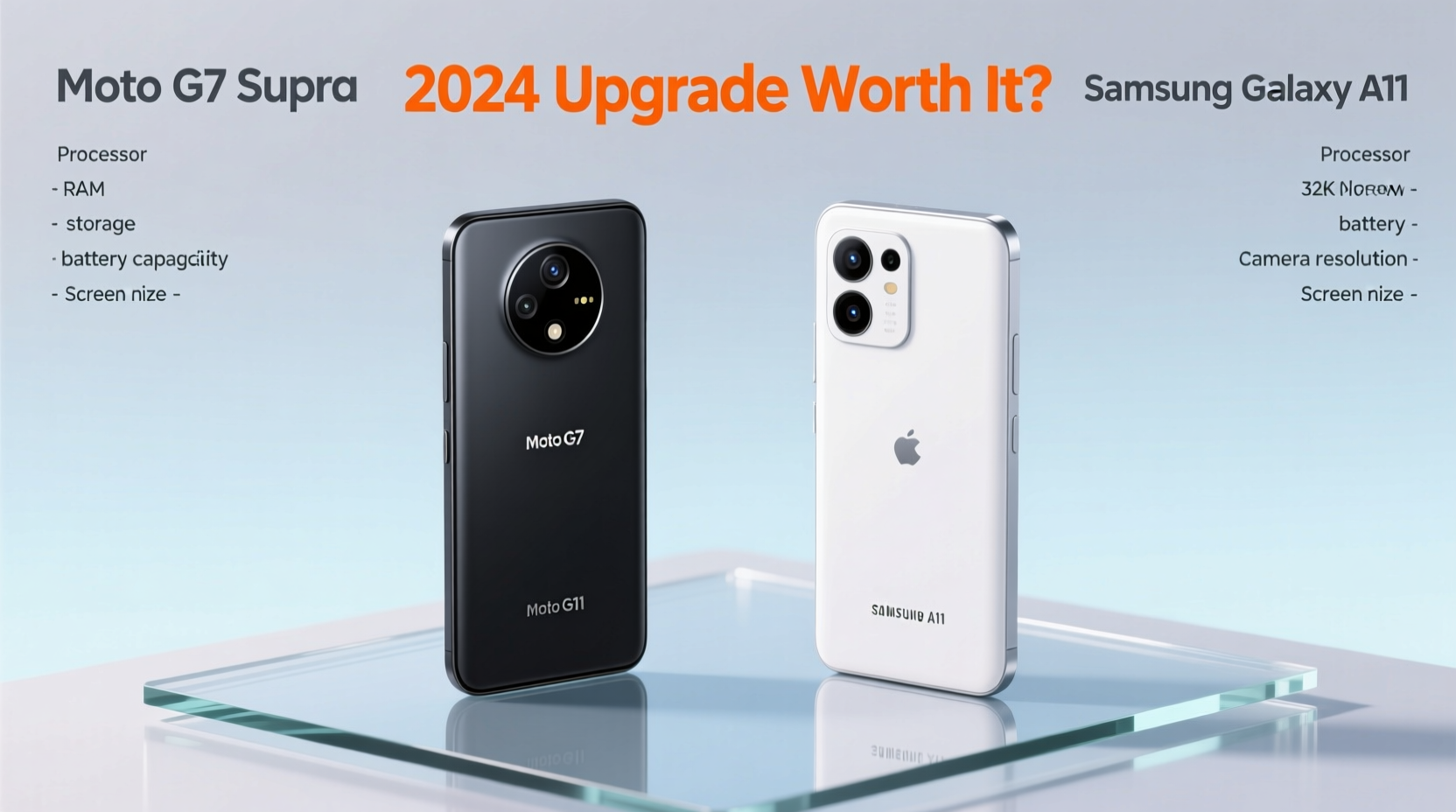
The core difference between the Moto G7 Supra and the Samsung A11 lies in their chipsets and RAM configurations. The G7 Supra runs on Qualcomm’s Snapdragon 632, paired with 3GB of RAM. The Galaxy A11 uses MediaTek’s MT6765 (Helio P35) with either 2GB or 3GB of RAM depending on region and variant.
In theory, the Snapdragon 632 offers better GPU performance and slightly more efficient multitasking than the Helio P35. In practice, both chips struggle with modern Android demands. By 2024 standards, neither supports 64-bit apps exclusively, and both face increasing lag when running background processes or switching between apps like Chrome, WhatsApp, and YouTube simultaneously.
Storage is another concern. Both phones offer 32GB base storage, expandable via microSD. However, Android itself consumes nearly 10GB over time, leaving limited space for apps and media. Users report frequent “storage full” warnings even with 128GB SD cards, due to app cache buildup and system bloatware—especially on Samsung’s One UI.
Software and Security: The Hidden Obsolescence
Here's where both phones fall short in 2024. The Moto G7 Supra launched with Android 9 Pie and received only one major OS update, topping out at Android 10. Similarly, the Galaxy A11 shipped with Android 10 and was promised only one upgrade, reaching Android 11. Neither device receives security patches anymore.
“Once a phone stops receiving security updates, it becomes increasingly vulnerable to malware and phishing attacks—especially as new exploits emerge.” — David Lin, Mobile Security Analyst at CyberShield Labs
Running outdated Android versions means missing critical protections against known vulnerabilities. Google Play Protect may flag your device as unsupported. Some banking and productivity apps already refuse to run on Android 10 and below, citing security risks.
Samsung’s One UI adds additional bloat and slower performance over time, while Motorola’s near-stock Android provides a cleaner, lighter experience that ages slightly better—though not immune to slowdowns.
Camera and Battery Life: Real-World Use in 2024
Let’s talk cameras. The Moto G7 Supra features a 48MP main sensor (pixel-binned to 12MP), which delivered decent daylight photos in 2019. The Samsung A11 has a 13MP primary shooter—lower resolution and noticeably softer output, especially in low light. Both lack optical image stabilization and modern computational photography features like Night Mode or HDR+.
In 2024, photo quality matters less than reliability. Apps like WhatsApp now compress images heavily, and social media platforms prioritize fast uploads. The G7 Supra’s faster processor gives it an edge in shot-to-share speed, though both suffer from shutter lag and poor autofocus in dim lighting.
Battery capacity favors the Samsung A11 with a 4000mAh cell versus the G7 Supra’s 3800mAh. On paper, that suggests longer life—but real-world usage tells a different story. After four to five years, lithium-ion batteries degrade significantly. Most units today likely hold only 60–70% of original capacity.
Charging is another pain point. Both phones support only 10W charging and lack fast-charging technology. A full charge can take over two hours, and degraded batteries often fail to reach 100%, dropping suddenly from 30% to shutdown.
Detailed Comparison Table
| Feature | Moto G7 Supra | Samsung Galaxy A11 |
|---|---|---|
| Release Date | March 2019 | May 2020 |
| OS (Final) | Android 10 | Android 11 |
| Chipset | Snapdragon 632 | MediaTek Helio P35 |
| RAM / Storage | 3GB / 32GB | 2GB or 3GB / 32GB |
| Main Camera | 48MP (f/1.8) | 13MP (f/1.8) |
| Front Camera | 16MP | 8MP |
| Battery | 3800mAh | 4000mAh |
| Charging | 10W (Micro USB) | 10W (Micro USB) |
| Security Updates (2024) | No | No |
| App Compatibility | Limited (Android 10) | Limited (Android 11) |
Mini Case Study: Maria’s Dilemma
Maria has used her Moto G7 Supra since 2019. She relies on it for texting, WhatsApp, checking email, and occasional YouTube videos. In early 2023, she noticed her phone freezing during video calls. By late 2023, Google Pay stopped working, citing OS incompatibility. Her bank app began logging her out repeatedly.
She considered switching to the Samsung A11, thinking it was newer and therefore better. After purchasing one secondhand, she found the interface slower, the screen dimmer, and the camera blurrier. Worse, after three months, the phone failed to receive a critical WhatsApp update, cutting off communication with family abroad.
Her solution? She eventually upgraded to a 2023 budget phone with Android 12 and guaranteed updates until 2025. The difference was immediate: smoother performance, reliable app access, and peace of mind knowing her device wasn’t a security liability.
Should You Upgrade in 2024?
If you're still using either the Moto G7 Supra or Samsung A11, here’s the reality: these phones are functionally obsolete. Not because they’re unusable, but because the digital ecosystem has moved on. Modern web standards, encrypted apps, and cloud services demand more from hardware and software than these models can reliably deliver.
Upgrading to the other phone won’t solve much. Yes, the A11 is technically newer, but its weaker processor, lower RAM options, and heavier software make it a questionable improvement. The G7 Supra’s cleaner OS and superior camera give it a slight edge, but both share the same fate: no security patches, limited app support, and degraded batteries.
Checklist: Is It Time to Move On?
- Does your phone fail to install critical app updates?
- Do banking or government apps refuse to launch?
- Is battery life under 4 hours of screen-on time?
- Does the device freeze or restart randomly?
- Have you stopped receiving security alerts or system updates?
If you answered yes to two or more, it’s time to consider an upgrade—not just for convenience, but for digital safety.
Frequently Asked Questions
Can I still use the Moto G7 Supra or Samsung A11 in 2024?
You can, but with limitations. Basic functions like calling, texting, and offline media playback will work. However, expect issues with app compatibility, slow browsing, and increased vulnerability to online threats due to outdated software.
Is the Samsung A11 better than the Moto G7 Supra overall?
Marginally. The A11 has a larger battery and slightly newer software, but its weaker chipset and bloated interface often result in a worse user experience. The G7 Supra’s cleaner Android and better camera make it more usable today—if the battery holds up.
What should I upgrade to instead?
Consider entry-level 2022–2024 models like the Samsung Galaxy A05s, Moto G Power (2023), or Nokia G42. These start around $120–$180, offer Android 12 or higher, and come with 3+ years of guaranteed updates—critical for long-term usability.
Conclusion: Make the Smart Move in 2024
Holding onto an aging phone out of habit or frugality is understandable. But in 2024, digital access is essential—not optional. The Moto G7 Supra and Samsung A11 served their purpose well, but they’ve reached the end of their lifecycle. Choosing to stay with either means accepting reduced functionality, security risks, and growing frustration.
Instead of comparing two outdated models, shift focus to what’s available now. Even modest upgrades bring meaningful improvements: faster performance, safer browsing, longer battery life, and access to modern apps. Your next phone doesn’t need to be flagship-tier—it just needs to keep up with today’s world.




 浙公网安备
33010002000092号
浙公网安备
33010002000092号 浙B2-20120091-4
Comments
No comments yet. Why don't you start the discussion?