
In 2015, smartphone buyers faced a pivotal decision: stick with a clean, near-stock Android experience or jump into the premium tier with cutting-edge hardware and glossy design. The Motorola Moto X Pure Edition represented value-driven excellence with pure Android and thoughtful customization, while the Samsung Galaxy S6 promised flagship performance and sleek aesthetics. For users considering an upgrade from mid-range devices or earlier Moto models, the question wasn’t just about specs—it was whether the leap to the Galaxy S6 delivered tangible improvements worth the cost.
Design and Build: Glass vs Practicality
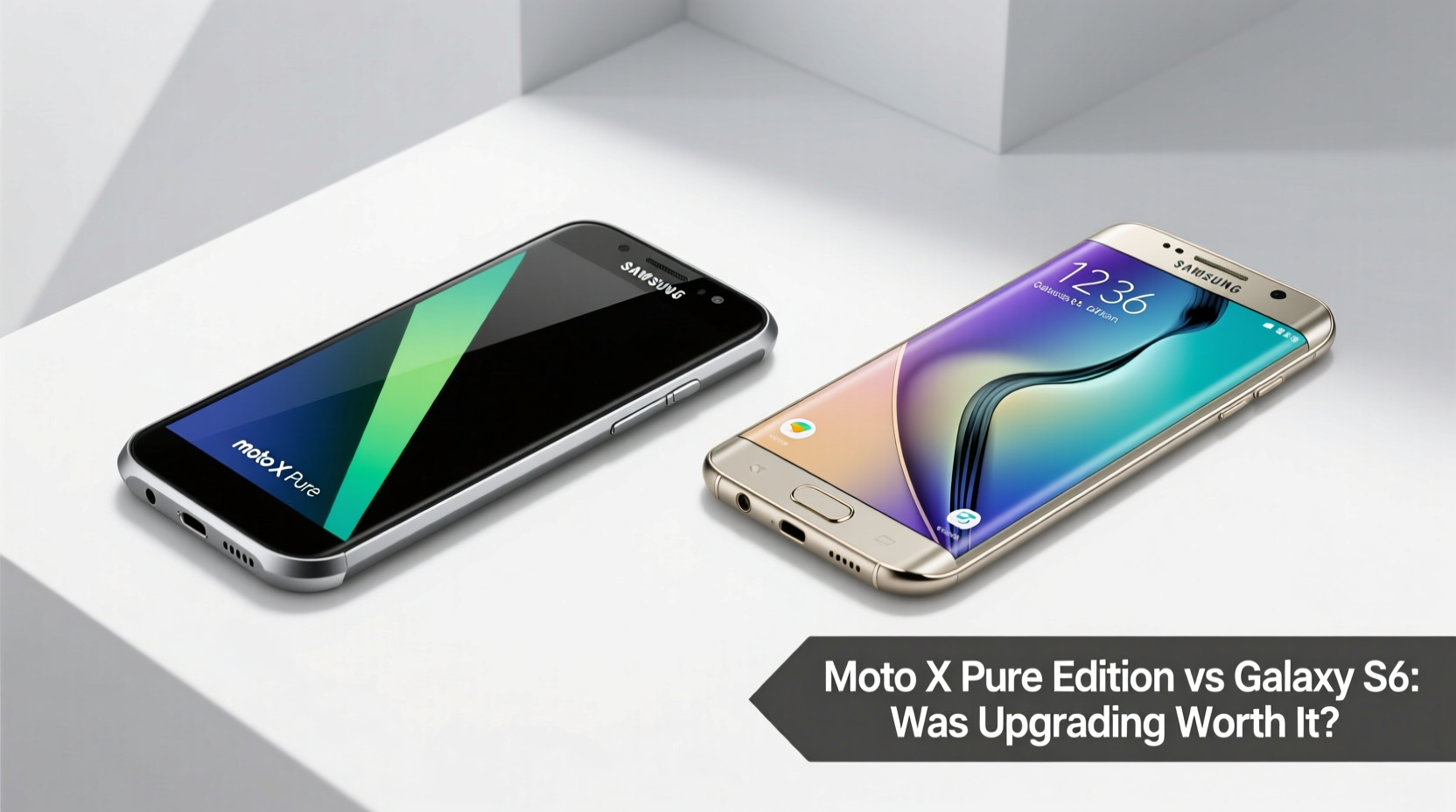
The Galaxy S6 marked a turning point in Samsung’s design language. After years of plastic builds, the S6 introduced a glass-and-metal unibody that felt undeniably premium. Its curved edges and reflective finish made it a standout on any table. However, that elegance came at a price—literally and practically. The glass back was prone to smudges and cracks, requiring cases for everyday protection. It also lacked waterproofing, despite its high-end positioning.
In contrast, the Moto X Pure Edition offered a more understated approach. Available with customizable backs—including wood, leather, and soft-touch plastic—it prioritized personalization over flashiness. While not as luxurious as the S6, the Moto X felt more durable in hand and easier to grip. Its polycarbonate body resisted scratches better, and the removable back (on select models) allowed access to the microSD and battery—a rare feature in 2015 flagships.
Performance and Software Experience
Under the hood, the Galaxy S6 packed Samsung’s Exynos 7420 (or Snapdragon 810 in some regions), one of the most powerful chips of its time. Paired with 3GB of RAM, it delivered smooth multitasking and excellent gaming performance. However, early units suffered from overheating issues, especially under sustained load, which occasionally triggered thermal throttling.
The Moto X Pure Edition used the Snapdragon 810 as well but paired it with only 3GB of RAM and a less aggressive cooling solution. Despite similar hardware, Motorola’s lighter software stack—near-stock Android with minimal bloat—often resulted in a snappier day-to-day experience. Google Now on Tap, Moto Display, and Active Notifications provided useful features without sacrificing speed.
Samsung’s TouchWiz interface, though significantly refined in 2015, still carried extra layers of apps and settings that could feel overwhelming. Bloatware like S Health, ChatON (at the time), and multiple email clients cluttered the experience, even if they could be disabled.
“Stock Android isn’t just cleaner—it’s more consistent. Updates arrive faster, and the interface doesn’t fight you for control.” — David Kim, Mobile UX Analyst
Camera Comparison: Real-World Results Matter
The Galaxy S6 featured a 16MP rear camera with an f/1.8 aperture—the widest available on a smartphone at the time. In good lighting, it produced vibrant, detailed photos with excellent dynamic range. Its HDR mode worked quickly, and the front-facing 5MP shooter excelled in selfies.
The Moto X Pure Edition had a 21MP sensor, but megapixels were misleading. Its f/2.0 aperture captured less light, and image processing often oversharpened details, leading to unnatural textures. Low-light performance lagged behind the S6, with more noise and slower focusing.
However, the Moto X offered one compelling advantage: zero shutter lag. Thanks to its predictive camera launch and always-on active listening, you could twist your wrist twice to open the camera instantly. For spontaneous shots, this responsiveness often mattered more than pixel count.
| Feature | Moto X Pure Edition | Galaxy S6 |
|---|---|---|
| Rear Camera | 21MP, f/2.0 | 16MP, f/1.8 |
| Front Camera | 5MP | 5MP |
| Video Recording | 4K @ 30fps | 4K @ 30fps |
| Shutter Lag | Nearly instant | Noticeable delay |
| Low-Light Performance | Average | Excellent |
Battery Life and Charging: Trade-offs in Thinness
The Galaxy S6 sacrificed user-replaceable batteries and microSD support to achieve its slim profile. With a 2550mAh battery, it struggled to last a full day under heavy use. Fast charging helped, but wireless charging compatibility was limited to specific pads. Once the battery degraded—which happened faster due to the sealed design—replacement required professional service.
The Moto X Pure Edition came with a larger 3630mAh battery, giving it a clear edge in endurance. Even with the same power-hungry Snapdragon 810, it consistently outlasted the S6 by several hours. Combined with adaptive brightness and Moto’s efficient ambient display, many users reported 1.5 days of moderate use.
Motorola also supported both fast charging and wireless charging across most variants, offering flexibility without compromise.
Real User Experience: A Mini Case Study
Consider Mark, a freelance photographer who upgraded from a Moto X (2nd gen) to the Galaxy S6 in mid-2015. He loved the S6’s camera quality and sharp Quad HD display, which helped him preview shots accurately. But within three months, he noticed the battery degrading rapidly. By month six, he needed to carry a portable charger daily. When he cracked the back dropping it on tile, repair costs exceeded $150.
He eventually switched back to a Moto X Pure Edition, drawn by its stock Android updates, longer battery, and ability to swap in a spare battery during shoots. Though the camera wasn’t quite as polished, the overall reliability and lower total cost of ownership made it a better fit.
His experience reflects a broader trend: for professionals and everyday users alike, sustainability and usability often trump momentary prestige.
Was the Upgrade Worth It? A Balanced Verdict
For some, yes—the Galaxy S6 was a technological marvel in 2015. Its display, processor, and camera set new standards. If you valued status, photo quality in daylight, and a compact flagship form factor, the upgrade made sense.
But objectively, the Moto X Pure Edition offered better value. It matched or exceeded the S6 in key areas: battery life, software cleanliness, storage flexibility, and long-term usability. At a starting price around $500 (unlocked), it undercut the S6 by nearly $200 while delivering 90% of the performance with fewer compromises.
Moreover, Motorola shipped Android 6.0 Marshmallow months before Samsung, highlighting another critical difference: update speed. Stock Android devices received security patches and OS upgrades faster, improving security and feature access over time.
Checklist: Was Upgrading to the Galaxy S6 Right for You?
- ✅ Did you prioritize camera quality in ideal lighting?
- ✅ Were you willing to charge midday or carry a power bank?
- ✅ Did you prefer a compact, premium-feeling device?
- ✅ Were you okay with no microSD or battery replacement?
- ✅ Did you value brand prestige or social perception?
If you answered “yes” to most of these, the Galaxy S6 likely satisfied your needs. If not, the Moto X Pure Edition probably served you better in the long run.
Frequently Asked Questions
Did the Galaxy S6 have expandable storage?
No. Unlike the Moto X Pure Edition, the Galaxy S6 did not support microSD cards. All storage was internal, capped at 128GB max.
Which phone got Android updates faster?
The Moto X Pure Edition received updates significantly faster. As a Nexus-like device, it was prioritized by Google and Motorola, often getting new Android versions weeks or months ahead of Samsung’s rollout.
Was the Moto X Pure Edition better for battery life?
Yes. With a 3630mAh battery versus the S6’s 2550mAh, and more efficient software, the Moto X typically lasted 30–50% longer on a single charge.
Conclusion: Value Over Vanity
Upgrading from the Moto X Pure Edition to the Galaxy S6 wasn’t inherently wrong—but it wasn’t automatically right, either. The decision depended on what you valued: short-term prestige and photographic brilliance, or long-term usability, flexibility, and value.
The Moto X Pure Edition proved that flagship performance didn’t require flagship pricing or fragile materials. It balanced innovation with practicality, offering a user-centric experience that aged gracefully. Meanwhile, the Galaxy S6, while impressive, highlighted the risks of pushing too far, too fast—glass backs, non-replaceable batteries, and software delays undermined its technical achievements.
Today, both phones are relics, but their lessons endure. When choosing between devices, look beyond marketing gloss. Ask how a phone fits your life, not just how it looks on a shelf.




 浙公网安备
33010002000092号
浙公网安备
33010002000092号 浙B2-20120091-4
Comments
No comments yet. Why don't you start the discussion?