
When the Motorola G8 Plus and Samsung Galaxy A50 launched in 2019, they represented two strong contenders in the mid-range smartphone market. Both offered compelling value—solid cameras, respectable processors, and modern designs—at prices that didn’t break the bank. But now, three years later, the question isn’t which was better at launch. It’s whether either device still holds up—and more importantly, if upgrading to one of them today, especially from an older phone, makes practical sense.
The answer depends on your needs, budget, and expectations. While neither phone runs the latest software flawlessly or handles intensive apps with ease, both have strengths that could still serve specific users well. This deep dive compares long-term performance, software support, camera quality, and real-world usability to help you decide if either phone deserves a second look in 2024.
Performance and Hardware: How They’ve Held Up
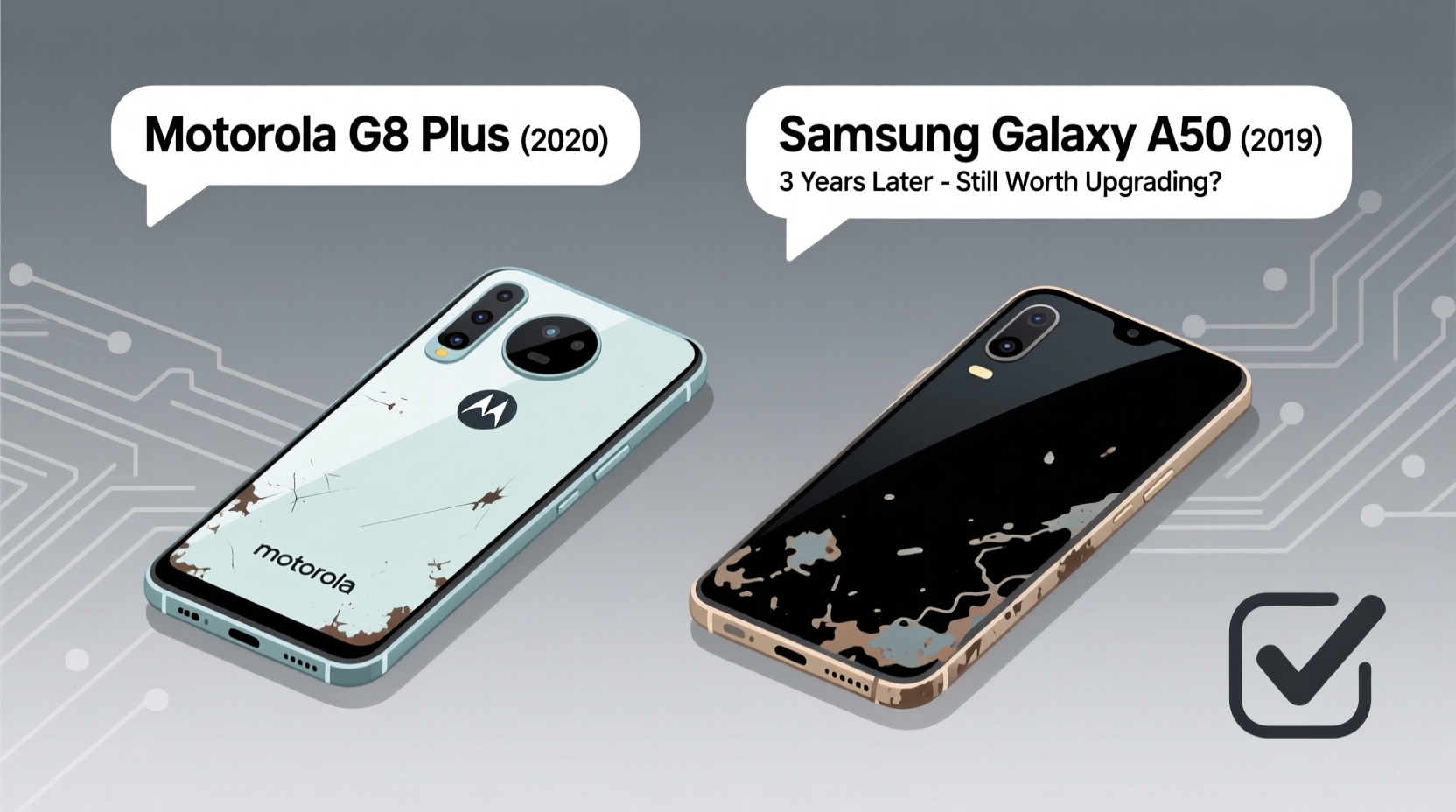
At launch, the Galaxy A50 had a clear edge in processing power thanks to Samsung’s Exynos 9610 chipset, paired with up to 4GB of RAM. The Motorola G8 Plus used Qualcomm’s Snapdragon 632, a capable but less powerful chip, typically with 4GB of RAM as well. In day-to-day tasks like browsing, messaging, and light social media use, both phones performed smoothly back then.
Fast forward to 2024, and the limitations are more apparent. The Exynos 9610, while once competitive, struggles with multitasking and newer Android versions. The Snapdragon 632, though efficient, lacks the muscle for heavy apps or gaming. Users report noticeable lag when switching between apps or using services like Google Maps with background music playing.
Storage is another consideration. The A50 offered 64GB or 128GB with microSD expansion; the G8 Plus maxed out at 64GB internally but also supported expandable storage. With app sizes growing steadily, 64GB feels tight today unless you rely heavily on cloud storage.
Software and Longevity: Which One Ages Better?
Samsung has historically provided longer software support than Motorola in the mid-range segment. The Galaxy A50 received two major Android upgrades (from Android 9 to Android 11) and regular security patches until late 2021. By contrast, the Motorola G8 Plus was updated from Android 9 to Android 10, with limited patching afterward.
This difference matters. A phone stuck on Android 10 in 2024 faces compatibility issues with newer apps, reduced security, and fewer feature enhancements. Google increasingly optimizes services like Messages, Photos, and Chrome for newer OS versions, leaving older devices behind.
“Two years of OS updates should be the baseline for any smartphone released today. Without them, usability degrades quickly.” — David Lin, Mobile Analyst at TechPulse Insights
If you’re buying used or relying on an old device, the Galaxy A50’s slightly longer update cycle gives it a modest advantage in longevity and app compatibility.
Camera Comparison After Three Years
Cameras age differently than processors. While sensor technology improves rapidly, a well-tuned camera system can still deliver decent photos under good lighting—even years later.
The Galaxy A50 featured a triple rear setup: 25MP main, 8MP ultra-wide, and 5MP depth. The G8 Plus had a dual system: 16MP main and 5MP depth, with a weaker 12MP front camera compared to the A50’s 25MP selfie shooter.
| Feature | Motorola G8 Plus | Samsung Galaxy A50 |
|---|---|---|
| Main Camera | 16MP f/1.8 | 25MP f/1.7 |
| Ultra-Wide | None | 8MP f/2.2 |
| Front Camera | 12MP f/2.0 | 25MP f/2.0 |
| Video Recording | 1080p@30fps | 1080p@30fps |
| Night Mode | Limited | Yes, with optimization |
In real-world conditions, the A50 consistently produces brighter, more detailed images, especially in low light. Its dedicated night mode and superior HDR processing make a noticeable difference. The ultra-wide lens adds versatility, even if its quality is average by today’s standards.
The G8 Plus captures acceptable daylight shots but struggles with dynamic range and noise in dim environments. Its lack of an ultra-wide camera limits flexibility, making it less appealing for travel or group photos.
Real-World Example: Sarah’s Experience
Sarah, a freelance writer in Lisbon, upgraded her five-year-old phone in 2021 and chose a used Galaxy A50 over a G8 Plus based on camera reviews. “I take notes, scan documents, and occasionally post to Instagram,” she said. “The A50’s camera lets me shoot directly into natural light and get usable images without editing. The ultra-wide helps when I’m documenting street art or café interiors. The G8 Plus just felt too basic.”
She noted that performance slowed over time, but with minimal apps installed and regular cache clearing, it remained functional for her workflow until she upgraded to a newer model in early 2024.
Battery Life and Charging: Practical Daily Use
Battery degradation is inevitable after three years. Original capacity diminishes, especially with daily charging cycles. Still, initial specs offer insight into potential endurance.
The G8 Plus came with a 5000mAh battery—the standout feature at launch—supporting up to two days of moderate use. The A50 packed a 4000mAh unit, sufficient for one full day but requiring nightly charging.
Today, even with degraded batteries, the G8 Plus often lasts longer on a charge due to its larger capacity and Motorola’s efficient software tuning. However, the A50 supports faster 15W charging versus the G8 Plus’s 10W, meaning quicker top-ups when needed.
- The G8 Plus excels in battery longevity for light users.
- The A50 charges faster but may need midday boosts with heavy use.
- Both lack wireless charging and reverse charging features common in newer budget phones.
Is It Still Worth Upgrading? A Step-by-Step Decision Guide
Upgrading to either device in 2024 isn’t about getting cutting-edge tech—it’s about finding reliable, affordable functionality. Follow this timeline to assess if either phone fits your situation:
- Evaluate your current phone: If your device is more than four years old and struggles with calls, texts, or basic apps, even a 2019 mid-ranger will feel like an improvement.
- Define your primary use: For photography and social media, the A50 is better. For long battery life and reading/email, the G8 Plus wins.
- Check availability and condition: Look for devices with verified battery health (ideally above 80%) and clean IMEI records.
- Install essential apps: Test WhatsApp, Gmail, YouTube, and your banking app to ensure smooth operation before committing.
- Consider future costs: Factor in potential battery replacement ($20–$40) or screen repairs if buying used.
Frequently Asked Questions
Can either phone run WhatsApp and Instagram reliably in 2024?
Yes, both can run these apps, but expect occasional stutters when uploading media or switching between stories and DMs. Clearing app caches monthly helps maintain responsiveness.
Which phone receives more security updates now?
Neither receives regular updates. The A50 got its last patch in 2021; the G8 Plus stopped earlier. Using such devices requires caution—avoid storing sensitive data or using untrusted apps.
Should I upgrade to one of these if I have a phone from 2017 or earlier?
Possibly. If budget is tight and you need a temporary solution, both represent a meaningful step up in screen quality, camera, and battery. But consider newer alternatives like the Redmi Note 12 or Moto G Power (2023), which offer better support and performance at similar used prices.
Final Verdict: Upgrade Only Under Specific Conditions
The Motorola G8 Plus and Galaxy A50 were solid choices in 2019, but their relevance today is limited. Neither offers a future-proof experience, and both fall short in software support and modern app performance. That said, the Galaxy A50 edges ahead for users prioritizing camera quality and a brighter Super AMOLED display. The G8 Plus remains relevant only for those who value extreme battery life above all else.
If you’re on a tight budget and need a functional secondary phone or a stopgap device, inspecting a well-maintained A50 might be worthwhile. But for most users, investing slightly more in a newer model—available at competitive used prices—will deliver better longevity, security, and overall satisfaction.




 浙公网安备
33010002000092号
浙公网安备
33010002000092号 浙B2-20120091-4
Comments
No comments yet. Why don't you start the discussion?