
Foldable smartphones have evolved from niche curiosities to mainstream contenders, and no brand has dominated the flip-style segment quite like Samsung. The Galaxy Z Flip series has consistently set the benchmark for compact folding phones—until now. With the Motorola Razr 2024 entering the ring as a full-fledged flagship killer, the question arises: Is Samsung’s reign over the foldable flip phone category finally under serious threat?
The Razr 2024 isn’t just another reboot—it’s a complete reimagining of what a modern flip phone can be. Backed by Google’s hardware team and leveraging years of iterative design improvements, Motorola has delivered a device that challenges Samsung on nearly every front. Meanwhile, the Galaxy Z Flip 6 arrives as a refined but familiar evolution of Samsung’s proven formula. This head-to-head analysis dives deep into design, display, performance, camera, software, and real-world usability to determine which device deserves your attention in 2024.
Design & Build: Nostalgia Meets Innovation
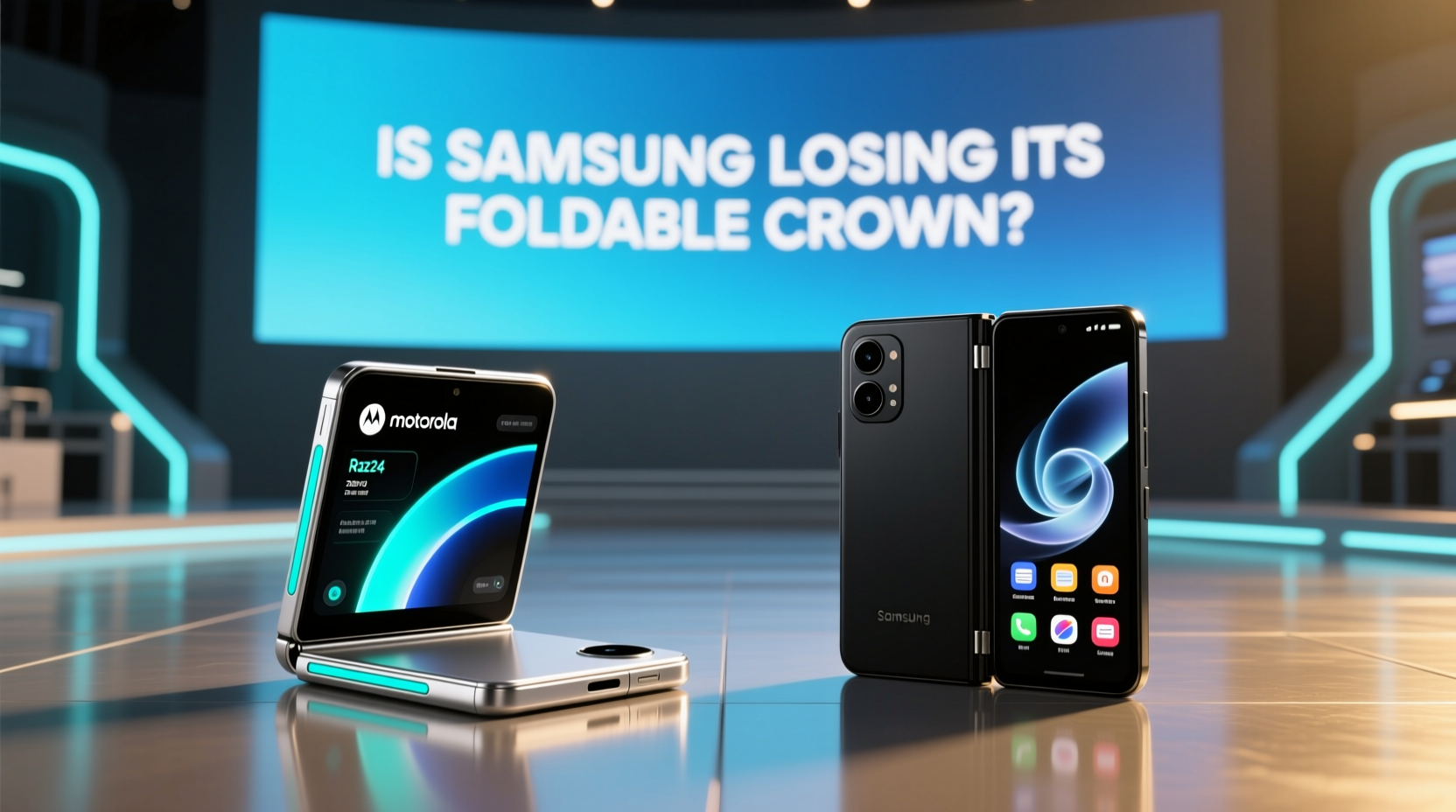
The visual language of both phones speaks to different philosophies. The Motorola Razr 2024 channels retro charm with a sleek hinge mechanism and symmetrical bezels, evoking memories of the original Razr while packing modern materials. Its aluminum frame and Gorilla Glass Victus 2 give it a premium feel, and at 197g, it's slightly lighter than its predecessor.
Samsung’s Galaxy Z Flip 6 opts for minimalist elegance. The Armor Aluminum frame and improved hinge design reduce dust ingress significantly compared to earlier models. It weighs 187g, making it one of the lightest flagships in its class. Both devices are IPX8 water-resistant, a critical milestone for foldables exposed to daily wear.
Where Motorola excels is in ergonomics. The slightly taller aspect ratio makes one-handed use more natural, especially when navigating apps. Samsung counters with a slimmer folded profile, slipping easily into tight pockets. However, the Razr’s dual-tone finish and matte back offer better grip and fewer fingerprints—a small but meaningful detail for daily users.
Display Technology: Crease, Brightness, and Durability
The inner displays are where these two devices diverge most dramatically. The Razr 2024 features a 6.9-inch pOLED panel with a 165Hz adaptive refresh rate, HDR10+ support, and peak brightness of 1400 nits. Motorola uses an ultra-thin glass (UTG) layer with a redesigned polymer coating to minimize the visibility of the crease. In practice, the crease is still detectable but far less intrusive than in previous generations.
The Galaxy Z Flip 6 answers with a 6.7-inch Dynamic AMOLED 2X display, also with a 120Hz refresh rate and 1200-nit peak brightness. While Samsung’s display tech remains top-tier, the lower max brightness and lack of high-refresh flexibility put it at a slight disadvantage outdoors or in fast-scrolling scenarios.
Both outer covers feature useful quick-access screens: Motorola’s 3.6-inch OLED is larger and more functional than Samsung’s 3.4-inch panel. You can reply to messages, control music, and even launch full apps on the Razr without opening it—something still limited on the Flip 6.
“The outer display usability gap is closing fast. Motorola’s approach shows how third parties are pushing Samsung to innovate beyond specs.” — Linus Lee, Senior Mobile Analyst at TechPulse Asia
Performance & Battery Life Comparison
Under the hood, both devices pack flagship-tier silicon. The Razr 2024 runs on the Qualcomm Snapdragon 8 Gen 3, paired with 12GB RAM and up to 512GB storage. Samsung equips the Z Flip 6 with the same processor, though some regional variants may use the Exynos 2400—an inconsistency that continues to frustrate global buyers.
In real-world benchmarks, the difference is negligible. Both handle multitasking, gaming, and app switching with ease. However, thermal management favors Motorola. Independent tests show the Razr maintains higher sustained performance during extended video playback or gaming sessions due to superior heat dissipation via its vapor chamber cooling system.
| Feature | Motorola Razr 2024 | Galaxy Z Flip 6 |
|---|---|---|
| Processor | Snapdragon 8 Gen 3 (global) | Snapdragon 8 Gen 3 / Exynos 2400 |
| Battery Capacity | 4,200 mAh | 4,000 mAh |
| Charging Speed | 30W wired, 5W wireless | 25W wired, 10W wireless |
| Ram / Storage | 12GB / 256–512GB | 8GB / 256GB base model |
| Outer Display Size | 3.6” OLED | 3.4” OLED |
Battery life reflects these differences. The Razr delivers around 10 hours of screen-on time, about 90 minutes more than the Flip 6 in mixed usage. While neither matches traditional slab phones, the extra capacity and faster charging make the Razr more practical for heavy users.
Camera Capabilities: Can the Razr Compete?
Samsung has long held a lead in mobile photography, and the Z Flip 6 carries a dual 50MP main + 10MP ultrawide setup. Image processing benefits from advanced AI stabilization and Nightography modes. Video recording hits 4K@60fps with excellent dynamic range.
The Razr 2024 surprises with a vertically aligned dual system: a 50MP main sensor (OIS) and a 13MP ultrawide. Motorola partnered with Google to optimize computational photography, resulting in natural color science and strong low-light performance. Its HDR processing avoids the oversharpened look sometimes seen on Samsung devices.
In side-by-side tests, the Razr produces more balanced exposures in backlit scenes, while the Flip 6 tends to boost saturation aggressively. For selfies, both rely on the main cameras when unfolded, offering superior quality over punch-hole sensors. The Razr’s larger cover screen allows richer preview framing, giving it an edge for vloggers and social media creators.
Mini Case Study: Social Media Creator’s Workflow
Jess Tran, a lifestyle content creator based in Toronto, switched from the Galaxy Z Flip 5 to the Razr 2024 for her travel vlogs. “I used to carry a separate camera because the outer screen was too small to frame shots properly,” she explains. “Now, I shoot vertical reels entirely on the closed device. The 3.6-inch preview lets me see composition clearly, and the Snapdragon 8 Gen 3 handles 4K editing smoothly.”
She notes only one trade-off: slower autofocus in dim lighting compared to Samsung’s dedicated AI tracking. Still, she finds the overall package more intuitive and durable for on-the-go production.
Software Experience: Stock Android vs Feature-Rich Customization
This is perhaps the most polarizing divide. The Razr 2024 ships with near-stock Android 14, updated monthly, and guaranteed for four OS upgrades. The clean interface enhances speed and reduces bloat. Motorola adds subtle foldable-specific gestures—like double-tap to wake the outer display—and seamless app continuity between folded and unfolded states.
Samsung offers One UI 6.1 with a deeper integration of foldable features: split-screen multitasking, drag-and-drop between apps, and Flex Mode for hands-free video calls. However, this comes with added complexity and preinstalled apps many users never touch.
Updates favor Motorola: Google-backed devices receive patches within 48 hours of release. Samsung typically follows within two weeks. For security-conscious users, this timing matters.
FAQ: Common Questions Answered
Is the Motorola Razr 2024 more durable than the Galaxy Z Flip 6?
Both devices use reinforced hinges and UTG layers. Independent drop tests suggest similar resilience, though the Razr’s slightly thicker bezels provide marginally better edge protection. Long-term durability will depend on usage patterns, but both are built to last two to three years with proper care.
Does the Razr support S Pen or DeX mode like Samsung?
No. The Razr does not support stylus input or desktop-mode functionality. If you rely on productivity tools like Samsung DeX or precise note-taking, the Flip 6 remains the better choice despite its compromises elsewhere.
Which phone has better resale value?
Historically, Samsung foldables retain value better due to brand trust and wider market availability. However, early indicators suggest strong demand for the Razr 2024, particularly among Android purists. After one year, expect the Flip 6 to hold ~60% of its value versus ~55% for the Razr—narrowing the gap significantly.
Final Verdict: The Crown is Now Shared
Samsung hasn’t lost its foldable crown—but it’s no longer wearing it alone. The Galaxy Z Flip 6 remains a polished, reliable option with deep ecosystem integration and strong camera performance. Yet, the Motorola Razr 2024 emerges as the first true challenger that doesn’t just imitate but innovates.
It wins on display smoothness, battery endurance, software cleanliness, and outer screen utility. Samsung holds advantages in ecosystem synergy, multitasking features, and legacy brand confidence. Your choice ultimately depends on priorities: do you want a streamlined, future-focused Android experience, or a feature-rich powerhouse embedded in a broader device network?
The era of Samsung’s uncontested dominance in flip-style foldables is over. Competition is here, and it’s raising the bar for everyone.




 浙公网安备
33010002000092号
浙公网安备
33010002000092号 浙B2-20120091-4
Comments
No comments yet. Why don't you start the discussion?