
Earrings have evolved from simple studs to bold, sculptural statements—and ear cuffs sit at the heart of this revolution. Among the most debated styles are multi-layer and single ear cuffs. Both offer unique aesthetics and versatility, but choosing between them isn’t just about trendiness—it’s about harmony with your facial structure, personal style, and lifestyle. Understanding the visual impact, comfort, and styling potential of each can help you make a decision that enhances your look rather than overwhelms it.
The Rise of the Ear Cuff Trend
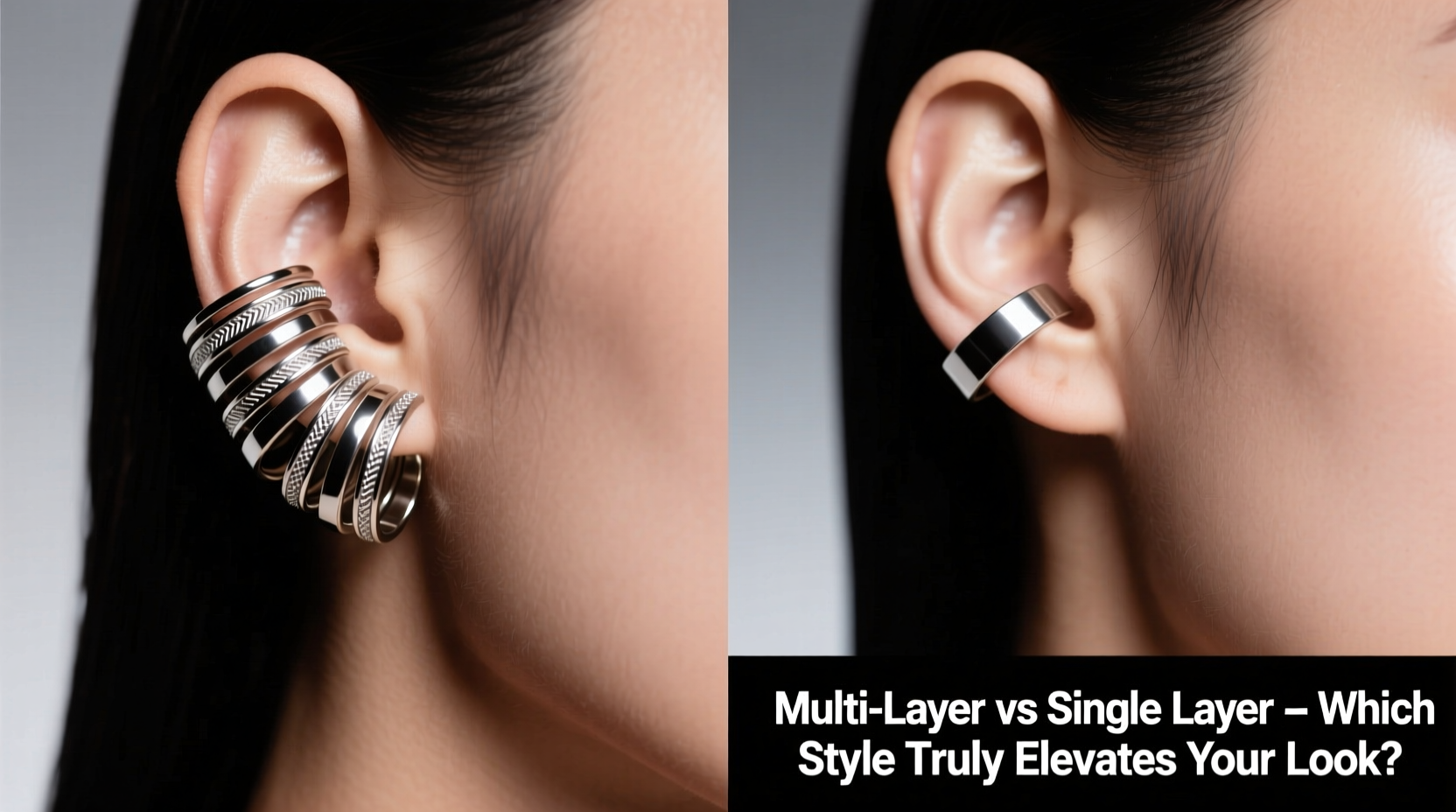
Ear cuffs emerged as a modern alternative to traditional piercings, allowing wearers to achieve a curated, asymmetrical, or stacked appearance without permanent modifications. Unlike standard earrings that pass through the earlobe, cuffs wrap around the outer cartilage, clinging to the curve of the ear for a sleek, architectural effect. Their popularity surged in the 2010s, championed by fashion influencers and luxury brands alike, from minimalist gold bands to intricate, layered designs.
What makes ear cuffs so compelling is their adaptability. They can be worn alone for subtle elegance or combined into complex compositions. But as the market has expanded, two dominant styles have emerged: the clean, singular line of the single cuff and the dynamic presence of the multi-layer cuff. Each appeals to different tastes and occasions, making the choice deeply personal.
Single Ear Cuffs: Simplicity With Impact
A single ear cuff typically consists of one continuous band that wraps around a section of the ear—most commonly the upper helix or forward helix. These designs emphasize minimalism, often crafted from delicate metals like sterling silver, rose gold, or polished brass. Their strength lies in restraint; they draw attention without dominating the face.
Single cuffs work exceptionally well for those who favor a refined, everyday aesthetic. They pair effortlessly with professional attire, bridal ensembles, or casual outfits where subtlety is key. Because they don’t rely on volume, they maintain balance with other accessories, such as necklaces or rings, without creating visual clutter.
When to Choose a Single Cuff
- You prefer understated elegance over bold statements.
- Your wardrobe leans toward neutral tones and classic cuts.
- You want an accessory that transitions seamlessly from day to night.
- You're new to ear cuffs and want a low-commitment entry point.
“Minimalist jewelry, when well-crafted, speaks louder than excess. A single cuff can define a person’s style more than a cascade of chains.” — Lena Torres, Fashion Stylist & Jewelry Curator
Multi-Layer Ear Cuffs: Drama and Dimension
Multi-layer ear cuffs consist of two or more interconnected bands that wrap around different parts of the ear simultaneously—often spanning from the helix down toward the lobe or across multiple ridges. These designs are inherently bolder, designed to catch light and create movement with every turn of the head.
They’re ideal for making a statement. Whether adorned with tiny gemstones, geometric shapes, or organic curves, layered cuffs transform the ear into a canvas. Their complexity mimics the look of multiple piercings without requiring any holes, appealing to those who love edgy, editorial-inspired fashion.
However, their visual weight demands consideration. Wearing a multi-layer cuff means the ear becomes the focal point of your look. This can be powerful in the right context—such as evening events, photo shoots, or artistic gatherings—but may feel excessive for daily wear or conservative environments.
Styling Tips for Multi-Layer Cuffs
- Keep the rest of your accessories minimal—a delicate chain or no necklace at all helps avoid competition.
- Style hair up or swept to one side to fully showcase the design.
- Avoid pairing with large hoops or chandelier earrings on the same ear.
- Opt for matte finishes if you want drama without sparkle overload.
Comparing Visual Impact: A Practical Breakdown
| Feature | Single Ear Cuff | Multi-Layer Ear Cuff |
|---|---|---|
| Visual Weight | Light to moderate | High |
| Best For | Daily wear, office settings, minimalists | Night events, photoshoots, fashion-forward looks |
| Comfort Level | Generally higher; less pressure points | Varies; heavier designs may cause fatigue |
| Face Compatibility | Suits oval, round, square faces equally | Balances long or narrow faces best |
| Style Flexibility | High—pairs with almost anything | Moderate—requires coordination |
Real-Life Example: Choosing the Right Cuff for the Occasion
Sophie, a graphic designer based in Portland, wanted to elevate her personal brand through accessories. She initially gravitated toward a dramatic multi-layer cuff studded with micro-crystals, drawn to its artistic flair. She wore it to a gallery opening and received compliments all night. However, when she tried wearing it to client meetings, she noticed people seemed distracted—some even commented that it “drew too much attention.”
She then switched to a slim, curved single cuff in brushed gold. It was barely noticeable at first glance but caught the light subtly during video calls. Clients described her as “polished” and “approachable.” For weekends and creative events, she still reaches for her layered piece. Her experience illustrates a key truth: the “better” style depends on context, not just preference.
How Face Shape Influences Your Choice
Your facial structure plays a crucial role in determining which cuff style will enhance your features. Jewelry acts as a frame, and the ear sits at the edge of that frame.
- Oval Faces: Can carry both styles well. A single cuff adds gentle definition; a multi-layer piece introduces exciting contrast.
- Square Faces: Benefit from the softening effect of a flowing single cuff. Angular multi-layer designs may exaggerate jawline sharpness.
- Round Faces: Gain elongation from vertical multi-layer cuffs that draw the eye upward. Single cuffs should follow a rising curve, not a horizontal line.
- Long/Narrow Faces: Should avoid overly tall cuffs. A horizontally wrapping single cuff can add width and balance proportions.
FAQ: Common Questions About Ear Cuffs
Can ear cuffs damage your ears?
Well-designed ear cuffs made from flexible materials (like memory wire or spring hinges) shouldn’t cause harm with regular use. Avoid forcing stiff cuffs onto areas they weren’t designed for, and remove them before sleeping or exercising to prevent discomfort or skin irritation.
Do I need pierced ears to wear ear cuffs?
No. One of the main advantages of ear cuffs is that they require no piercings. They grip the cartilage securely through tension or adjustable clasps, making them ideal for those who can’t or don’t want to get additional ear piercings.
Are multi-layer cuffs harder to put on?
Sometimes. Due to their complex structure, multi-layer cuffs may require more precision when positioning. Look for models with open-back designs or adjustable sliders for easier application. Practice with a mirror until you find the right fit.
Final Verdict: Which Style Actually Looks Better?
There’s no universal answer. “Better” depends on what you’re trying to express. A single ear cuff often looks better in real life—not because it’s superior, but because it integrates seamlessly into your overall appearance. It enhances without demanding attention.
Conversely, a multi-layer cuff tends to look better in photographs or stylized settings. Its intricacy shines under controlled lighting and deliberate posing. In motion, it captures glances; in stillness, it commands focus.
The most effective approach is curation. Build a small collection: a single cuff for weekdays, a layered piece for nights out, and perhaps a convertible design that allows you to adjust the intensity. This way, you’re not limited by one aesthetic—you’re equipped for any moment.
Conclusion: Wear What Elevates You
Jewelry should reflect intention, not impulse. Whether you choose the quiet confidence of a single ear cuff or the expressive energy of a multi-layer design, the goal is alignment—with your style, your face, and your lifestyle. Don’t follow trends blindly. Try both styles, observe how they make you feel, and notice how others respond.




 浙公网安备
33010002000092号
浙公网安备
33010002000092号 浙B2-20120091-4
Comments
No comments yet. Why don't you start the discussion?