
In recent years, the wrist has become a prime canvas for personal expression. From minimalist bands to stacked gold chains, bracelets have evolved beyond mere accessories—they're now statements of identity, taste, and lifestyle. Among the most debated trends is the choice between wearing a single, bold bracelet or layering multiple rings into a cohesive stack. The layered look—often referred to as \"bracelet stacking\"—has gained popularity among fashion influencers and everyday wearers alike. But is this trend truly worth embracing? Or does a single, well-chosen piece offer more long-term value?
This article dives deep into the practical, aesthetic, and emotional considerations behind multi-ring versus single-ring bracelets. We’ll explore durability, versatility, cost, styling strategies, and real-life scenarios to help you decide which approach aligns best with your personal style and lifestyle.
The Aesthetic Impact: Statement vs. Storytelling
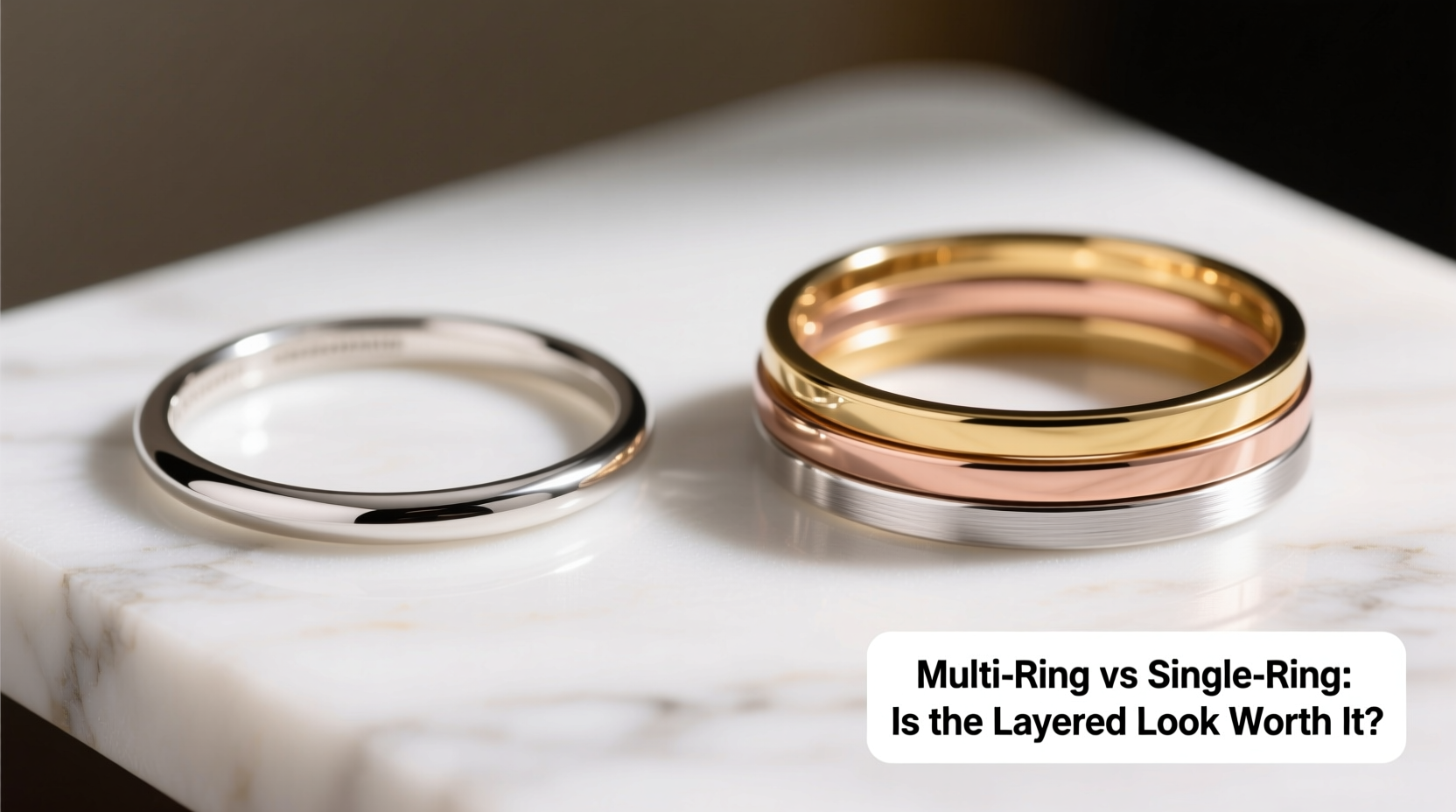
A single bracelet often serves as a focal point—a deliberate statement. Whether it’s a sleek titanium band, an engraved silver cuff, or a delicate rose gold chain, its power lies in simplicity. It draws attention through clean lines and intentional presence. Designers like Tiffany & Co. and Cartier have long championed the idea that less is more, emphasizing craftsmanship and material quality over quantity.
In contrast, a layered bracelet ensemble tells a story. Each ring contributes a different texture, metal tone, or symbolic meaning. One might be a gift from a loved one, another a souvenir from a trip, and a third a personal milestone marker. Together, they create a narrative that evolves over time. As stylist Lena Moreau notes:
“A stack isn’t just jewelry—it’s autobiography. Every piece has earned its place on the wrist.” — Lena Moreau, Fashion Stylist & Curator
However, storytelling comes with risks. Poorly coordinated stacks can appear cluttered or chaotic. Without balance in proportion, color, and design, the layered look may dilute rather than enhance your overall aesthetic.
Durability and Longevity: Wear, Tear, and Maintenance
One often overlooked factor in the multi-ring debate is durability. Multiple bracelets mean increased friction between pieces, especially if they’re made from softer metals like gold-filled or sterling silver. Constant rubbing leads to micro-scratches, tarnishing, and eventual weakening at connection points like clasps and jump rings.
A single bracelet, particularly if crafted from durable materials like stainless steel, titanium, or solid gold, tends to withstand daily wear better. With fewer moving parts and no interlocking components, there are fewer failure points. This makes it ideal for active lifestyles, frequent travelers, or those working in hands-on environments.
Material Comparison: Single vs. Multi-Ring Wear
| Material | Single Bracelet Durability | Multi-Ring Stack Risk |
|---|---|---|
| Sterling Silver | High (with care) | Scratching, tarnishing due to friction |
| Stainless Steel | Very High | Low – resistant to corrosion and abrasion |
| Gold-Filled | Moderate | Layering accelerates wear on outer layer |
| Leather | Good (if kept dry) | Can crack if compressed between rigid pieces |
Cost Efficiency and Investment Value
At first glance, building a stack seems more expensive—you’re buying multiple pieces instead of one. However, the cost equation isn’t always linear. Many people start small, adding a new bracelet every few months based on budget or occasion. This incremental investment spreads out financially and allows for thoughtful curation.
On the other hand, a high-quality single bracelet—especially one made from solid gold or featuring gemstones—can represent a significant upfront cost. Yet it may hold or even appreciate in value over time, particularly if it’s from a reputable brand or has heirloom qualities.
Consider this scenario:
Mini Case Study: Emma’s Graduation Gift
Emma received a simple 14k gold bangle at graduation. Over five years, she added three thinner chains—a turquoise beaded band from her travels, a slim herringbone link, and a personalized charm bracelet. What began as a single investment grew into a meaningful stack. While each additional piece was modestly priced, together they created a look uniquely hers. Her original bangle remained the anchor, preserving both sentimental and structural integrity.
The lesson? Layering doesn’t require luxury spending. It thrives on intentionality and gradual growth.
How to Build a Balanced Stack: A Step-by-Step Guide
If you’re considering the layered look, follow these steps to ensure cohesion and comfort:
- Start with a base piece: Choose one substantial bracelet—like a bangle, cuff, or wide chain—that will serve as the foundation.
- Select complementary textures: Mix smooth with textured, rigid with flexible. For example, pair a hammered metal band with a braided leather cord.
- Vary widths: Combine thin, medium, and thick bracelets to create visual rhythm without overcrowding.
- Limit metal tones: Stick to two finishes maximum (e.g., rose gold + silver) to avoid a mismatched appearance.
- Test for comfort: Wear the stack for several hours. If pieces shift excessively or pinch, adjust spacing or remove one element.
- Secure placement: Position heavier pieces closer to the wrist bone; lighter ones can sit higher toward the forearm.
When Simplicity Wins: Scenarios Favoring a Single Bracelet
Despite the allure of layering, certain situations call for minimalism:
- Professional settings: In conservative workplaces, a single elegant bracelet projects confidence without distraction.
- Frequent hand use: Chefs, healthcare workers, mechanics, and fitness trainers benefit from unobstructed movement and reduced snag risk.
- Travel: Fewer pieces mean less chance of loss or damage during transit.
- Allergy concerns: Sensitive skin may react to mixed metals in close contact; a single hypoallergenic band reduces exposure.
Moreover, some designs are inherently meant to stand alone. A sculptural artisan piece or a vintage heirloom loses impact when surrounded by competing elements.
FAQ: Common Questions About Layered vs. Single Bracelets
Can I mix fine jewelry with casual pieces in a stack?
Yes—but do so intentionally. Pairing a diamond tennis bracelet with a woven hemp band can work if balanced by color harmony and purpose. Avoid combining too many contrasting styles, as this can appear disjointed.
How many bracelets make a good stack?
Most stylists recommend 3 to 5 pieces for a balanced look. Fewer than three may not feel “layered,” while more than five risks looking excessive unless carefully curated. Adjust based on wrist size and bracelet thickness.
Do layered bracelets damage each other over time?
They can. Metal-on-metal contact causes microscopic abrasions that accumulate into visible wear. To minimize damage, rotate your stacks, store them separately, and consider using protective sleeves or spacing beads.
Final Verdict: Is the Layered Look Worth It?
The answer depends entirely on how you define value. If your priority is low maintenance, timeless elegance, and enduring quality, a single, thoughtfully chosen bracelet may be your best bet. It requires less upkeep, adapts easily across contexts, and often carries greater symbolic weight.
But if self-expression, adaptability, and evolving style matter more to you, then layering offers unmatched creative freedom. The layered look isn’t about following a trend—it’s about curating a wearable journal of moments, memories, and moods.
Ultimately, you don’t have to choose forever. Many people alternate between both styles depending on the season, outfit, or phase of life. The key is mindfulness: wear what reflects who you are today, not what you think you should wear.




 浙公网安备
33010002000092号
浙公网安备
33010002000092号 浙B2-20120091-4
Comments
No comments yet. Why don't you start the discussion?