
In recent years, multifunctional throw blankets have flooded online marketplaces and lifestyle blogs. Marketed as space-saving, travel-friendly, and endlessly adaptable—capable of transforming into ponchos, scarves, or even pet carriers—they promise more than warmth. But how much of their appeal is rooted in genuine utility, and how much is simply clever branding capitalizing on minimalist living trends? To answer that, we need to go beyond the product descriptions and examine real-world performance, material quality, versatility, and long-term value compared to traditional throw blankets.
Defining the Two: What Sets Them Apart?
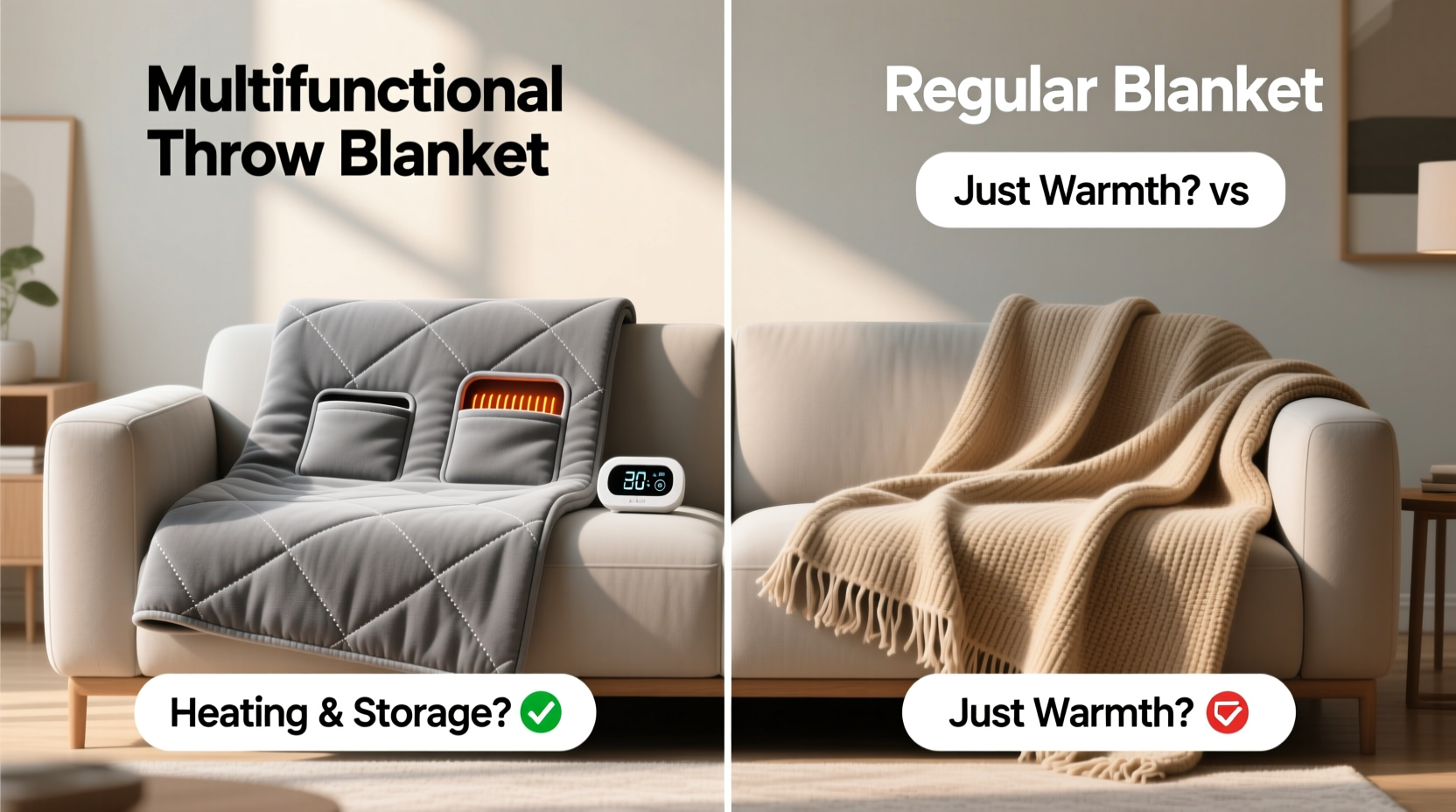
A regular throw blanket is typically a small to medium-sized textile designed for comfort—draped over a sofa, used during movie nights, or folded at the foot of a bed. Made from materials like fleece, cotton, wool, or acrylic blends, its purpose is singular: insulation and coziness.
In contrast, a multifunctional throw blanket is engineered with added features. These may include snap buttons, zippers, hidden pockets, detachable sleeves, or modular designs that allow it to be reconfigured. Some models claim to convert into travel pillows, hooded capes, or picnic mats. The core idea is flexibility: one item, multiple uses.
“Multifunctionality only adds value if each function performs well. Too often, these blankets sacrifice comfort for gimmicks.” — Lena Patel, Textile Designer & Home Goods Consultant
Performance Comparison: Comfort, Durability, and Practicality
The true test of any blanket lies in how well it serves its primary role: keeping you warm and comfortable. Let’s break down key factors where multifunctional and regular throws differ.
| Feature | Multifunctional Throw | Regular Throw |
|---|---|---|
| Warmth Retention | Varies; some lightweight synthetics lose heat | Consistently good, especially wool or fleece |
| Durability | Stress points (zippers, snaps) prone to wear | Fewer weak points; longer lifespan |
| Softness & Drape | Often stiffer due to structural elements | Natural drape and plush feel |
| Portability | Compact, often includes carrying pouch | Bulkier; requires folding |
| Versatility | High—can be worn, packed, or repurposed | Limited to draping or light layering |
The data shows a trade-off: while multifunctional throws win in portability and adaptability, they often compromise on comfort and longevity. For someone prioritizing relaxation at home, a regular blanket remains superior. However, for travelers, campers, or urban dwellers with limited storage, the multifunctional option offers tangible benefits.
Real-World Use Case: The Weekend Traveler
Sarah, a freelance photographer based in Portland, frequently travels for weekend shoots. She purchased a popular convertible throw that doubles as a wearable shawl and travel pillow. On a recent trip to the Oregon coast, she used it during outdoor shoots to stay warm between takes, wrapped it around her shoulders while editing in a café, and later used the built-in pouch as a makeshift seat cover on a damp bench.
“It wasn’t as soft as my favorite fleece throw,” she admits, “but having one item do three jobs saved me space in my bag. I didn’t need to pack a jacket, scarf, and blanket separately.”
This scenario illustrates the niche where multifunctional throws shine: mobile lifestyles where minimizing gear is a priority. In contrast, Sarah still keeps a plush cotton-blend throw at home for evenings on the couch—proving that both types have their place.
Marketing Hype vs. Measurable Value
Many multifunctional throws are sold with aspirational imagery: a person wearing the blanket as a cape while hiking, then unfolding it into a picnic mat, all while sipping coffee beside a lake. While visually appealing, such scenes rarely reflect everyday reality.
The truth is, most users don’t need a blanket that converts into six different items. A 2023 consumer survey by *Home & Living Review* found that 78% of multifunctional blanket owners used fewer than half of the advertised functions regularly. Snap-on hoods were deemed “awkward,” and integrated pillows were described as “underfilled” or “too flat.”
Yet, the psychological appeal of “doing more with less” drives sales. Brands leverage minimalism, sustainability messaging, and smart design rhetoric to justify premium pricing—sometimes double that of a high-quality regular throw.
That said, not all multifunctional blankets are overhyped. Models with thoughtful engineering—such as magnetic closures instead of fragile snaps, or breathable, temperature-regulating fabrics—do deliver incremental improvements for specific needs.
Choosing the Right Blanket: A Practical Checklist
Before buying, ask yourself the following questions to determine which type suits your lifestyle:
- Do I frequently travel or spend time outdoors?
- Is storage space limited in my home?
- Do I value innovation and multi-use items?
- Am I willing to sacrifice some softness for functionality?
- Will I actually use the extra features, or are they novelty?
If you answered “yes” to the first two, a multifunctional throw could be a smart investment. If comfort and durability are top priorities, stick with a well-made regular blanket.
Expert-Backed Care Tips for Longevity
No matter which type you choose, proper care extends its life. Here’s a step-by-step guide to maintaining your blanket:
- Read the label: Check washing instructions, especially for multifunctional models with metal components.
- Use gentle cycles: Wash in cold water on delicate mode to protect fibers and seams.
- Air dry when possible: Tumble drying can weaken stitching and melt synthetic threads.
- Store properly: Fold neatly or roll; avoid hanging heavy blankets long-term to prevent stretching.
- Inspect attachments: Regularly check zippers, snaps, or pockets for loose threads or damage.
Frequently Asked Questions
Can a multifunctional throw replace a winter coat?
Not reliably. While some models include sleeves or hoods, they lack the insulation, wind resistance, and waterproofing of proper outerwear. They’re best suited for mild conditions or indoor/outdoor transitions.
Are multifunctional blankets suitable for pets?
Some brands market them as dual-use for humans and pets, but animal safety depends on design. Avoid blankets with small, detachable parts that could be chewed off. Always supervise pet use.
Do they really save money in the long run?
Potentially, but only if you actively use multiple functions. If you only use it as a blanket, a $50 regular throw will outperform and outlast a $90 multifunctional one used identically.
Final Verdict: Hype or Help?
The hype around multifunctional throw blankets isn’t entirely unfounded—but it’s also not universally applicable. For minimalist travelers, van-lifers, or those in small apartments, the space-saving design and adaptability offer real advantages. However, for the average user seeking comfort and durability, a traditional throw blanket remains the smarter, more satisfying choice.
The key is intentionality. Ask not what the blanket *can* do, but what you *need* it to do. When form follows function, innovation adds value. When it leads with marketing flair alone, you’re paying for potential you’ll never use.




 浙公网安备
33010002000092号
浙公网安备
33010002000092号 浙B2-20120091-4
Comments
No comments yet. Why don't you start the discussion?