
Mustard seeds are among the most widely used spices in global cuisines, yet their subtle distinctions often go unnoticed by even seasoned cooks. From the pungent crackle of black mustard in Indian tempering to the mild tang of yellow seeds in American ballpark condiments, these tiny powerhouses shape flavor profiles across continents. Understanding their varieties, chemical behavior, and culinary applications transforms how they’re used—not just as background notes but as foundational elements in seasoning. This guide unpacks everything from seed types and flavor chemistry to roasting techniques and substitution strategies, offering a comprehensive resource for cooks who want precision and depth in their spice work.
Definition & Overview
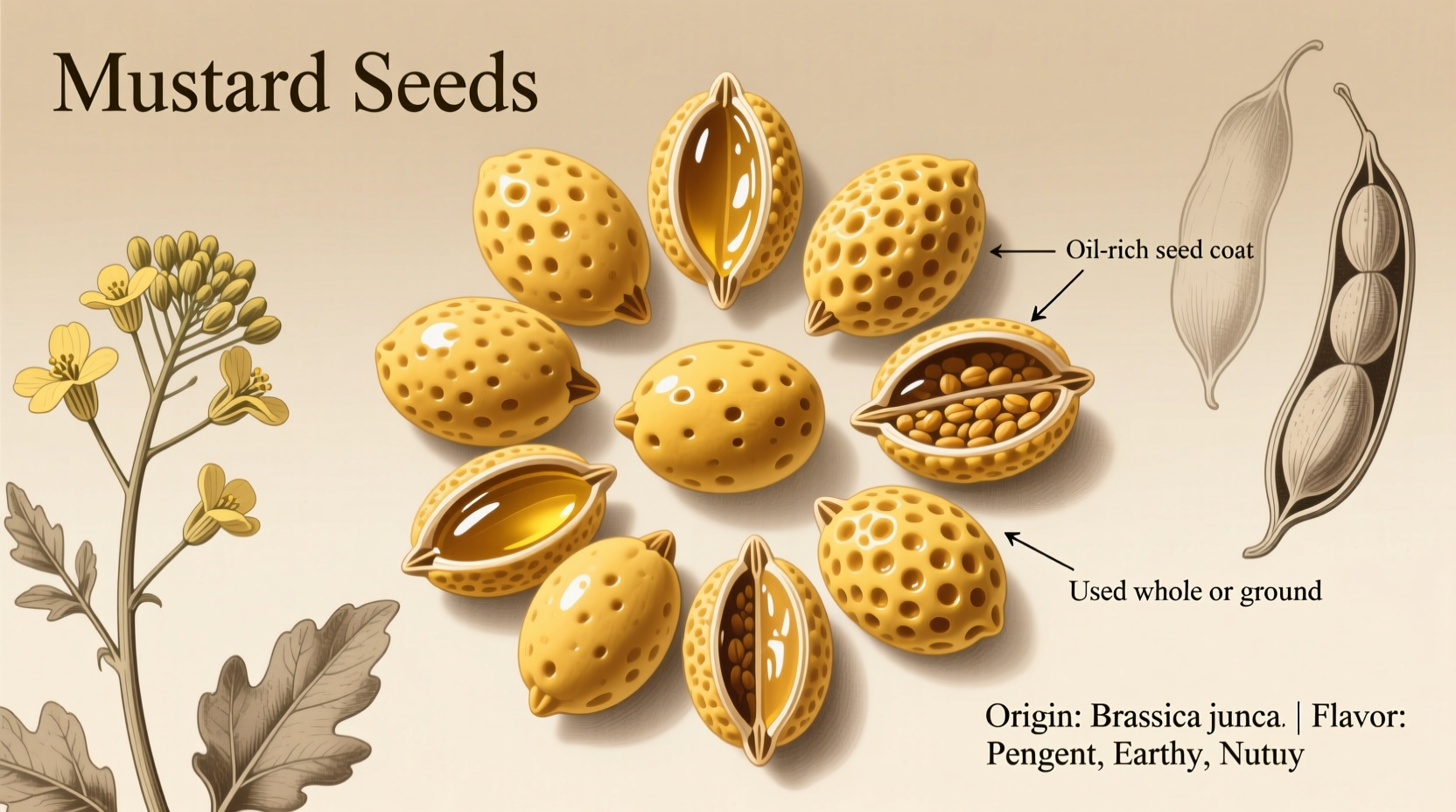
Mustard seeds are the small, round seeds harvested from various species of the Brassica and Sinapis genera, primarily Brassica juncea, B. nigra, and Sinapis alba. Native to Europe, North Africa, and parts of Asia, they’ve been cultivated for over 5,000 years. Their defining trait is the presence of glucosinolates—sulfur-containing compounds that, when combined with moisture, activate myrosinase enzymes to produce allyl isothiocyanate, the volatile compound responsible for their signature heat and nasal-clearing sharpness.
In whole form, mustard seeds remain dormant until exposed to liquid or dry heat. This delayed activation makes them uniquely versatile: they can be toasted for nutty aroma, soaked for slow-release pungency, or ground into flour for emulsified sauces. They appear in three primary colors—yellow, brown, and black—each with distinct potency, texture, and regional significance. Unlike pre-made mustard paste, raw seeds offer control over heat development, allowing chefs to modulate spiciness through preparation method rather than relying solely on variety.
Key Characteristics
| Characteristic | Details |
|---|---|
| Flavor Profile | Nutty when dry; sharp, pungent, or sinus-clearing when hydrated. Heat develops enzymatically upon contact with water. |
| Aroma | Toasted sesame or popcorn when dry-heated; sharp horseradish-like note when crushed and wetted. |
| Color & Form | Small spherical seeds (1–3 mm): pale yellow, light to dark brown, or near-black. Available whole, cracked, or powdered. |
| Heat Level (Relative) | Yellow: mild (1/10); Brown: medium-hot (6/10); Black: hottest (8/10). Heat intensity depends on preparation. |
| Culinary Function | Tempering agent, flavor base, thickener, preservative, emulsifier in dressings, pickling brine component. |
| Shelf Life | Whole seeds: 3–4 years in cool, dark storage; ground: 6–12 months due to rapid oxidation of oils. |
| Solubility Trigger | Heat release requires moisture. Cold liquids yield slower, longer-lasting pungency; hot liquids deactivate enzymes faster, milder result. |
Variants & Types
The three main types of mustard seeds differ not only in appearance but in agricultural origin, oil content, and culinary role. Choosing the right type affects both safety and sensory outcome, especially in fermented or preserved preparations.
Yellow Mustard Seeds (Sinapis alba)
Also known as white mustard seeds, these are the mildest and most commonly used in Western cuisine. Pale gold in color, they originate from the Mediterranean and contain fewer sinigrin compounds, resulting in lower heat. Predominantly used in American yellow mustard, pickling blends, and beer cheese spreads. Less prone to bitterness when overcooked. Ideal for beginners or dishes requiring subtle background warmth.
Brown Mustard Seeds (Brassica juncea)
Native to the Himalayas and dominant in Indian, Chinese, and Ethiopian cooking, brown seeds range from tawny to deep russet. They pack more punch than yellow and are essential in Dijon-style mustards, Bengali panch phoron, and Sichuan pickles. When heated in oil, they pop vigorously and release a complex aroma—nutty, earthy, slightly bitter. Often paired with cumin or fenugreek in tempering sequences. Preferred for fermenting due to natural preservative qualities.
Black Mustard Seeds (Brassica nigra)
The rarest commercially due to difficult harvesting (plants shatter easily), black seeds are nearly jet-black and intensely aromatic. Found in traditional South Indian tadka, Persian herb stews (ghormeh sabzi), and Ethiopian spice mixes. Highest concentration of myrosinase enzyme, yielding the sharpest, longest-lasting burn. Require careful timing—overheating leads to acridity. Considered superior in artisanal preparations where fragrance is paramount.
TIP: In many markets, “black” mustard may actually be very dark brown B. juncea. True B. nigra is less common outside specialty spice shops. Check botanical labels if authenticity matters for your recipe.
Comparison with Similar Ingredients
Mustard seeds are frequently confused with other pungent spices or misused as direct substitutes. Key distinctions lie in activation mechanism and thermal stability.
| Ingredient | Difference from Mustard Seeds | Substitution Advice |
|---|---|---|
| Horseradish Root | Same active compound (allyl isothiocyanate) but released instantly when grated. More aggressive, shorter-lived heat. | Use 1:1 in creamy sauces only; not interchangeable in dry rubs or tempering. |
| Wasabi Powder | Synthetic versions often contain mustard flour. Real wasabi (Wasabia japonica) is rhizome-based, fresher, greener flavor. | Pre-mixed \"wasabi\" powders rely on mustard—check ingredients. Not suitable for dry spice blends. |
| Cole Seeds (Rapeseed/Canola) | From same plant family but bred for low erucic acid. No enzymatic heat. Neutral taste. | Not a substitute. Used for oil only, not flavoring. |
| Poppy Seeds | Similar size and appearance when whole, but nutty-sweet, no heat. High mucilage content. | Visually confusing in spice jars. Never interchangeable in savory spice mixes. |
\"The magic of mustard isn’t in the seed itself—it’s in what happens when you wake it up with water or fire. That moment defines whether you get warmth or war.\" — Anjali Rao, Culinary Ethnobotanist & Author of *Spice Alchemy*
Practical Usage: How to Use Mustard Seeds in Cooking
Mastering mustard seeds requires understanding their dual nature: inert when dry, reactive when activated. Technique determines outcome.
Dry Roasting (Tosting)
Used to enhance nuttiness without triggering pungency. Heat a dry skillet over medium-low. Add seeds in single layer. Shake frequently until they darken slightly and emit a popcorn-like scent (~90 seconds). Immediately transfer to plate to stop cooking. Best for salad sprinkles, spice blends (chaat masala), or garnishing dals. Avoid high heat—burnt mustard turns bitter fast.
Tempering (Tadka/Chaunk)
A cornerstone technique in Indian and Sri Lankan cooking. Heat neutral oil (like grapeseed or sunflower) to shimmering point. Add mustard seeds—they will sputter and pop within seconds. Cover pan briefly to prevent splatter. Once popping slows (~30–45 seconds), add complementary spices: curry leaves, dried chilies, asafoetida. Pour entire mixture over cooked lentils, vegetables, or yogurt raita. The oil carries both flavor and antimicrobial benefits, extending shelf life.
Wet Activation (Mustard Paste)
For homemade mustard, grind seeds coarsely. Mix with liquid—vinegar yields sharp, stable heat; wine adds fruitiness; beer imparts malt depth. Cold liquid = slow-building heat (peaks at 10–15 minutes); boiling liquid = milder, rounded flavor (enzyme denatured). Let sit covered for at least 20 minutes before use. Adjust consistency with more liquid; sweeten with honey or maple syrup if desired.
Pickling & Fermenting
Whole seeds added to brines inhibit bacterial growth while contributing texture. Use brown or black seeds in sauerkraut, kimchi, or mixed vegetable pickles. They don’t dissolve but soften slightly, releasing flavor gradually. Typical ratio: 1 tsp per quart jar. Combine with garlic, bay leaf, and peppercorns for balanced complexity.
Emulsification in Dressings
Ground mustard acts as an emulsifier in vinaigrettes. Whisk 1 tsp mustard powder with vinegar and salt first, then slowly drizzle in oil. Prevents separation and adds body. Works better than egg yolk in vegan applications. For extra depth, toast seeds lightly before grinding.
PRO TECHNIQUE: Layer heat in curries by using both whole and ground mustard. Whole seeds provide burst and texture during tempering; ground mustard (added later) ensures consistent background pungency throughout the dish.
Pairing Suggestions & Flavor Synergy
Mustard seeds harmonize with ingredients that balance or complement their sharpness:
- Dairy: Cools heat—ideal in yogurt-based dips, cheese spreads, or butter sauces.
- Acids: Vinegar, lime juice, or tamarind amplify brightness and stabilize enzymatic reaction.
- Sweet Elements: Honey, jaggery, or roasted carrots contrast heat and round out flavor.
- Alliums: Onion, garlic, and shallots form aromatic bases that support mustard’s intensity.
- Herbs: Dill, thyme, and cilantro cut richness and refresh the palate.
In Ethiopian mitmita-spiced dishes, brown mustard pairs with berbere and clarified butter. In German sausages, yellow seeds meet caraway and mustard powder in casing brines. These pairings aren’t arbitrary—they reflect centuries of flavor balancing.
Storage & Shelf Life Best Practices
Proper storage preserves potency and prevents rancidity:
- Store whole seeds in airtight glass jars away from light, heat, and humidity—ideally in a pantry or drawer.
- Label containers with purchase date. Whole seeds retain full flavor for up to 4 years; ground loses potency within 6–12 months.
- Do not freeze unless in long-term bulk storage. Condensation risks premature activation.
- Check freshness by crushing a few seeds between fingers. Fresh ones should release a clean, sharp scent. Stale seeds smell dusty or oily.
- Buy small quantities from high-turnover spice vendors. Old stock may have reduced myrosinase activity, leading to weak flavor development.
Substitutions & Workarounds
While no substitute fully replicates mustard seeds’ dual textural and chemical role, alternatives exist for emergency use:
- Mustard Powder: Replace 1 tsp whole seeds with ¾ tsp powder. Add early in cooking for integrated flavor; late for sharper bite.
- Horseradish + Nuts: Grated fresh horseradish (½ amount) plus chopped almonds mimics heat and crunch in relishes.
- Wasabi Paste: Only in cold applications—use sparingly (¼ strength). Lacks nuttiness and oil solubility.
- Radish Seeds: Rare but available; similar pungency profile, milder. Experimental option for foragers.
Note: Substitutes fail in tempering techniques, where popping and oil infusion are critical. In such cases, omitting seeds is preferable to incorrect replacement.
Practical Tips & FAQs
Why do mustard seeds pop when heated in oil?
Each seed contains residual moisture. When exposed to hot oil (~350°F+), internal water vaporizes rapidly, building pressure until the seed coat ruptures—similar to popcorn. This popping indicates readiness for the next spice addition.
Can I eat mustard seeds raw?
Safely yes, but unpleasant. Raw seeds are hard to digest and deliver unmodulated heat. Always cook or hydrate before consumption in significant quantity.
Which type should I use for homemade Dijon mustard?
Authentic Dijon uses brown mustard seeds (Brassica juncea) soaked in white wine and verjuice. Substitute with brown seeds and dry white wine plus a splash of lemon juice.
Are mustard seeds safe for people with thyroid concerns?
In excess, glucosinolates may interfere with iodine uptake. Those with hypothyroidism should consume moderate amounts, preferably cooked—heat reduces goitrogenic activity.
How do I prevent mustard sauce from becoming too hot?
Use warm or hot liquid instead of cold. Heat deactivates myrosinase enzyme quickly, limiting isothiocyanate production. Alternatively, blend in cream or oil immediately after mixing.
Can I grow my own mustard seeds?
Yes. Plant Brassica juncea in cool seasons. Harvest pods when dry and tan. Break open to collect seeds. Allow 80–100 days from sowing.
Summary & Key Takeaways
Mustard seeds are far more than pantry staples—they are dynamic flavor catalysts whose behavior hinges on preparation. Recognizing the differences between yellow, brown, and black varieties allows precise control over heat, aroma, and texture. Techniques like tempering, roasting, and enzymatic activation unlock their full potential, turning simple additions into transformative moments in cooking.
Key points to remember:
- Whole seeds stay stable for years; ground forms degrade quickly.
- Heat development depends on liquid temperature—cold = hotter, hot = milder.
- Tempering in oil is non-negotiable for authentic Indian and Middle Eastern dishes.
- No perfect substitute exists for whole seeds in frying applications.
- Freshness is detectable by scent and pop response in oil.
Next time you reach for a jar of mustard seeds, pause—consider how you’ll awaken them. Will it be a slow simmer in vinegar for layered heat? A fiery crackle in smoking oil to crown a dal? The choice shapes the dish. Experiment with one new technique this week and taste the difference precision makes.




 浙公网安备
33010002000092号
浙公网安备
33010002000092号 浙B2-20120091-4
Comments
No comments yet. Why don't you start the discussion?