
For anime collectors and fans of modern shonen series, the debate between My Hero Academia and Jujutsu Kaisen extends beyond storylines and character arcs—it reaches into the physical realm of collectible action figures. With both franchises receiving extensive merchandise treatment from major manufacturers like Bandai, Aniplex, and Megahouse, one key factor separates a display-worthy figure from a shelf-sitter: articulation. How well can the figure move? Can it strike dynamic poses true to the source material? And most importantly, which franchise’s toy line offers superior engineering in this department?
This article breaks down the articulation performance of both lines across multiple product tiers—from budget-friendly SH Figuarts entries to premium deluxe editions—offering a clear verdict based on joint design, range of motion, stability, and real-world usability.
Understanding Articulation in Modern Anime Figures
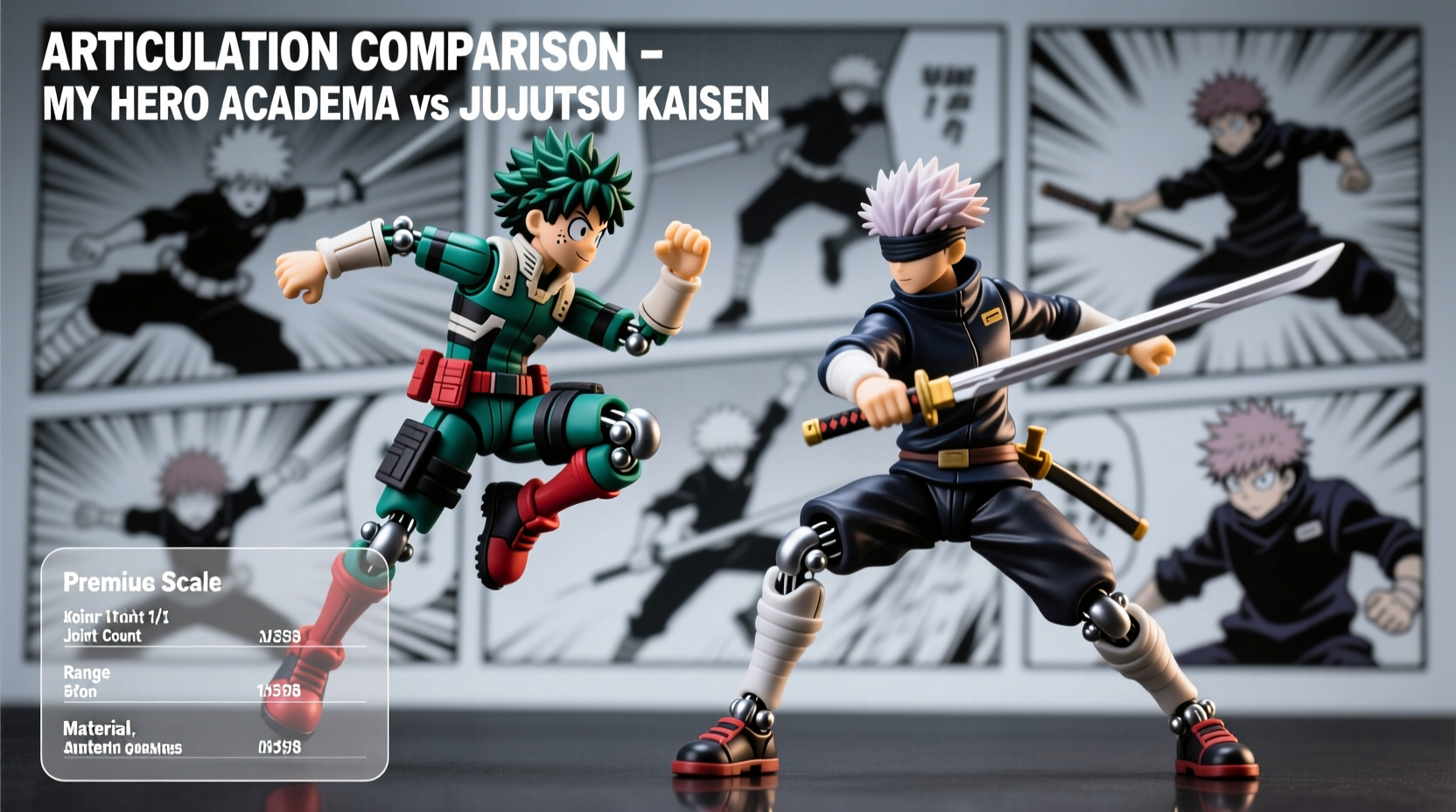
Articulation refers to the number, placement, and functionality of joints in an action figure. High articulation allows for natural posing, dynamic battle stances, and accurate representation of characters’ movements as seen in their respective anime. While aesthetics matter, a beautifully sculpted figure with stiff or poorly placed joints often disappoints collectors seeking versatility.
In recent years, Japanese toy manufacturers have adopted advanced engineering techniques borrowed from Western action figure traditions—ball joints, swivel hinges, butterfly joints, double-jointed elbows, and hidden ankle rockers—to maximize poseability without compromising structural integrity.
The SH Figuarts line by Bandai Tamashii Nations is the primary platform for both My Hero Academia and Jujutsu Kaisen figures, making direct comparisons possible. However, subtle differences in mold design, accessory integration, and character anatomy lead to noticeable disparities in performance.
Key Articulation Points Evaluated
- Neck: Ball joint or hinge for head movement
- Shoulders: Range of abduction and forward motion
- Arms: Double elbows, bicep swivels, wrist articulation
- Torso: Ab crunch, waist rotation
- Hips: Swivel, rocker base, lateral spread
- Legs: Double knees, ankle rockers, toe pivots
- Fingers: Individual finger tips or interchangeable hands
Each of these contributes to the overall flexibility and realism of the figure. A lack in any one area can severely limit posing options, especially for characters known for acrobatic or spell-based combat styles.
My Hero Academia: Consistency Over Innovation
The My Hero Academia SH Figuarts line launched earlier than its Jujutsu Kaisen counterpart, giving Bandai time to refine its approach. The result is a highly consistent, if somewhat conservative, articulation standard across the roster.
Early releases like Deku (Base) and All Might featured limited torso articulation and basic knee joints. However, later iterations—especially post-Season 5—introduced significant upgrades. The \"Dynamic Action\" series brought ab-crunch joints, improved hip rockers, and double-jointed legs, allowing for running, jumping, and impact poses that mirror key animation moments.
One standout example is the **Deku - Full Cowl: United States of Smash** release. This version includes:
- Ball-jointed neck with slight tilt capability
- Butterfly shoulder joints enabling high arm raises
- Double elbows and wrist swivels for punch accuracy
- Waist ab-crunch and full 360° rotation
- Hips with lateral spread up to 90 degrees
- Ankle rockers with toe pivot points
Despite these improvements, limitations remain. Many MHA figures feature thick capes or bulky costumes (e.g., Endeavor, Hawks) that restrict leg movement. Additionally, some early molds reuse outdated skeletons, meaning newer color variants may look updated but perform no better than 2018-era figures.
“Bandai treats My Hero Academia as a long-term franchise, so they prioritize accessibility over cutting-edge mechanics.” — Takashi R., Toy Design Analyst at Otaku Insider
Jujutsu Kaisen: Precision Engineering for Dynamic Combat
Launched after MHA, the Jujutsu Kaisen SH Figuarts line benefits from lessons learned. Characters in JJK engage in fast-paced, close-quarters martial arts combined with supernatural gestures—requiring exceptional hand and upper-body articulation.
From the outset, JJK figures were built on evolved skeleton frames. Yuji Itadori’s initial release already included butterfly shoulders, double elbows, and a fully articulated waist with ab-crunch. But it was the **Satoru Gojo - Blindfold Ver.** that set a new benchmark.
Gojo features:
- Extended ball-jointed neck for dramatic head tilts
- Bicep swivels for sleeve clearance during poses
- Interchangeable open palms and spell-forming hands
- Enhanced hip design allowing near-split stances
- Improved ankle rockers for crouching without tipping
What sets JJK apart is attention to gesture-specific details. Fingers are molded to replicate hand signs used in domain expansions and cursed techniques. Even minor characters like Panda include rotatable claws and jaw articulation—a level of detail rarely seen in MHA sidecast figures.
Moreover, the streamlined costumes of JJK characters (tight-fitting uniforms, minimal capes) allow for greater freedom of movement. Compare Megumi Fushiguro’s trench coat (removable) to Mirko’s rigid wings—functionality wins out over flair.
Case Study: Posing Gojo vs. Deku in Combat Scenes
A practical test reveals meaningful differences. Attempting to recreate Gojo’s signature “Hollow Purple” blast requires:
- One arm extended forward, palm open
- Other hand pulled back in preparation
- Slight torso twist
- One leg forward in lunge stance
The JJK Gojo figure handles this naturally. Shoulder joints rotate cleanly, wrists lock in place, and the hip design supports a deep lunge. In contrast, attempting the same pose with Deku’s earlier mold causes elbow drag against the ribs and foot instability due to shallow ankle rockers.
While newer Deku versions close the gap, the consistency across the JJK lineup—from Nobara to Maki—is more impressive. Even budget-tier Chibi Revo figures maintain usable articulation, whereas MHA’s lower-end lines often sacrifice joints for cost reduction.
Direct Comparison: Articulation Showdown
| Feature | My Hero Academia (Avg) | Jujutsu Kaisen (Avg) |
|---|---|---|
| Total Articulation Points | 24–28 | 28–32 |
| Ab-Crunch Joint | Yes (Newer Models) | Standard on All |
| Double Knees | Yes | Yes |
| Ankle Rockers | Limited (Some Tipping) | Stable, Deep Range |
| Butterfly Shoulders | Select Models | Universal |
| Wrist Swivels | Common | Standard + Gesture Hands |
| Hip Lateral Spread | 60–75° | 80–90° |
| Pose Stability | Good (with Base) | Excellent |
The data shows a clear trend: Jujutsu Kaisen figures, on average, offer more joints, better placement, and enhanced stability. This isn’t due to radically different technology, but rather smarter application of existing systems tailored to the anime’s kinetic choreography.
Do’s and Don’ts When Choosing Based on Articulation
| Do | Don't |
|---|---|
| Check if the figure uses the latest skeleton mold | Assume all versions of a character are equally articulated |
| Prioritize figures with removable cloaks or accessories | Buy sealed blind boxes if articulation is critical |
| Test stability by posing before final display | Ignore wrist and finger articulation for spellcasters |
| Compare hip and ankle performance for low stances | Overlook older molds re-released with new paint |
Collector’s Checklist: Evaluating Articulation Before Purchase
- Research the mold version: Is it a new release or reused body?
- Count major joints: Aim for at least 28 points for full poseability.
- Check for ab-crunch and butterfly shoulders: Essential for natural bending and reaching.
- Verify ankle rocker depth: Shallow rockers limit crouching and kneeling.
- Review hand options: Open palms, gripping hands, and spell forms increase versatility.
- Look for bicep swivels: Prevents sleeves from restricting arm movement.
- Read collector forums: Sites like Reddit’s r/SHFiguarts often highlight joint weaknesses.
FAQ: Common Questions About MHA vs. JJK Figure Articulation
Are Jujutsu Kaisen figures worth more than My Hero Academia ones?
Not necessarily in price, but in functional value. JJK figures tend to hold their resale value better due to higher demand and superior articulation. Limited editions like Gojo (Domain Expansion) routinely sell above retail, while comparable MHA figures stabilize closer to MSRP.
Can I upgrade older MHA figures with new parts?
Only partially. Some joints (like hips and legs) are compatible across newer SH Figuarts bodies, but torso designs changed significantly around 2020. Mixing parts may require modification and won’t always improve stability.
Why does Jujutsu Kaisen seem more articulated even at lower price points?
Because the franchise launched during a peak in SH Figuarts engineering. Bandai applied lessons from Power Rangers and Kamen Rider lines to JJK from day one, while MHA started simpler and evolved slowly to keep entry-level pricing accessible.
Final Verdict: Which Line Offers Better Articulation?
The evidence points clearly toward Jujutsu Kaisen as the leader in articulation quality. Its figures consistently feature more joints, smarter joint placement, and design choices that enhance poseability without sacrificing durability. Whether recreating a Domain Expansion or a simple walking stance, JJK figures respond with precision and balance.
My Hero Academia remains strong in visual appeal and character variety, especially with heroic proportions and flashy effects parts. However, its articulation is more inconsistent—some top-tier releases match JJK, but many standard editions fall short in hip mobility, wrist function, and torso dynamics.
If your priority is **display-only**, MHA offers stunning sculpts and vibrant colors. But if you want **poseability, realism, and functional design**, Jujutsu Kaisen delivers a superior experience across nearly every product tier.
Take Action: Build a Smarter Collection
Don’t let marketing visuals fool you—what looks great in photos may not perform well on your shelf. Prioritize articulation testing, research mold generations, and invest in figures that support dynamic storytelling through movement. Whether you’re team Midoriya or team Gojo, understanding the engineering behind your collection empowers better choices.




 浙公网安备
33010002000092号
浙公网安备
33010002000092号 浙B2-20120091-4
Comments
No comments yet. Why don't you start the discussion?