
If your HTC U12’s antenna has failed—leading to weak signal reception, dropped calls, or spotty data—you're not alone. Many users have reported similar issues with the U12's internal antenna system, especially after prolonged use or minor physical stress. Now you’re wondering: if you switch to a Samsung Galaxy S8, will you face the same fate? Are modern smartphone antennas inherently fragile, or do some models hold up better under real-world conditions?
This article dives deep into the antenna design, durability, and long-term reliability of both the HTC U12 and Samsung Galaxy S8. We’ll compare materials, construction techniques, user-reported failure rates, and real-world performance to help you make an informed decision.
Understanding Smartphone Antenna Design
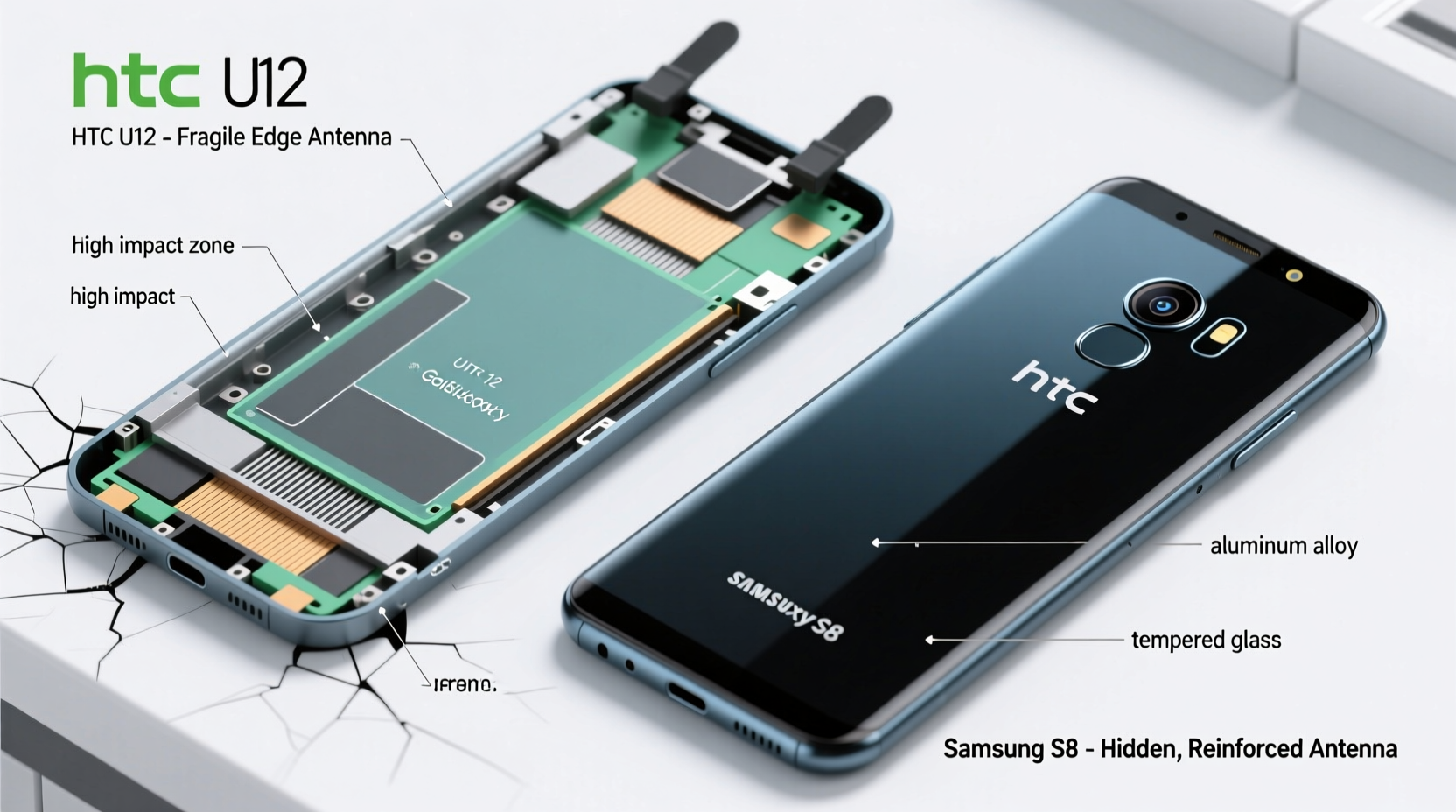
Modern smartphones rely on complex internal antenna arrays to support multiple frequency bands—2G, 3G, 4G LTE, 5G (in newer models), Wi-Fi, Bluetooth, GPS, and NFC. These antennas are typically etched into flexible printed circuits or embedded within the phone’s frame or back panel. Unlike older phones with external stub antennas, today’s designs prioritize sleekness over serviceability, making repairs difficult and replacements costly.
The shift toward metal and glass bodies has further complicated antenna integration. Metal blocks radio signals, so manufacturers must use antenna \"windows\"—plastic strips or gaps in the chassis—or embed antennas along the edges. The HTC U12 uses a liquid surface finish with a mostly aluminum frame, while the S8 features a glass-and-aluminum sandwich with antenna lines integrated into the top and bottom edges.
“Antenna placement and material choice directly impact signal resilience. Phones with full-metal backs often suffer unless engineers strategically isolate antenna zones.” — Dr. Lin Wei, RF Systems Engineer at Mobile Insights Group
HTC U12: Known Antenna Issues and Weaknesses
The HTC U12+, released in 2018, was praised for its BoomSound speakers and Edge Sense pressure-sensitive frame. However, it gained a reputation among repair technicians for antenna fragility. The primary issue stems from its internal modular layout: the main cellular antenna is soldered near the mid-frame, close to the battery connector.
When the phone suffers even minor drops or bending stress—common with daily pocket or bag use—the antenna flex cable can crack or detach. Because the antenna isn’t modular but rather part of a larger ribbon cable assembly, replacing it requires significant disassembly and precision soldering.
User reports on forums like XDA Developers and Reddit highlight recurring problems:
- Sudden drop from full signal to “No Service”
- Inability to reconnect to LTE without rebooting
- Poor performance in areas with marginal coverage
While HTC offered strong software support initially, third-party repair options remain limited. Most authorized service centers treat antenna failure as a full-unit replacement scenario due to labor costs.
Samsung Galaxy S8: Antenna Build and Real-World Durability
Released a year earlier in 2017, the Samsung Galaxy S8 set a new standard for premium Android design. Its curved glass body and slim profile were groundbreaking, but concerns about durability persisted—especially around the antenna and water resistance seals.
Unlike the HTC U12, the S8 uses a multi-element antenna system distributed along the top and bottom bezels. These are embedded in plastic strips that act as signal windows, preserving connectivity without compromising aesthetics. More importantly, Samsung designed these components with modularity in mind. The main cellular antenna module can be replaced independently in most cases, reducing repair complexity.
Independent teardowns by iFixit show that while the S8 scores poorly on overall repairability (rated 4/10), the antenna itself is less prone to incidental damage. It’s shielded by structural reinforcements and located away from high-stress zones like the center of the frame.
In real-world usage, S8 owners report fewer instances of sudden signal degradation. Even after three to four years of use, many units maintain stable LTE and Wi-Fi performance—provided the device hasn't suffered water damage or screen fractures that compromise internal seals.
Comparative Analysis: HTC U12 vs. Samsung S8 Antenna Performance
| Feature | HTC U12 | Samsung Galaxy S8 |
|---|---|---|
| Antenna Location | Mid-frame, near battery connector | Top and bottom edge strips |
| Material Integration | Metal frame with hidden gaps | Glass back with plastic antenna lines |
| Repairability | Low – requires full ribbon replacement | Moderate – modular antenna component |
| User-Reported Failure Rate | High – common after 2+ years | Low to moderate – rare without physical damage |
| Signal Stability (Urban/Rural) | Good initially, degrades over time | Consistently strong across environments |
| Water Resistance Impact | IP68 – seal degradation affects antenna | IP68 – minimal signal impact if sealed |
Based on this comparison, the Samsung S8 demonstrates superior antenna resilience, primarily due to smarter placement and better serviceability. While neither phone is immune to wear, the S8’s design makes it less likely to suffer catastrophic antenna failure from everyday handling.
How to Protect Your Phone’s Antenna: A Practical Checklist
Whether you keep your HTC U12 or upgrade to an S8 (or another model), protecting the antenna starts with smart habits. Follow this checklist to extend your device’s connectivity lifespan:
- Use a shock-absorbing case – Prevents frame deformation during drops.
- Avoid sitting on your phone – Pressure on the midsection can damage internal ribbons.
- Don’t open the back unless necessary – Repeated disassembly wears out connectors.
- Keep firmware updated – Some updates optimize radio power management.
- Limit exposure to moisture – Corrosion can degrade antenna contacts over time.
- Monitor signal behavior – Early detection of dropouts helps catch issues before total failure.
Real-World Example: From U12 to S8 – One User’s Experience
Mark, a field technician based in Portland, relied on his HTC U12 for work communication and GPS navigation. After 18 months, he began experiencing frequent call drops during site visits—even in areas with strong coverage. Diagnostics showed fluctuating signal strength depending on how he held the phone.
He visited two repair shops; one quoted $180 for a logic board-level fix, the other advised replacement. Frustrated, Mark upgraded to a used Samsung Galaxy S8. Over the next two years, despite similar usage patterns—including being carried in tool belts and exposed to rain—he never encountered a single antenna-related issue. His only complaint was battery degradation, which didn’t affect connectivity.
“The difference in reliability was night and day,” Mark said. “I thought all high-end phones had fragile internals, but the S8 just handled daily abuse better.”
Frequently Asked Questions
Can I repair the HTC U12 antenna myself?
Possible, but not recommended unless you have micro-soldering experience. The antenna is part of a multi-function flex cable, and improper handling can damage the charging port or buttons. Replacement kits exist online, but success rates vary.
Does the Samsung S8 still receive network updates?
No major software updates are provided anymore, but carrier-specific modem updates may still occur. The hardware remains compatible with current LTE networks in most regions.
Are newer phones less prone to antenna issues?
Yes. Recent models from Samsung, Google, and Apple use advanced beamforming and MIMO (multiple-input, multiple-output) antennas that are more resilient and self-adjusting. They also benefit from improved materials science and testing protocols.
Final Thoughts: Is the S8 a Better Choice?
If your HTC U12’s antenna has failed, switching to a Samsung Galaxy S8 is a reasonable upgrade—not because the S8 is cutting-edge by today’s standards, but because it represents a more robust engineering approach to antenna integration. Its modular design, proven track record, and lower incidence of spontaneous signal loss make it a more reliable option for users who depend on consistent connectivity.
That said, both phones are now well beyond their prime support window. If you're investing in a replacement, consider newer models with stronger durability ratings and longer software support. But if you’re weighing the U12 against the S8 specifically, the evidence clearly favors the Galaxy S8 for better antenna longevity and repair feasibility.




 浙公网安备
33010002000092号
浙公网安备
33010002000092号 浙B2-20120091-4
Comments
No comments yet. Why don't you start the discussion?