
In 2015, Android users faced a pivotal decision: stick with Samsung’s flagship Galaxy S6 Edge Plus or take a leap of faith with Google’s newly launched Nexus 6P. The choice wasn’t just about hardware—it represented a shift in philosophy. One offered polished premium design and multimedia features; the other promised pure Android, timely updates, and close alignment with Google’s vision. Now, years later, we can assess that decision with clarity. Was switching from the S6 Edge Plus to the Nexus 6P a mistake—or a forward-thinking move?
The Context: Android in 2015
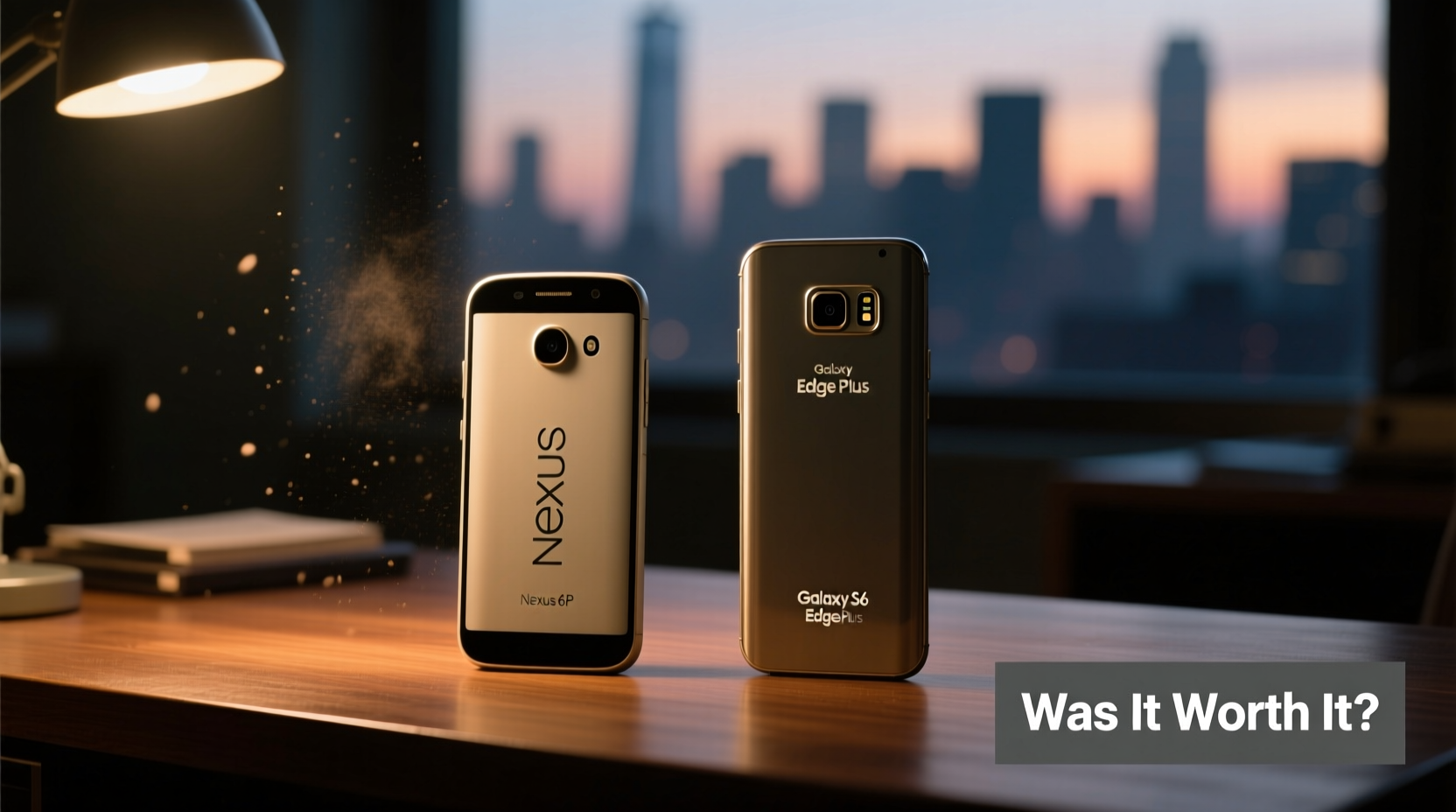
By mid-2015, Samsung had refined its Galaxy line into sleek, high-end devices. The Galaxy S6 Edge Plus stood as a symbol of engineering ambition—curved displays, metal-and-glass construction, and a powerful Exynos/Snapdragon hybrid platform. Meanwhile, Google’s Nexus program aimed to showcase stock Android without manufacturer bloat. Partnering with Huawei for the Nexus 6P marked a turning point: finally, a Nexus phone with top-tier specs and modern industrial design.
This contrast defined user expectations. Samsung appealed to those who valued aesthetics, camera performance, and feature-rich software. Google targeted developers, enthusiasts, and users who prioritized clean interfaces and rapid OS updates. The decision to switch wasn’t merely technical—it reflected personal values around software purity versus hardware polish.
Design and Build: Premium vs Purposeful
The Galaxy S6 Edge Plus was undeniably striking. Its dual-edge display created a futuristic look, and the combination of glass front and back with an aluminum frame gave it a luxurious feel. It was compact for its time (despite being “Plus” sized), and the curved edges weren’t just aesthetic—they enabled Edge Panels for quick access to contacts, notifications, and tools.
The Nexus 6P, by comparison, embraced minimalism. Its brushed aluminum body felt solid and professional, but lacked the visual flair of Samsung’s offering. The larger 5.7-inch form factor made it less pocketable, though the slimmer bezels and symmetrical design gave it a balanced presence. While the S6 Edge Plus turned heads, the 6P earned respect through durability and simplicity.
Performance and Software Experience
Under the hood, both phones were powered by Snapdragon 810 processors—a chip notorious for overheating issues. However, Samsung implemented aggressive thermal management and software throttling, which limited peak performance but improved stability. The Nexus 6P, lacking such safeguards initially, suffered more from heat-related slowdowns, especially during extended camera use or gaming.
Where the 6P truly shined was in software. As a Nexus device, it received Android 6.0 Marshmallow at launch and continued to get updates up to Android 8.1 Oreo. More importantly, it was among the first to receive monthly security patches and preview builds. This meant users enjoyed faster bug fixes, new features, and better long-term support compared to the S6 Edge Plus, which only reached Android 7.0 Nougat after significant delays—and never received consistent security updates beyond early 2017.
“Owning a Nexus wasn’t just about having the latest Android—it was about participating in its evolution.” — David Kim, Senior Android Developer
Camera Comparison: Innovation vs Consistency
Samsung’s 16MP rear camera on the S6 Edge Plus delivered vibrant colors, excellent dynamic range, and strong low-light performance for its era. Features like real-time HDR and selective focus added creative flexibility. Video recording topped out at 4K, though bitrate and stabilization lagged behind competitors.
The Nexus 6P introduced a 12.3MP sensor with larger pixels (1.55µm), designed specifically for better light capture. Google leveraged computational photography—HDR+, noise reduction algorithms, and laser autofocus—to deliver remarkably consistent results. In good lighting, both cameras performed similarly, but in challenging conditions, the 6P often produced cleaner, more natural-looking images.
However, early firmware issues caused shutter lag and inconsistent exposure. These were gradually resolved through updates—an advantage exclusive to Nexus devices. Over time, the 6P’s camera became a benchmark for software-driven imaging improvements.
Longevity and Real-World Use: A Mini Case Study
Consider Mark, a tech journalist who switched from the S6 Edge Plus to the Nexus 6P in October 2015. Initially frustrated by the larger size and occasional stutters, he appreciated the immediate access to Android updates. By late 2016, his peers with S6 Edge Plus units complained about sluggishness after the Nougat update, battery degradation, and lack of further patching. Mark’s 6P remained responsive, supported, and secure well into 2018.
He noted: “The S6 Edge Plus felt premium every day, but the 6P aged better. After two years, mine still got updates, booted quickly, and took reliable photos. I missed the curved screen sometimes, but never the bloatware or update anxiety.”
This experience reflects a broader trend: while the S6 Edge Plus dazzled early on, its lifecycle was cut short by Samsung’s update policies. The Nexus 6P, despite some initial flaws, offered greater long-term usability.
Comparison Table: Key Specifications and Outcomes
| Feature | Nexus 6P | Galaxy S6 Edge Plus |
|---|---|---|
| Launch Date | October 2015 | August 2015 |
| OS at Launch | Android 6.0 Marshmallow | Android 5.1 Lollipop |
| Final OS Version | Android 8.1 Oreo | Android 7.0 Nougat |
| Security Updates (Post-Launch) | Over 30 months | Approx. 18 months |
| Rear Camera | 12.3MP, f/2.0, laser AF | 16MP, f/1.9, optical image stabilization |
| Battery Capacity | 3450 mAh | 3000 mAh |
| Charging | USB-C, fast charging supported | Micro-USB, wireless charging |
| Build Material | Aluminum unibody | Glass + metal |
| Notable Advantage | Pure Android, long update support | Premium design, edge features, brand familiarity |
Was It a Mistake to Switch?
For users who valued aesthetics, multimedia features, and seamless integration with Samsung’s ecosystem, staying with the S6 Edge Plus made sense. Its screen, speaker quality, and camera interface catered to mainstream preferences. However, for those focused on software integrity, update velocity, and developer accessibility, the Nexus 6P was not just a valid alternative—it was a strategic upgrade.
Looking back, the decision hinged on priorities. Short-term satisfaction favored the S6 Edge Plus. Long-term functionality and peace of mind leaned toward the Nexus 6P. Given how rapidly Android evolved between 2015 and 2018—with material design overhauls, permission model changes, and security threats—the ability to stay current mattered more than minor differences in camera saturation or screen curvature.
Frequently Asked Questions
Did the Nexus 6P have better battery life than the S6 Edge Plus?
Yes, generally. Despite the S6 Edge Plus having adaptive power-saving modes, the 6P’s larger 3450 mAh battery and optimized Android runtime allowed for longer daily usage, especially under mixed workloads. Users commonly reported one full day of heavy use on the 6P, compared to needing a recharge by evening on the S6 Edge Plus.
Why did Samsung stop updating the S6 Edge Plus so early?
Samsung’s update policy at the time prioritized newer models. The S6 series, while high-end, used a mix of Exynos and Snapdragon chips across regions, complicating unified development. Combined with UI layer complexity (TouchWiz), this made major updates resource-intensive. By contrast, Google controlled both hardware and software on the Nexus line, enabling faster, longer support.
Is the Nexus 6P still usable in 2024?
As a primary device, no. It lacks modern app compatibility, security protections, and network optimizations. However, some users repurpose it as a dedicated media player, smart home controller, or offline reference device due to its clean Android base and physical durability.
Final Verdict: A Calculated Risk That Paid Off
Switching from the Galaxy S6 Edge Plus to the Nexus 6P wasn’t reckless—it was a conscious trade-off. You gave up some immediate luxury for future-proofing. In hindsight, that trade-off proved wise for many. The Nexus 6P embodied a shift toward software longevity and open development, principles that now define Google’s Pixel line.
If your goal was to own a phone that stayed relevant, secure, and functional for years—not just months—the Nexus 6P was not a mistake. It was a vote of confidence in Android’s future, and for those who made the switch, it often delivered exactly that.




 浙公网安备
33010002000092号
浙公网安备
33010002000092号 浙B2-20120091-4
Comments
No comments yet. Why don't you start the discussion?