
Nickel Creek, the progressive bluegrass trio composed of Chris Thile, Sara Watkins, and Sean Watkins, has long transcended genre boundaries with a sound that blends acoustic precision, lyrical sophistication, and emotional authenticity. While their instrumentation dazzles, it’s the depth of their songwriting that invites deeper engagement. Exploring the meaning behind Nickel Creek’s songs isn’t just an academic exercise—it reveals how artistry, personal reflection, and cultural commentary converge to create lasting musical impact.
The Lyrical Craft Behind the Sound
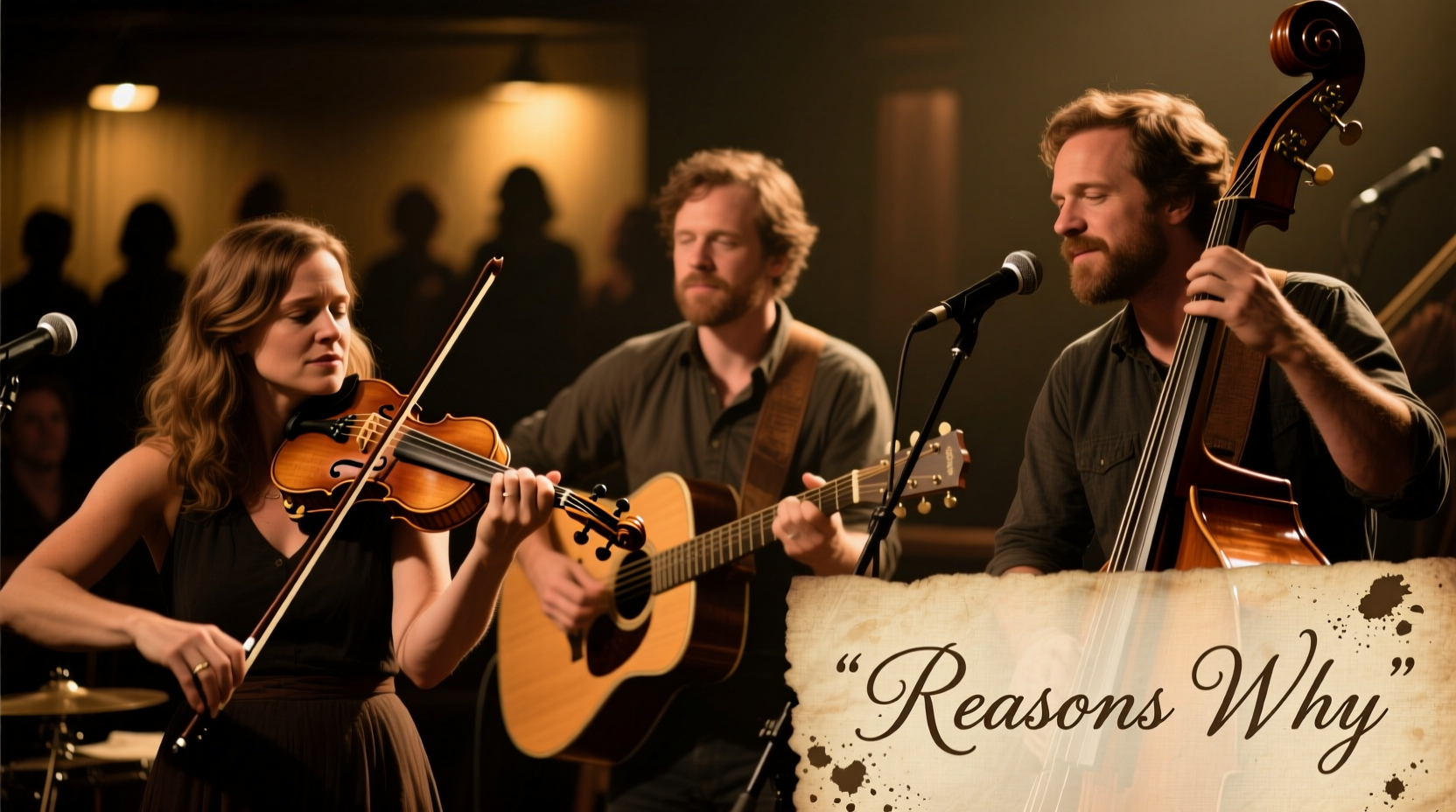
At first listen, Nickel Creek’s melodies might seem rooted in traditional folk or Americana aesthetics. But beneath the fiddle runs and mandolin flourishes lies a poetic sensibility that rewards close attention. Their lyrics often explore themes of identity, longing, impermanence, and spiritual questioning—not through grand pronouncements, but through intimate vignettes and metaphor-rich storytelling.
Songs like “The Lighthouse’s Tale” use narrative structure to convey loss and isolation, while “When in Rome” juxtaposes playful phrasing with existential unease. This duality—between surface charm and underlying complexity—is one reason their work resonates across generations. Listeners return not only for the sonic beauty but for the layered meanings that unfold over time.
Cultural and Musical Context: Why It Matters
To fully appreciate the significance of Nickel Creek’s lyrics, one must consider their place in modern roots music. Emerging in the late 1990s, they helped redefine what acoustic music could be—bridging the gap between bluegrass purism and contemporary songcraft. Their collaborations with producers like Alison Krauss brought mainstream visibility, yet they never compromised lyrical integrity for accessibility.
This balance is evident in tracks such as “Scotch & Chocolate,” which uses the metaphor of incompatible substances to describe a failing relationship. On the surface, it’s a clever turn of phrase; beneath, it speaks to broader human struggles with connection and compatibility. The band’s willingness to experiment musically—incorporating jazz harmonies, classical forms, and indie rock dynamics—mirrors their lyrical ambition.
“Nickel Creek didn’t just play bluegrass—they questioned it, expanded it, and made room for introspection where there was once only tradition.” — Robert Stone, Music Historian & Author of *American String*
Emotional Resonance and Listener Connection
One of the most compelling reasons to explore the meaning of Nickel Creek’s songs is their power to evoke deep emotional responses. Unlike much pop music, which often prioritizes immediacy, their work unfolds gradually. A line repeated in a later verse takes on new weight. A minor chord shift underscores a lyrical revelation.
Take “Doubting Thomas,” a song that grapples with faith, doubt, and the desire for certainty. Its refrain—“I’d have to see him bleed / To know he ever lived”—is stark and unsettling, yet profoundly honest. For many listeners, especially those navigating questions of belief or grief, this kind of lyrical candor offers solace not through answers, but through shared vulnerability.
Their 2014 album “A Dotted Line”, released after a seven-year hiatus, reflects maturity and self-awareness. Songs like “Destination” confront aging and purpose: “I used to think I’d find my way / By chasing every single day.” These reflections strike a chord with audiences who’ve also faced transitions, regrets, or renewed hopes.
Real Example: A Fan’s Journey with “Hayloft”
Consider the experience of Maya Tran, a school counselor from Asheville, NC. After her father’s sudden passing, she found herself returning repeatedly to “Hayloft.” At first, she connected with its driving rhythm and raw vocal delivery. Over weeks, however, the lyrics—particularly the lines “I burned down the hayloft / Now I’m standing in the ashes / Wondering why”—began to mirror her own feelings of guilt and unresolved anger.
“It wasn’t about literal destruction,” she explained in an online forum. “It was about realizing you’ve damaged something precious in a moment of frustration. That song gave me permission to grieve not just his death, but the things we never fixed.”
This anecdote illustrates how Nickel Creek’s music functions as both art and emotional conduit—inviting listeners into a space where personal meaning can emerge from carefully crafted words.
Do’s and Don’ts When Interpreting Nickel Creek’s Lyrics
| Do | Don't |
|---|---|
| Consider the historical context of the album’s release | Assume all songs are autobiographical |
| Analyze recurring motifs (e.g., light/dark, travel, fire) | Ignore musical cues—melody affects meaning |
| Read interviews with Chris Thile for insight | Disregard irony or wordplay as accidental |
| Compare early vs. later works for thematic evolution | Force a single ‘correct’ interpretation |
A Step-by-Step Guide to Deep Listening
Understanding the full impact of Nickel Creek’s music requires more than passive listening. Follow this process to engage meaningfully with their songs:
- Listen First Without Lyrics: Pay attention to mood, tempo, instrumentation, and vocal tone. What emotions arise before you even know the words?
- Read the Lyrics Separately: Print or view them without playback. Note rhymes, metaphors, and structural choices (verse/chorus shifts, repetition).
- Research Background: Look up when the song was written, any known inspirations, and statements from the band.
- Re-listen Actively: Play the track again, focusing on how lyrics align with musical dynamics.
- Reflect Personally: Ask: How does this relate to my life? What memories or feelings surface?
- Discuss or Journal: Writing or talking about your interpretation solidifies understanding and reveals new layers.
Frequently Asked Questions
Is Chris Thile the main songwriter for Nickel Creek?
While all three members contribute creatively, Chris Thile is the primary lyricist for most of their original material. His background in literature and philosophy heavily influences the band’s thematic depth.
Are Nickel Creek’s songs religious in nature?
Some songs touch on spiritual themes—such as doubt, grace, and morality—but rarely in dogmatic terms. Instead, they explore faith as a human experience marked by uncertainty and searching, rather than doctrine.
How has their sound evolved over time?
Early albums leaned more heavily on bluegrass traditions with tight instrumental arrangements. Later works, especially post-reunion, incorporate more experimental structures, lyrical abstraction, and genre-blurring elements influenced by indie rock and chamber music.
Actionable Tips for Deeper Appreciation
Final Thoughts: Why Meaning Matters
In an age of algorithm-driven playlists and disposable singles, Nickel Creek stands out because their music demands—and rewards—attention. Exploring the meaning behind their songs isn’t about decoding secret messages; it’s about participating in a dialogue between artist and listener, past and present, sound and silence.
Their impact lies not only in technical mastery but in their courage to ask difficult questions through song. Whether grappling with faith, love, mortality, or artistic purpose, Nickel Creek reminds us that music can be both beautiful and intellectually rigorous. Their legacy grows not just from how they play, but from what they say—and how deeply we’re moved to listen.




 浙公网安备
33010002000092号
浙公网安备
33010002000092号 浙B2-20120091-4
Comments
No comments yet. Why don't you start the discussion?