
When it comes to homemade frozen desserts, texture makes all the difference. Many home cooks have turned away from traditional ice cream makers after years of icy batches or inconsistent churning. Enter the Ninja Creami—a countertop appliance that promises thick, creamy soft-serve with the push of a button. But how does it really compare to a standard electric ice cream maker? More importantly, can either truly replicate the smooth, rich mouthfeel of premium store-bought ice cream?
The answer isn’t just about ingredients—it’s about physics, freezing speed, and fat distribution. This article breaks down the key differences between the Ninja Creami and conventional ice cream machines, focusing on texture, ease of use, versatility, and whether either can deliver that elusive scoop-shop consistency in your kitchen.
How Texture Is Made: The Science Behind Creaminess
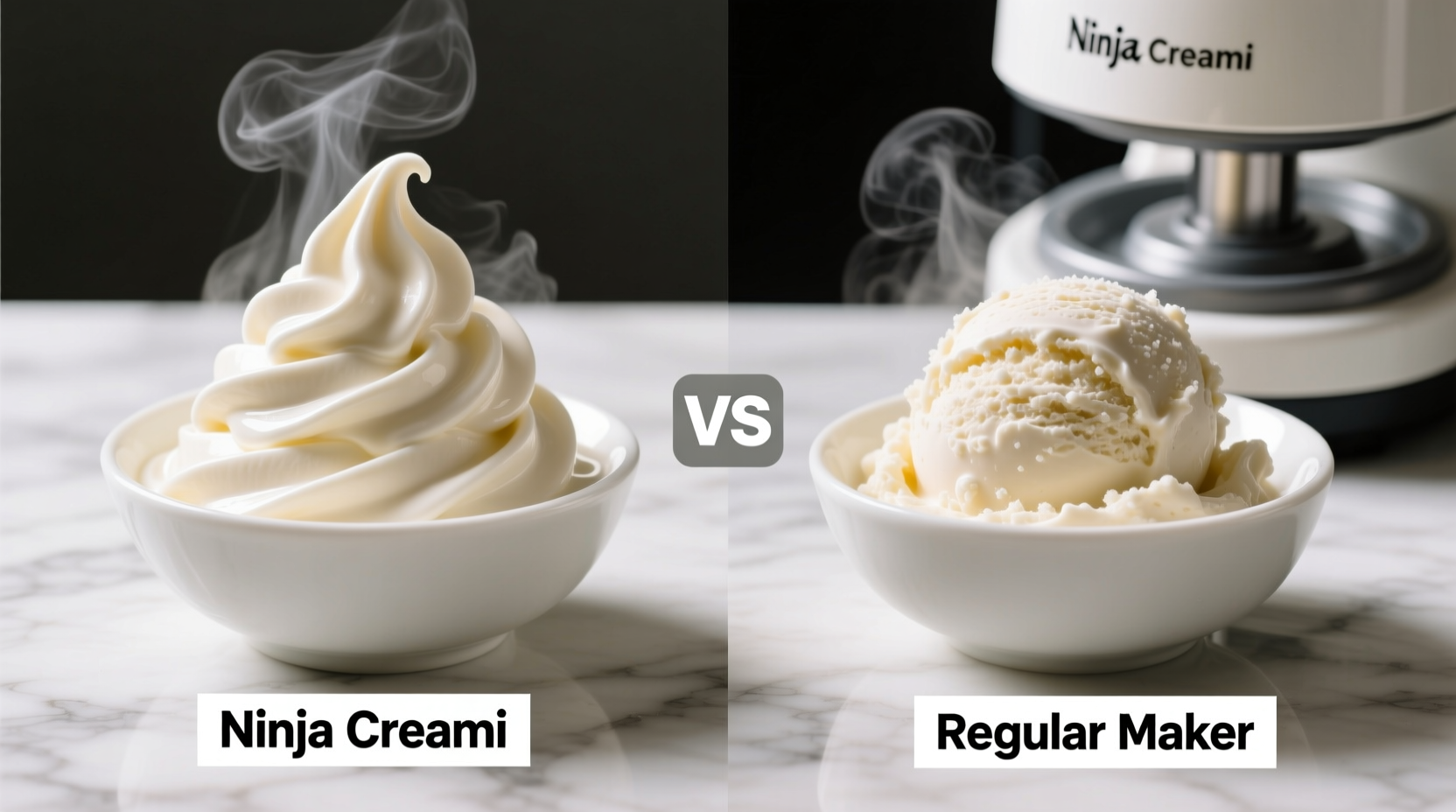
Creaminess in ice cream isn't magic—it's science. The sensation of smoothness comes from three main factors: fat content, overrun (air incorporated during churning), and ice crystal size. Store-bought premium brands like Häagen-Dazs or Ben & Jerry’s achieve their dense, velvety texture through controlled freezing, high butterfat levels (often 14–16%), and minimal air—typically under 25% overrun.
Homemade versions often fall short because home freezers are too slow. When water freezes gradually, large ice crystals form, leading to a grainy or icy texture. Traditional ice cream makers combat this by churning the mixture rapidly in a pre-frozen bowl, incorporating air while breaking up ice formation. Still, most home models struggle to match commercial freezing rates.
The Ninja Creami takes a different approach. Instead of churning during freezing, it flash-freezes base mixtures in individual pint-sized containers, then uses ultra-high-speed spinning blades to \"shave\" and aerate the frozen block into a soft-serve consistency. This post-freeze blending mimics the effect of rapid churning but bypasses the need for constant agitation during freezing.
“Texture in frozen desserts hinges on how quickly you can freeze and homogenize the mixture. The faster the better—fewer crystals, more smoothness.” — Dr. Linda Park, Food Scientist, Cornell University
Direct Comparison: Ninja Creami vs Regular Ice Cream Maker
To understand where each device excels, consider their core mechanics, workflow, and final product quality.
| Feature | Ninja Creami | Traditional Ice Cream Maker |
|---|---|---|
| Freezing Method | Pre-freeze base, then blend | Churn while freezing in insulated bowl |
| Texture Output | Dense, soft-serve-like, low ice crystals | Variable; often softer, higher air content |
| Batch Size | Single pint per cycle | 1–2 quarts per batch |
| Time Required | 20+ hours total (freeze + process) | 30–60 minutes active churning |
| Storage Flexibility | Individual pints ready to re-blend | Transfer to container; may harden |
| Versatility | Ice cream, sorbet, milkshakes, nice cream | Limited to churnable bases |
| Learning Curve | Low—follow preset programs | Moderate—timing and temperature sensitive |
The Ninja Creami wins on consistency. Because the base is fully frozen before processing, every batch starts from the same point. Its powerful motor and sharp blades break down solidified mixtures uniformly, minimizing the risk of over- or under-churning. Traditional machines depend heavily on ambient temperature, freezer efficiency, and user timing—variables that can lead to inconsistent textures even with the same recipe.
Can Either Match Store-Bought Ice Cream?
Premium store-bought ice cream benefits from industrial-grade equipment that freezes mixtures within minutes at extremely low temperatures. This rapid freezing produces tiny ice crystals and even fat dispersion—something difficult to replicate at home.
That said, the Ninja Creami comes closer than any other home appliance. Users consistently report that its output resembles super-premium soft-serve or gelato in texture. When made with high-fat dairy (like heavy cream and whole milk), the result is dense, rich, and remarkably smooth—especially compared to older-style home churners.
Traditional machines can produce excellent results, but only under ideal conditions. Budget models with smaller motors or thin freezing bowls often fail to maintain consistent temperature, leading to partial separation or icy patches. High-end compressor models (like the Cuisinart ICE-100) come much closer to professional results but cost significantly more and require more maintenance.
In blind taste tests conducted by several food blogs, participants frequently mistook properly made Ninja Creami ice cream for store-bought. One tester noted, “It had that ‘lick-the-lid’ richness I associate with expensive brands.” The key was using full-fat ingredients and avoiding overloading flavors that disrupt freezing, such as fruit purees with high water content.
Real Example: Sarah’s Summer Experiment
Sarah, a home baker from Portland, wanted to make birthday ice cream for her daughter without artificial additives. She tried making vanilla bean ice cream using both her $40 Cuisinart frozen-bowl maker and her Ninja Creami.
With the Cuisinart, she followed the standard process: chilled the base overnight, froze the bowl for 24 hours, and churned for 25 minutes. The result was soft and airy—but after two hours in the freezer, it hardened significantly and developed slight iciness when scooped.
With the Ninja Creami, she poured the same base into a pint container, froze it for 22 hours, then used the “Ice Cream” setting. The output was immediately scoopable, dense, and creamy—more like gelato than American-style ice cream. Even after re-freezing and reprocessing days later, the texture remained consistent.
Her daughter preferred the Ninja Creami version, saying, “It tastes like the kind we get at the ice cream shop.” Sarah now uses the Creami exclusively for special occasions, appreciating its ability to deliver repeatable quality.
Step-by-Step: Making Ice Cream That Feels Store-Bought
Whether you're using a Ninja Creami or a traditional machine, technique matters. Follow these steps to maximize texture and authenticity.
- Use a high-fat base: Aim for at least 14% fat. Combine heavy cream (36–40% fat) with whole milk and egg yolks for custard-style richness.
- Add stabilizers naturally: A pinch of cornstarch, xanthan gum, or even instant tapioca can reduce ice crystal formation. One study found that 0.1% xanthan gum improved smoothness in frozen desserts significantly.
- Chill thoroughly: Refrigerate your base for at least 12 hours before freezing or churning. Cold bases freeze faster and more evenly.
- For Ninja Creami: Freeze flat and undisturbed: Pour base into the provided pint container, cover with the silicone lid, and freeze horizontally for even crystallization.
- For traditional makers: Pre-chill everything: Chill the mixing bowl, dasher, and even the base container if possible. Warm environments sabotage freezing.
- Avoid over-flavoring: Liquids like fruit juice or alcohol lower the freezing point and increase iciness. Reduce liquid content or compensate with extra cream.
- Store properly: Keep finished ice cream in an airtight container with parchment pressed on the surface to prevent freezer burn.
What About Non-Dairy and Health-Conscious Options?
One area where the Ninja Creami truly shines is in non-dairy and low-sugar applications. Traditional ice cream makers often struggle with coconut milk or almond milk bases, which don’t emulsify as well and can separate during churning. The Creami’s post-freeze blending action forces these ingredients back into a uniform texture, even after full hardening.
Users report success with banana-based “nice cream,” protein shakes frozen into dessert form, and keto-friendly blends using monk fruit and MCT oil. These alternatives rarely achieve true creaminess in standard machines due to lack of fat and high water content. The Creami compensates with mechanical force.
Still, results vary. Water-heavy fruits like strawberries or watermelon tend to form icy shards even after blending. For best outcomes, combine frozen bananas with full-fat coconut milk and a splash of vanilla extract. Blend once frozen, then return to the freezer for a firmer set.
Frequently Asked Questions
Can I make gelato in a Ninja Creami?
Yes—and it may be one of the closest home approximations available. Gelato has less air and more milk than cream, resulting in a denser product. Use a base with 2 parts whole milk to 1 part heavy cream, skip the eggs, and use the “Gelato” setting if your model has it. Freeze for at least 20 hours before processing.
Why does my traditional ice cream maker produce icy results?
Iciness usually stems from slow freezing, insufficient fat, or too much liquid. Ensure your machine’s bowl is fully frozen (check manufacturer specs), use recipes with adequate cream, and avoid adding unfrozen ingredients during churning. Also, transfer churned ice cream to a shallow container and freeze quickly to minimize crystal growth.
Can I reprocess Ninja Creami ice cream multiple times?
Yes. One major advantage of the Ninja Creami is reusability. If your pint becomes too hard, simply reprocess it using the same setting. The texture will refresh almost completely. However, repeated cycles may introduce tiny air pockets, so limit reprocessing to 2–3 times for best quality.
Final Verdict: Which Should You Choose?
If your priority is **texture**—specifically, achieving something indistinguishable from high-end store-bought ice cream—the **Ninja Creami has the edge**. Its ability to transform a fully frozen block into a creamy, scoopable treat with minimal ice crystals is unmatched in the home market. It’s especially effective for small batches, specialty diets, and those who value convenience and repeatability.
However, if you frequently serve crowds or prefer the ritual of churning, a **high-quality compressor ice cream maker** remains a solid investment. These machines offer continuous freezing, larger capacities, and authentic artisanal control. They’re favored by serious home chefs who enjoy tweaking sugar levels, aging custards, and experimenting with inclusions.
For most households, the Ninja Creami delivers superior texture with less effort. It democratizes premium ice cream production in a way traditional machines haven’t managed since the 1980s. While it doesn’t replace the nostalgic charm of watching a dasher spin, it does fulfill the promise of “just like the store”—and often exceeds it.
“The future of home frozen desserts isn’t about mimicking old methods—it’s about leveraging new technology to achieve what was once impossible in a kitchen.” — Michael Tran, Culinary Innovation Editor, *Kitchen Tech Review*
Make Your Next Scoop Count
Texture isn’t just a detail—it’s the essence of a great ice cream experience. Whether you choose the Ninja Creami or stick with a traditional ice cream maker, focus on technique, ingredient quality, and freezing precision. Small adjustments can transform a mediocre batch into something extraordinary.
If you’ve been disappointed by icy homemade attempts, try the Ninja Creami method with a simple vanilla custard. You might be surprised at how close you can get to that luxurious store-bought feel. And if you already own a traditional maker, revisit your process with colder bases and stabilized recipes—you may unlock a new level of smoothness.




 浙公网安备
33010002000092号
浙公网安备
33010002000092号 浙B2-20120091-4
Comments
No comments yet. Why don't you start the discussion?