
When it comes to portable retro gaming, two Nintendo devices stand out across generations: the Nintendo DS and the Switch Lite. One defined the early 2000s with dual screens and touch controls; the other represents modern Nintendo’s commitment to dedicated handheld play. But if you're looking to relive classic games or explore older titles in a compact form, which system truly delivers a better retro experience?
The answer isn't as straightforward as nostalgia might suggest. While the DS was built during an era when \"retro\" meant Game Boy Advance titles, the Switch Lite accesses decades of retro gaming through digital re-releases and emulation. This article compares both systems across critical categories—game library, hardware, usability, customization, and future-proofing—to help you decide which handheld suits your retro gaming needs best.
Game Library: Native Support vs Emulated Classics
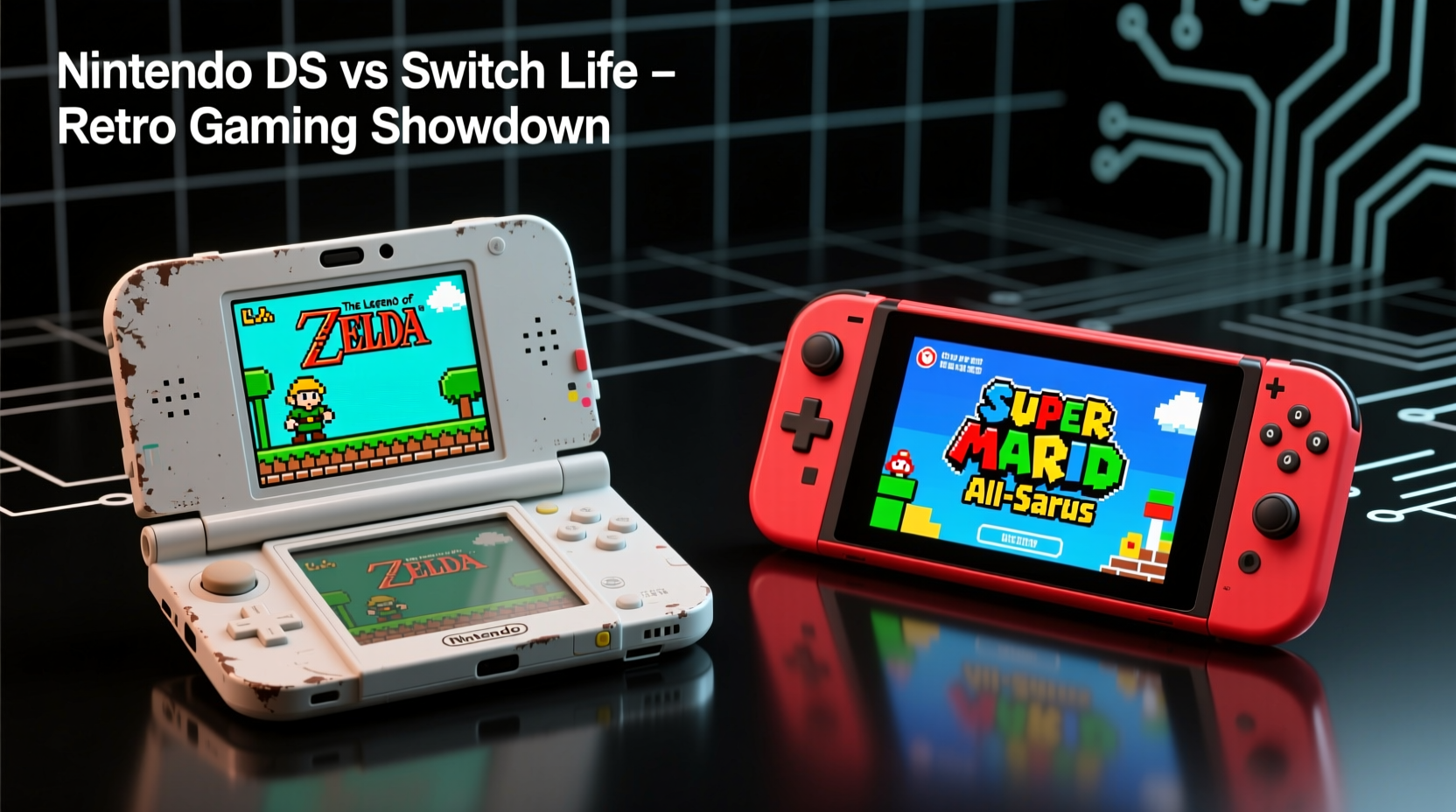
The heart of any retro gaming device lies in its accessible game library. Here, the Nintendo DS and Switch Lite represent fundamentally different philosophies.
The DS launched with backward compatibility for Game Boy Advance cartridges. This gave users immediate access to hundreds of GBA titles—from *The Legend of Zelda: The Minish Cap* to *Metroid Fusion*—alongside a growing catalog of original DS-era classics like *Mario Kart DS*, *Phoenix Wright*, and *The World Ends with You*. These were true retro experiences at the time, bridging the legacy of earlier handhelds with new innovations.
In contrast, the Switch Lite has no cartridge slot for older physical media. Instead, it relies on the Nintendo eShop’s **Nintendo Switch Online + Expansion Pack**, which includes curated libraries from the NES, SNES, N64, and even Sega Genesis. Subscribers can play *Super Mario Bros. 3*, *The Legend of Zelda: Ocarina of Time*, *EarthBound*, and *Sonic the Hedgehog* directly on the device—often with save states, rewind features, and online multiplayer.
However, the Switch Lite’s retro offerings are limited by what Nintendo chooses to include. Major absences—like most Pokémon mainline entries or certain third-party gems—are notable. Meanwhile, the DS plays every DS and GBA title ever released (region permitting), offering unparalleled breadth for collectors.
Hardware Design and Portability
Both systems prioritize portability, but their designs reflect very different eras of technology.
The original Nintendo DS measures approximately 5.8 x 3.3 inches and weighs around 8.3 oz. Its clamshell design protects the touchscreen and stylus, making it durable for travel. However, the small 3-inch screens (especially the lower one) can feel cramped by today’s standards. The resolution is low (256x192 per screen), and the lack of backlighting on early models makes outdoor visibility poor unless upgraded to the DS Lite.
The Switch Lite, released in 2019, is sleeker and lighter at 8.2 oz, with a single 5.5-inch capacitive touchscreen (720p). It offers brighter visuals, responsive touch input, and built-in stereo speakers. Battery life ranges from 3–7 hours depending on usage, while the DS typically lasts 5–10 hours on two AA batteries (DS Lite) or internal battery (later models).
While the Switch Lite wins in screen quality and ergonomics, it lacks modularity. You can’t attach external controllers or use it on a TV. The DS, though less powerful, supports wireless multiplayer via local connections—a feature still beloved for games like *Pokémon Black/White* or *Mario Party DS*.
“Portability isn’t just about size—it’s about how easily you can dive into a game anywhere. The DS was revolutionary because it made gaming tactile and social.” — Lena Tran, Gaming Historian
Performance and Compatibility Compared
Understanding what each system can actually run is crucial for retro gamers.
| Feature | Nintendo DS | Switch Lite |
|---|---|---|
| Retro Game Access | GBA cartridges + DS ROMs | NES/SNES/N64/Genesis via subscription |
| Resolution | 256x192 (dual screens) | 1280x720 (single screen) |
| Battery Life | 5–10 hrs (varies by model) | 3–7 hrs |
| Backward Compatibility | Yes (GBA) | No (physical); Yes (digital only) |
| Save States | No | Yes (on emulated titles) |
| Online Play (Retro) | Local wireless only | Yes (via NSO servers) |
The table highlights a key distinction: the DS excels in native, offline retro gameplay using real cartridges, while the Switch Lite provides enhanced digital emulation with modern conveniences.
For purists who value original hardware experiences, the DS remains unmatched. Inserting a GBA cartridge and playing *Fire Emblem: The Sacred Stones* exactly as it was in 2005 is a form of preservation. On the other hand, being able to pause *Super Metroid* mid-jump, rewind five seconds, or save anywhere enhances accessibility—especially for challenging retro titles.
Moreover, the Switch Lite runs homebrew via custom firmware (though not officially supported), enabling ROM loading from older systems like NES, SNES, and even PS1 through unofficial emulators. This vastly expands its retro potential beyond Nintendo’s curated list—if you’re technically inclined.
Real-World Example: Two Gamers, Two Choices
Consider Sarah and James, both retro enthusiasts with similar goals but different priorities.
Sarah collects physical games and values authenticity. She owns over 60 GBA titles and wants to play them on original hardware. She also enjoys using a reproduction flash cart (like the EverDrive) to safely back up her collection. For her, the DS (specifically the DS Lite) is ideal. She can swap cartridges freely, maintain original audiovisual output, and preserve the tactile feel of retro gaming.
James travels frequently and prefers convenience. He doesn’t want to carry multiple devices or worry about cartridge wear. With a Switch Lite and a $30/year Nintendo Switch Online subscription, he accesses hundreds of retro titles in one device. He appreciates the ability to suspend gameplay instantly and resume later—something impossible on original hardware.
Their stories illustrate that “better” depends on lifestyle and values. There’s no universal winner—only the right tool for your kind of retro play.
Long-Term Viability and Maintenance Tips
Durability and sustainability matter when choosing a retro gaming device, especially since both systems are now discontinued.
The DS family, particularly the DS Lite, suffers from common issues over time: dimming screens, broken hinges, and worn shoulder buttons. Replacements parts exist, and repair communities remain active. Cleaning cartridge slots and storing units in protective cases significantly extends lifespan.
The Switch Lite, being newer, generally holds up well—but its reliance on software services introduces risk. If Nintendo discontinues the Switch Online service, access to retro games could vanish overnight. Physical media owners face no such threat. Additionally, microSD cards used for downloaded content may fail, risking loss of purchased digital titles.
- Use screen protectors on both devices to prevent scratches.
- Avoid extreme temperatures—especially leaving either unit in a hot car.
- For DS users: keep spare styli handy; they’re easily lost.
- Switch Lite owners should invest in a carrying case with padding and a wrist strap.
Which Should You Choose? A Decision Checklist
Still unsure? Use this checklist to guide your decision:
- Do you own GBA or DS cartridges? → Choose DS for direct playback.
- Do you prefer high-resolution screens and modern UI? → Switch Lite wins.
- Are you willing to pay a recurring fee for retro access? → Required for Switch Lite’s best retro features.
- Do you value save states and rewind functions? → Only available on Switch Lite (for emulated games).
- Do you play multiplayer retro games locally? → DS supports local wireless; Switch Lite requires internet for most retro multiplayer.
- Is modding acceptable to you? → Switch Lite allows broader ROM support via CFW; DS supports flash carts.
- Do you prioritize longevity and independence from online services? → DS offers more self-sufficiency.
If most answers point to the first few items, the DS is likely your best fit. If modern features, screen quality, and integrated emulation appeal more, go with the Switch Lite.
Frequently Asked Questions
Can I play Game Boy Advance games on the Switch Lite?
No, not natively. The Switch Lite does not support GBA cartridges. While some GBA titles have been re-released (e.g., *Yoshi’s Island* via SNES app), most—including core Pokémon entries—are unavailable digitally. You’d need a separate emulator or original hardware.
Is the Nintendo DS still relevant for retro gaming in 2024?
Absolutely. Thanks to its massive library, backward compatibility, and thriving homebrew scene, the DS remains a top choice for retro collectors. Flash carts allow safe ROM loading, and repairs are widely documented. Its role as a bridge between 2D and early 3D handheld gaming makes it historically significant.
Does the Switch Lite offer better performance for retro games than original consoles?
In many ways, yes. Emulation on the Switch Lite includes enhancements like upscaling, rewinding, quick saves, and online co-op. Input lag is minimal, and the interface is user-friendly. However, purists may notice subtle timing differences or audio inaccuracies compared to original hardware.
Final Verdict: Different Eras, Different Strengths
The Nintendo DS and Switch Lite aren’t direct competitors—they’re products of different philosophies separated by nearly two decades. The DS is a hands-on, cartridge-driven machine rooted in physical ownership and local interaction. The Switch Lite is a streamlined, digital-first device optimized for curated, cloud-connected experiences.
For raw retro authenticity, cartridge flexibility, and offline independence, the DS stands strong. It’s the ultimate tool for playing GBA and DS-era games as intended—with all their quirks and charm intact.
But for ease of access, visual clarity, and modern quality-of-life features, the Switch Lite is unmatched. It brings retro gaming into the streaming age, where convenience often trumps format fidelity.
Ultimately, the “better” handheld depends on how you define retro gaming. Is it about experiencing history firsthand? Then reach for the DS. Is it about enjoying timeless classics with comfort and flexibility? The Switch Lite earns its place.
You don’t necessarily have to choose one. Many serious retro fans keep both: the DS for deep cuts and collecting, the Switch Lite for daily commutes and casual play. Together, they span generations of Nintendo’s handheld legacy—one hinge at a time.




 浙公网安备
33010002000092号
浙公网安备
33010002000092号 浙B2-20120091-4
Comments
No comments yet. Why don't you start the discussion?