
When Nintendo released the Switch OLED model in 2021, it wasn’t a full redesign but a thoughtful refinement of the original. The most obvious change was the vibrant new 7-inch OLED screen, which immediately caught the eye of gamers considering an upgrade or first-time buyers. But beyond the glossy marketing, does that improved display—and other subtle enhancements—justify the higher price tag over the standard Switch? For many, the answer depends on how they use their console.
The base model remains a solid performer at a lower cost, while the OLED version offers incremental upgrades that enhance portability and media consumption. To determine whether the screen upgrade is truly worth it, a closer look at hardware differences, user experience, and long-term value is essential.
Display Quality: The Heart of the Upgrade
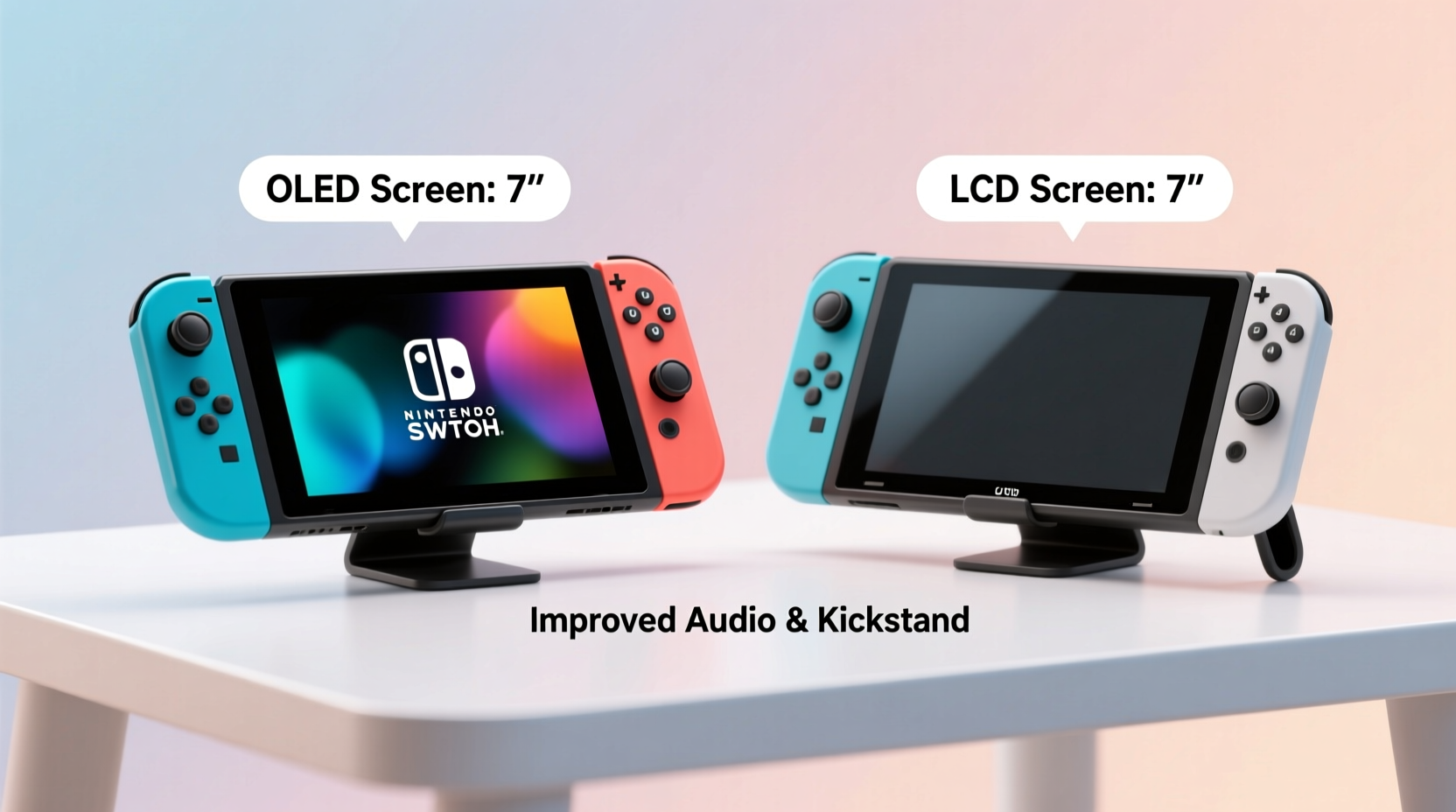
The most significant difference between the two models lies in the screen technology. The original Switch uses a 6.2-inch LCD panel, while the OLED model features a larger 7-inch OLED display. This shift isn’t just about size—it’s about image quality.
OLED (Organic Light-Emitting Diode) panels produce their own light, allowing for true blacks, infinite contrast ratios, and more vivid colors. In practice, this means games like The Legend of Zelda: Breath of the Wild or Super Mario Odyssey appear richer and more immersive on the OLED model. Dark scenes in games such as Hollow Knight: Silksong (when available) benefit from deeper shadows and better visibility without losing detail.
In direct side-by-side comparisons, the OLED screen reduces glare and improves viewing angles, making it easier to see the screen when playing in bright environments—like on a sunlit couch or during travel. While the resolution remains the same (720p in handheld mode), the pixel density is slightly lower due to the larger screen, but this is rarely noticeable during gameplay.
Hardware Comparison: What Else Changed?
Beyond the screen, Nintendo made several smaller but meaningful improvements to the OLED model. These include:
- Larger internal storage: 64GB compared to 32GB on the base model.
- Improved kickstand: Wider, adjustable, and far more stable than the flimsy plastic hinge on the original.
- Better speakers: Enhanced audio output with clearer mids and highs.
- New dock design: Includes a wired LAN port for more stable online play when using TV mode.
- Slightly longer battery life: Up to 9 hours versus 4.5–9 hours on the revised base model (post-2019).
The increased storage may not seem critical given the availability of microSD cards, but having double the space out of the box reduces the urgency to purchase additional storage—especially helpful for families or casual users unfamiliar with expandable memory.
The kickstand is arguably one of the most underrated upgrades. The original’s narrow, single-position stand frequently failed on uneven surfaces. The OLED’s wide, multi-angle kickstand allows for tabletop mode on beds, airplane trays, or coffee tables with far greater reliability. It transforms the portable multiplayer experience, particularly for games like Overcooked! 2 or Just Dance.
“The OLED model feels like the Switch we should have gotten from the start—especially the kickstand and screen clarity.” — Kyle Orland, Senior Gaming Editor at Ars Technica
Performance and Game Compatibility
Despite the visual and structural upgrades, there is no difference in processing power between the base and OLED models. Both use the same NVIDIA Tegra X1 chip, meaning game performance, load times, and frame rates are identical across devices. Whether you’re playing in handheld, tabletop, or docked mode, the core gaming experience remains unchanged.
All games—including demanding titles like Elden Ring via cloud streaming or Bayonetta 3—run the same way on both systems. There are no exclusive features or graphical enhancements tied to the OLED hardware. This is important for consumers expecting a performance leap; the improvement is purely in presentation and usability, not raw capability.
However, because the OLED screen renders colors more accurately and with higher contrast, some players report feeling more immersed in visually rich worlds. This subjective enhancement can make long gaming sessions more enjoyable, even if technical specs haven’t changed.
Real-World Usage: Who Benefits Most?
To assess whether the $349 OLED model is worth the extra $50 over the $299 base version, consider your typical usage patterns. A realistic scenario illustrates the difference:
Mini Case Study: Sarah, the Commuter Gamer
Sarah takes the train to work daily and plays Switch during her 45-minute commute. She often struggles with screen visibility on her old base model due to overhead lighting and window reflections. After upgrading to the OLED model, she notices immediate improvements: the screen is easier to see, colors pop more, and the wider kickstand lets her prop it securely on her tray table. The enhanced speakers also make dialogue clearer without needing headphones.
For Sarah, the upgrade is absolutely worth it. The device fits her lifestyle better, and the daily gains in comfort and clarity add up over time.
In contrast, Mark, who mostly docks his Switch to a 4K TV and only occasionally plays handheld, sees little benefit from the OLED screen. Since he’s not using the built-in display regularly, the superior panel doesn’t impact his experience. For him, the base model—or even a used one—makes more financial sense.
This highlights a key principle: the value of the OLED upgrade scales directly with how much you rely on handheld or tabletop modes.
Detailed Feature Comparison
| Feature | Nintendo Switch Base Model | Nintendo Switch OLED Model |
|---|---|---|
| Screen Size & Type | 6.2-inch LCD | 7-inch OLED |
| Internal Storage | 32GB | 64GB |
| Battery Life | 4.5 – 9 hours (revised model) | 4.5 – 9 hours |
| Kickstand | Narrow, fixed-angle | Wide, adjustable |
| Audio Output | Standard stereo | Enhanced stereo speakers |
| Dock Features | HDMI out only | HDMI + wired LAN port |
| Price (MSRP) | $299 | $349 |
| Ideal For | Docked play, budget buyers, secondary units | Handheld players, travelers, media viewers |
Is the Screen Upgrade Worth It? A Practical Checklist
Before deciding, ask yourself the following questions. Check each item that applies to your situation:
- Do you play in handheld mode more than 50% of the time? ✅
- Do you often play in brightly lit environments (e.g., outdoors, near windows)? ✅
- Have you been frustrated by the original kickstand breaking or slipping? ✅
- Do you watch videos or stream content on your Switch? ✅
- Are you buying your first Switch and want the best long-term experience? ✅
- Do you plan to keep the console for 4+ years? ✅
If you checked three or more, the OLED model is likely worth the investment. The screen, storage, and build refinements compound over time, especially for frequent mobile users.
Frequently Asked Questions
Can I use OLED-exclusive features in docked mode?
No. When connected to a TV, both models output the same video signal (up to 1080p). The OLED screen only enhances the handheld and tabletop experience. The dock’s LAN port is the only dock-related advantage.
Does the OLED model have better battery life?
Officially, battery life is rated the same (4.5 to 9 hours depending on the game). However, some users report slightly longer endurance, possibly due to more efficient power management. Real-world differences are minimal.
Is the OLED model more durable?
It’s not significantly more rugged, but the improved kickstand and slightly sturdier build reduce common failure points. The screen itself is more scratch-resistant, though a screen protector is still recommended.
Final Verdict: Who Should Upgrade?
The Nintendo Switch OLED is not a revolutionary upgrade, but it is a refinement that addresses long-standing pain points. For players who value portability, visual clarity, and everyday usability, the improvements justify the $50 premium. The screen alone elevates the handheld experience, while the expanded storage and reliable kickstand eliminate minor frustrations that plagued the original design.
On the other hand, if your Switch lives primarily in your entertainment center, connected to a large TV, the base model delivers identical performance at a lower cost. There’s no shame in choosing practicality over polish—especially when games run the same way on both systems.
Ultimately, the decision comes down to how you play. For commuters, travelers, parents using the console in tabletop mode, or anyone who appreciates a brighter, sharper screen, the OLED model is the better choice. For home-based gamers or those building a multi-console household, the base version remains a smart, cost-effective option.
“The OLED model doesn’t change what the Switch can do—but it makes doing it more pleasant.” — Patricia Hernandez, Senior Culture Editor at Polygon
Conclusion: Make the Choice That Fits Your Playstyle
The Nintendo Switch OLED vs base model debate isn’t about which is objectively better—it’s about which aligns with your habits. Technology upgrades should serve how you live, not the other way around. If you’re constantly on the move, playing in parks, trains, or bed, the OLED’s superior screen and build quality deliver tangible benefits every day. But if your Switch stays docked and you prioritize value, the base model continues to offer excellent bang for the buck.
Instead of chasing the newest version, focus on what enhances your enjoyment. Whether you choose the vibrant OLED or stick with the proven base, what matters most is the time spent playing, sharing, and discovering new worlds. The screen may be prettier, but the joy of gaming remains the same across both.




 浙公网安备
33010002000092号
浙公网安备
33010002000092号 浙B2-20120091-4
Comments
No comments yet. Why don't you start the discussion?